Artwork
A Capriccio View of Roman Ruins along the Tiber
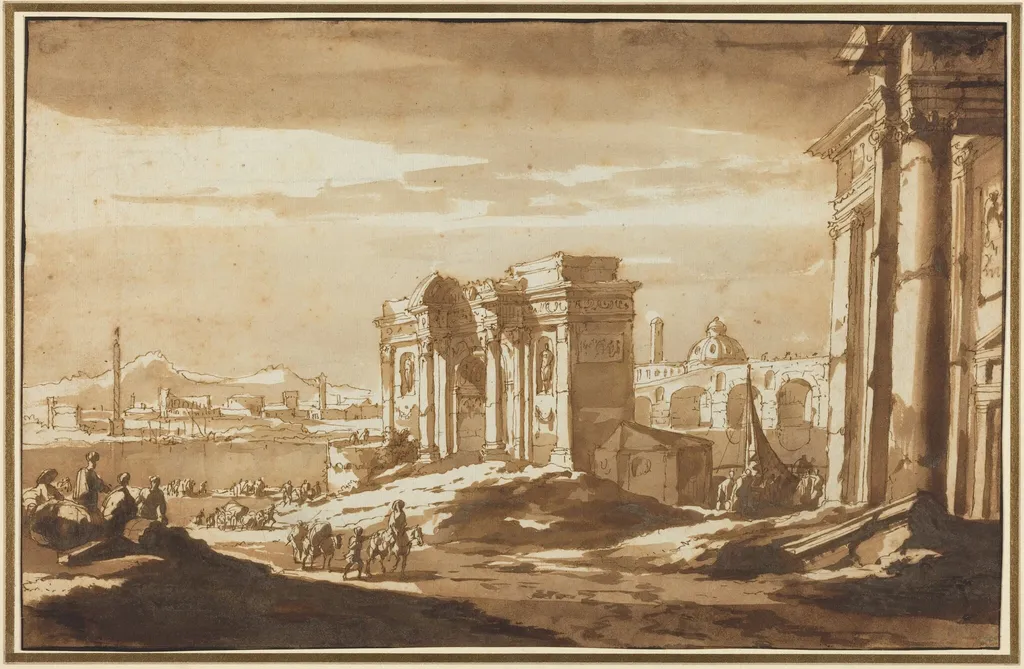
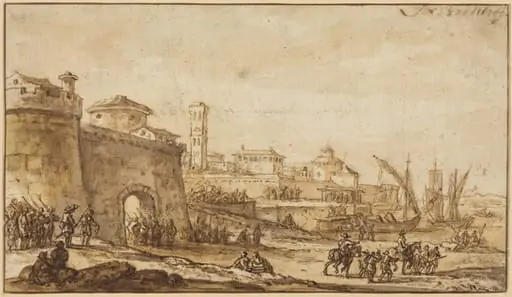
A Capriccio View of Roman Ruins along the Tiber is an ink drawing by the Baroque artist Jacob van der Ulft. It dates from 1655 and is held in the collection of the National Gallery of Art.
About this work
Overview
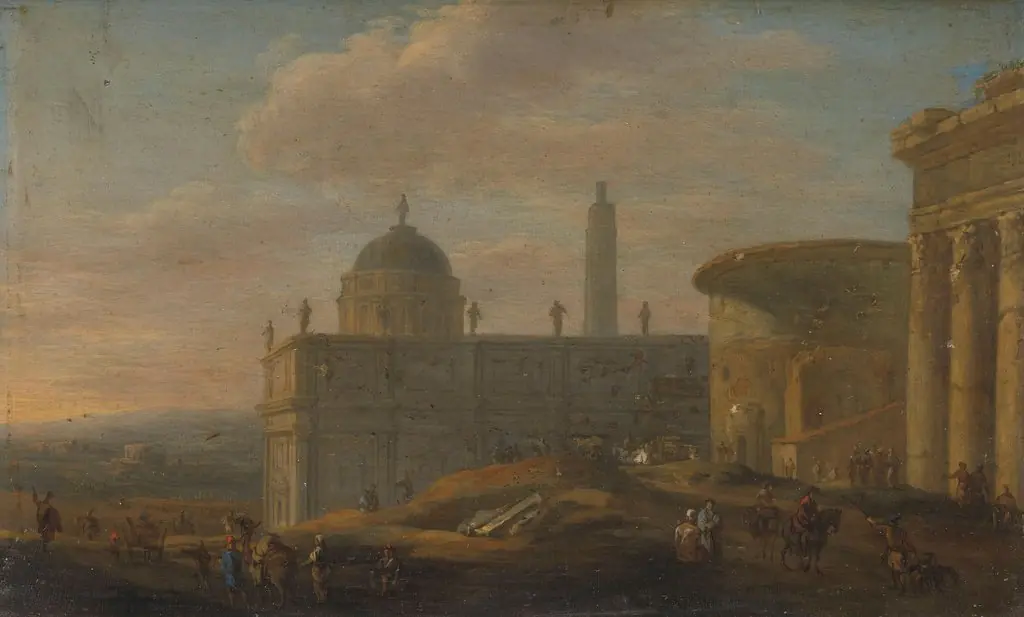
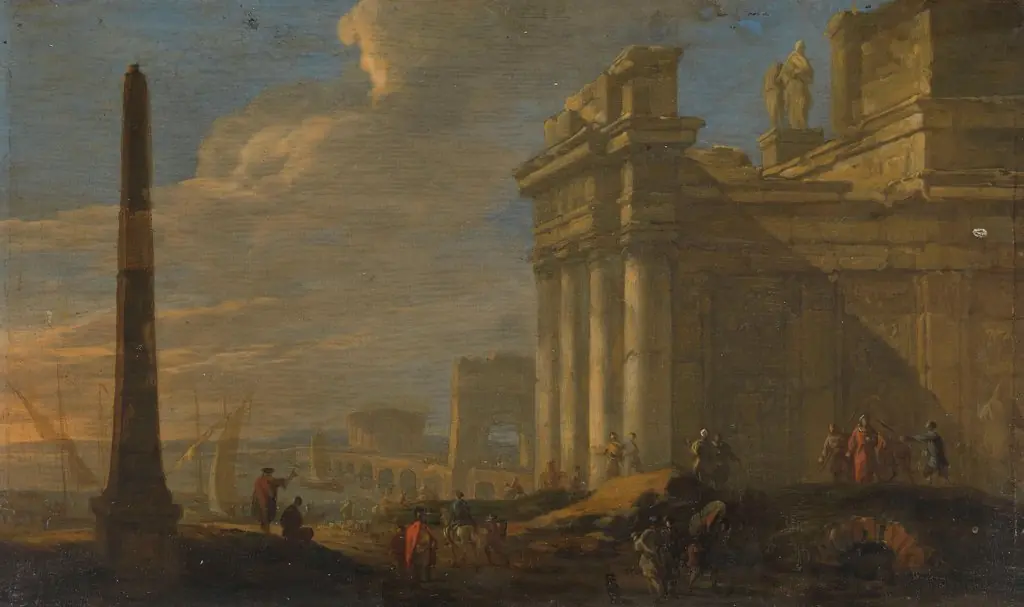
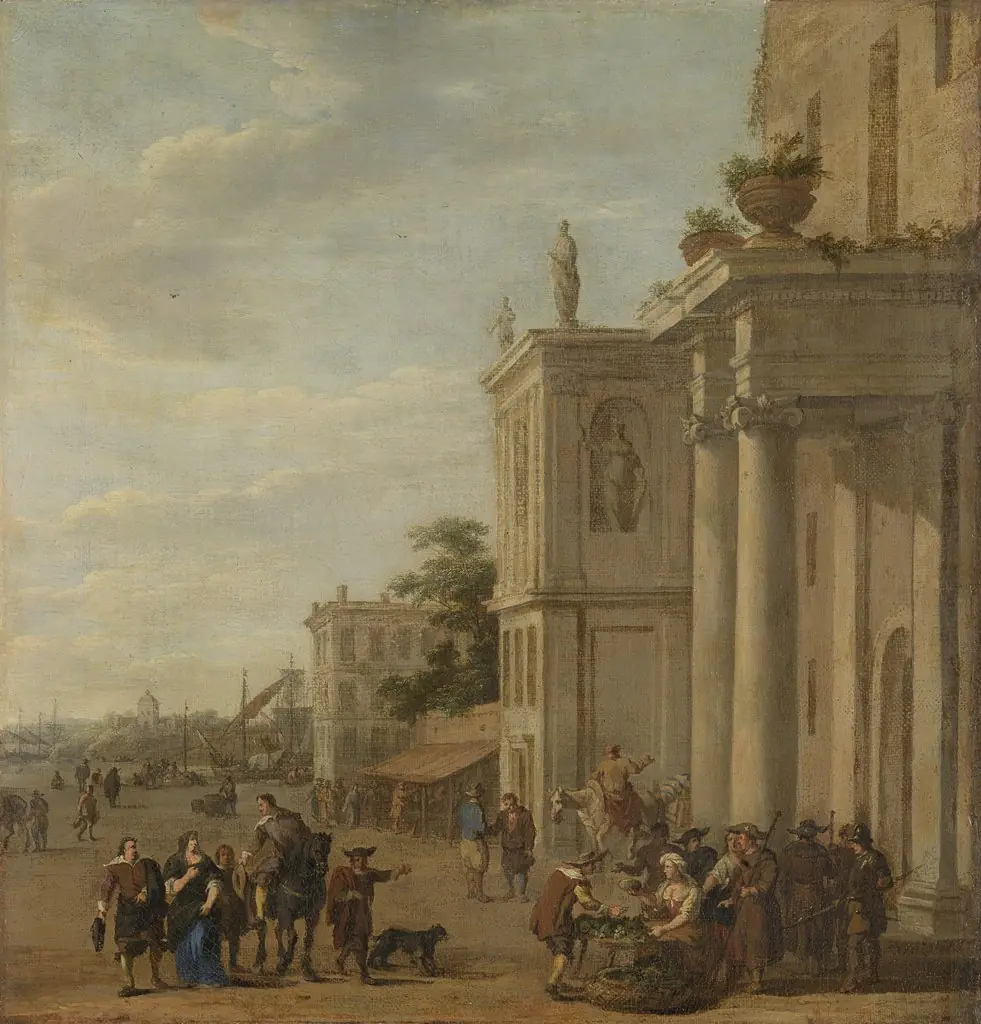
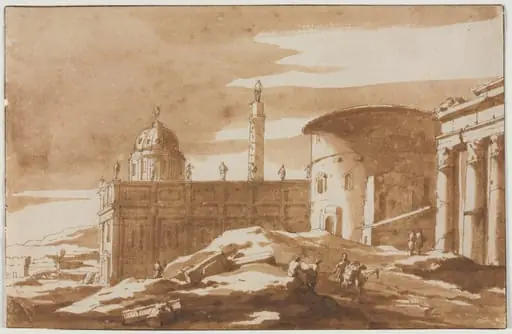
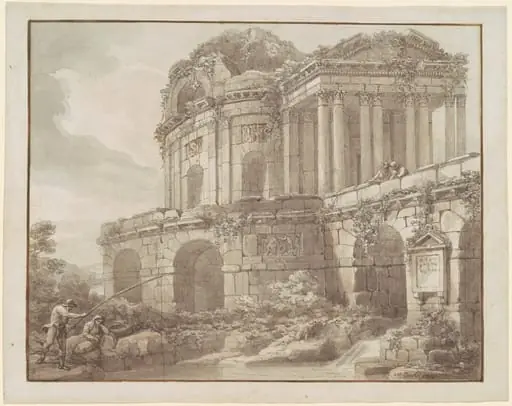
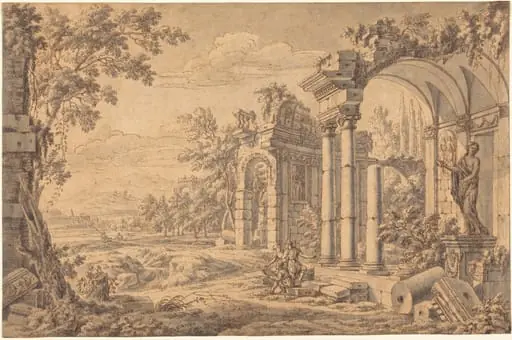
A Capriccio View of Roman Ruins along the Tiber is a 1655 drawing by Dutch artist Jacob van der Ulft, executed in pen, brush, and iron gall ink on laid paper. The work combines realistic and imaginative elements in a composite view of Roman ruins and structures along the Tiber River.
Subject & Meaning
The drawing depicts a blend of actual Roman ruins and fictional, grand architectural elements, characteristic of the capriccio genre. This mix of old and new suggests a commentary on the perception of history and power during the artist's time.
Technique & Style
Van der Ulft employed architectural precision, typical of his topographical expertise, alongside expressive ink washes. The faded, blended quality of the ink on laid paper contributes to the scene's dreamlike, composite atmosphere.
History & Provenance
Created in 1655, the drawing's provenance is not detailed here, though it is noted to be 'laid down', indicating it has been mounted on another support for preservation or display purposes.
Context
This work reflects the Baroque era's fascination with dramatic contrasts and the blending of reality and idealization. For further insight into this style, see the broader context of Baroque art, which often utilized such juxtapositions for expressive effect.
Artist & collection
Artist
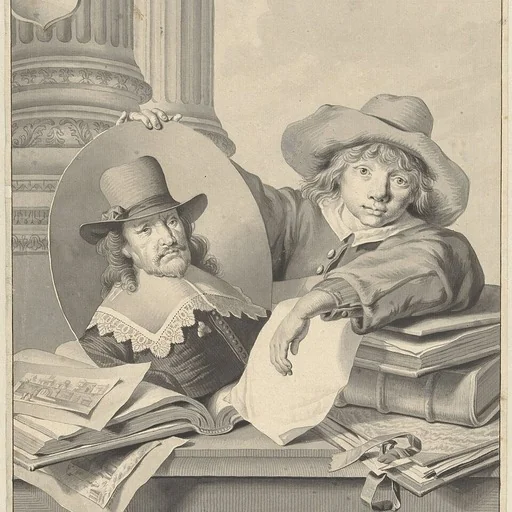
Jacob van der Ulft (Dutch pronunciation: ; 1621–1689) was a Dutch painter, glass painter, print artist, architect and mayor. He was known for his architectural and city views, landscapes and topographical views.