Artwork
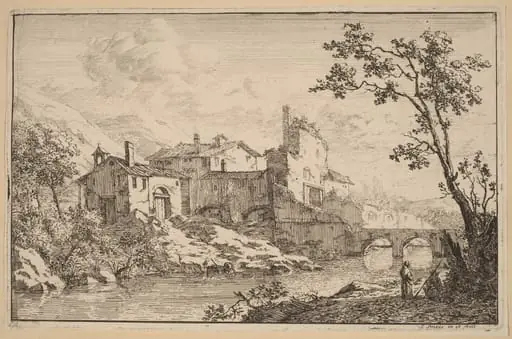
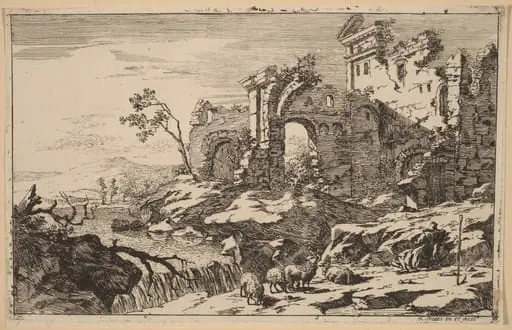
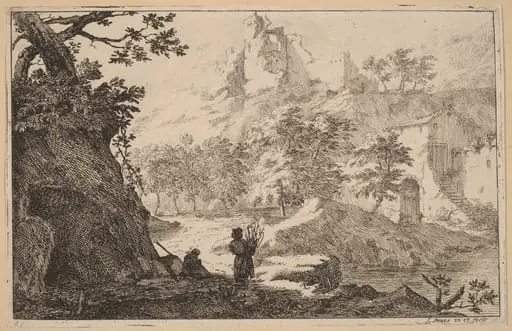
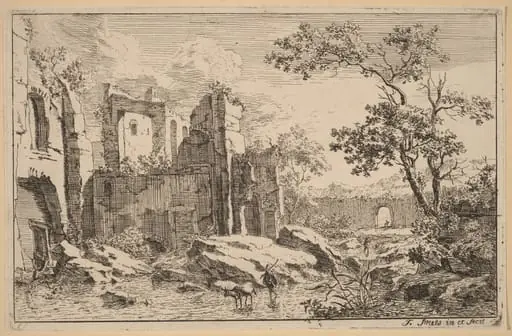
Building in Ruins at the Side of a River
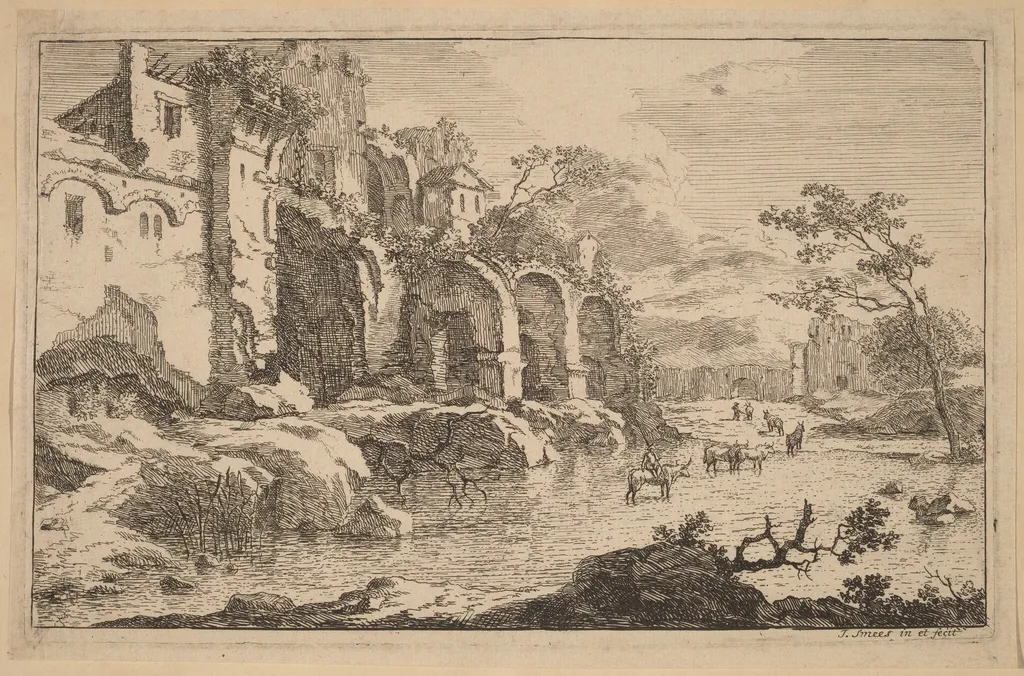
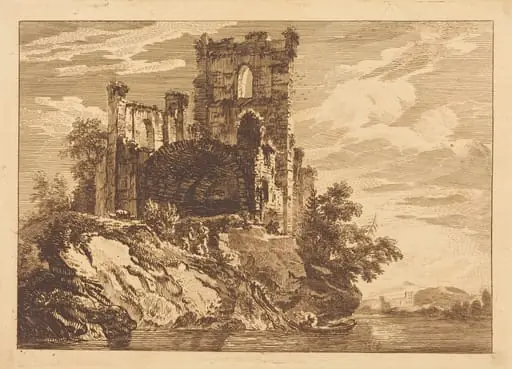
Building in Ruins at the Side of a River is an ink print by the Baroque artist Jan Smees. It dates from 1707 and is held in the collection of the National Gallery of Art.
About this work
Overview
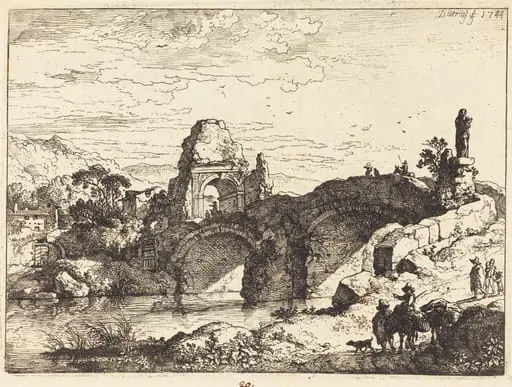
Jan Smees’s 1707 etching, titled Building in Ruins at the Side of a River, presents a monochrome landscape in which a winding river cuts through a craggy terrain. A dilapidated stone structure, half embedded in the hillside, dominates the composition, while twisted trees and scattered figures lend a sense of scale to the scene.
Subject & Meaning
The print juxtaposes natural decay with human abandonment, suggesting the transience of built environments against the enduring forces of nature. Small human and animal figures near the water’s edge hint at continued life amidst the ruin, inviting contemplation of the passage of time.
Technique & Style
Executed in etching, the work relies on precise, incised lines to render textures such as bark, rock, and weathered masonry. The absence of color emphasizes tonal contrast; deep shadows and highlighted areas create depth, while the hand‑drawn quality of the lines conveys a vivid, tactile surface.
History & Provenance
Created in the early eighteenth century, the etching reflects the period’s interest in ruin imagery and landscape studies. While specific ownership records are scarce, the piece is documented as part of Smees’s oeuvre and appears in several collections of Dutch printmaking from the era.
Context
During the 1700s, Dutch artists frequently explored themes of decay and the sublime in nature, often employing etching to reach a broader audience. Smees’s work aligns with this tradition, echoing contemporary concerns about the impermanence of human constructs within a changing environment.
Own this work as a print
Artist & collection