Artwork
Untitled
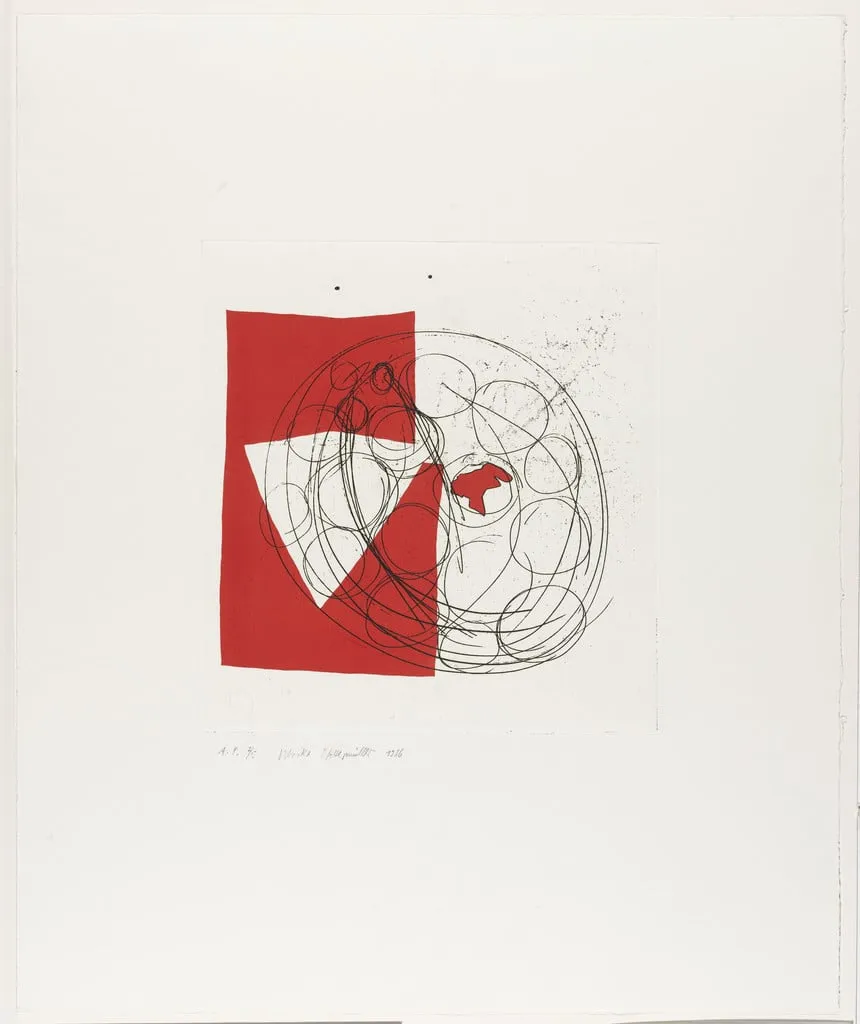
Untitled is an ink print by Ulrike Nattermuller. It dates from 1986 and is held in the collection of the Museum of Modern Art.
About this work
Overview
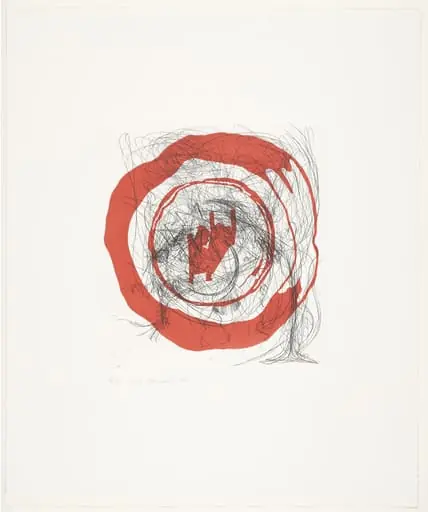
Created in 1986, this print by Ulrike Nattermuller combines etching and aquatint techniques to produce a composition of stark contrasts.
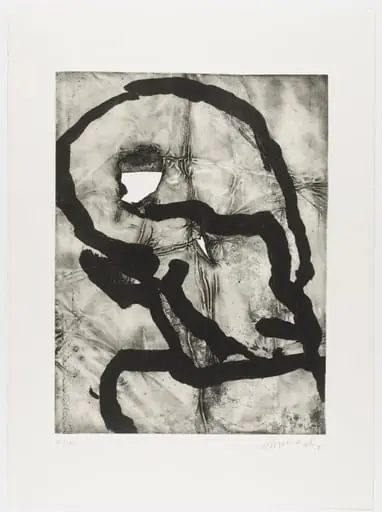
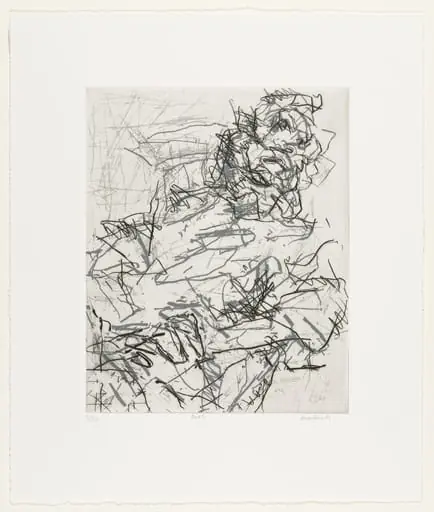
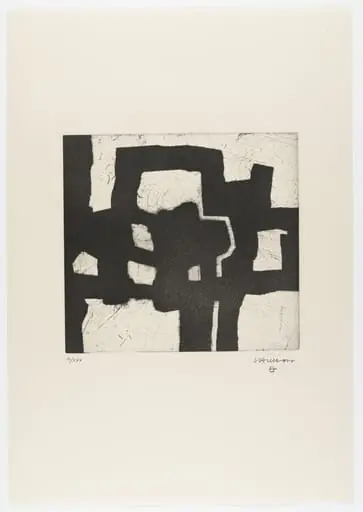
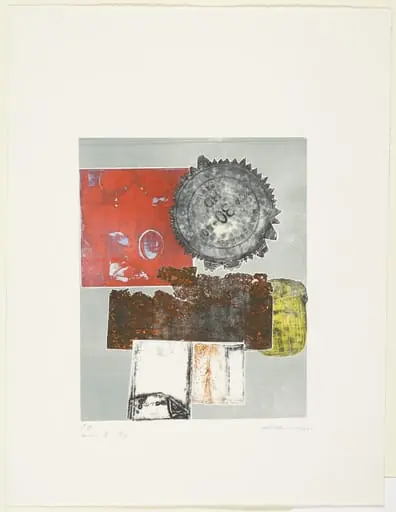
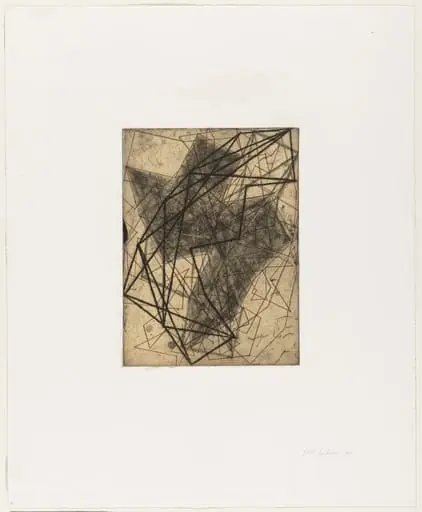
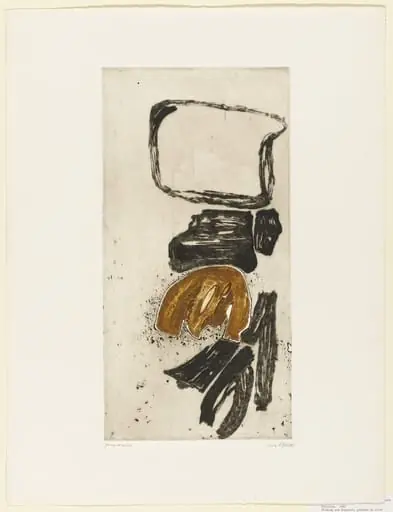
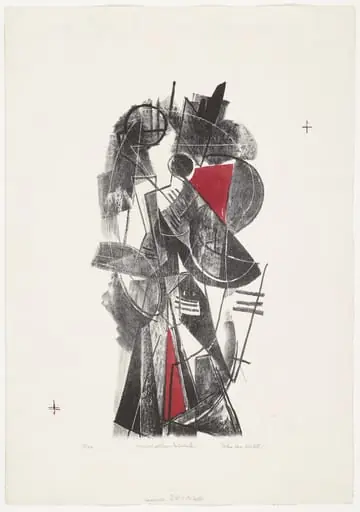
Created in 1986, this print by Ulrike Nattermuller combines etching and aquatint techniques to produce a composition of stark contrasts. It features solid red forms against a pale ground, intersected by dense, irregular black lines. The work is part of the collection at The Museum of Modern Art, where it is cataloged as a non-representational print that emphasizes texture and spatial tension over figurative content.
Subject & Meaning
The image resists clear narrative or symbolic interpretation. A solid red square, containing a smaller triangle, anchors the left side, while the right is dominated by a chaotic network of intersecting lines that suggest organic growth or erasure. The absence of recognizable forms invites focus on the interplay between order and disorder, structure and spontaneity, without assigning external meaning.
Technique & Style
Nattermuller employed etching for fine, incised lines and aquatint to achieve tonal gradations in the background. The red areas are flat and unmodulated, contrasting with the sketchy, layered black strokes that appear hand-drawn and unstable. This deliberate juxtaposition of controlled color fields with erratic linework generates visual rhythm and a sense of unresolved motion.
History & Provenance
The work was produced in 1986 and entered the collection of The Museum of Modern Art shortly thereafter. It has not been widely exhibited outside institutional contexts, and no public records detail its initial exhibition or private ownership prior to acquisition. Its inclusion in MoMA’s holdings reflects the institution’s interest in postwar printmaking that challenges traditional representational norms.
Context
Created during a period when many artists explored abstraction through print media, Nattermuller’s work aligns with broader trends in late 20th-century European art that prioritized process and materiality. Etching and aquatint, historically associated with detailed imagery, were repurposed here to emphasize gesture and texture, reflecting a shift toward expressive abstraction in printmaking.
Legacy
While not widely reproduced or cited in major art historical narratives, the piece contributes to a quieter lineage of abstract printmaking that values ambiguity and tactile experimentation. Its presence in MoMA’s collection ensures its accessibility to students and researchers interested in the evolution of non-traditional print techniques and the role of chance in formal composition.
Artist & collection