Artwork
Untitled
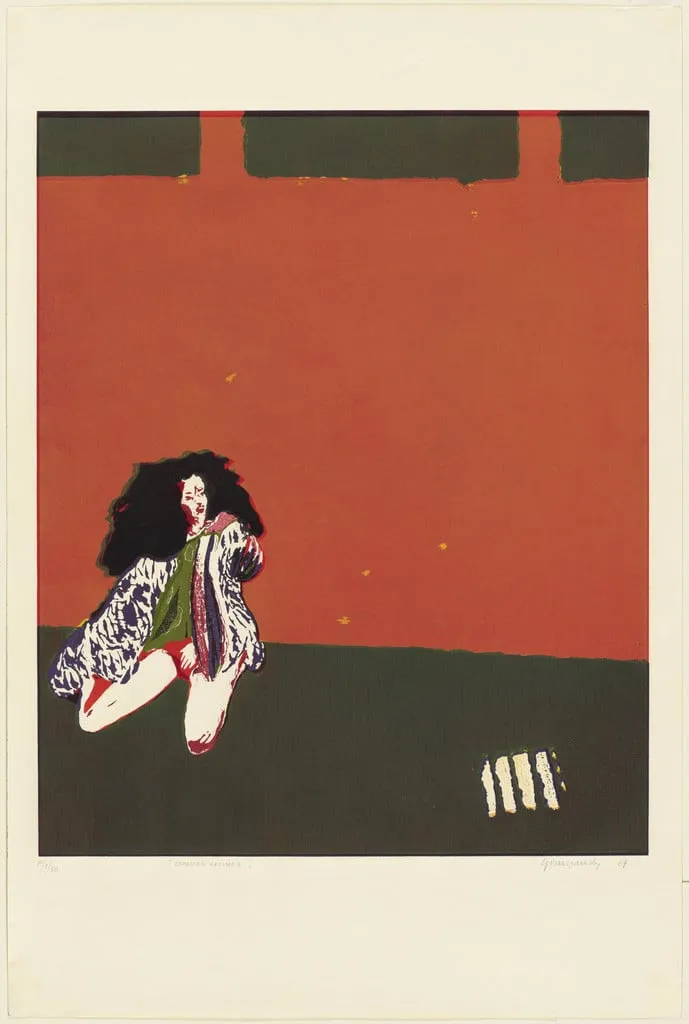
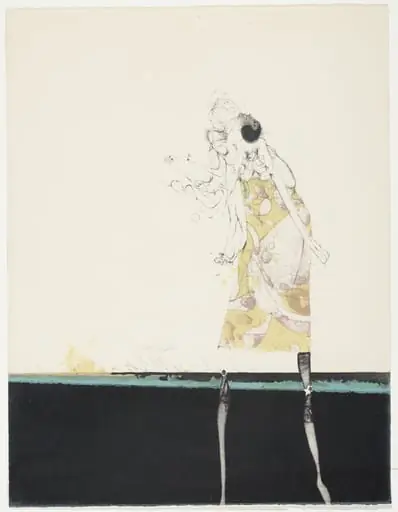
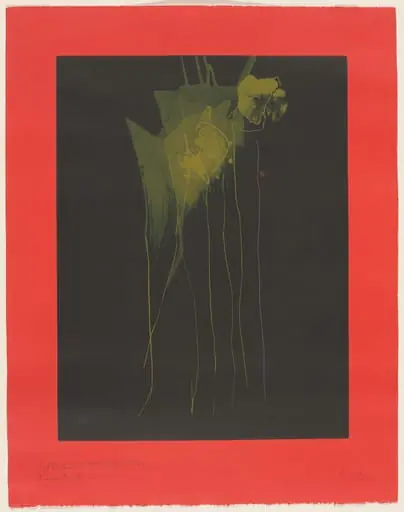
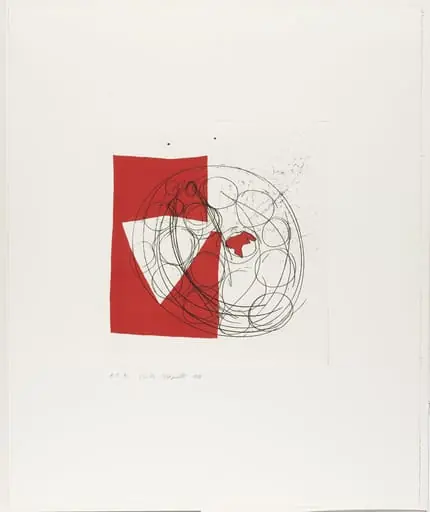
Untitled is an ink print by Umberto Giangrandi. It dates from 1969 and is held in the collection of the Museum of Modern Art.
About this work
Overview
The work is distinguished by its limited palette and dramatic tonal contrasts, emphasizing emotional weight over narrative detail.
Created in 1969, this print by Umberto Giangrandi combines etching and aquatint techniques to produce a stark, atmospheric image. It is part of the collection at The Museum of Modern Art. The work is distinguished by its limited palette and dramatic tonal contrasts, emphasizing emotional weight over narrative detail. The artist’s hand is evident in the precision of line and the depth achieved through layered ink application.
Subject & Meaning
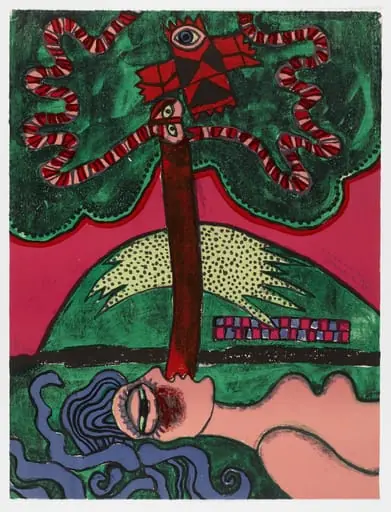
A solitary figure, cloaked in a patterned coat and with long dark hair, kneels before a modest dwelling beneath a vivid red sky. The figure’s posture suggests contemplation or surrender, while the house below appears small and isolated. The unnatural hue of the sky introduces an element of unease, though the work avoids explicit symbolism, leaving interpretation open to the viewer’s perception of solitude and environment.
Technique & Style
Giangrandi employed etching to define sharp, incised lines and aquatint to achieve graduated tones in the sky and ground. The red of the sky was built through multiple acid baths and ink manipulation, creating a saturated, almost glowing field. The dark figure and structure are rendered with dense, clean contours, contrasting sharply with the textured background. The method emphasizes materiality and the physical act of mark-making.
History & Provenance
The print was produced in 1969 and entered The Museum of Modern Art’s collection shortly thereafter. No record of prior ownership or exhibition history prior to its acquisition is publicly documented. Its inclusion in the museum’s print department reflects an interest in postwar European printmakers who explored psychological themes through abstracted figuration and expressive technique.
Context
Made during a period of heightened social and political tension in Europe, the work aligns with broader artistic trends that favored introspective, non-narrative imagery. Giangrandi’s approach echoes contemporaries who used printmaking to convey emotional states through minimal forms and symbolic color. The absence of clear context or setting invites viewers to project personal or cultural anxieties onto the scene.
Legacy
Though not widely reproduced or exhibited beyond institutional settings, this print remains a representative example of Giangrandi’s engagement with print media in the late 1960s. It contributes to the understanding of how European artists used traditional techniques to explore modern alienation. Its quiet intensity continues to resonate in discussions of postwar printmaking that prioritize mood over explicit content.
Artist & collection