Artwork
明/清 佚名 舊傳李公麟 法海靈山圖 冊|Procession of Arhats
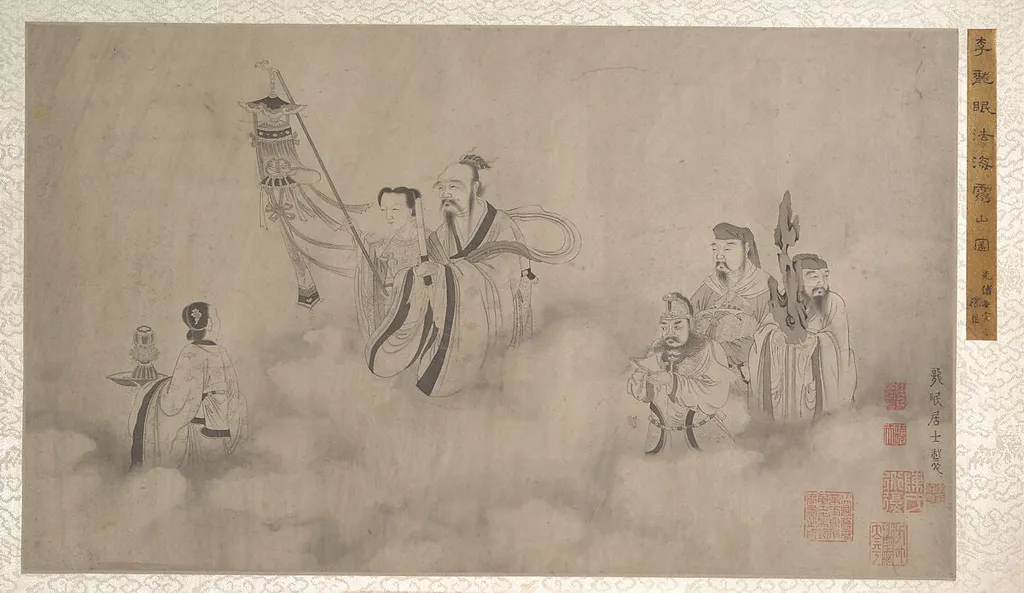
明/清 佚名 舊傳李公麟 法海靈山圖 冊|Procession of Arhats is an ink painting. It dates from 1639 and is held in the collection of the Metropolitan Museum of Art. This album, titled Procession of Arhats, comprises ten leaves rendered in ink on silk.
About this work
Overview
The composition conveys a sense of collective movement and activity, characteristic of processional scenes in traditional Chinese painting.
This album, titled Procession of Arhats, comprises ten leaves rendered in ink on silk. Created during the Ming or Qing dynasty by an anonymous artist, the work depicts a detailed procession of figures, including both men and women, moving through a distinct Chinese landscape. The composition conveys a sense of collective movement and activity, characteristic of processional scenes in traditional Chinese painting.
Subject & Meaning
The painting illustrates a lively procession, possibly a celebratory or ritualistic event, featuring numerous individuals. While the visual notes describe a general procession, the title Procession of Arhats suggests a specific Buddhist theme, where arhats (enlightened beings) are depicted in a journey or gathering. The presence of lanterns and various objects further enriches the narrative, implying a significant communal occasion within a traditional Chinese setting.
Technique & Style
Executed with ink on silk, the artwork demonstrates a refined approach to line and color. The artist employed a simplified palette and precise linear work to articulate the numerous figures and their surroundings. This stylistic choice effectively generates an impression of dynamic motion across the ten leaves, guiding the viewer's eye through the detailed arrangement of participants and their environment.
History & Provenance
Dating from either the Ming or Qing dynasty, the creation of this album is attributed to an unknown artist. Historically, it was once thought to be the work of the renowned Song dynasty painter Li Gonglin. This earlier attribution highlights the perceived quality and stylistic resonance with earlier masters, even though modern scholarship now recognizes its anonymous origin from a later period.
Artist & collection

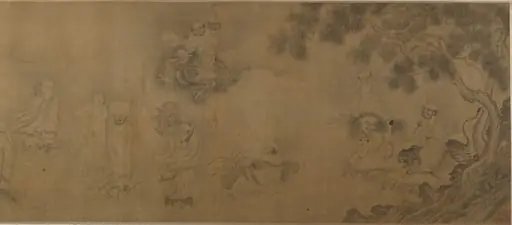 明 /清 佚名 李公麟 偽款 龍王請齋圖 卷|Buddhist luohans crossing the sea to the palace of the dragon king
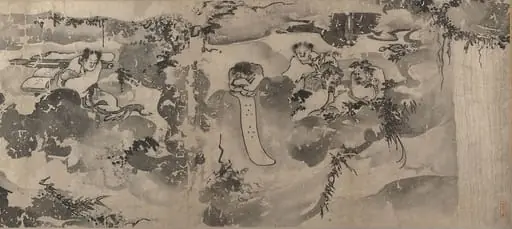 壺天聚樂圖|Merry Gatherings in the Magic Jar
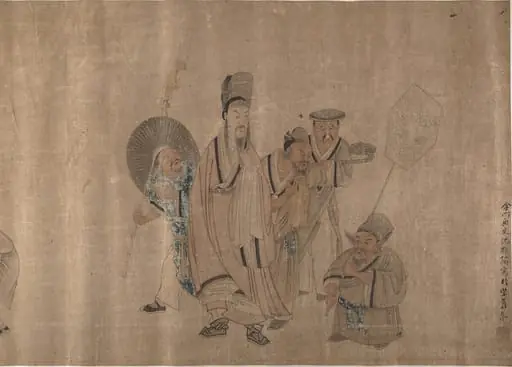 Untitled
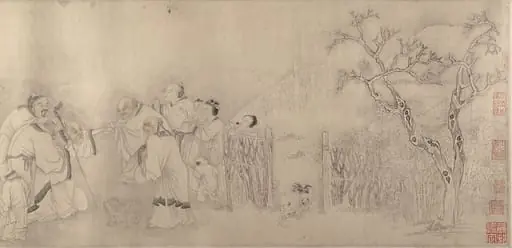 明/清 佚名 人物故事圖 卷|Family Visit
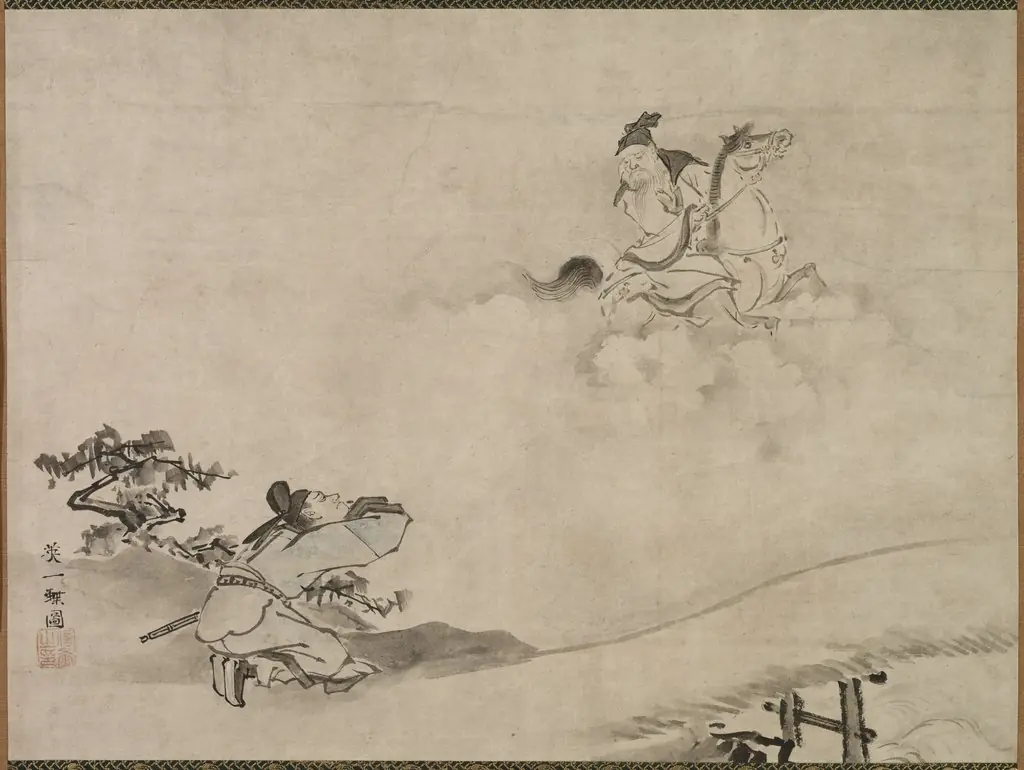 Daoist Immortal
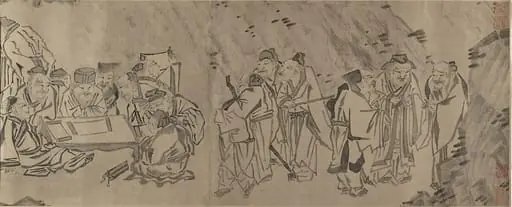 Untitled
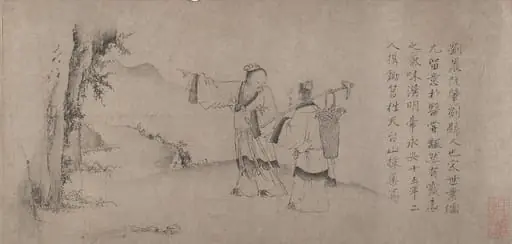 元 趙蒼雲 劉晨阮肇入天台山圖 卷|Liu Chen and Ruan Zhao Entering the Tiantai Mountains
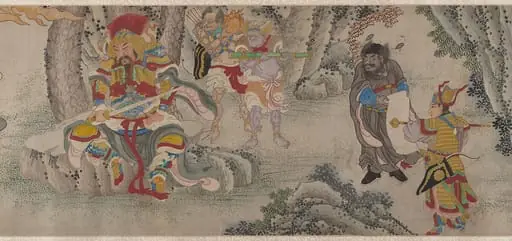 明 鄭重 搜山圖 卷|Searching the Mountains for Demons
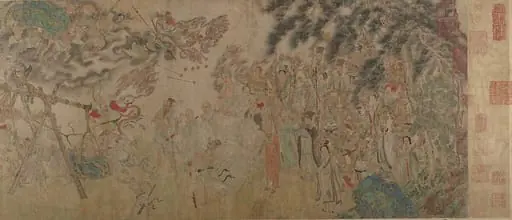 明/清 佚名 揭缽圖 卷|Raising the Alms-Bowl
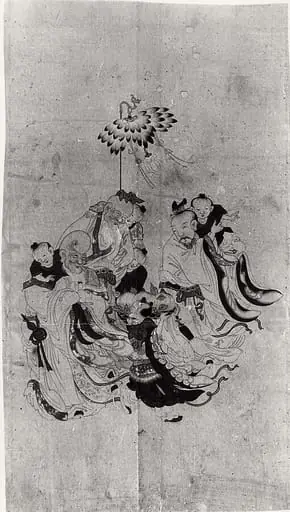 Untitled
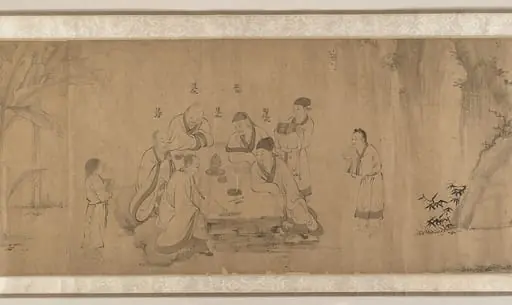 明 佚名 李公麟 偽款 白蓮社圖 卷|White Lotus Society