Artwork
明/清 佚名 羅漢圖 冊|Luohans
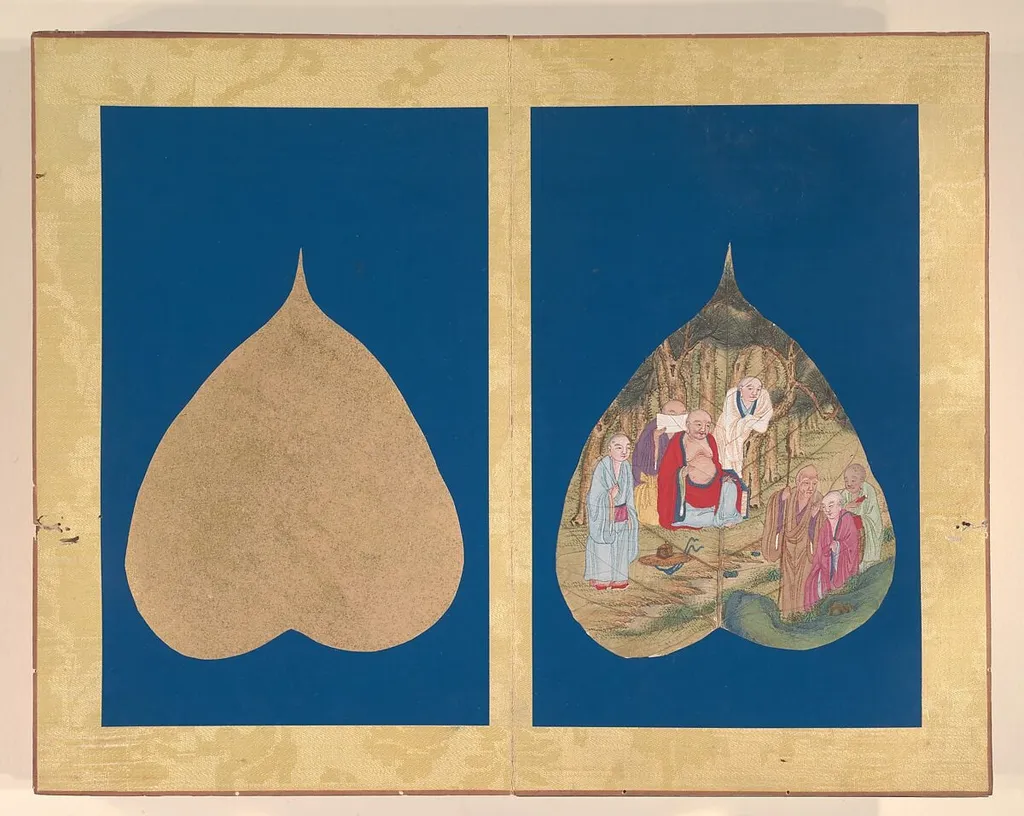
明/清 佚名 羅漢圖 冊|Luohans is an ink painting. It dates from 1699 and is held in the collection of the Metropolitan Museum of Art. This album features eighteen small paintings depicting Buddhist figures on dried bodhi leaves.
About this work
Overview
Created by an anonymous artist during the Ming or Qing dynasty, the work presents luohans, revered saints who chose to remain in the world to assist others.
This album features eighteen small paintings depicting Buddhist figures on dried bodhi leaves. Created by an anonymous artist during the Ming or Qing dynasty, the work presents luohans, revered saints who chose to remain in the world to assist others. Each leaf portrays a robed man with a shaved head, typically in a quiet, contemplative posture, rendered with meticulous detail using ink and color.
Subject & Meaning
The central figures of these paintings are luohans, enlightened Buddhist disciples who defer their own entry into nirvana to guide humanity. Their serene countenances and composed poses convey their spiritual dedication. The choice of bodhi tree leaves as the painting surface is deeply symbolic, as the bodhi tree is sacred in Buddhism, marking the location where the Buddha achieved enlightenment. This material choice enhances the spiritual significance of the artwork.
Technique & Style
The artist employed a delicate and precise hand, utilizing ink and color to create these intricate portraits. The fine quality of the brushwork is particularly notable in the extremely thin lines, which meticulously define the facial features and individual hairs of each luohan. This careful execution underscores the quiet dignity and spiritual focus of the figures, contributing to the overall contemplative atmosphere of the album.
Artist & collection