Artwork
Achaius of Scotland, with Geneology
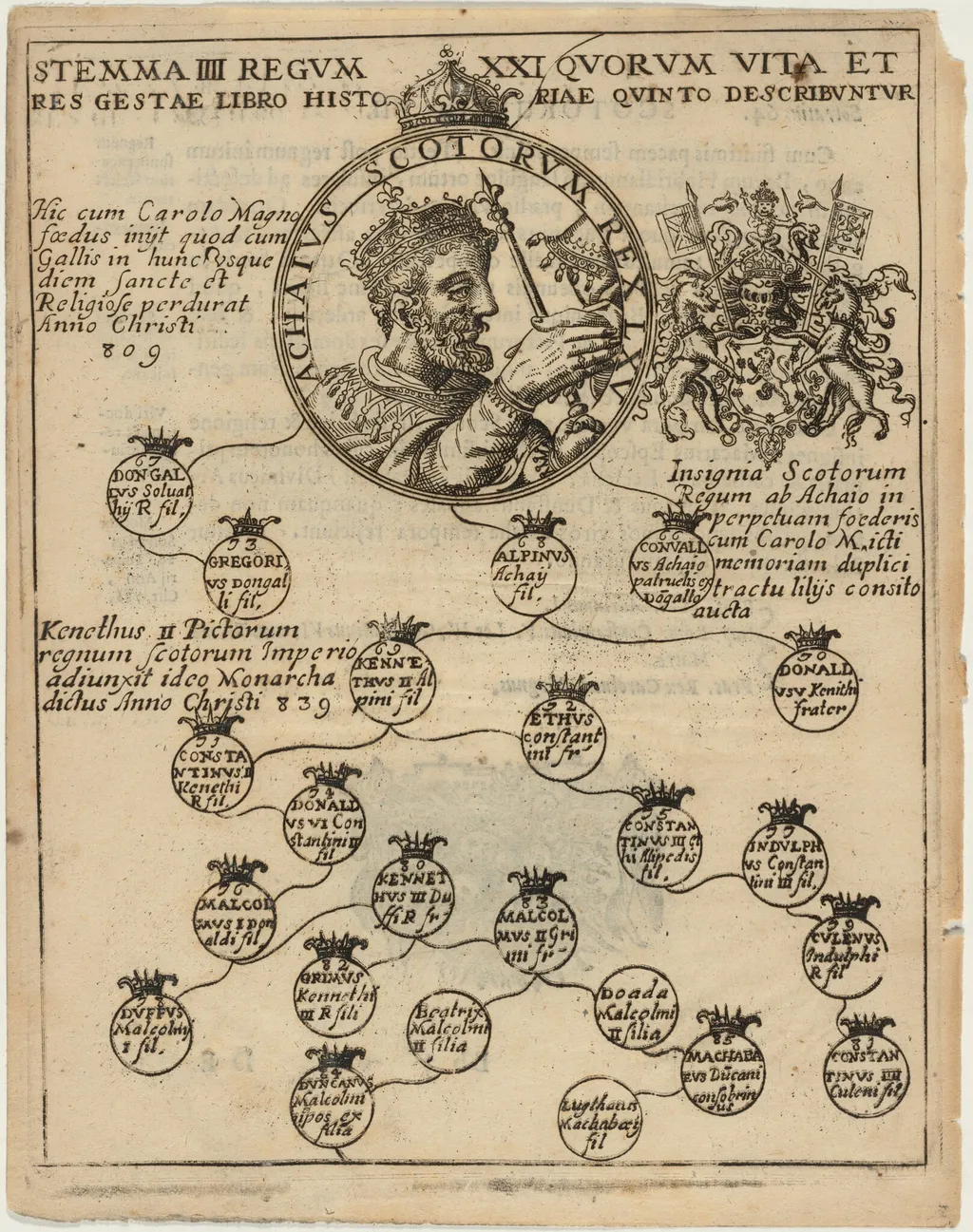
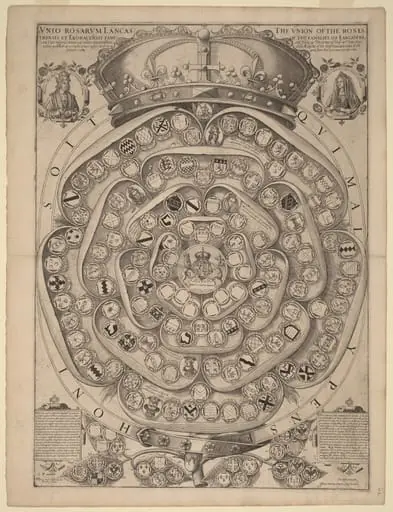
Achaius of Scotland, with Geneology is an ink print by the Baroque artist Unknown 19th Century. It dates from 1675 and is held in the collection of the National Gallery of Art. This black-and-white etching presents a genealogical chart of early Scottish royalty, centered on a crowned figure identified as Achaius.
About this work
Overview
This black-and-white etching presents a genealogical chart of early Scottish royalty, centered on a crowned figure identified as Achaius.
This black-and-white etching presents a genealogical chart of early Scottish royalty, centered on a crowned figure identified as Achaius. The composition uses circular portraits and branching ovals to trace lineage downward, with heraldic symbols framing the structure. Latin inscriptions accompany names, suggesting scholarly or ecclesiastical origins. The print functions as a visual genealogy, blending dynastic claims with symbolic authority.
Subject & Meaning
The central figure, Achaius, is depicted with regalia—crown, sword, and orb—signifying kingship and divine right. Below him, names such as Donald and Kenneth represent successive rulers, arranged to imply direct descent. The inclusion of shields and crowns along the margins reinforces legitimacy through lineage. The Latin text underscores the document’s intent to anchor Scottish royalty in a learned, ecclesiastical tradition rather than oral history.
Technique & Style
Executed in etching, the work employs fine, controlled lines to render intricate details of faces, crowns, and connecting branches. The monochrome palette emphasizes structure over ornament, focusing attention on familial relationships. The layout is rigidly hierarchical, with each name positioned to reflect generational order. The precision of the lines reflects the technical skill required to produce such a complex genealogical diagram on a single plate.
History & Provenance
The print likely originated in the late 16th or early 17th century, a period when Scottish nobility sought to legitimize claims through documented ancestry. Such genealogies were often commissioned for political or legal purposes, particularly amid tensions with England. While the exact creator and original patron are unknown, its survival suggests it was valued as a record of royal continuity, possibly held in aristocratic or institutional collections.
Context
During the Renaissance, European courts increasingly relied on written and printed genealogies to assert legitimacy. In Scotland, where historical records were fragmented, visual genealogies like this served to unify disparate clans under a single royal narrative. The use of Latin, common in scholarly and ecclesiastical circles, signals the print’s alignment with continental traditions of historiography and heraldic documentation.
Legacy
This etching contributes to a broader tradition of dynastic portraiture that shaped perceptions of Scottish monarchy before modern historiography. Though later scholarship has revised many of its claims, the print remains a tangible artifact of how lineage was visually constructed to serve political identity. It reflects the era’s belief in the power of imagery to encode authority and continuity across generations.
Artist & collection

Artist

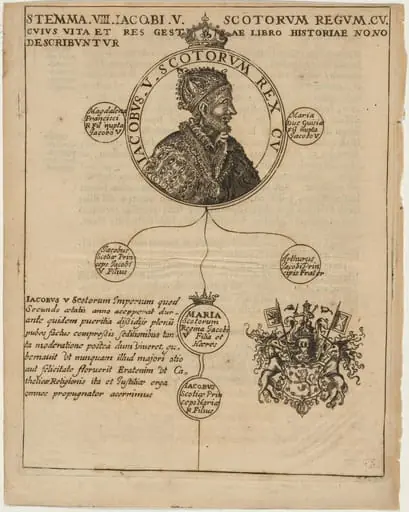 James V of Scotland with Geneology
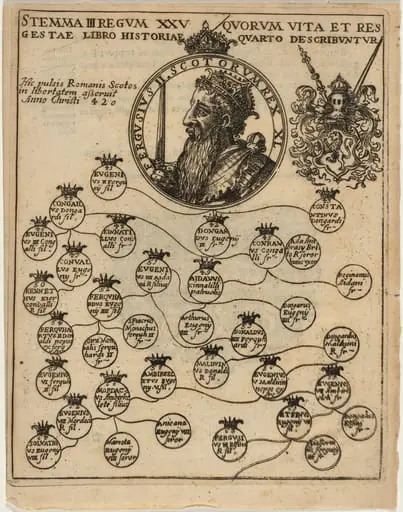 Fergus II of Scotland with Geneology
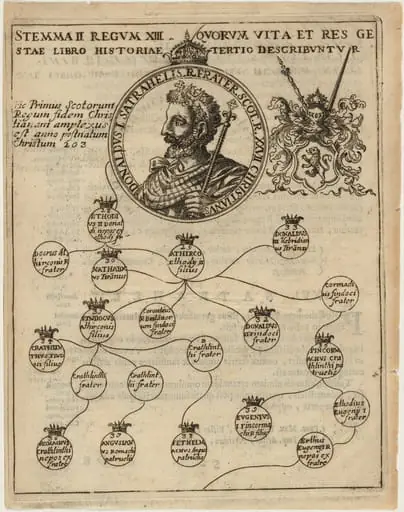 Donald I of Scotland with Geneology
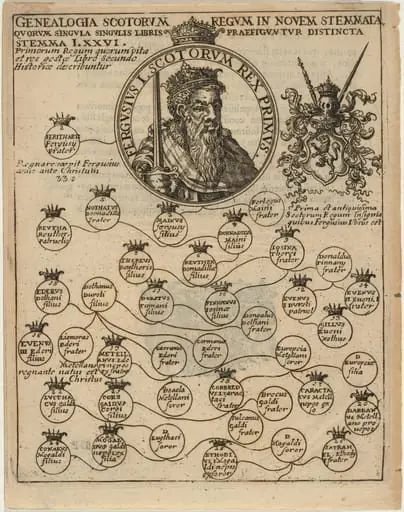 Fergus I of Scotland With Geneology
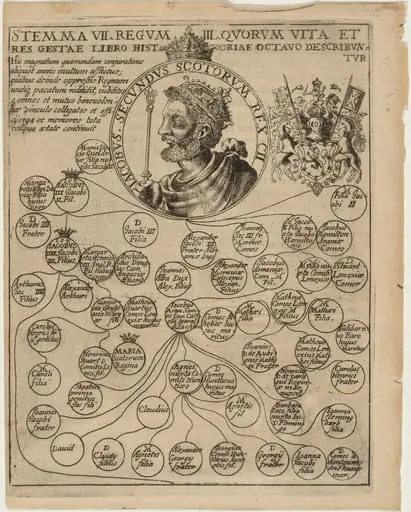 James II of Scotland with Geneology of the Stuarts
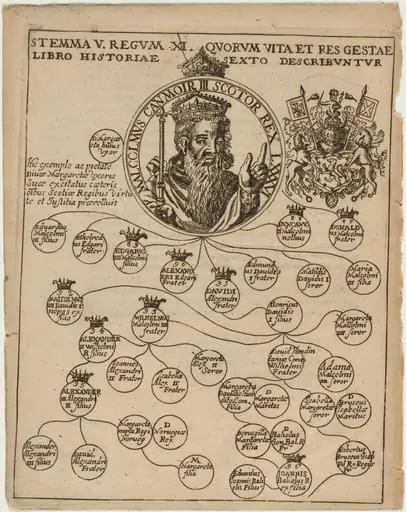 Malcolm III with Geneology
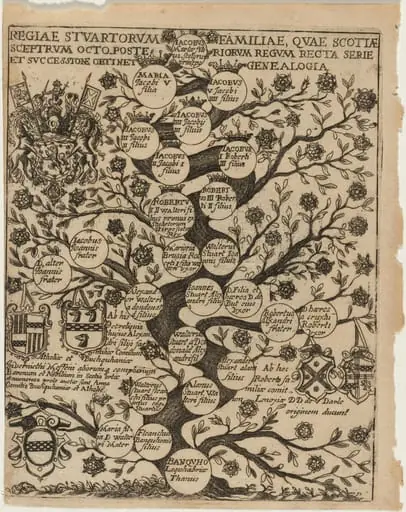 Family Tree of the Stuarts Stemming From Banquho
 Talbot's Rose: A Record of the Knights of the Garter, 1486-1589