Artwork
Talbot's Rose: A Record of the Knights of the Garter, 1486-1589
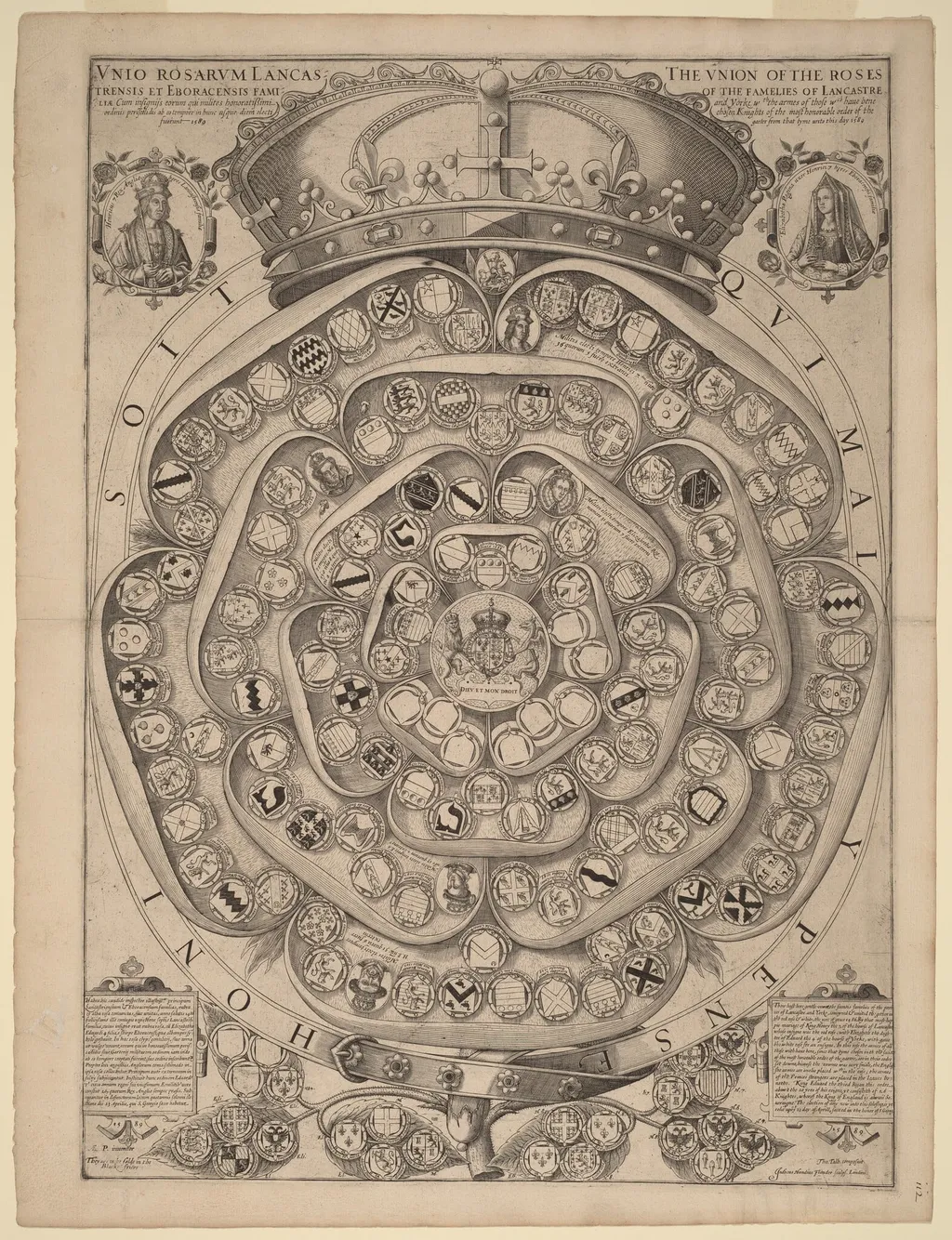
Talbot's Rose: A Record of the Knights of the Garter, 1486-1589 is an ink print by the Renaissance artist Jodocus Hondius I. It dates from 1589 and is held in the collection of the National Gallery of Art.
About this work
Overview
This 1589 engraving by Jodocus Hondius I serves as a visual register of the Knights of the Garter, an order of chivalry established in medieval England.
This 1589 engraving by Jodocus Hondius I serves as a visual register of the Knights of the Garter, an order of chivalry established in medieval England. Executed in black ink on paper, the print organizes heraldic symbols into concentric circles, blending genealogical record with decorative precision. Its composition reflects both the prestige of the order and the technical demands of engraving as a reproductive medium.
Subject & Meaning
The work documents the lineage of the Knights of the Garter across a century, from 1486 to 1589, through an array of family crests. Each shield represents a member, while the central motif—a crowned garter inscribed with the order’s French motto—anchors the design. The inclusion of two unidentified portraits at the upper corners may reference figures of historical or ceremonial significance, reinforcing the print’s commemorative purpose.
Technique & Style
Hondius employed fine burin work to achieve the engraving’s intricate detail, a method requiring controlled incisions into a metal plate. The dense arrangement of shields, crests, and ornamental flourishes demonstrates the period’s preference for symbolic complexity. Despite the absence of color, cross-hatching and stippling create tonal variation, lending depth to the composition while adhering to the constraints of monochrome printing.
History & Provenance
Produced in 1589, the engraving likely circulated among patrons associated with the English court or heraldic scholarship. Its creation coincides with a period of renewed interest in documenting chivalric orders, particularly under the Tudor monarchy. The print’s survival suggests it was valued both as a historical record and a specimen of reproductive art, though specific early owners remain unrecorded.
Context
The Knights of the Garter, founded in the 14th century, embodied ideals of loyalty and aristocratic prestige. By the late 16th century, such visual records served to affirm the order’s continuity amid political and dynastic shifts. Hondius’s engraving reflects broader European trends in heraldic documentation, where printed images disseminated genealogical and symbolic information across regions and social strata.
Legacy
The engraving preserves a snapshot of the Garter’s membership during a formative era, offering later historians a material link to the order’s evolution. Its design influenced subsequent heraldic prints, which adopted similar circular layouts for clarity and visual impact. As an artifact of early modern printmaking, the work underscores the role of engraving in transmitting complex historical narratives to a literate audience.
Artist & collection

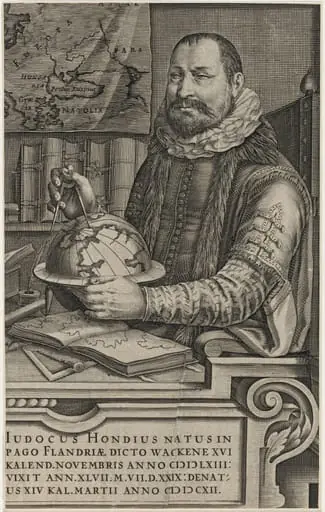 Jodocus Hondius
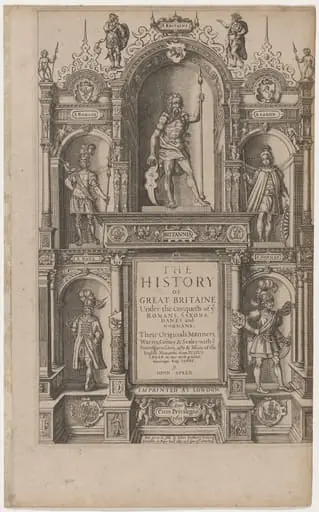 Title Page to "The History of Great Britaine" by John Speed
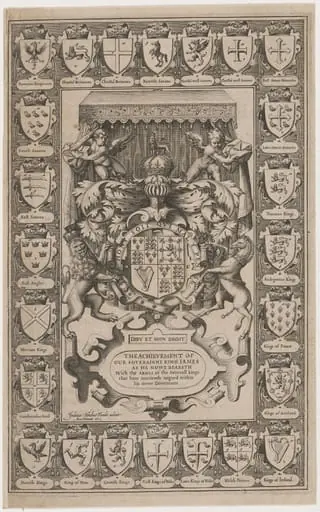 Title Page for the Achievement of our Soveraigne King James
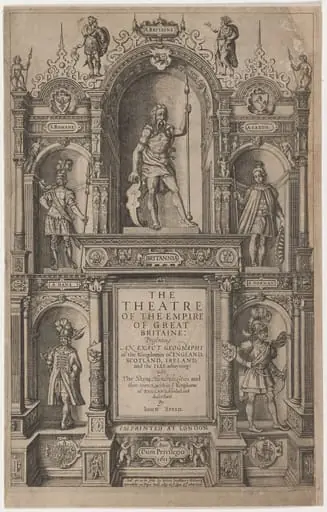 Title Page to "The Theatre of the Empire of Great Britaine" by John Speed
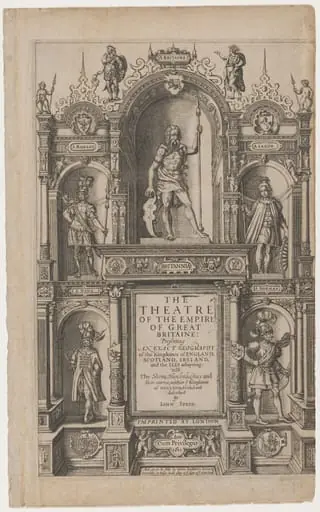 Title Page to "The Theatre of the Empire of Great Britaine" by John Speed
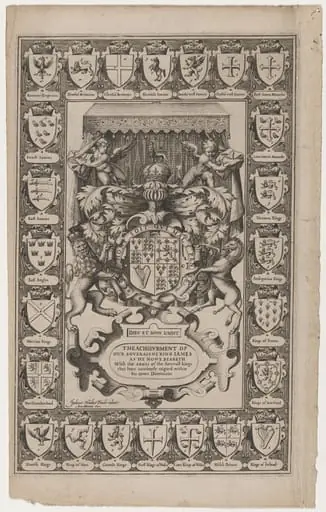 Title Page for the Achievement of our Soveraigne King James
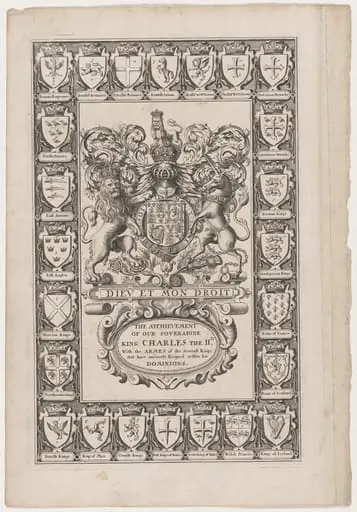 Title Page for the Achievement of Our Sovereign King Charles the Second
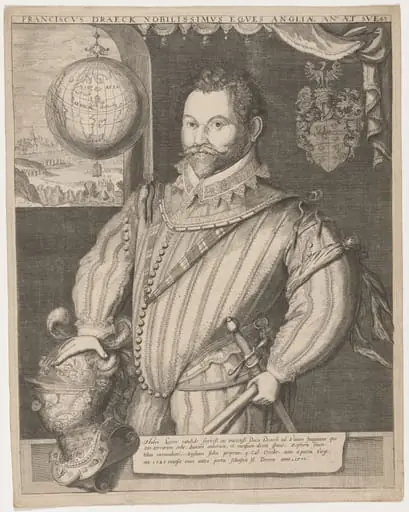 Sir Francis Drake
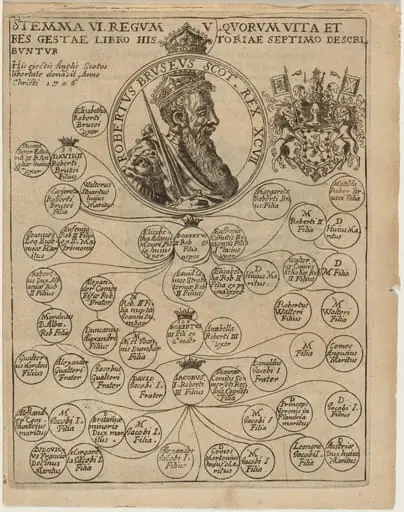 Robert de Bruce VIII, King of Scotland
![Coins [plate 2], by Jacques Callot](https://artifactworldgallery.com/img/jacques-callot--coins-plate-2--b39cf66376b9d11b-w320.webp) Coins [plate 2]
Coins [plate 2]![Coins [plate 3], by Jacques Callot](https://artifactworldgallery.com/img/jacques-callot--coins-plate-3--48953d8de7930b03-w320.webp) Coins [plate 3]
Coins [plate 3]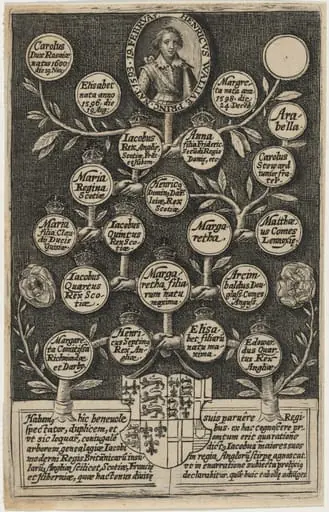 Henry Frederick, Prince of Wales
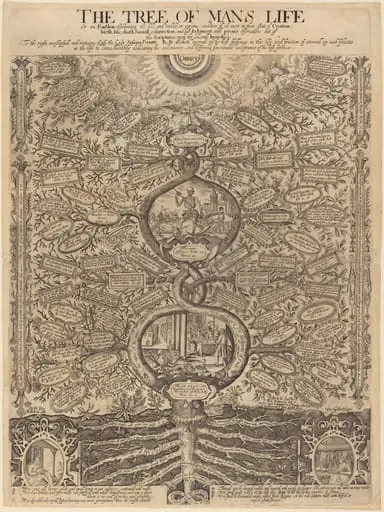 The Tree of Man's Life
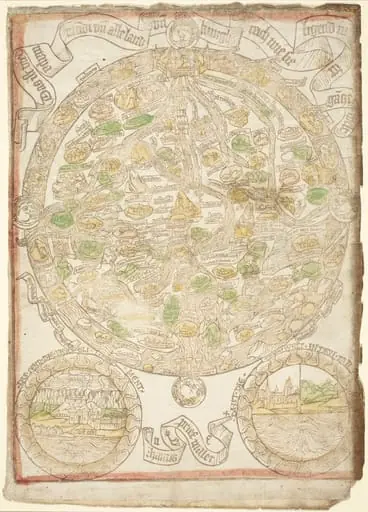 Map of the World
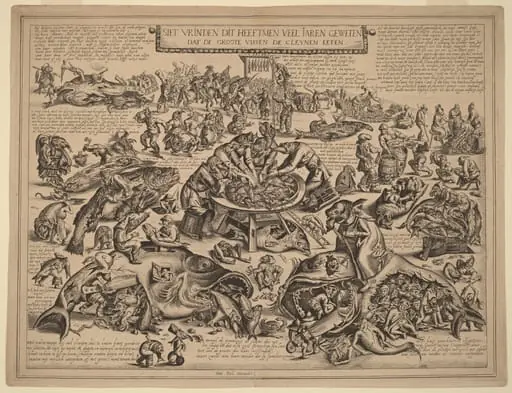 The Big Fish Eat the Little Fish
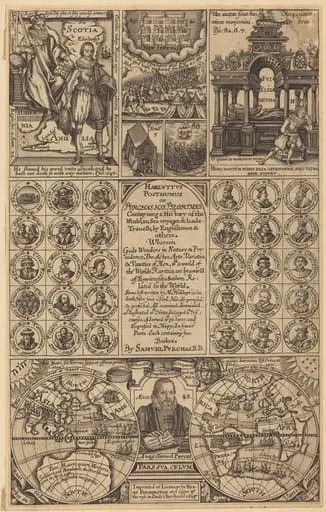 Frontispiece
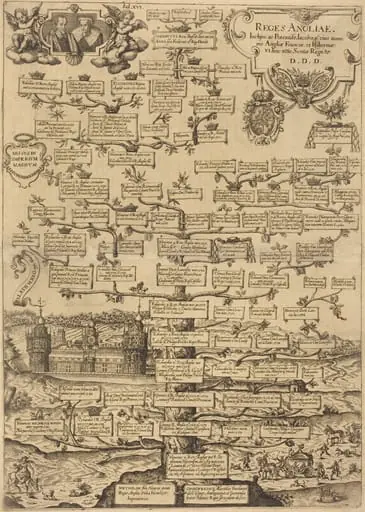 Reges Anglia
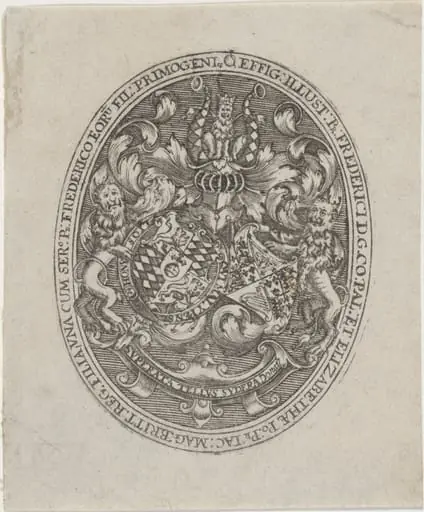 Shields of Frederick V, Elizabeth, and Prince Frederick Henry
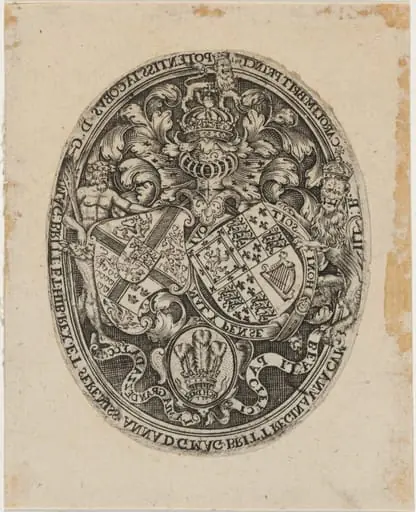 Shield of James I, Anne of Denmark, and Prince Charles
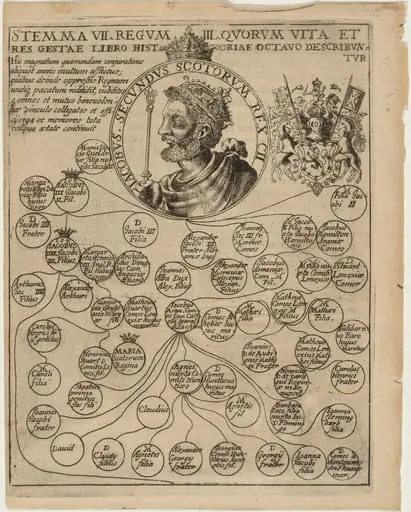 James II of Scotland with Geneology of the Stuarts