Artwork
Family Tree of the Stuarts Stemming From Banquho
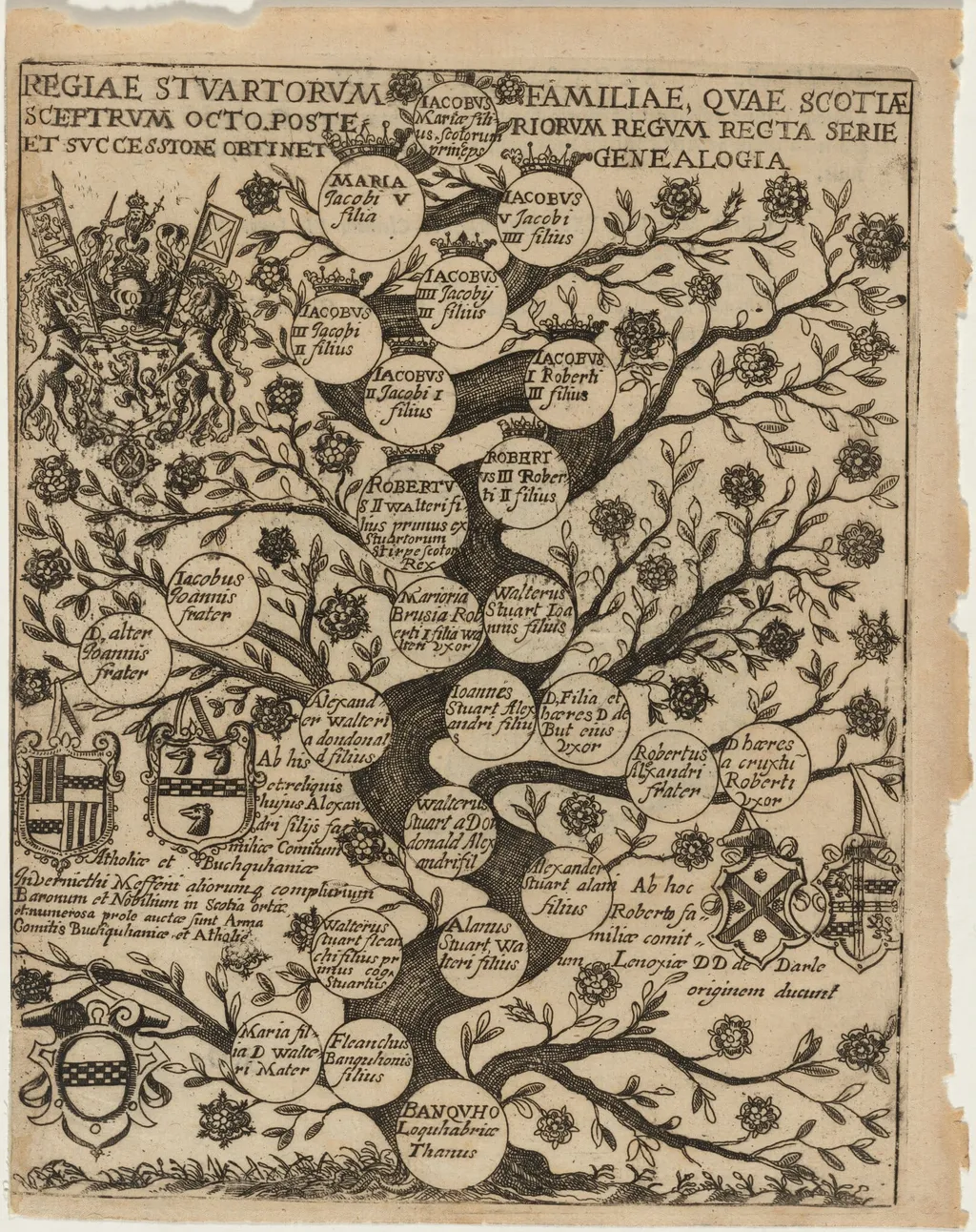
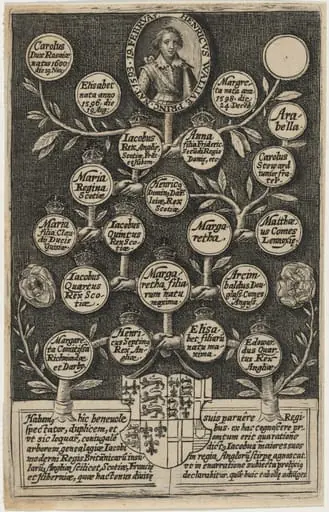
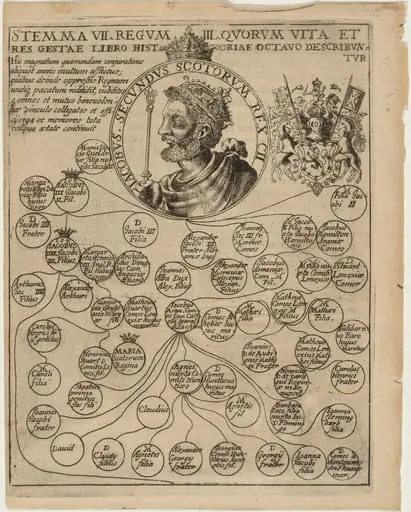
Family Tree of the Stuarts Stemming From Banquho is an ink print by the Baroque artist Unknown 19th Century. It dates from 1675 and is held in the collection of the National Gallery of Art. This black-and-white etching presents a genealogical chart of the Stuart dynasty, structured as a stylized tree rooted at Banquho.
About this work
Overview
Decorative elements such as crowns, floral motifs, and heraldic shields adorn the composition, reinforcing its royal subject matter.
This black-and-white etching presents a genealogical chart of the Stuart dynasty, structured as a stylized tree rooted at Banquho. Names of royal figures are placed within circular nodes, linked by branching lines to indicate familial relationships. Decorative elements such as crowns, floral motifs, and heraldic shields adorn the composition, reinforcing its royal subject matter. The intricate detail and formal layout reflect early modern conventions for visualizing lineage.
Subject & Meaning
The print traces the Stuart lineage back to Banquho, a symbolic or literal origin point in Scottish royal ancestry. By mapping kinship through generations, it asserts continuity and legitimacy of rule. The inclusion of coats of arms and crowns emphasizes dynastic authority, while the tree form evokes natural growth and divine order—common metaphors in early modern political ideology for hereditary monarchy.
Technique & Style
Executed in etching, the image relies on fine lines incised into a metal plate to render its dense network of names and symbols. The style is meticulously detailed, characteristic of 17th-century genealogical prints, where clarity and ornamentation coexist. Tiny heraldic shields and floral borders are rendered with precision, reflecting both technical skill and the period’s preference for elaborate, information-rich compositions.
History & Provenance
The work likely originated in the late 16th or early 17th century, during a period of heightened interest in royal genealogy following the Union of the Crowns. Its reference to Banquho suggests a Scottish provenance, possibly commissioned to affirm Stuart claims to both Scottish and English thrones. Exact origins remain undocumented, but similar prints circulated among aristocratic and scholarly circles as tools of political memory.
Context
In an era when lineage determined political legitimacy, visual genealogies like this served as both historical records and propaganda. The Stuart dynasty, navigating religious and territorial conflicts, relied on such imagery to reinforce ancestral authority. Similar tree diagrams appeared in manuscripts and printed books, often produced by heralds or engravers working under royal patronage to codify noble descent.
Legacy
Though not widely known today, this etching exemplifies a genre of early modern printmaking that merged art, history, and politics. It reflects how visual culture was used to stabilize power through ancestry. Such works influenced later genealogical publications and remain valuable for historians studying the symbolic language of monarchy in Britain and Scotland.
Artist & collection

Artist

 Reges Anglia
 Henry Frederick, Prince of Wales
 The Tree of Man's Life
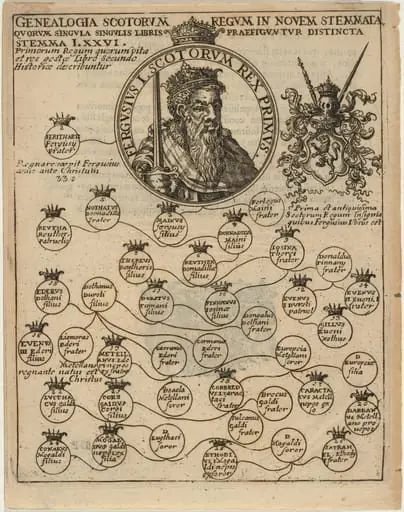 Fergus I of Scotland With Geneology
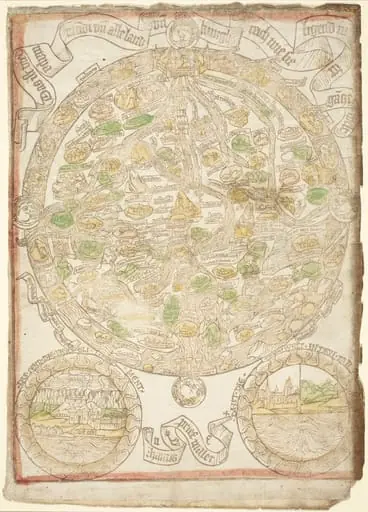 Map of the World
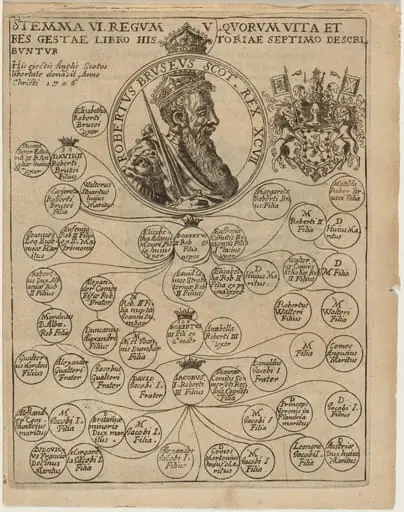 Robert de Bruce VIII, King of Scotland
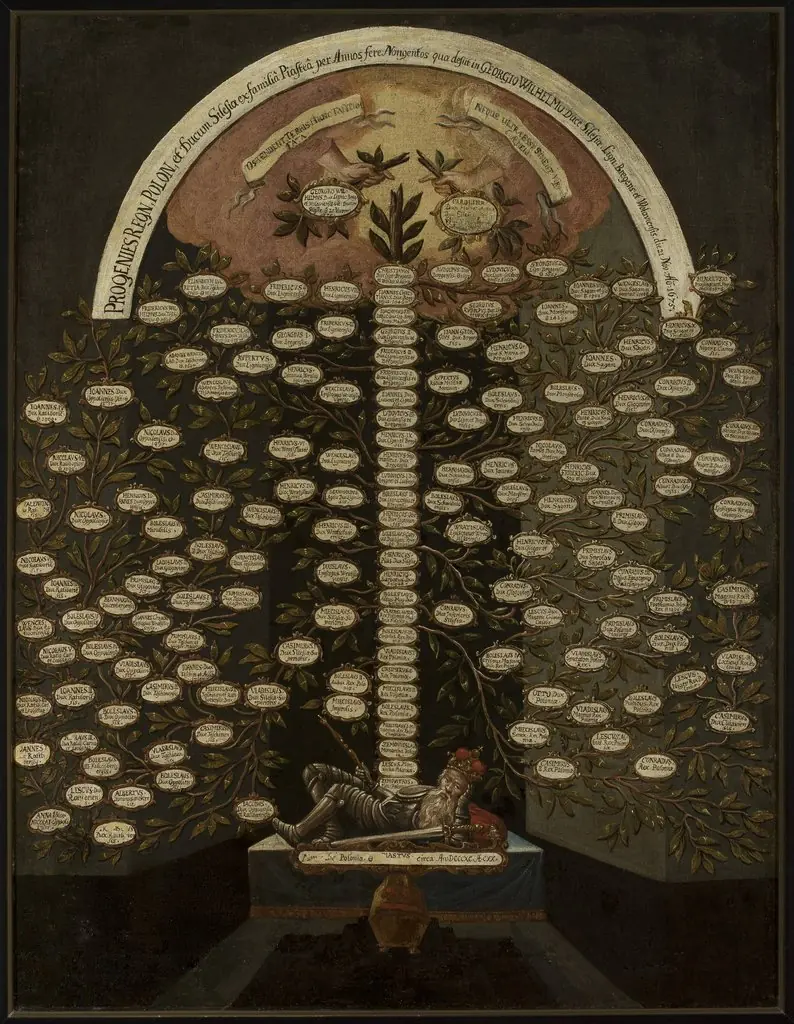 Family tree of the Piasts of Brieg-Liegnitz
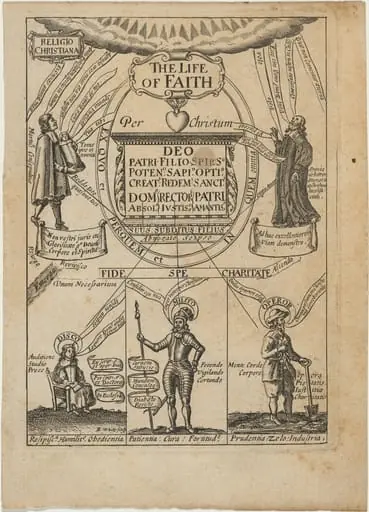 Title Page to The Life of Faith by Richard Baxter
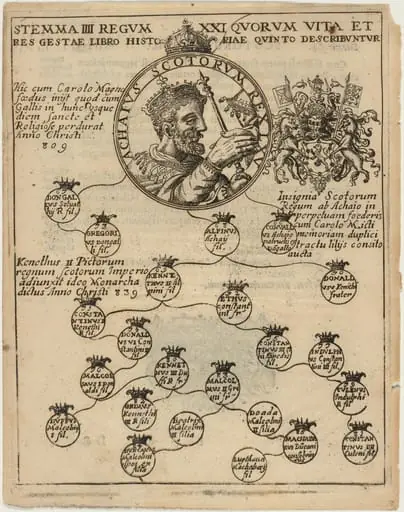 Achaius of Scotland, with Geneology
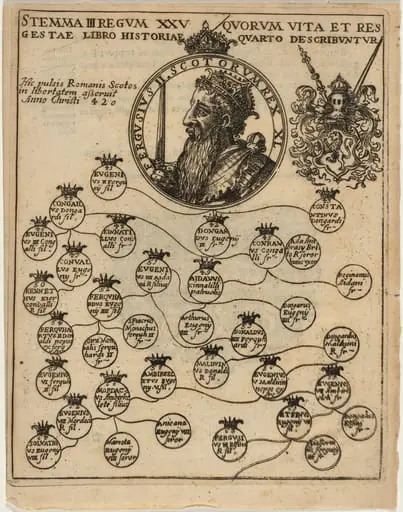 Fergus II of Scotland with Geneology
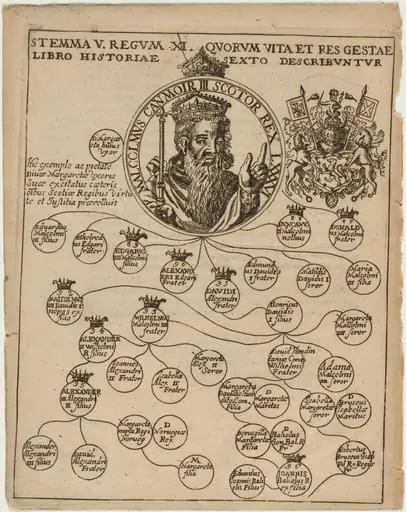 Malcolm III with Geneology
 James II of Scotland with Geneology of the Stuarts