Artwork
Augustus, Duke of Saxony
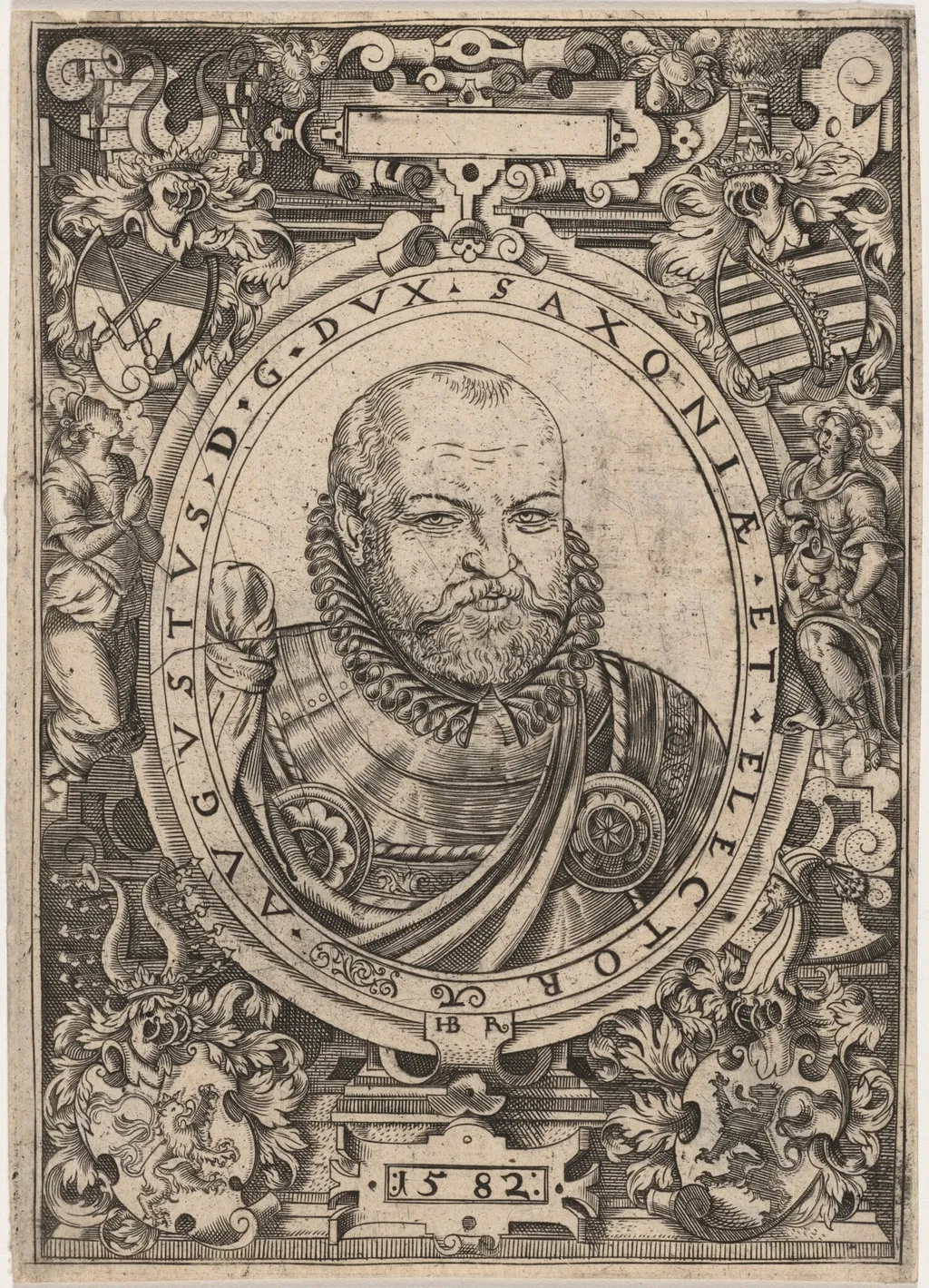
Augustus, Duke of Saxony is an ink print by the Renaissance artist Unknown 19th Century. It dates from 1582 and is held in the collection of the National Gallery of Art.
About this work
Around him, there’s a fancy border filled with swirls, letters, and tiny details like crowns and scrolls.
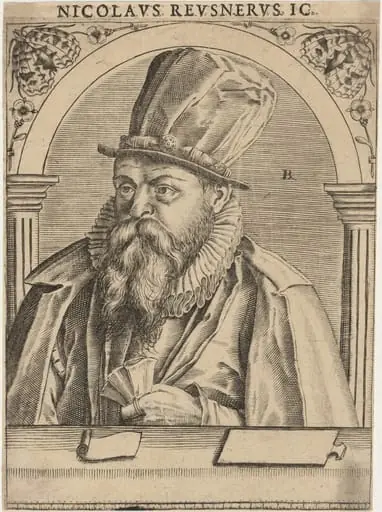
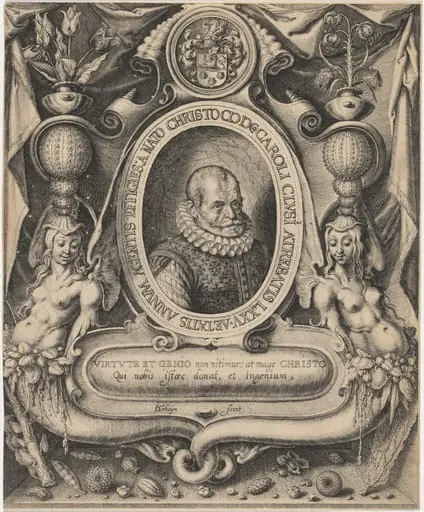
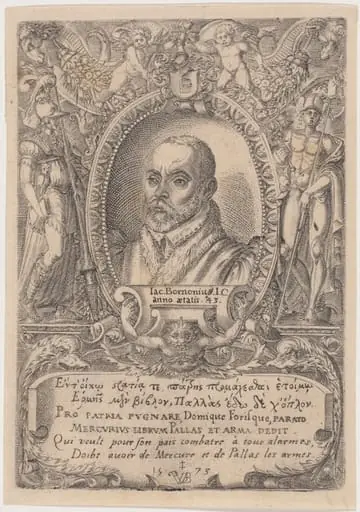
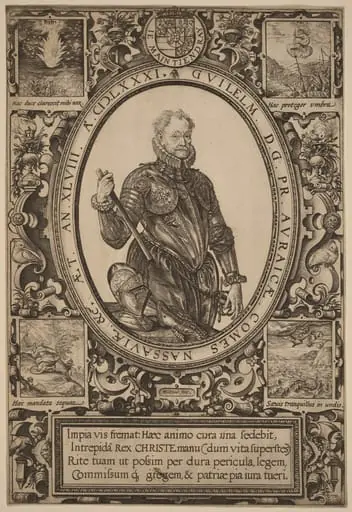
This is a black-and-white engraving of a bearded man in a round frame. His face is serious, with deep lines and a full beard. Around him, there’s a fancy border filled with swirls, letters, and tiny details like crowns and scrolls. The words "AUGUSTVS DUX SAXONIAE" curve above his head, and the year "1582" sits at the bottom.
The artist used cross-hatching—lots of crisscrossed lines—to create shadows and texture. This style was common in Renaissance prints to add depth without color.
Check out how cross-hatching works to see how artists made shading before photography.
Overview
This black-and-white engraving depicts Augustus, Duke of Saxony, rendered in fine linear detail. Executed in 1582, the portrait is framed within an ornate decorative border featuring floral motifs, crowns, and Latin inscriptions. The use of cross-hatching creates tonal variation and volume, characteristic of Renaissance printmaking techniques that relied on line rather than color to convey form and texture.
Subject & Meaning
Augustus, Duke of Saxony, is portrayed with a solemn expression and full beard, emphasizing his authority and maturity. The Latin inscription above his head identifies his title and domain, reinforcing his political and dynastic identity. The elaborate border, rich with heraldic symbols, functions as a visual affirmation of his noble status and the cultural prestige of the Saxon court during the late Renaissance.
Technique & Style
The artist employed meticulous cross-hatching to model the duke’s face and clothing, achieving subtle gradations of light and shadow. This method, standard in 16th-century engraving, allowed for detailed rendering without pigment. The border’s intricate swirls and miniature elements reflect the period’s fascination with ornamental precision, demonstrating the printmaker’s skill in translating complex designs into fine lines on metal.
History & Provenance
Created in 1582, the engraving likely served as a portrait for distribution among allies or as a commemorative piece within the Saxon court. Such prints were commonly produced to reinforce the image of ruling elites during a time of religious and political upheaval. While its early ownership is undocumented, its survival suggests it was valued as a record of Saxon leadership in the late Renaissance.
Context
In late 16th-century Germany, engraved portraits were vital tools for projecting power and legitimacy. Augustus, a key Protestant leader, used such imagery to consolidate his authority amid the Reformation’s tensions. The print’s formal style aligns with broader European trends in dynastic portraiture, where clarity, dignity, and symbolic detail replaced earlier medieval conventions in favor of humanist ideals.
Legacy
This engraving exemplifies the role of print culture in shaping public perception of nobility during the Renaissance. Its technical precision and symbolic richness influenced later portrait prints in Central Europe. Though not widely reproduced today, it remains a representative artifact of how ruling families employed visual media to assert continuity, status, and control over their public image.
Artist & collection

Artist