Artwork
Georg Roggenbach
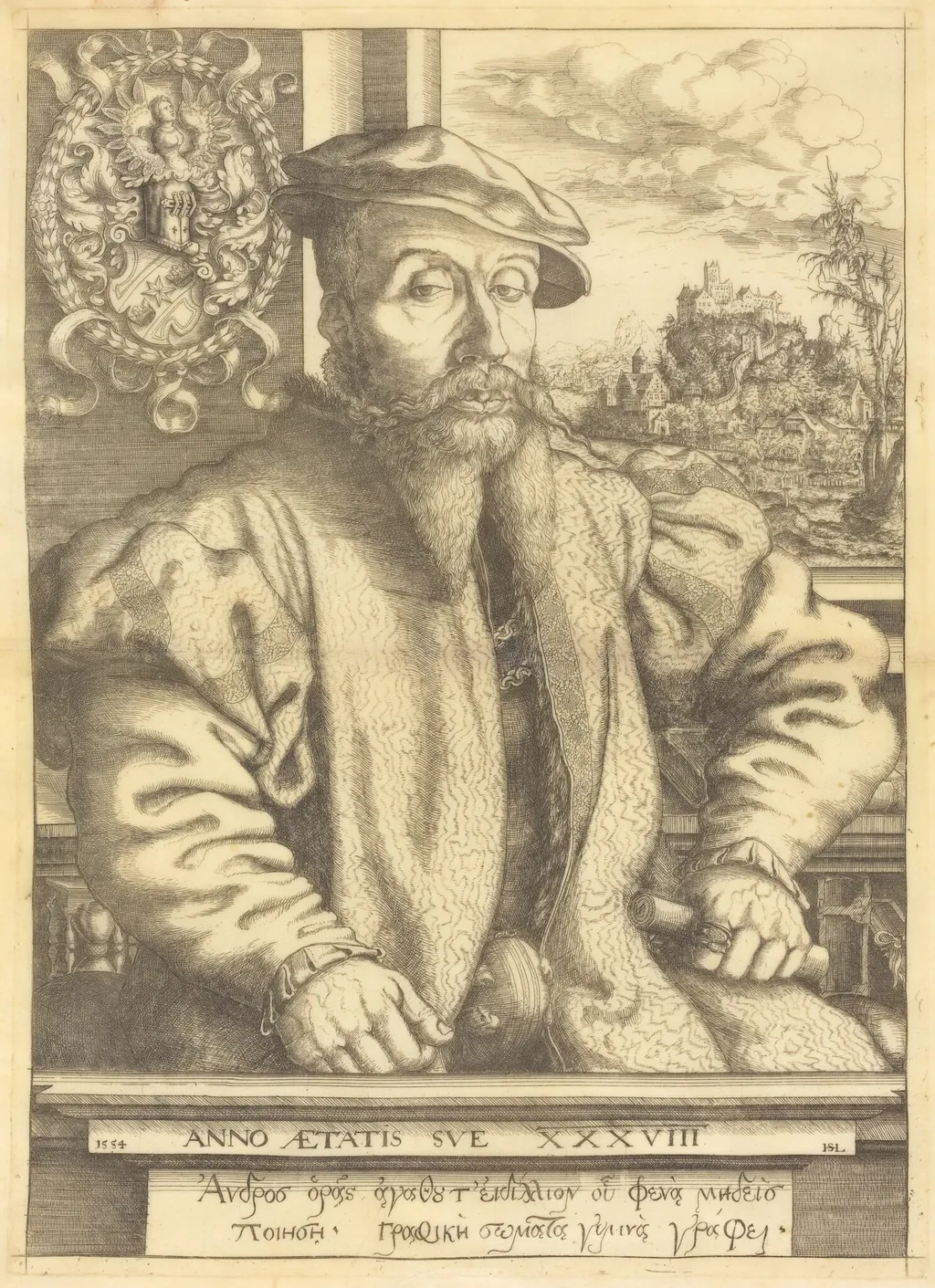
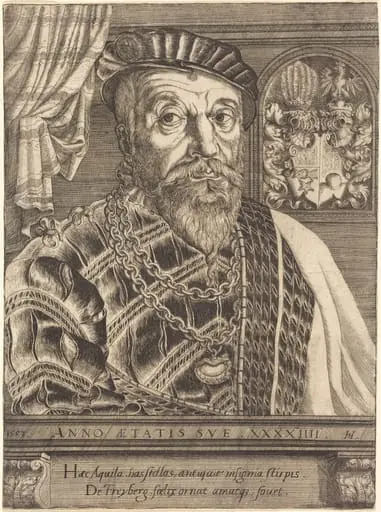
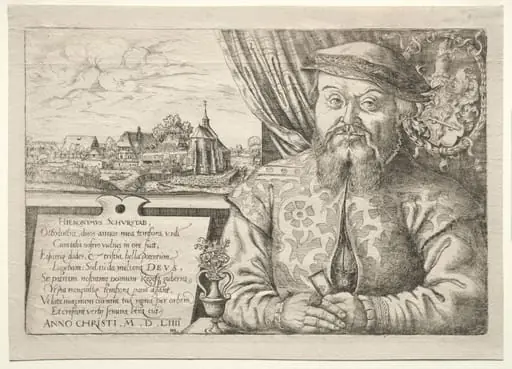
Georg Roggenbach is an ink print by the Renaissance artist Hanns Lautensack. It dates from 1554 and is held in the collection of the National Gallery of Art. The work is a mid‑sixteenth‑century etching executed on vellum, dated 1554.
About this work
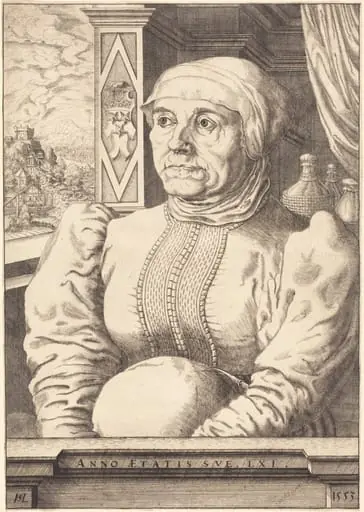
This is a black-and-white portrait of an older man with a long beard and hat, sitting in a chair.
This is a black-and-white portrait of an older man with a long beard and hat, sitting in a chair. He’s holding a small object in one hand and resting his other arm on the chair. Behind him, a window shows a cityscape with buildings and trees. The edges of the image have decorative patterns, almost like lace.
The bottom of the print has Latin text and the year 1554. The man’s face looks serious, but his hands seem calm. This kind of detailed linework was made using a printing method that carves into a surface.
Next, look up etching to see how artists like this created such sharp, precise images.
Overview
The work is a mid‑sixteenth‑century etching executed on vellum, dated 1554. It presents a monochrome portrait of an elderly gentleman seated in a chair, his long beard and hat framing a solemn expression. A small object rests in one hand while the other arm leans on the seat. Behind the figure, a window opens onto a modest cityscape, and the image is bordered by intricate, lace‑like patterns.
Subject & Meaning
The sitter appears as a dignified, perhaps scholarly figure, suggested by his composed demeanor and the contemplative pose. The inclusion of a window with a town view may allude to civic identity or personal ties to a specific locale. The decorative border and Latin inscription at the bottom reinforce the formal nature of the portrait, indicating it was intended as a commemorative or documentary image rather than a purely decorative piece.
Technique & Style
The image was produced by incising lines into a metal plate, a process that allows for fine, controlled strokes, then transferring the design onto prepared vellum. The resulting line work is crisp and detailed, capturing textures of fabric, hair, and architectural elements. The ornamental edge treatment reflects the Renaissance fascination with intricate borders, while the overall composition balances realism with a restrained, scholarly aesthetic.
History & Provenance
Created by Hanns Lautensack, a German etcher born in Bamberg in 1524, the print reflects his mature period shortly before his relocation to Vienna around 1556. Lautensack, son of painter Paul Lautensack, worked primarily in Nuremberg and signed many of his prints with a monogram. The presence of a Latin date and inscription suggests it was intended for a learned audience, possibly commissioned by the sitter or his family.
Context
The portrait belongs to a broader tradition of Northern European printmaking in the 1500s, where etching emerged as a favored medium for portraiture and documentary imagery. Lautensack’s work aligns with contemporary practices that emphasized precise line work and the use of vellum as a refined support, distinguishing it from paper prints that were more common for mass distribution.
Artist & collection
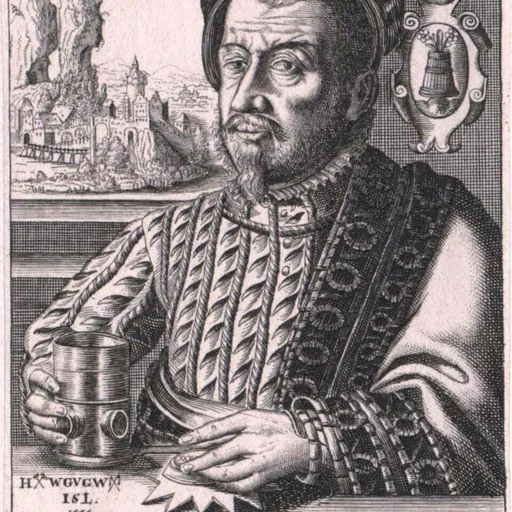
Artist
Hanns Lautensack (sometimes erroneously referred to as Hans Sebald Lautensack) (1524 – c.

![View of Nuremberg from the West [center section], by Hanns Lautensack](https://artifactworldgallery.com/img/hanns-lautensack--view-of-nuremberg-from-the-west-center-section--12422dca269411c0-w320.webp)