Artwork
Coat of Arms of Prince Rupert, Hollar and Evelyn
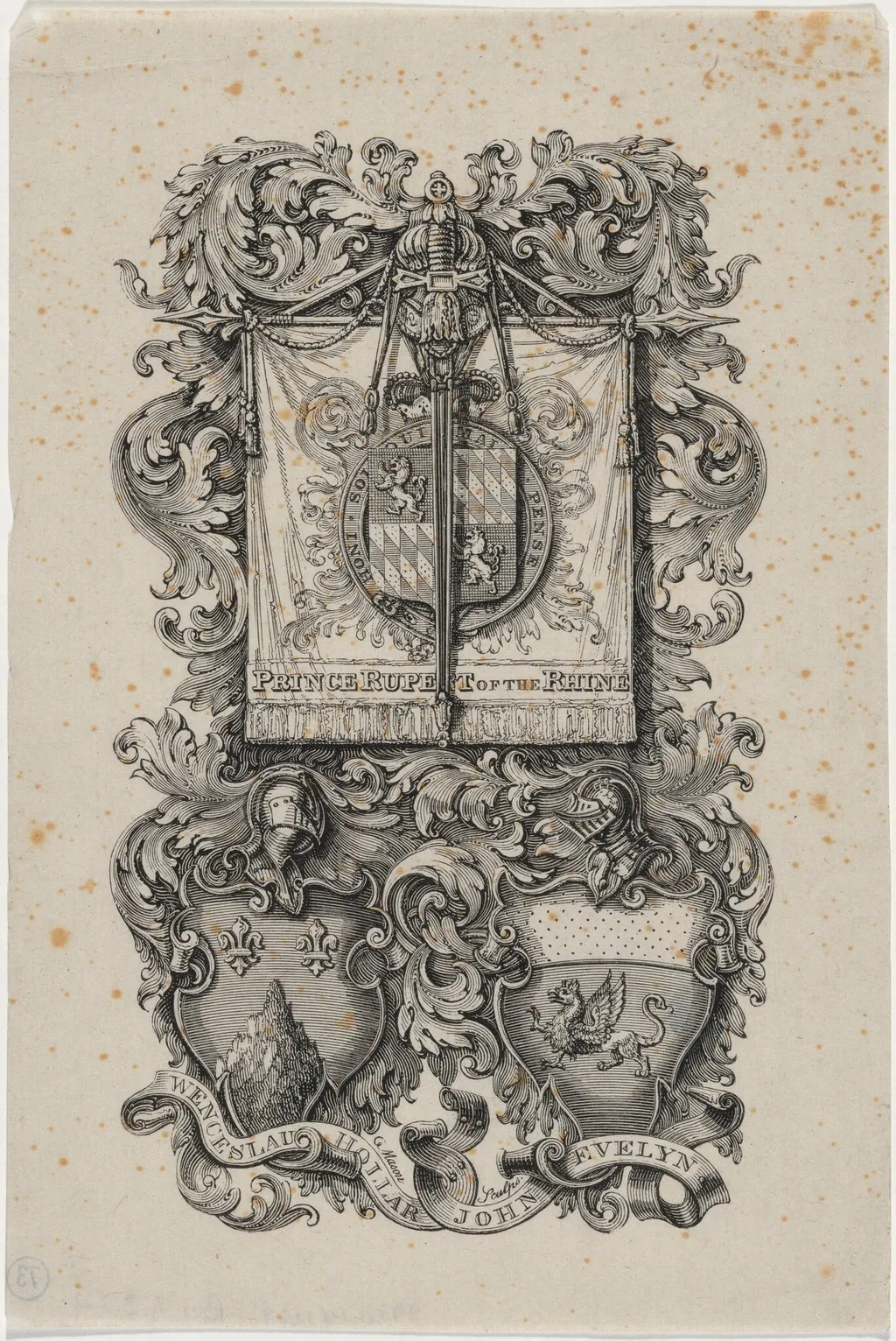
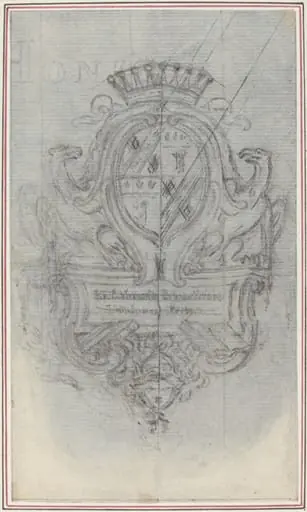
Coat of Arms of Prince Rupert, Hollar and Evelyn is a print by the Romanticist artist Unknown 19th Century. It dates from 1850 and is held in the collection of the National Gallery of Art. This facsimile on India paper reproduces a 17th-century coat of arms associated with Prince Rupert.
About this work
Overview
This facsimile on India paper reproduces a 17th-century coat of arms associated with Prince Rupert. Created in the 19th century, the print captures intricate details of the original heraldic design using a thin, durable paper known for its fine texture. The medium allows precise replication of fine lines, making it a tool for archival study rather than decorative display.
Subject & Meaning
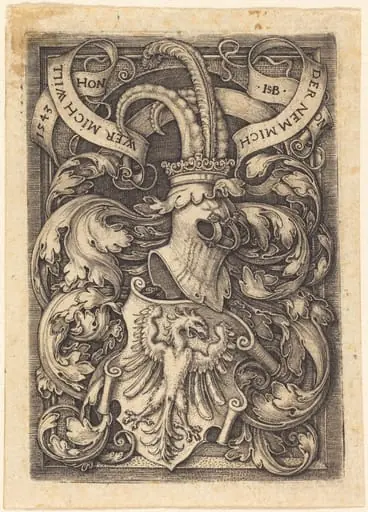
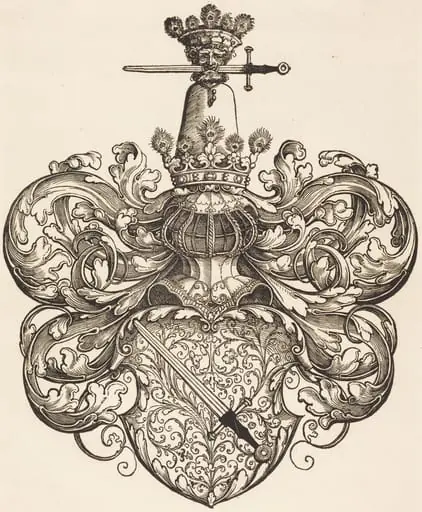
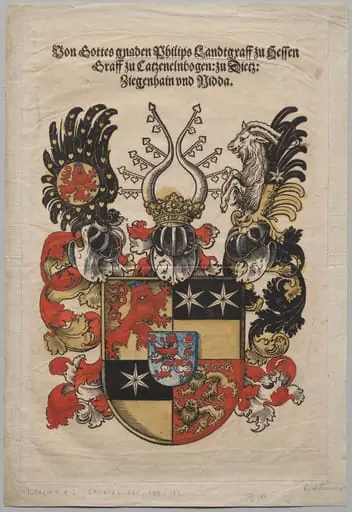
The coat of arms features a shield bearing lions, a crown, and a hand clutching a palm branch—symbols of royal authority, victory, and divine favor. Surrounding elements include flags, swords, and armor, reinforcing military and noble status. These components reflect the traditional language of heraldry used to convey lineage, achievement, and power in early modern Europe.
Technique & Style
The reproduction employs fine-line engraving techniques to mimic the original heraldic rendering. India paper, valued for its strength and translucency, enhances the visibility of minute details. The style is faithful and restrained, prioritizing accuracy over embellishment, aligning with 19th-century practices of documentary reproduction in antiquarian circles.
History & Provenance
The print is a 19th-century facsimile derived from a design linked to Prince Rupert of the Rhine, a prominent Royalist commander during the English Civil War. Its creation likely served scholarly or collector interests, preserving heraldic imagery as historical record. The use of India paper suggests it was produced by institutions or individuals engaged in archival preservation.
Context
In the 1800s, there was growing interest in documenting historical emblems as part of broader antiquarian movements. Facsimiles like this one were made to study and disseminate heraldic designs without risking damage to fragile originals. Wenceslaus Hollar, known for his detailed engravings, was a likely influence, though this piece is not his original work.
Legacy
This print contributes to the preservation of early modern heraldic iconography through technical fidelity. It exemplifies how 19th-century methods enabled access to historical symbols for study, education, and collection. While not an original artifact, it remains a valuable resource for understanding the transmission of aristocratic imagery across centuries.
Artist & collection

Artist