Artwork
Frederick V as Count Palatine
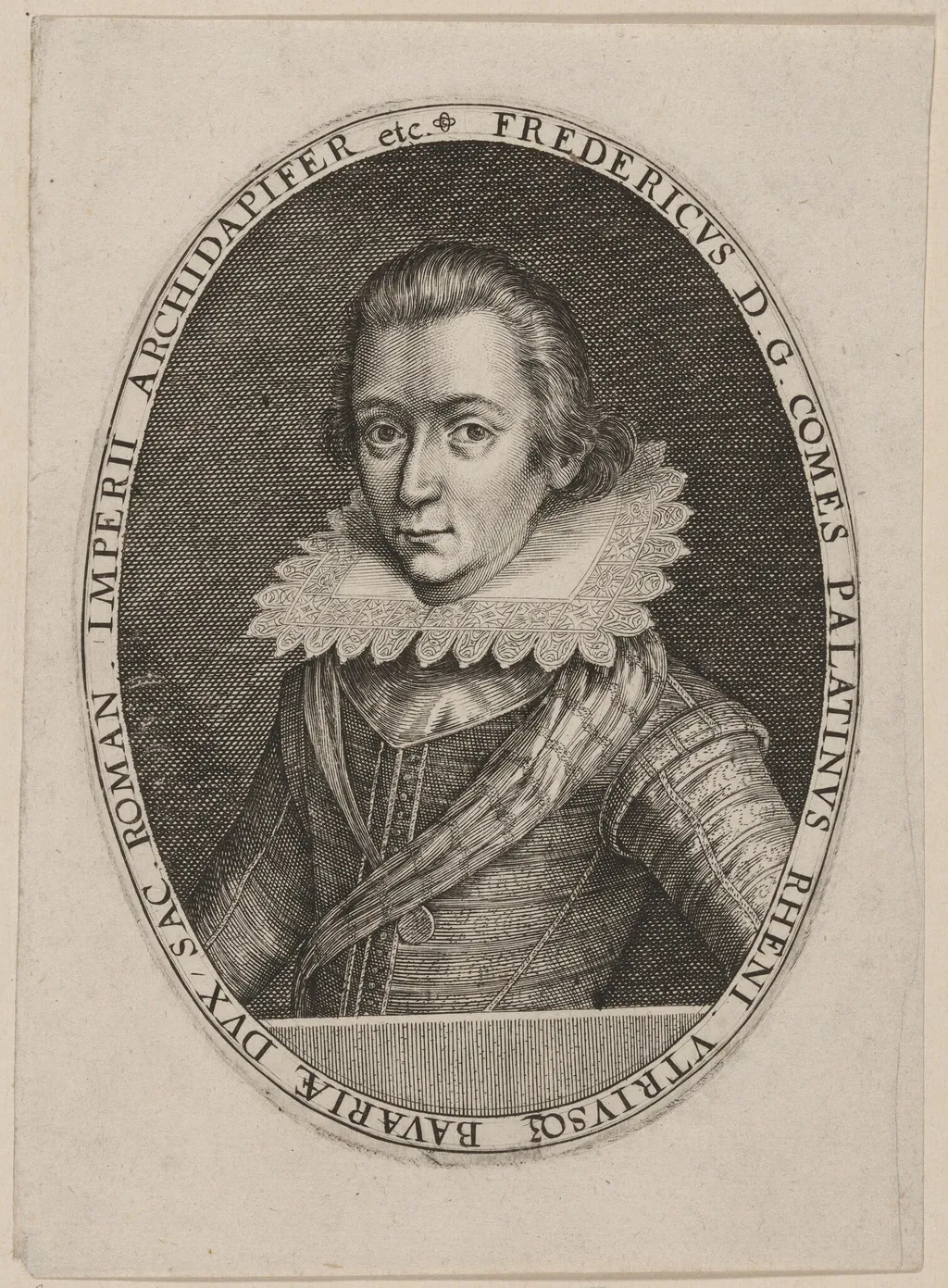
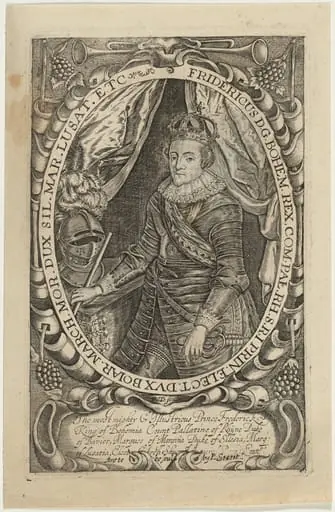
Frederick V as Count Palatine is an ink print by the Romanticist artist Unknown 19th Century. It dates from 1850 and is held in the collection of the National Gallery of Art.
About this work
Overview
The subject is portrayed without ornamentation, against a plain background, emphasizing his status through inscribed authority rather than elaborate setting.
This black-and-white engraving depicts Frederick V in his role as Count Palatine, rendered in a formal, restrained style typical of 19th-century reproductive prints. The image is circular, bordered by a ring of text enumerating his official titles, including Archduke and Elector. The subject is portrayed without ornamentation, against a plain background, emphasizing his status through inscribed authority rather than elaborate setting.
Subject & Meaning
Frederick V is shown in official regalia, his ruffled collar and high-necked coat signaling noble rank. The surrounding text functions as a heraldic label, reinforcing his political and dynastic roles within the Holy Roman Empire. The serious expression and minimal background focus attention on his titles, suggesting the print’s purpose was to document and disseminate his official identity rather than convey personal character.
Technique & Style
The engraving employs fine, linear strokes typical of 19th-century reproductive printmaking, with careful attention to texture in fabric and facial detail. The circular composition and typographic border reflect traditional portraiture conventions used for noble figures before photography. The monochrome palette and lack of shading suggest a functional, rather than artistic, intent—likely produced for distribution among officials or collectors.
History & Provenance
Though the artist is unidentified, the style aligns with 19th-century efforts to document historical figures through standardized engravings. Such prints were often made from earlier portraits or paintings, serving as archival references. Its circulation may have been tied to scholarly or aristocratic circles interested in the Palatinate lineage, particularly after Frederick’s brief reign as King of Bohemia.
Context
Frederick V’s titles reflect his position within the complex hierarchy of the Holy Roman Empire, where the Count Palatine of the Rhine held significant electoral power. The engraving’s emphasis on titles coincides with a period when printed imagery was used to reinforce dynastic legitimacy, especially after the upheavals of the Thirty Years’ War, which ended with his family’s diminished influence.
Legacy
As a reproductive engraving, this work contributes to the visual record of early modern European nobility, preserving the iconography of Frederick V for later generations. Though not an original work of art, it reflects the era’s methods of transmitting political identity through standardized imagery, offering insight into how authority was visually codified before the age of photography.
Artist & collection

Artist

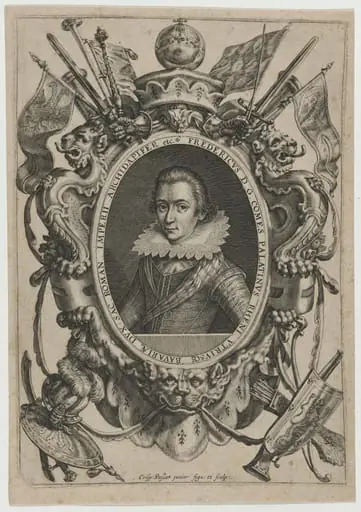 Frederick V, Elector Palatine, King of Bohemia
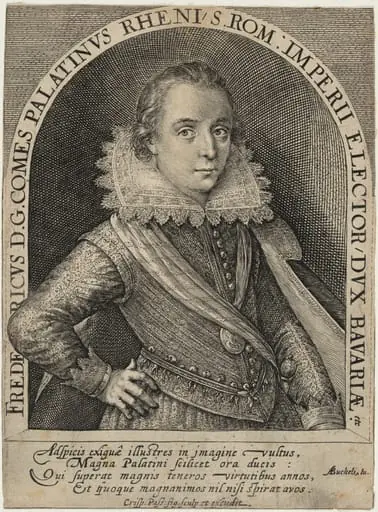 Frederick V, Elector Palatine, Later King of Bohemia
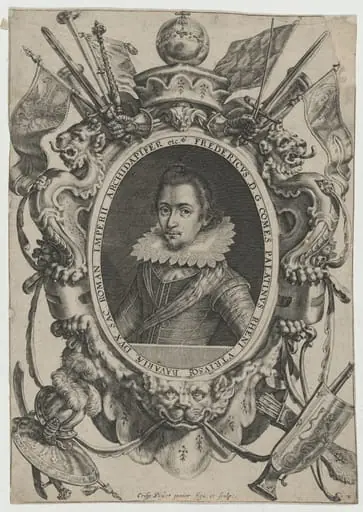 Frederick V, Elector Palatine, King of Bohemia
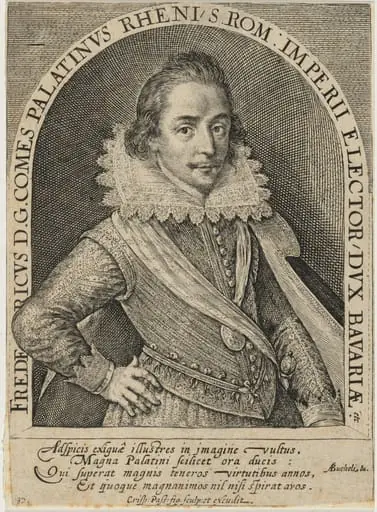 Frederick V, Elector Palatine, Later King of Bohemia
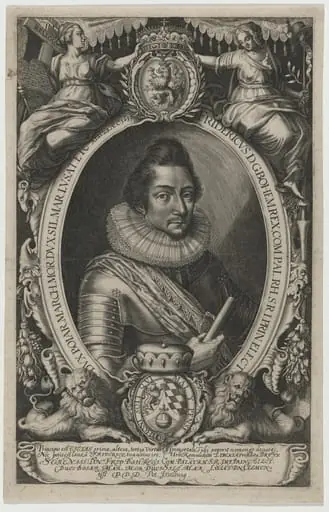 Frederick V, King of Bohemia
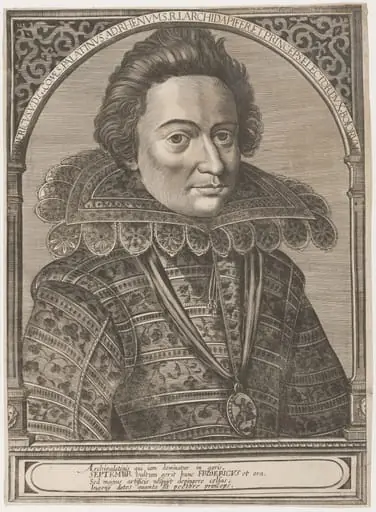 Frederick V, Count Palatine
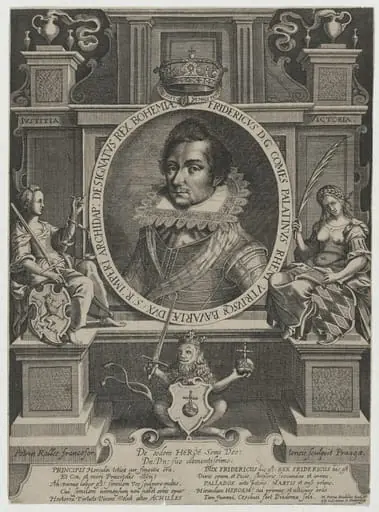 Frederick V, King of Bohemia
 Fredericus D.G. Bohem. Rex (Frederick V, Kingof Bohemia)