Artwork
Frederick V, King of Bohemia
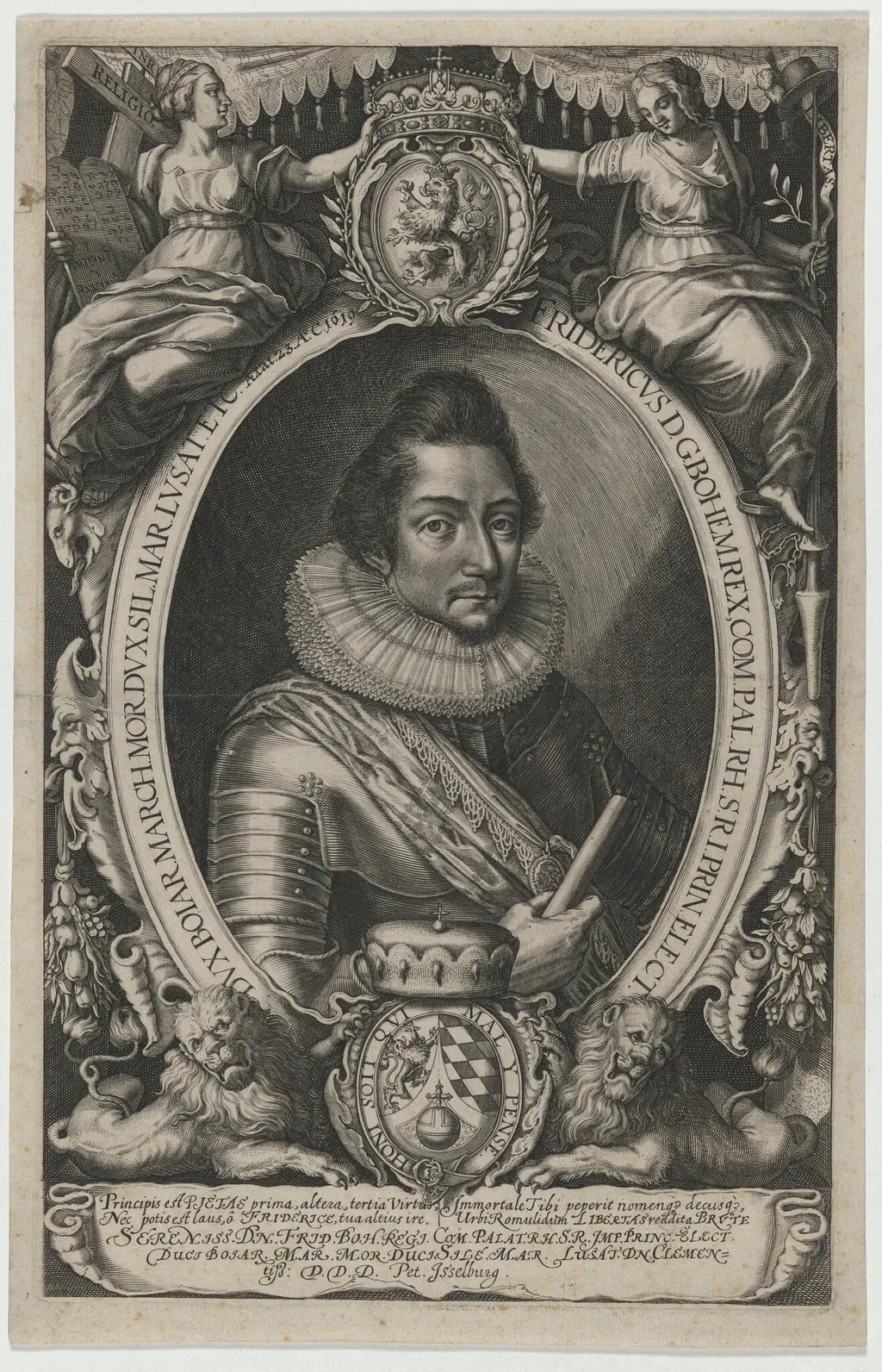
Frederick V, King of Bohemia is an ink print by the Renaissance artist Peter Isselburg. It dates from 1620 and is held in the collection of the National Gallery of Art.
About this work
Overview
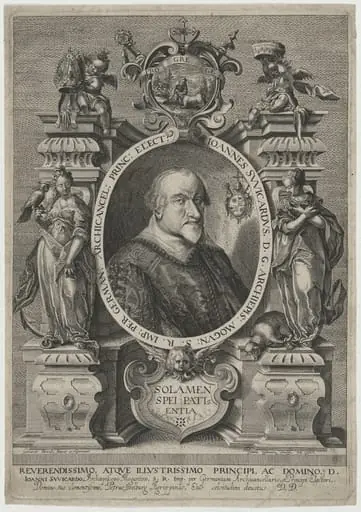
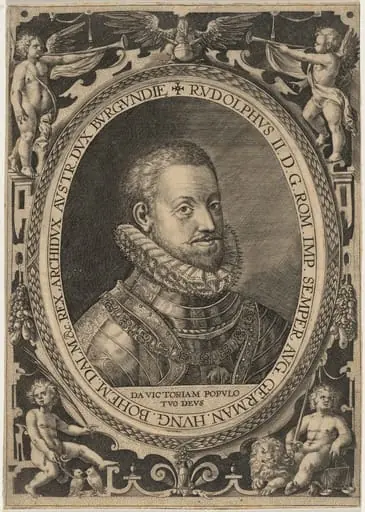
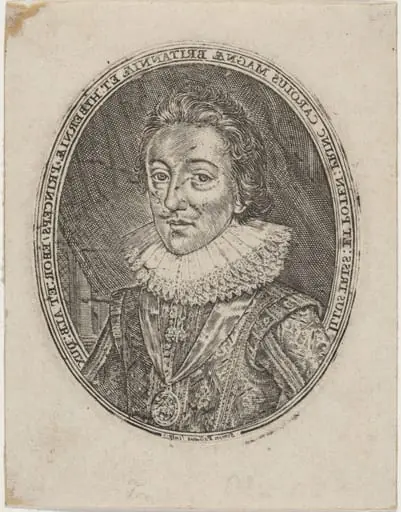
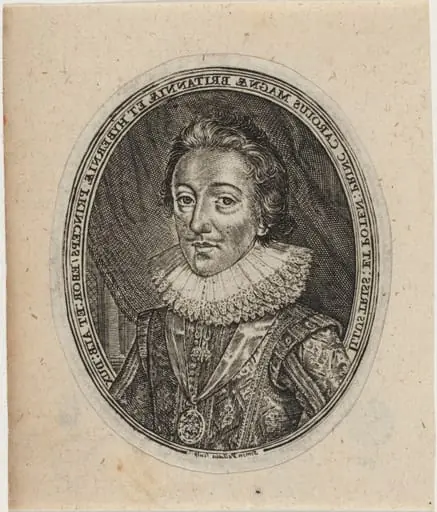
Peter Isselburg’s 1620 engraving presents Frederick V, King of Bohemia, in a formal pose. Rendered in black ink on paper, the image combines portraiture with allegorical elements, framing the monarch within an ornamental arch and surrounding him with symbolic figures. The composition emphasizes his regal status through attire, accessories, and accompanying Latin inscriptions.
Subject & Meaning
The central figure is Frederick V, depicted in a ruff, armor, and elaborate clothing, holding a rolled document that likely signifies his claim to authority. Flanking him are two attendant figures, one winged, each bearing a crown and a scroll inscribed with Latin text, suggesting divine sanction and the legitimacy of his rule.
Technique & Style
Isselburg employs fine line work and cross‑hatching to model forms and suggest depth, a hallmark of early‑17th‑century engraving. The delicate shading creates a three‑dimensional effect despite the medium’s monochrome nature, while the intricate decorative arch demonstrates the period’s penchant for elaborate ornamental framing in portrait prints.
History & Provenance
Created in 1620, the print coincides with Frederick V’s brief reign as King of Bohemia and his subsequent exile. Isselburg, a German engraver active in the early Baroque era, produced the work likely for a courtly audience, and surviving copies are found in several European print collections.
Context
The engraving reflects the political turbulence of the early Thirty Years’ War, when Frederick’s election as Bohemian king sparked conflict with the Habsburgs. Portraits of the time often incorporated allegorical figures to convey the ruler’s divine right and to legitise contested claims to power.
Artist & collection