Artwork
Frederick V, Elector Palatine, Later King of Bohemia
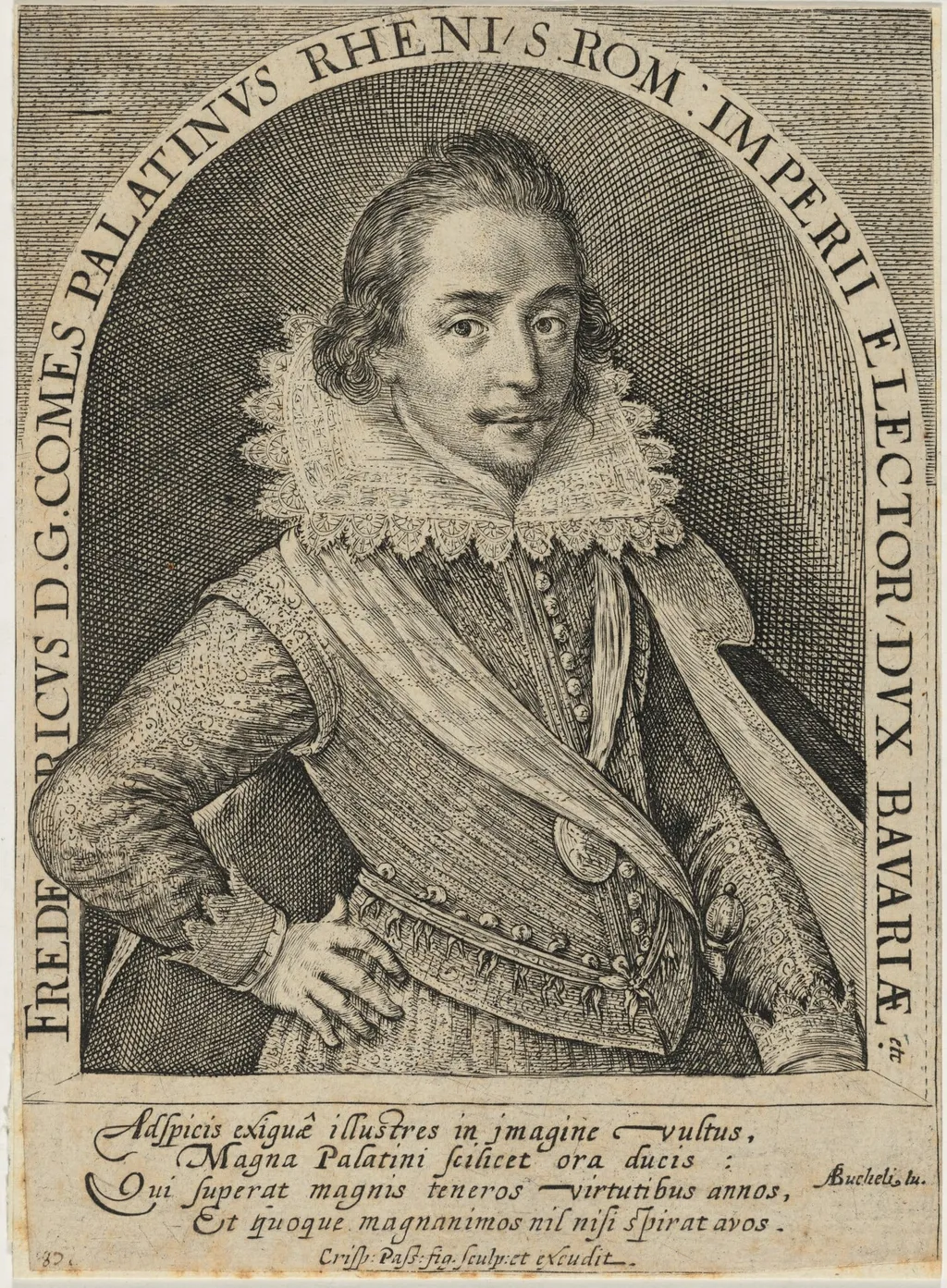
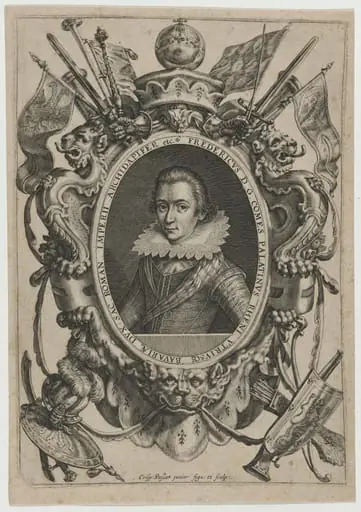
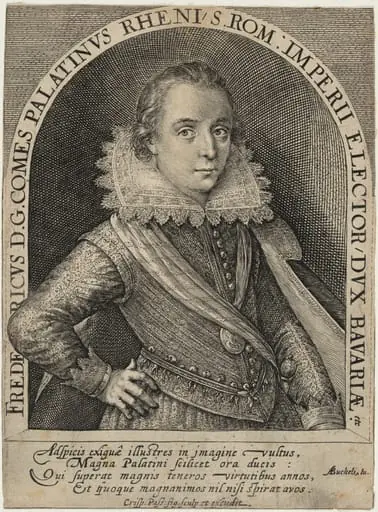
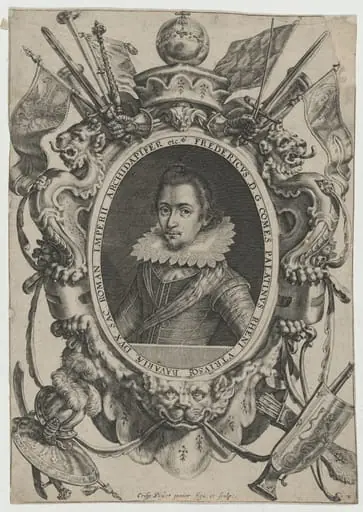
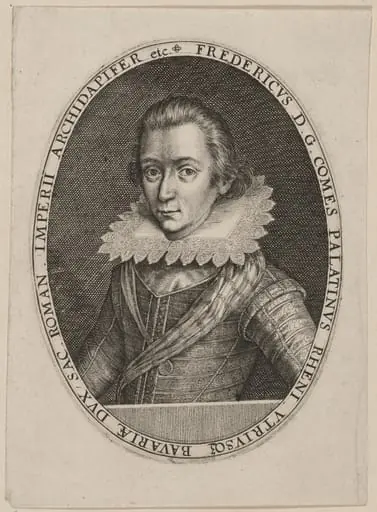
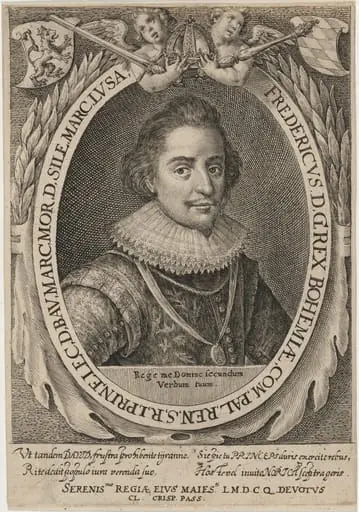
Frederick V, Elector Palatine, Later King of Bohemia is an ink print by the Renaissance artist Crispijn van de Passe I. It dates from 1601 and is held in the collection of the Rosenwald Collection.
About this work
Overview
Rendered in fine linear detail, the portrait emphasizes his status through precise rendering of clothing and insignia.
This black-and-white engraving, produced in 1601 by Crispijn van de Passe I, depicts Frederick V, Elector Palatine, shortly before his brief reign as King of Bohemia. Rendered in fine linear detail, the portrait emphasizes his status through precise rendering of clothing and insignia. The composition is tightly focused on the figure, with no decorative background to distract from his presence. Latin inscriptions encircle the image, formally identifying his titles and lineage.
Subject & Meaning
Frederick V is portrayed as a nobleman of high political standing, dressed in formal attire befitting his rank. The ruffled collar, buttoned jacket, and ornate chain signify his aristocratic position, while the object held in his hands—possibly a document or seal—suggests administrative authority. His expression is composed and introspective, conveying gravitas rather than flamboyance, aligning with the solemnity expected of ruling elites in early 17th-century Europe.
Technique & Style
Crispijn van de Passe I employed the engraving technique, incising fine lines into a copper plate to create tonal variation and texture. The fabric of the jacket, the lace of the collar, and the contours of the face are rendered with meticulous cross-hatching and delicate strokes, giving a lifelike sense of depth and materiality. The absence of color and background enhances the portrait’s clarity and formal dignity, typical of Northern European print portraiture of the period.
History & Provenance
Created in 1601, the engraving predates Frederick’s controversial ascension to the Bohemian throne in 1619. It likely served as a diplomatic or dynastic image, circulated among European courts to affirm his legitimacy and status. As a member of a prominent Protestant family, his likeness would have been valuable in political networks. The print’s survival suggests it was preserved in collections interested in royal iconography or Reformation-era politics.
Context
In the early 1600s, engraved portraits were key tools for disseminating the image of rulers across Europe, especially among Protestant elites. Van de Passe, part of a renowned family of printmakers, specialized in such works. Frederick’s portrayal reflects the era’s emphasis on lineage and authority, as well as the growing role of print culture in shaping political identity. His later role in the Thirty Years’ War would cast this image in a new, more tragic light.
Legacy
This engraving remains a primary visual record of Frederick V before his dramatic fall from power. It exemplifies the precision and restraint of early 17th-century Northern European portraiture and offers insight into how rulers were visually constructed for public and political consumption. Though his reign in Bohemia was short-lived, this image endures as a document of status, ambition, and the mechanics of dynastic representation.
Artist & collection

Artist
Crispijn van de Passe I (1564–1637) was an artist, born in Arnemuiden.