Artwork
James I and Anne of Denmark with GeneologicalTree
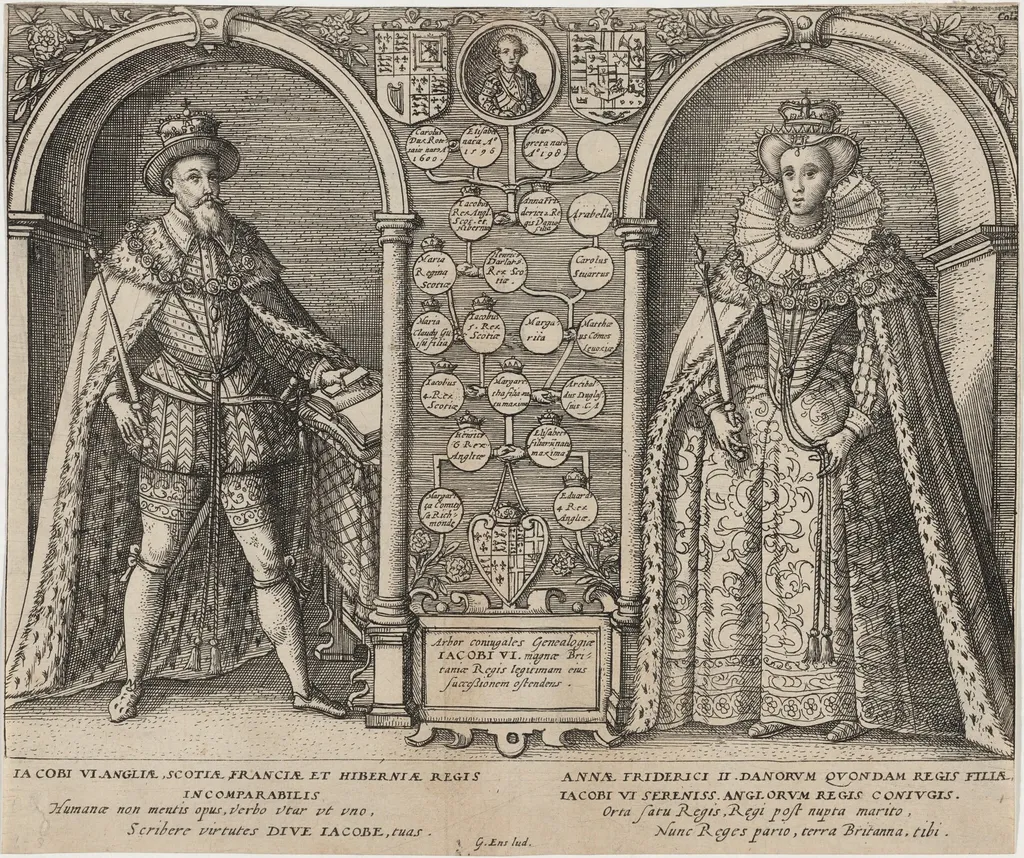
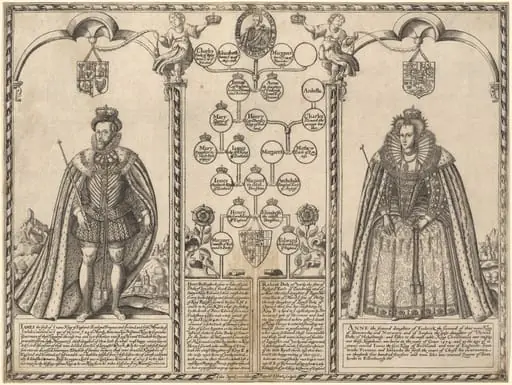
James I and Anne of Denmark with GeneologicalTree is an ink print by the Romanticist artist Unknown 19th Century. It dates from 1850 and is held in the collection of the National Gallery of Art. The print is an etching that portrays a monarch and his consort positioned on either side of an elaborate genealogical tree.
About this work
The king and queen are depicted in a formal, regal manner, with intricate details in their clothing and accessories.
In this etching, a king and queen stand on either side of a large, ornate genealogical tree. The king, on the left, wears a crown, a fur-trimmed cape, and a sword at his side. The queen, on the right, also wears a crown and a long, ornate dress with a fur-trimmed cape. Above the tree, a circular portrait of a young boy is visible. The tree itself is adorned with various symbols and coats of arms.
The king and queen are depicted in a formal, regal manner, with intricate details in their clothing and accessories. The genealogical tree is a prominent feature of the etching, suggesting a focus on family lineage and heritage.
This etching is reminiscent of the work of artists who specialized in etching, such as Unknown 19th Century.
Overview
The print is an etching that portrays a monarch and his consort positioned on either side of an elaborate genealogical tree. Both figures are crowned and dressed in richly fur‑trimmed garments, the king bearing a sword and the queen in an ornate gown. Above the tree a circular portrait of a young boy is placed, while the tree itself is embellished with heraldic symbols and coats of arms.
Subject & Meaning
The composition emphasizes dynastic continuity, presenting James I of England and his wife Anne of Denmark as the focal points of a lineage visualized through the tree. The inclusion of the boy’s portrait suggests a reference to an heir, reinforcing the theme of succession and the royal family's hereditary claims.
Technique & Style
Executed in the medium of etching, the work relies on fine line work to render the intricate details of the royal attire, the foliage, and the heraldic devices. The contrast between the dark ink and the delicate rendering of textures creates a formal, almost documentary quality typical of early‑modern portrait prints.
History & Provenance
The print originates from the early 17th‑century period when portraiture and genealogical imagery were commonly used to legitimize monarchical authority. It was likely produced for a courtly audience or as a commemorative item, though specific information about its creator or original ownership remains undocumented.
Context
During James I’s reign, visual representations of lineage served political purposes, reinforcing the union of the English and Scottish crowns and the royal family's ties to European dynasties. The presence of Anne of Denmark reflects her role in diplomatic alliances and the importance of marital connections in royal propaganda.
Legacy
While the etching itself is not widely cited in major art historical surveys, it exemplifies the period’s use of print media to disseminate royal iconography and genealogical narratives, contributing to the visual culture that shaped public perception of monarchy in early modern Britain.
Artist & collection

Artist