Artwork
Anne of Denmark, Queen of James VI of Scotland
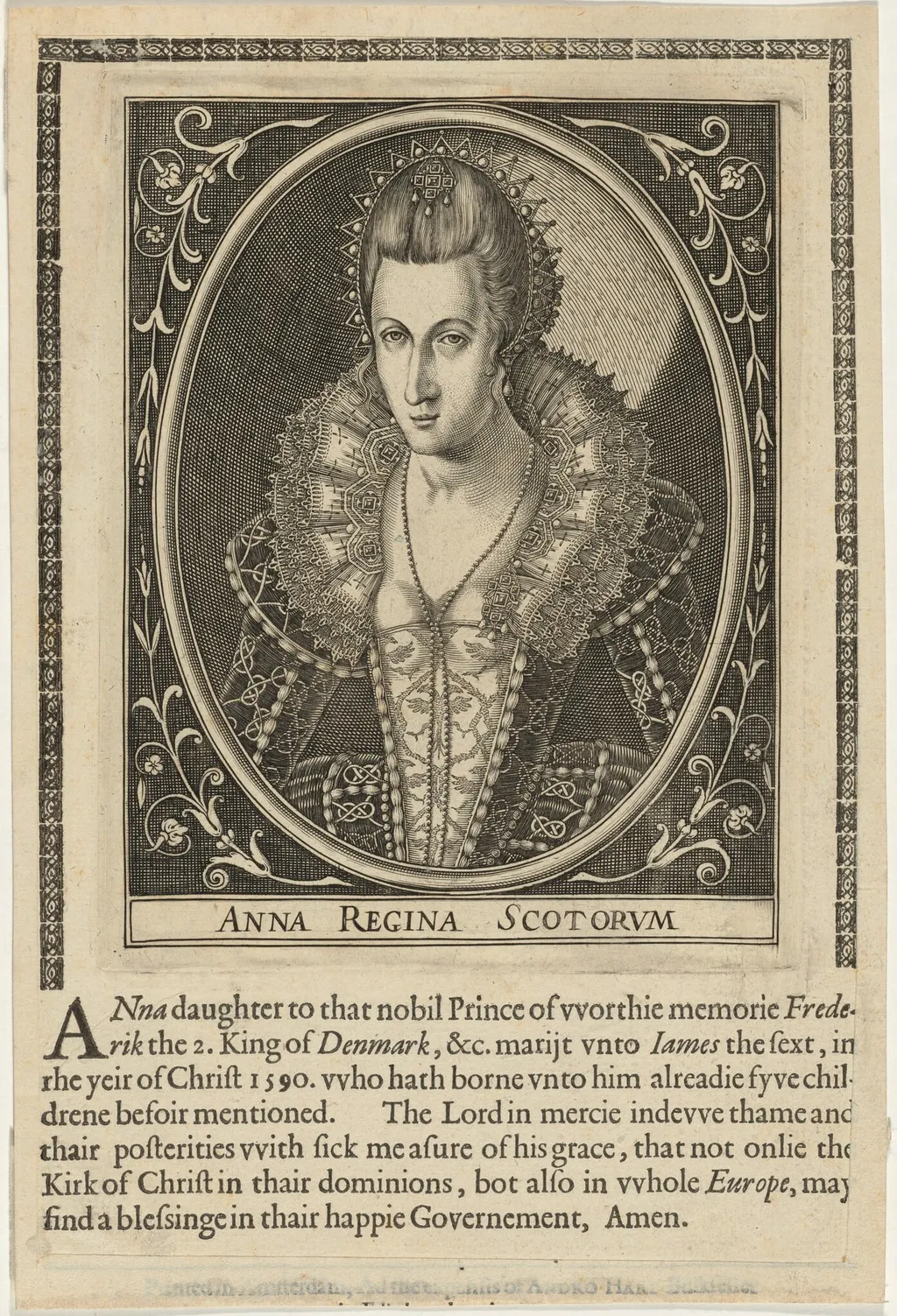
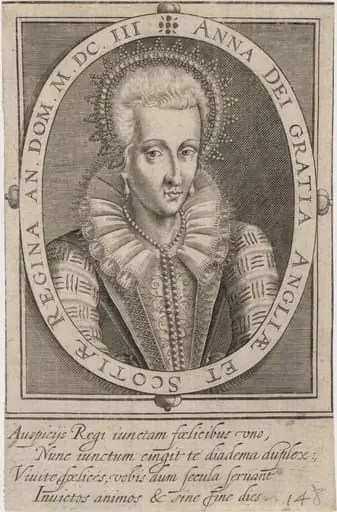
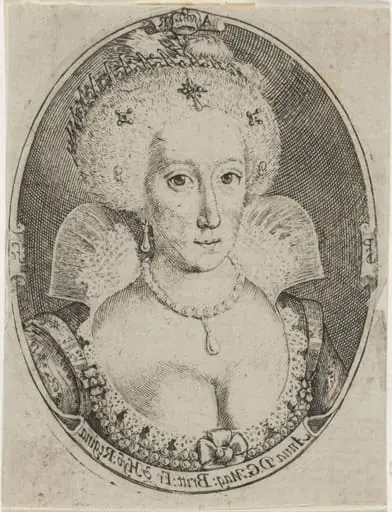
Anne of Denmark, Queen of James VI of Scotland is an ink print by the Baroque artist Unknown 19th Century. It dates from 1602 and is held in the collection of the National Gallery of Art. This 1602 engraving presents a formal portrait of Anne of Denmark, queen consort to James VI of Scotland.
About this work
Overview
Rendered within an oval border adorned with floral motifs, the image captures her in regal attire, emphasizing status through detailed jewelry and a crown.
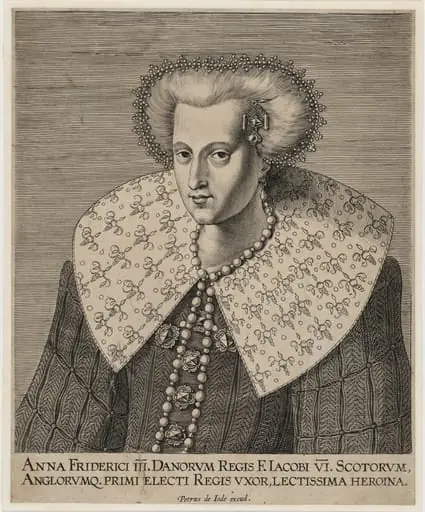
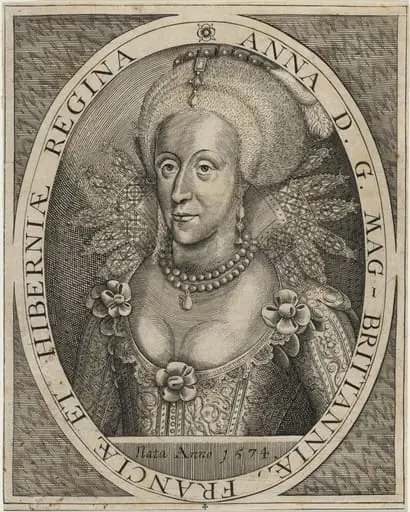
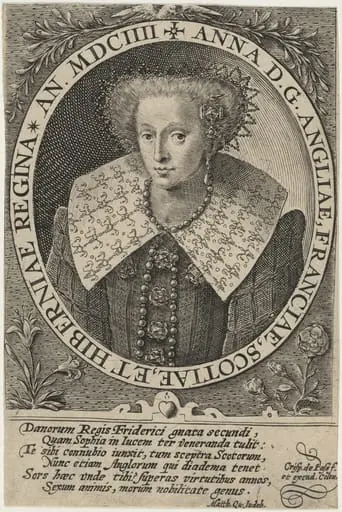
This 1602 engraving presents a formal portrait of Anne of Denmark, queen consort to James VI of Scotland. Rendered within an oval border adorned with floral motifs, the image captures her in regal attire, emphasizing status through detailed jewelry and a crown. The technique relies on fine cross-hatching to model form and texture, typical of early 17th-century printmaking. Its production reflects the use of engraved portraits to disseminate royal imagery beyond court circles.
Subject & Meaning
Anne is depicted with symbolic elements of sovereignty: a crown, an elaborate ruff collar, and meticulously rendered ornaments. These signify her position as queen and align her with ideals of dignity and authority. The floral frame may allude to fertility or dynastic continuity, common in royal iconography of the period. The portrait functions less as a likeness and more as a statement of legitimacy and ceremonial presence.
Technique & Style
The image is executed in intaglio engraving, using precise lines and cross-hatching to create tonal variation and texture. The artist carefully rendered fabric folds, lace, and metalwork through controlled etching, demonstrating technical mastery. The oval composition and decorative border follow conventions of court portraiture, balancing naturalism with stylized form. The print’s clarity and detail suggest it was intended for an affluent or scholarly audience.
History & Provenance
Created in 1602, the engraving was likely produced to circulate Anne’s image across Scotland and England following her arrival as queen. It may have been commissioned by court officials or printed by a commercial publisher seeking to meet public interest in royal figures. Early copies survive in royal and institutional collections, indicating its use in diplomatic or ceremonial contexts during the early Stuart era.
Context
In the early 1600s, engraved portraits were vital tools for projecting royal authority in an era before photography. Anne’s image, like those of other European queens, served political ends—reinforcing alliances and dynastic claims. The style reflects Northern European print traditions, distinct from Italian painting, with emphasis on line over color. Such prints circulated among nobility and were collected as tokens of loyalty or status.
Legacy
This engraving remains one of the earliest widely distributed images of Anne of Denmark, contributing to her visual legacy. It influenced later portraiture and was referenced in subsequent royal prints. Though not attributed to a known master, its craftsmanship exemplifies the role of printmakers in shaping public perception of monarchy. Today, it is studied as a document of early modern visual culture and gendered representation.
Artist & collection

Artist