Artwork
James III, King of Scotland
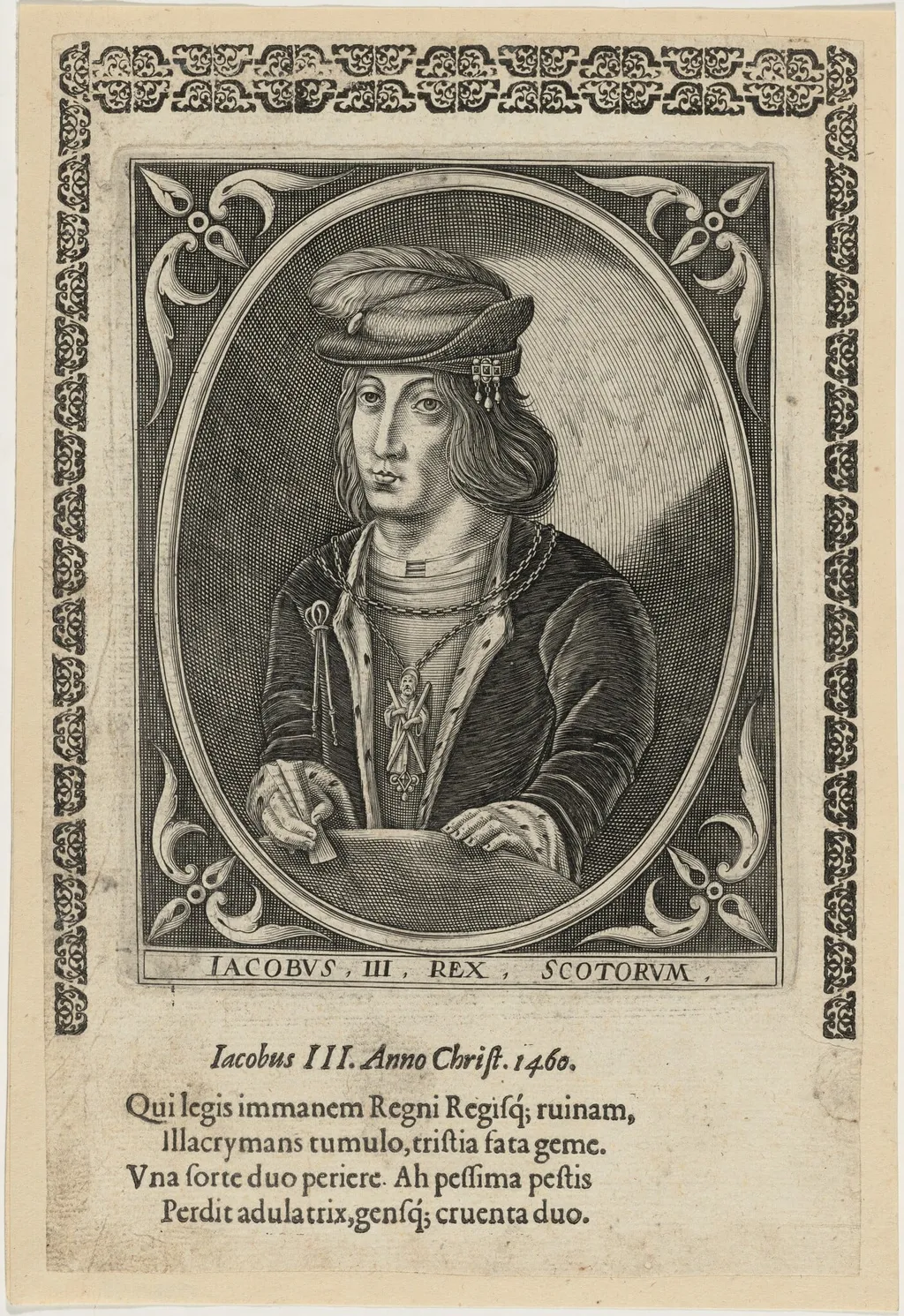
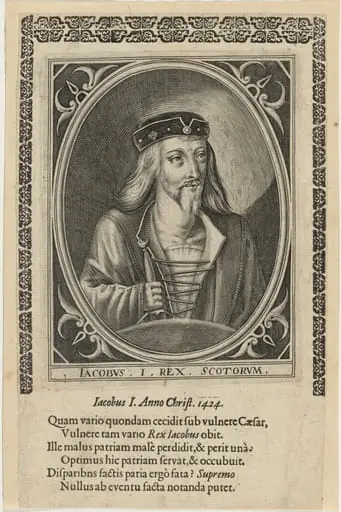
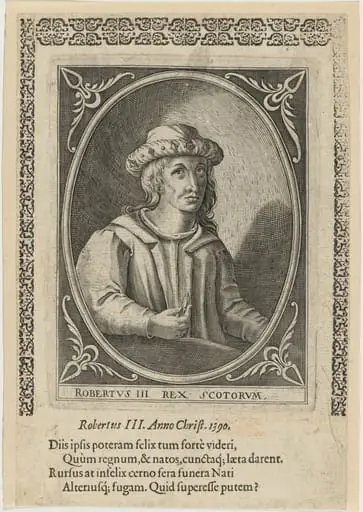
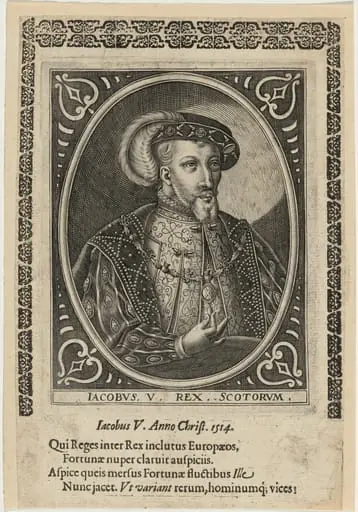
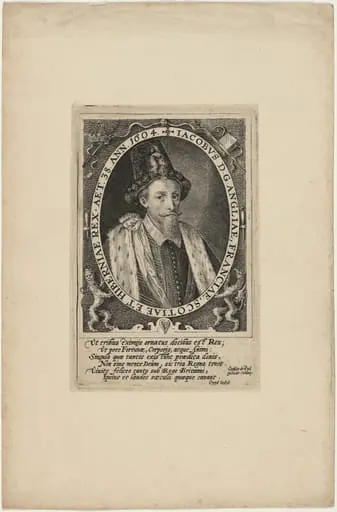
James III, King of Scotland is an ink print by the Baroque artist Unknown 19th Century. It dates from 1603 and is held in the collection of the National Gallery of Art. This black-and-white engraving depicts James III of Scotland, produced in 1602, over a century after his death.
About this work
The text below says his name is Jacobus III and it’s dated 1460, but the print was made much later.
This is a black-and-white portrait of a man in fancy clothes. He wears a dark robe with a chain around his neck and a small pendant. His hat has a feather sticking up. The background is a plain oval shape with decorative patterns around the edges.
The text below says his name is Jacobus III and it’s dated 1460, but the print was made much later. The words are in Latin and sound sad, like a poem about his life.
If you like this style, check out engraving.
Overview
This black-and-white engraving depicts James III of Scotland, produced in 1602, over a century after his death. Though it bears the date 1460, that refers to the subject’s reign, not the print’s creation. The image is framed within an oval border adorned with ornamental motifs, typical of early modern portraiture. Latin text beneath the portrait offers a mournful epitaph, reinforcing its commemorative purpose rather than its accuracy as a likeness.
Subject & Meaning
James III, who ruled Scotland from 1460 to 1488, is portrayed in ceremonial attire: a dark robe, a chain of office, and a feathered hat. The image does not reflect his actual appearance but conforms to idealized conventions of royal dignity. The Latin inscription, elegiac in tone, frames him as a figure of tragic fate, aligning with posthumous narratives that emphasized his controversial reign and violent end.
Technique & Style
Executed in fine-line engraving, the portrait relies on precise cross-hatching to define texture and form. The robe’s folds, the chain’s links, and the feather’s detail are rendered with controlled precision. The plain oval background and decorative border reflect contemporary printmaking trends, where symbolism and structure often outweigh naturalism. The style is characteristic of early 17th-century Northern European reproductive prints.
History & Provenance
Created in 1602, the engraving likely originated in the Low Countries or England, where demand for historical royal portraits was growing. It was not made from life but based on earlier, now-lost depictions or textual descriptions. Its publication coincided with efforts to document Scottish monarchy during the Union of the Crowns, serving more as historical record than contemporary tribute.
Context
In the early 1600s, printed portraits of past monarchs were used to assert dynastic continuity and legitimize rule. James III’s troubled reign—marked by rebellion and his death in battle—made him a subject of retrospective moralizing. The Latin epitaph reflects a literary tradition of lamenting fallen rulers, common in post-Reformation Europe where history was often framed through moral and religious lenses.
Legacy
The engraving survives as an example of how historical figures were visually reconstructed centuries after their deaths. It reveals more about early modern perceptions of monarchy than about James III himself. Such prints circulated among scholars and collectors, shaping enduring, if inaccurate, visual memories of medieval rulers through stylized, symbolic representation.
Artist & collection

Artist