Artwork
James I as James VI of Scotland
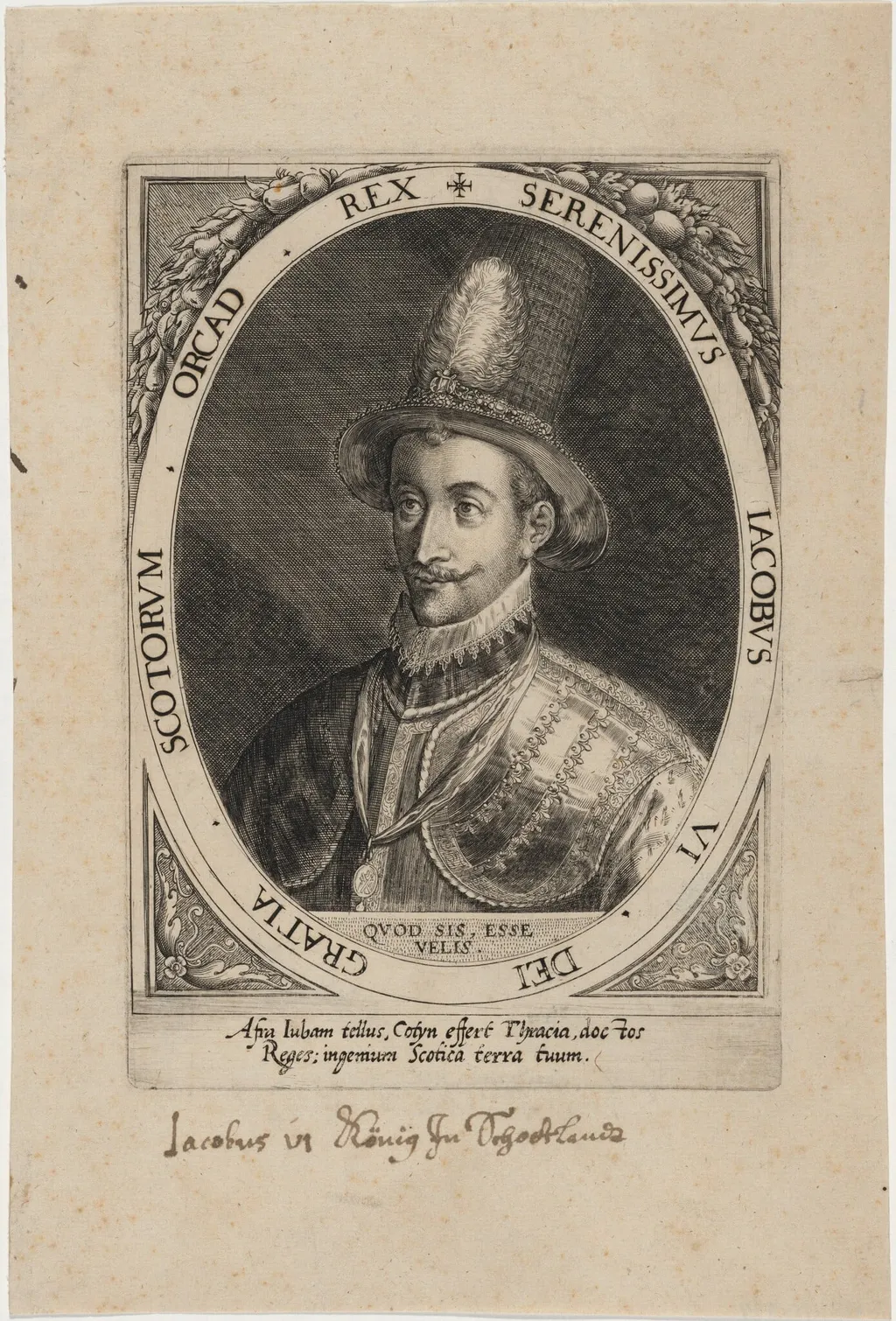
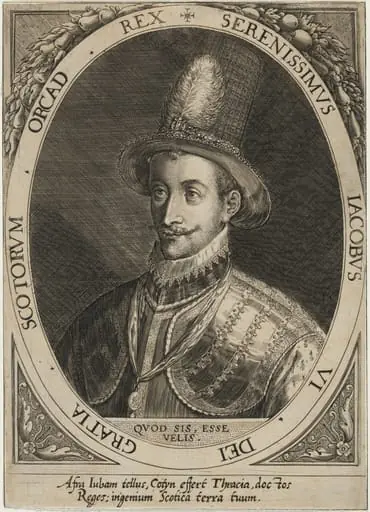
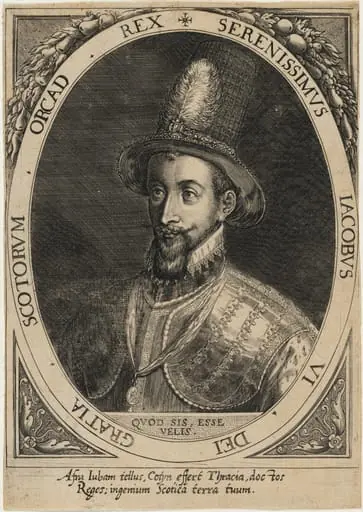
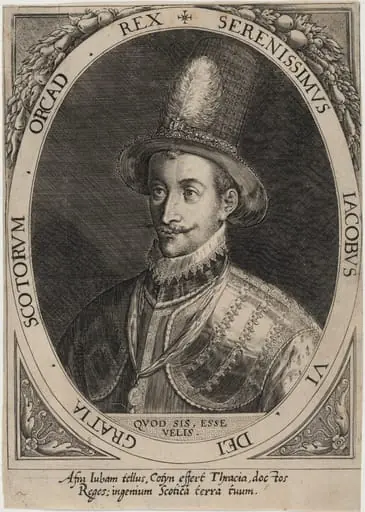
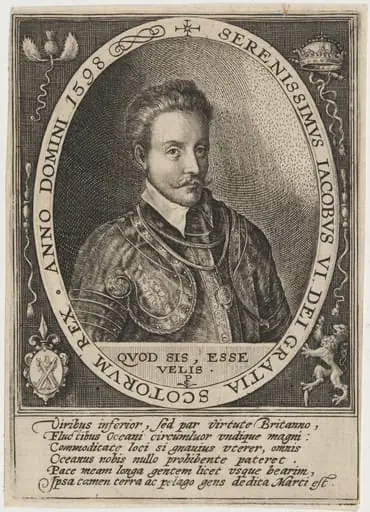
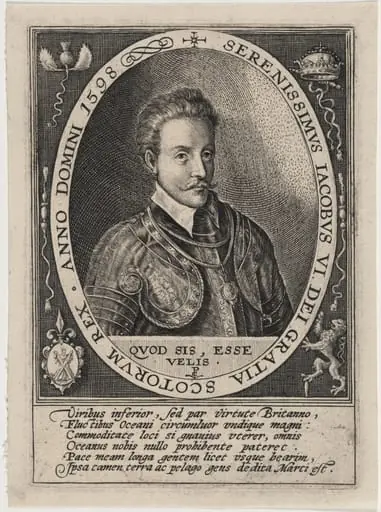
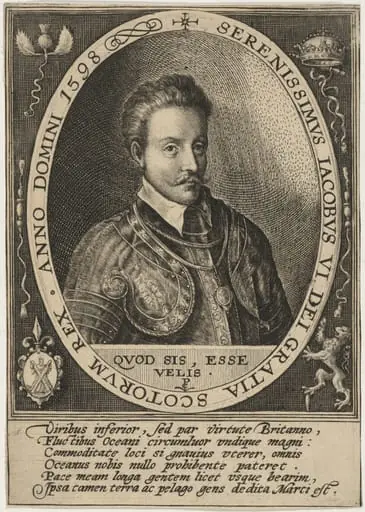
James I as James VI of Scotland is an ink print by the Baroque artist Dominicus Custos. It dates from 1600 and is held in the collection of the National Gallery of Art.
About this work
Overview
Executed on laid paper, the work belongs to a tradition of courtly portraiture produced under the patronage of Emperor Rudolf II in Augsburg.
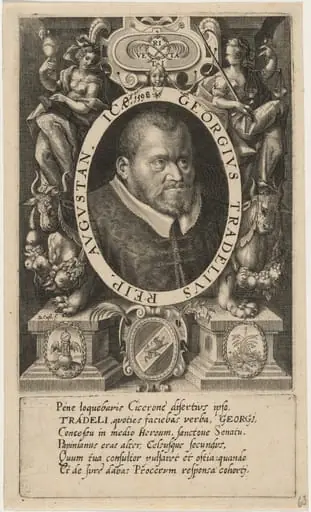
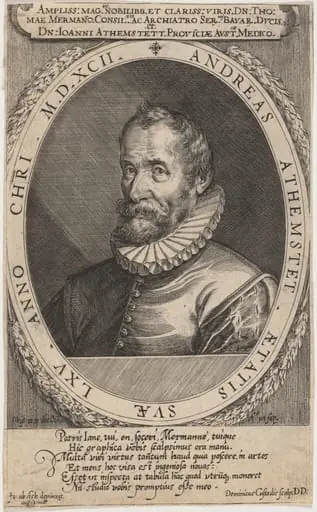
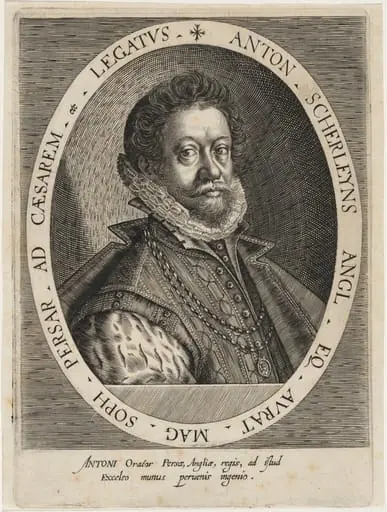
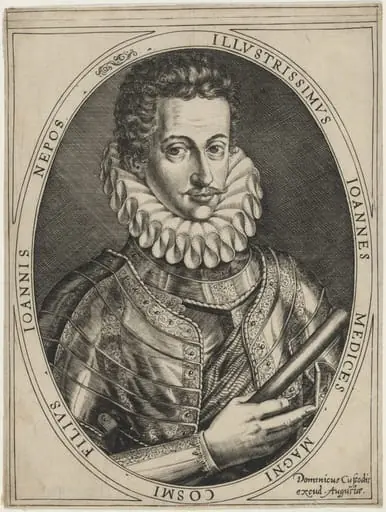
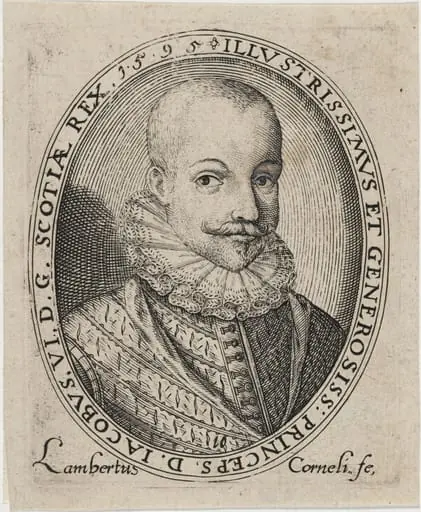
Created in 1600 by Flemish engraver Dominicus Custos, this black-and-white print depicts James VI of Scotland following his accession to the English throne as James I. Executed on laid paper, the work belongs to a tradition of courtly portraiture produced under the patronage of Emperor Rudolf II in Augsburg. Custos, part of a family of printmakers, employed fine cross-hatching to render texture and volume, reflecting the technical precision valued in early modern engraving.
Subject & Meaning
The portrait presents James in dual identity: as ruler of both Scotland and England. His elaborate attire—feathered hat, ruffled collar, and ornate chain—signals royal authority and continental fashion. The Latin inscriptions framing the image reinforce his titles and territorial claims. The composition avoids overt symbolism, instead relying on dignified presentation to affirm legitimacy during a period of political transition.
Technique & Style
Custos used meticulous cross-hatching to model form and fabric, creating subtle gradations of light and shadow. The lines are tightly controlled, enhancing the three-dimensionality of the face and garments without obscuring detail. The oval border, inscribed with Latin text, follows conventions of Renaissance portraiture. The use of laid paper, with its characteristic chain lines, was standard for high-quality prints of the era, supporting fine detail and durability.
History & Provenance
The print was made during Custos’s tenure in Augsburg, where he worked within imperial artistic circles. His collaboration with humanist Marcus Henning suggests scholarly input into the text and iconography. The work likely circulated among elites to affirm James’s new status. Custos’s workshop, including his stepsons Wolfgang and Lukas Kilian, maintained a reputation for precision, ensuring the print’s dissemination across European courts.
Context
Produced shortly after the Union of the Crowns in 1603, the engraving anticipates James’s unification of England and Scotland. It reflects the role of print in shaping political identity, as rulers used portraiture to project authority beyond their immediate realms. The emphasis on Latin and continental style aligns with humanist ideals promoted at Rudolf II’s court, where art served both aesthetic and diplomatic functions.
Legacy
Custos’s engraving exemplifies the role of printmaking in early modern statecraft. While not widely reproduced, it contributed to the visual language of monarchy during a pivotal dynastic shift. Its technical refinement influenced later portrait engravers, and its fusion of political messaging with artistic craftsmanship remains a documented example of how images reinforced royal legitimacy in the absence of photography.
Artist & collection
Artist
Dominicus Custos (1560–1612) was a Flemish artist, printer and copperplate engraver, who worked in the service of Emperor Rudolph II in Prague.