Artwork
James I, King of England
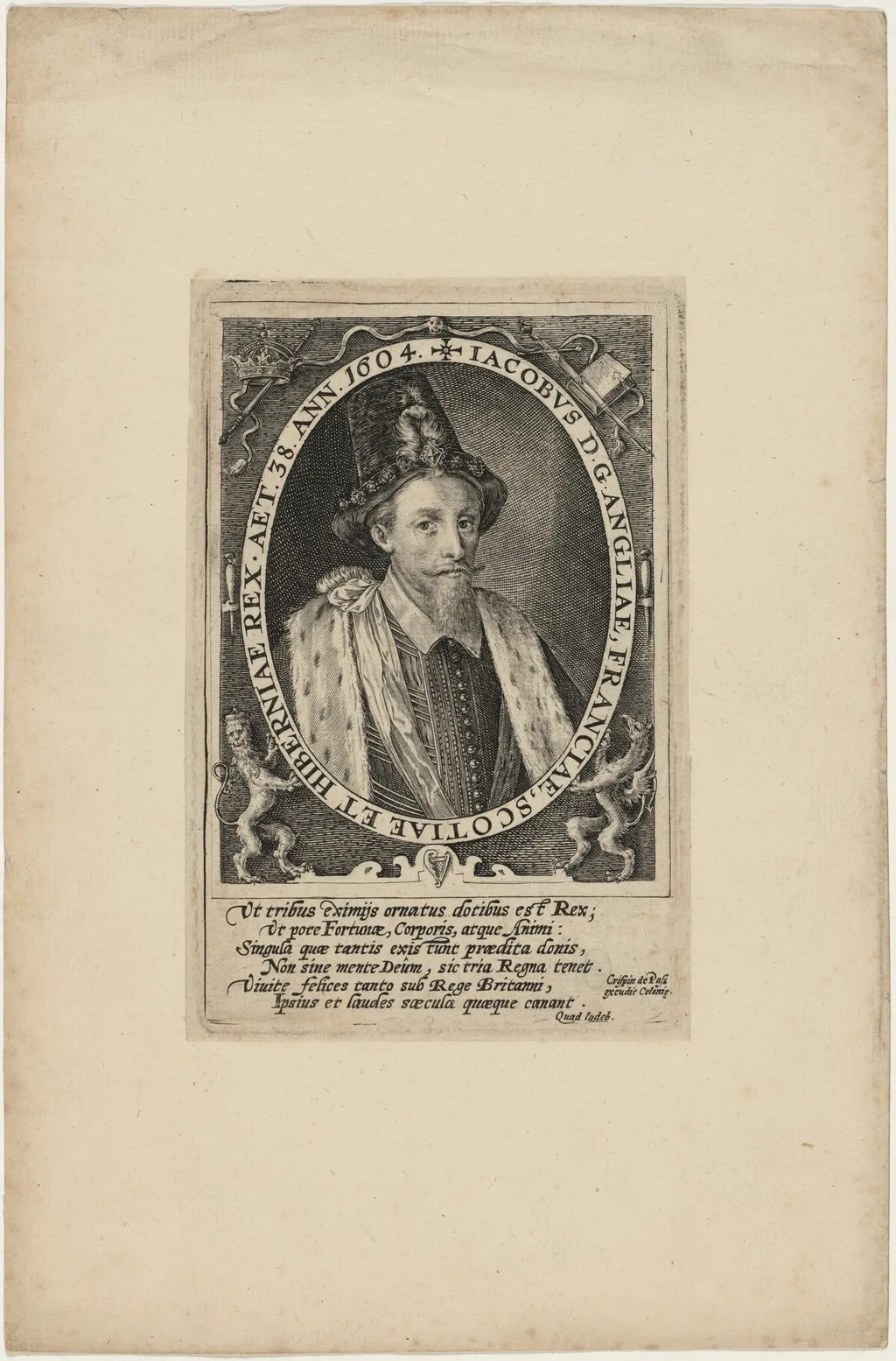
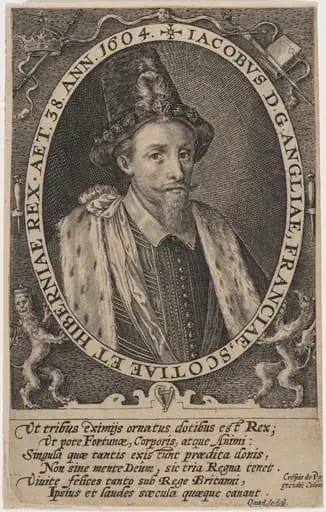
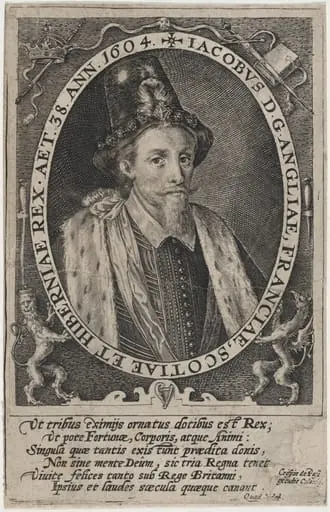
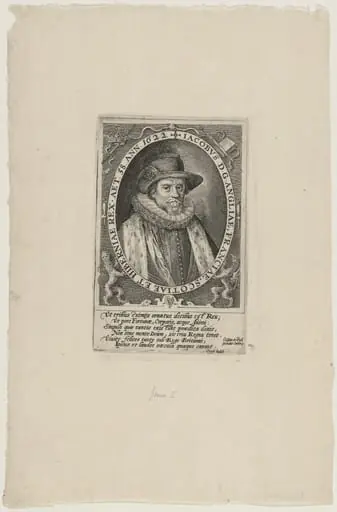
James I, King of England is an ink print by the Baroque artist Crispijn van de Passe I. It dates from 1604 and is held in the collection of the National Gallery of Art.
About this work
The tiny lines all over the image create the details—this is how the artist built up shadows and texture.
This black-and-white print shows a man in a fur-lined robe and a wide-brimmed hat. His beard is thick, and his gaze is steady. The background is plain, but his collar has a ruffled edge. Above his head, a banner reads *"IACOBVS"* and *"D.G. FRANC. ET HIB. REX"* in fancy letters.
The tiny lines all over the image create the details—this is how the artist built up shadows and texture. The print was made in 1604, but the style looks older, like it’s borrowing from earlier designs.
Want to see how this technique works? Look up engraving.
Overview
Crispijn van de Passe I produced an engraving of James I, King of England in 1604. The print presents the monarch in a fur‑trimmed robe and a broad‑brimmed hat, his thick beard and steady gaze rendered in fine, cross‑hatched lines that define form and shadow. A plain background isolates the figure, while a decorative banner above bears the Latin inscription “IACOBVS” and the royal titles.
Subject & Meaning
The portrait emphasizes James I’s regal authority, highlighting his status as both King of France and England through the Latin titulature. The ruffled collar and fur lining convey wealth and power, while the direct gaze suggests confidence and sovereignty.
Technique & Style
Van de Passe employed the traditional engraving method, incising intricate lines into a copper plate. The dense network of fine strokes creates tonal variation, modeling the facial features and fabric textures. Although executed in the early seventeenth century, the composition reflects stylistic conventions of earlier portrait prints, with its restrained background and ornamental lettering.
History & Provenance
Created in 1604, the print was likely intended for distribution among courtiers and collectors interested in royal imagery. As a work by a prominent member of the van de Passe family, it circulated within the network of European printmakers and patrons, contributing to the visual representation of James I across the continent.
Artist & collection

Artist
Crispijn van de Passe I (1564–1637) was an artist, born in Arnemuiden.