Artwork
Portrait of a Man
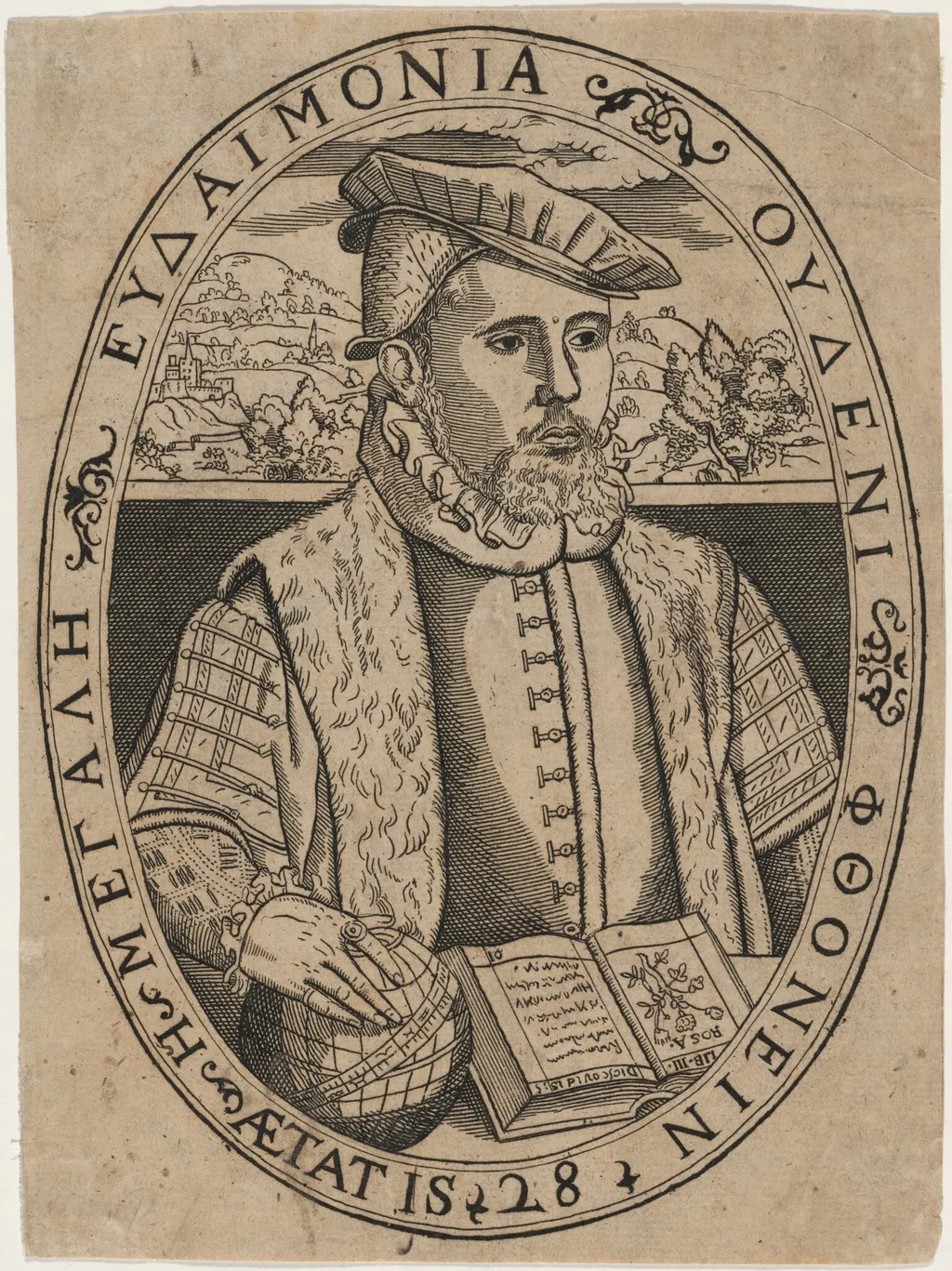
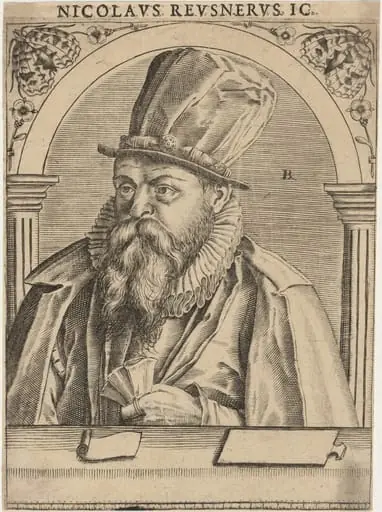
Portrait of a Man is an ink print by the Romanticist artist Unknown 19th Century. It dates from 1850 and is held in the collection of the National Gallery of Art. This black-and-white engraving depicts a man’s portrait, rendered with fine linear detail typical of early printmaking.
About this work
Overview
His formal attire—including a hat and fur-lined collar—and the inclusion of a book and scroll convey scholarly or civic status.
This black-and-white engraving depicts a man’s portrait, rendered with fine linear detail typical of early printmaking. His formal attire—including a hat and fur-lined collar—and the inclusion of a book and scroll convey scholarly or civic status. The background features two miniature scenes: a cityscape and a harbor, framed by an ornate border inscribed with text, likely identifying the subject and recording dates of significance.
Subject & Meaning
The figure is portrayed with solemn composure, suggesting a person of authority or learning. The book and scroll imply intellectual engagement, while the maritime and urban scenes behind him may reference his profession, patronage, or place of origin. The elaborate border, filled with inscriptions, functions as a formal identifier, reinforcing the portrait’s role as a record of status rather than mere likeness.
Technique & Style
Executed in engraving, the image relies on incised lines on a metal plate to create tonal variation and texture. Fine cross-hatching defines the fur collar and facial features, while the background scenes are rendered with precise, miniature detail. The dense, decorative border contrasts with the restrained focus on the face, reflecting a blend of portraiture and emblematic design common in early printed works.
History & Provenance
The inclusion of inscribed dates and names suggests the print was produced to commemorate a specific individual, possibly a civic leader, scholar, or merchant. Such engravings were often circulated among elite circles or used as personal keepsakes. While the exact origin is unconfirmed, the style aligns with Northern European printmaking traditions of the late 15th to early 16th centuries.
Context
During the period this work likely originated, engraved portraits served as tools for personal and professional identity, especially among literate urban classes. The integration of symbolic scenes and textual elements mirrored the humanist emphasis on knowledge and civic duty. Unlike painted portraits, engravings allowed wider dissemination, making them valuable for documenting individual achievement beyond aristocratic circles.
Legacy
This print exemplifies how early print technology transformed portraiture from exclusive commissions into reproducible records of individual identity. Its combination of likeness, symbolism, and inscription influenced later engraved portraits in both religious and secular contexts, establishing a visual language that linked personal status with intellectual and geographic identity.
Artist & collection

Artist

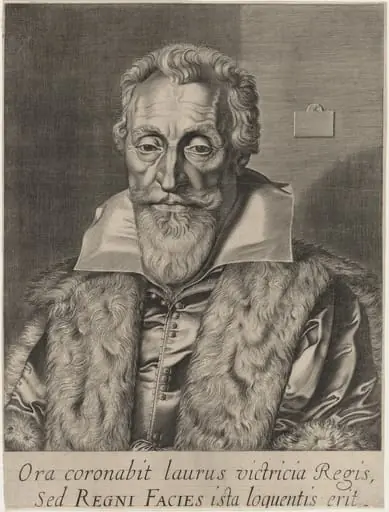
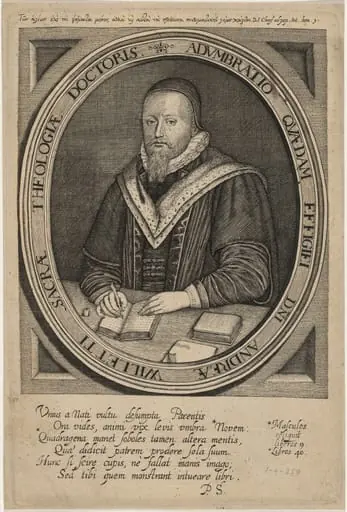 Andrew Willet, D.D., Controversionalist
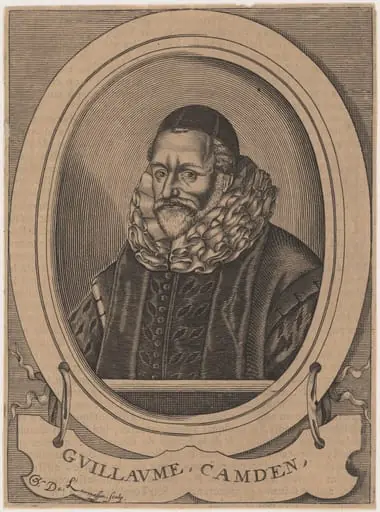 William Camden, Herald, Antiquary and Historian
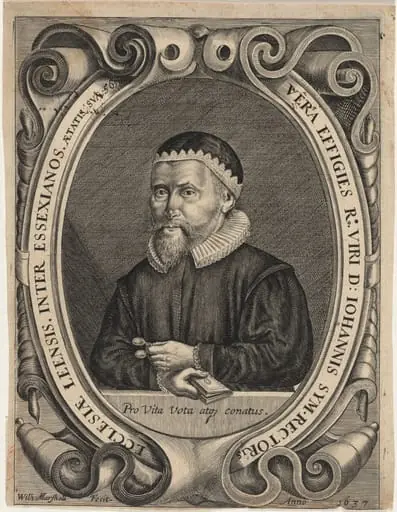 John Sym, Rector of Leigh and Essex
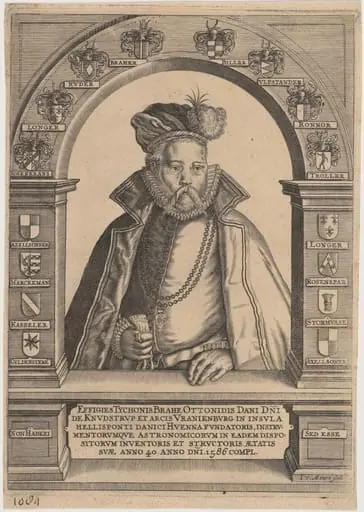 Tycho de Brahe
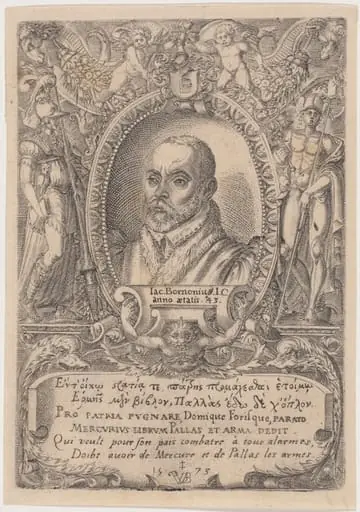 Jacob Bornonius
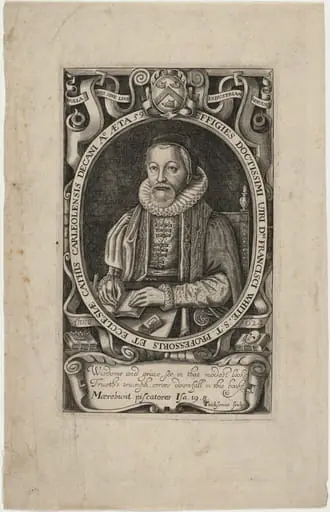 Francis White, Bishop of Ely
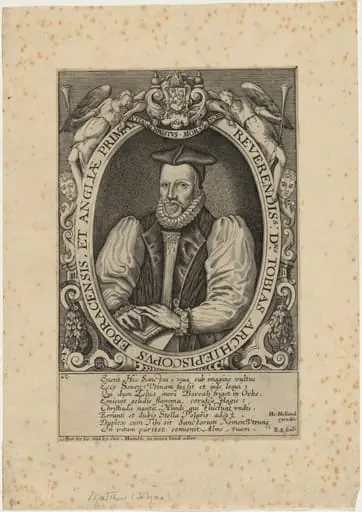 Tobias Matthew, D.D., Archbishop of York
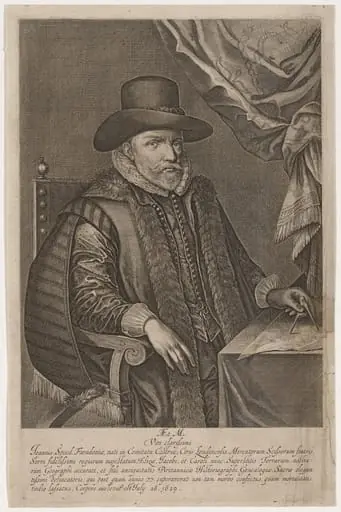 John Speed
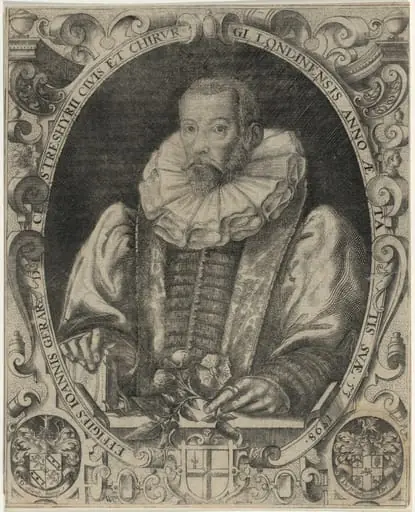 John Gerard, Herbalist
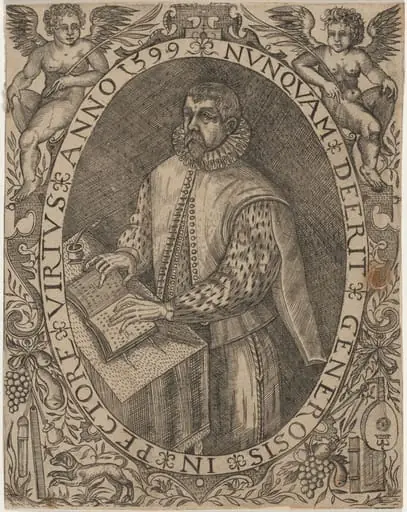 John Dee (?)
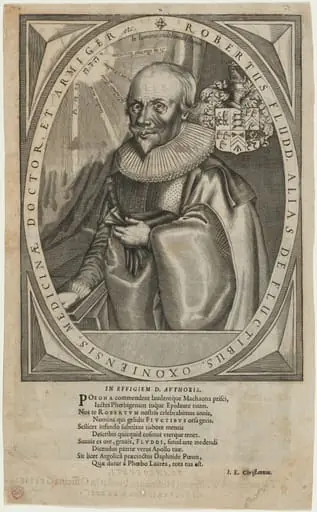 Dr. Robert Fludd, Physician and Rosicrucian
 Nicolas Reusner