Artwork
William Camden, Herald, Antiquary and Historian
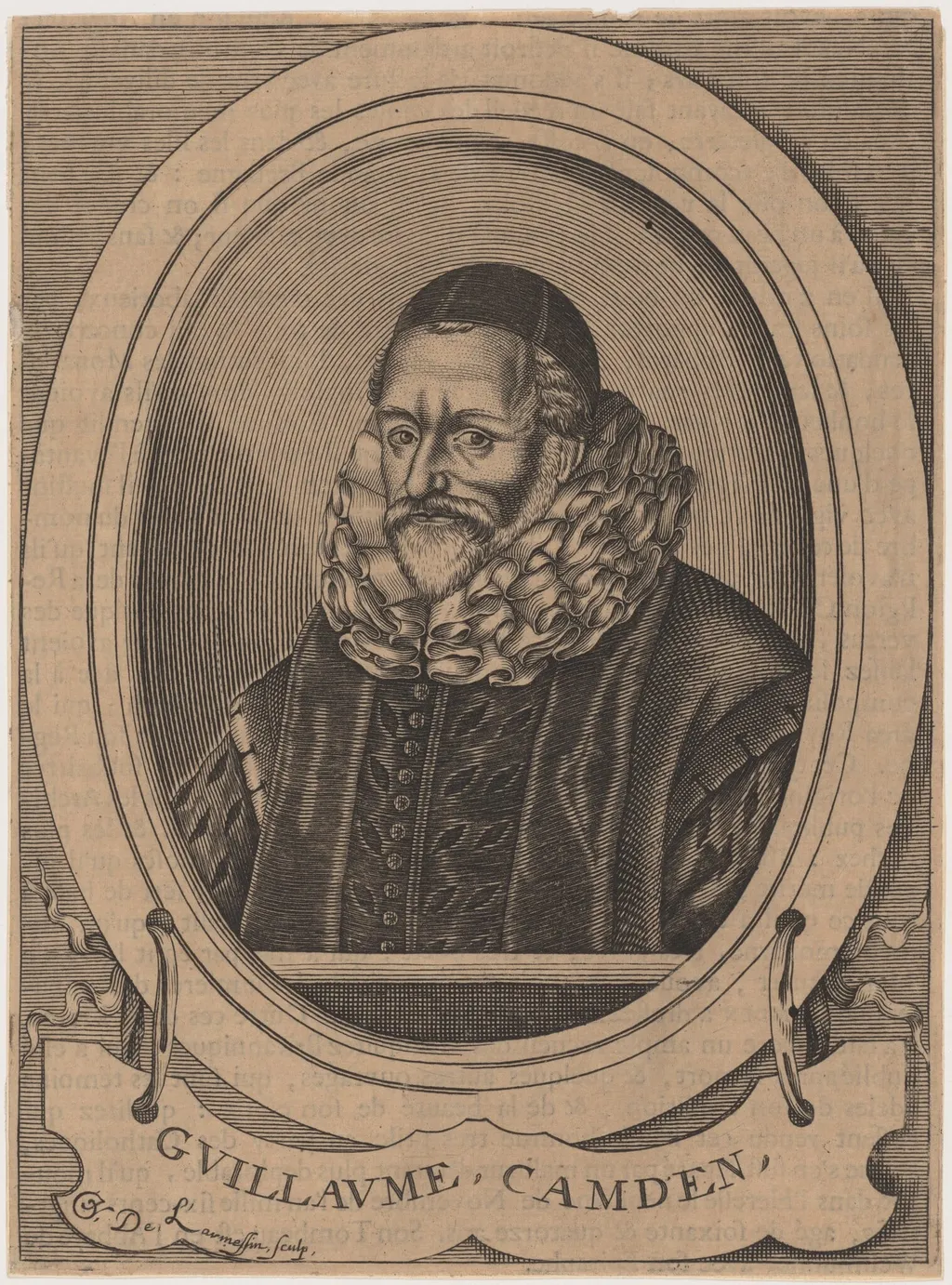
William Camden, Herald, Antiquary and Historian is an ink print by the Baroque artist Nicolas de Larmessin IV. It dates from 1720 and is held in the collection of the National Gallery of Art.
About this work
Overview
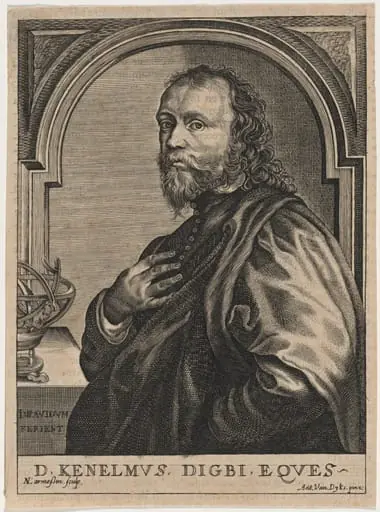
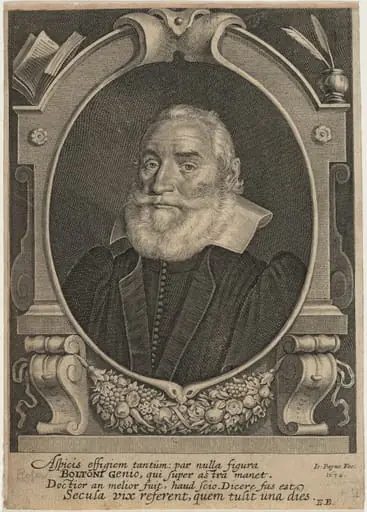
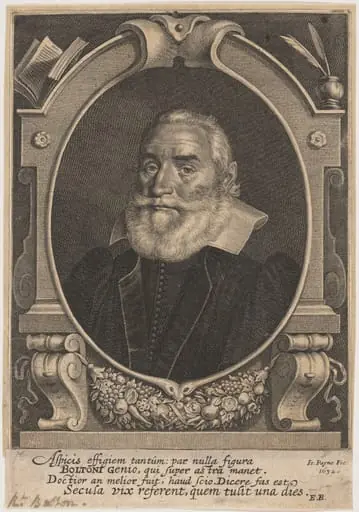
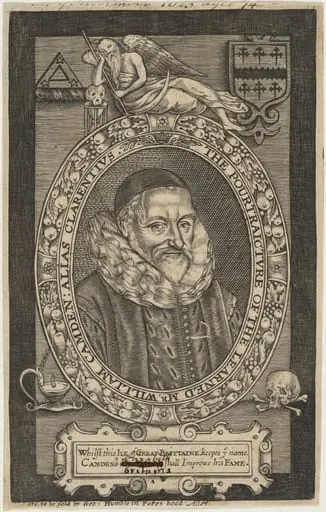
This black-and-white engraving, produced in 1720 by Nicolas de Larmessin IV, depicts William Camden, a prominent English antiquary and historian.
This black-and-white engraving, produced in 1720 by Nicolas de Larmessin IV, depicts William Camden, a prominent English antiquary and historian. Rendered in fine linear detail, the portrait captures Camden in formal attire with a high collar and ruffled shirt. The image is enclosed within an ornate oval frame adorned with delicate scrolls, typical of early 18th-century print design. His name, spelled 'Gvillaume Camden,' appears beneath his chin in stylized script.
Subject & Meaning
William Camden was a foundational figure in English historical scholarship, known for his meticulous documentation of British antiquities and genealogies. The portrait emphasizes his scholarly identity rather than his heraldic office, aligning with his legacy as a chronicler of national heritage. The formal dress and restrained composition reflect the dignity associated with learned men of the period, reinforcing his status as a keeper of historical memory.
Technique & Style
Executed with a burin, the engraving relies on precise incised lines to model form and texture. Cross-hatching creates subtle gradations of tone across Camden’s face and clothing, suggesting volume without color. The decorative border, with its curved filigree and scrollwork, contrasts with the austere realism of the portrait, blending artistic convention with scholarly portraiture common in printed biographical collections of the era.
History & Provenance
The print was made nearly a century after Camden’s death, likely as part of a series illustrating notable scholars. Nicolas de Larmessin IV, a French engraver known for historical and biographical portraits, produced it in Paris. Its creation reflects the continued European interest in English antiquarians during the Enlightenment, when historical scholarship was increasingly valued and disseminated through printed media.
Context
In the early 18th century, engraved portraits of scholars were widely circulated in books and collections, serving both educational and commemorative purposes. Camden’s image, though posthumous, was included in such compilations to honor his role in establishing systematic historical research in England. The use of French engravers for English subjects highlights the transnational exchange of intellectual and artistic practices across Europe.
Legacy
Though not original to Camden’s lifetime, this engraving became one of the most reproduced images of him, shaping later visual representations. Its clarity and formal tone ensured its adoption in historical texts and academic publications. As a product of Enlightenment print culture, it helped cement Camden’s enduring association with the discipline of antiquarian study in the public imagination.
Artist & collection