Artwork
Robert Dudley, Earl of Leicester
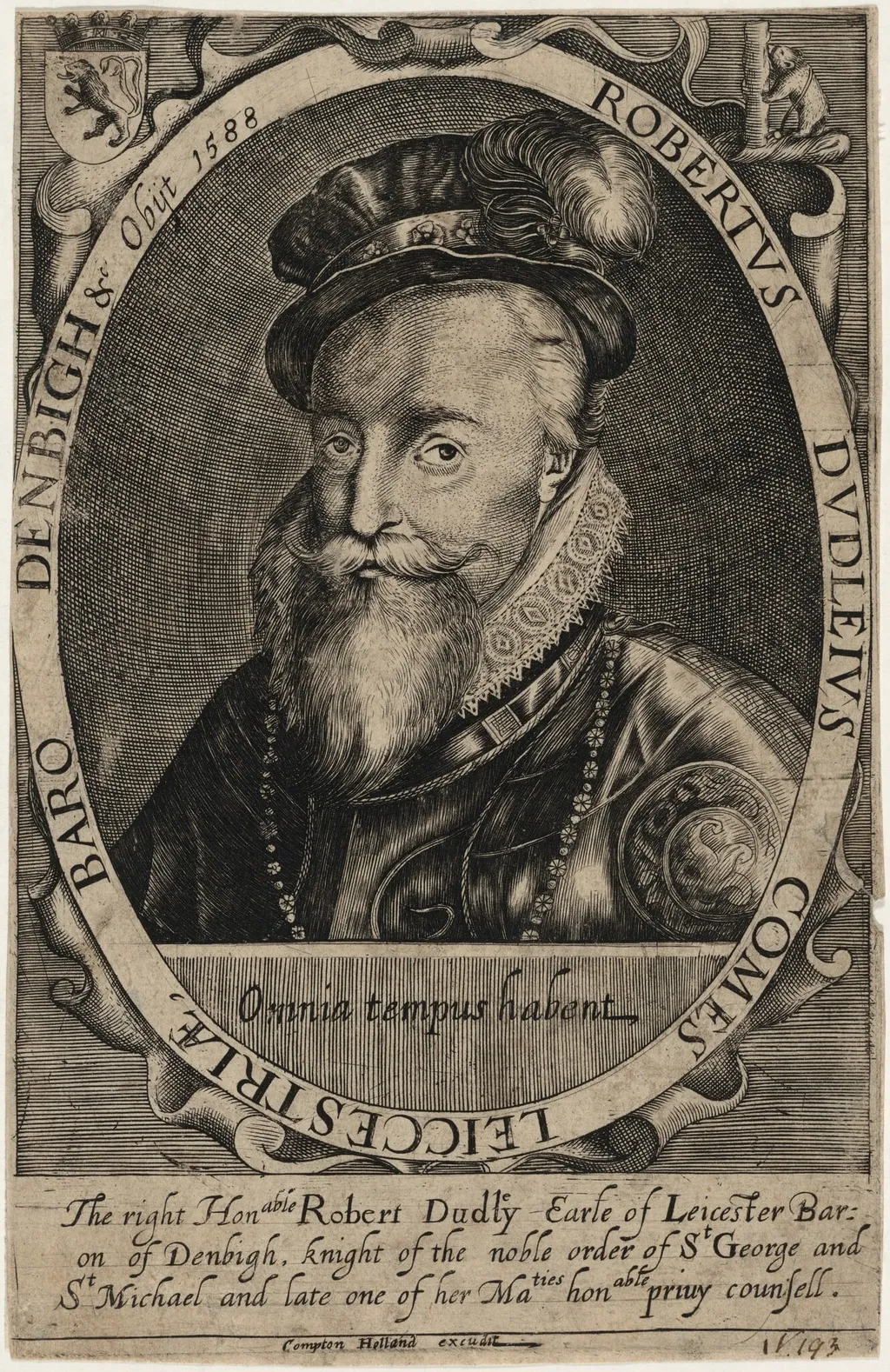
Robert Dudley, Earl of Leicester is an ink print by the Romanticist artist Unknown 19th Century. It dates from 1850 and is held in the collection of the National Gallery of Art.
About this work
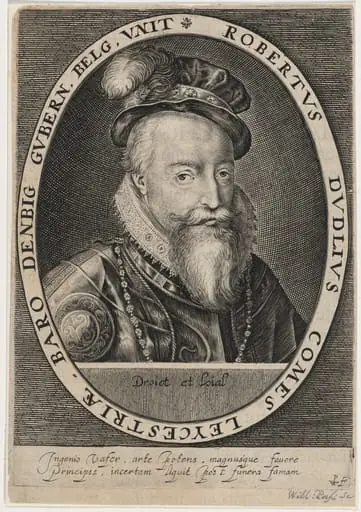
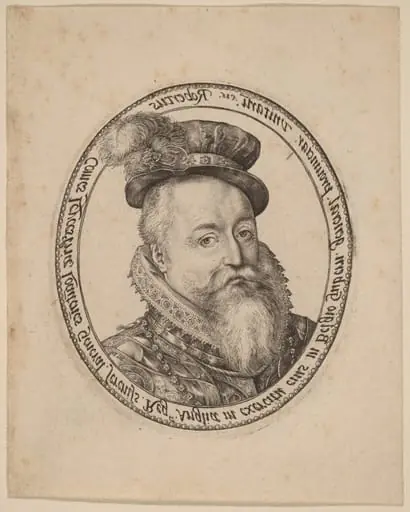
The oval border is decorated with text, including the subject's name, "ROBERTVS DUDLEIVS COMES LEICESTRIAE," and the year "1588.
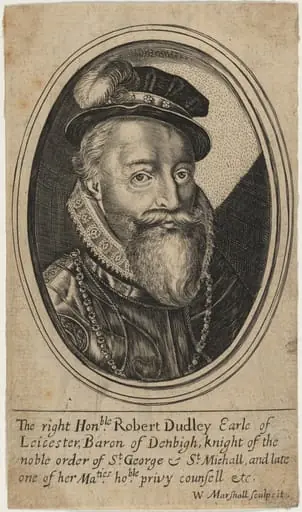
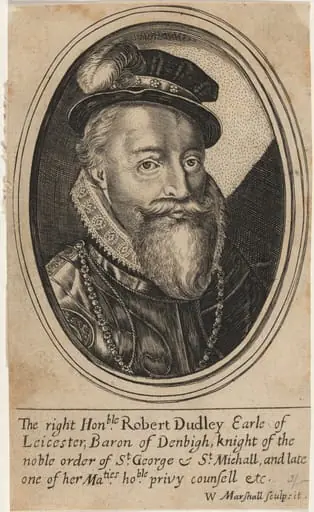
This portrait features a man with a long white beard and mustache, wearing a hat adorned with a feather. He is dressed in a dark jacket with a high collar and a lace ruff around his neck. The image is rendered in black and white, with a prominent oval border that frames the subject's face and upper body.
The oval border is decorated with text, including the subject's name, "ROBERTVS DUDLEIVS COMES LEICESTRIAE," and the year "1588." The background of the image is a plain gray color, which helps to focus attention on the subject's face and clothing.
The level of detail in this engraving suggests a high level of skill on the part of the artist, who is unknown. To learn more about the techniques used to create this image, look up the technique of cross-hatching.
Overview
This 1588 engraving portrays Robert Dudley, Earl of Leicester, rendered in black and white. The composition centers on the nobleman’s face and upper torso within an oval frame, emphasizing his dignified bearing. A plain gray background recedes, allowing the intricate details of his attire and facial features to dominate the viewer’s attention.
Subject & Meaning
Robert Dudley, identified by the Latin inscription "ROBERTVS DUDLEIVS COMES LEICESTRIAE," appears as a mature figure with a long white beard and moustache, signifying age and authority. His hat, topped with a feather, and the elaborate lace ruff suggest his high social rank and courtly status in late‑sixteenth‑century England.
Technique & Style
The work is executed as an engraving, employing fine lines to achieve delicate shading and textural contrast. The artist’s skill is evident in the precise rendering of facial hair, fabric folds, and ornamental details, while the oval border integrates typographic elements with the visual composition.
History & Provenance
Printed in 1588, the portrait likely served as a commemorative image of Dudley, who was a prominent political figure and close confidant of Queen Elizabeth I. The identity of the engraver remains unknown, and the print would have been circulated among elite circles as a representation of his status.
Context
During the late Tudor period, portrait prints functioned as a means of disseminating the likenesses of influential individuals. This engraving aligns with contemporary practices of using Latin captions and decorative borders to convey both information and aesthetic refinement.
Artist & collection

Artist