Artwork
Sir Aston Cockain, Poet
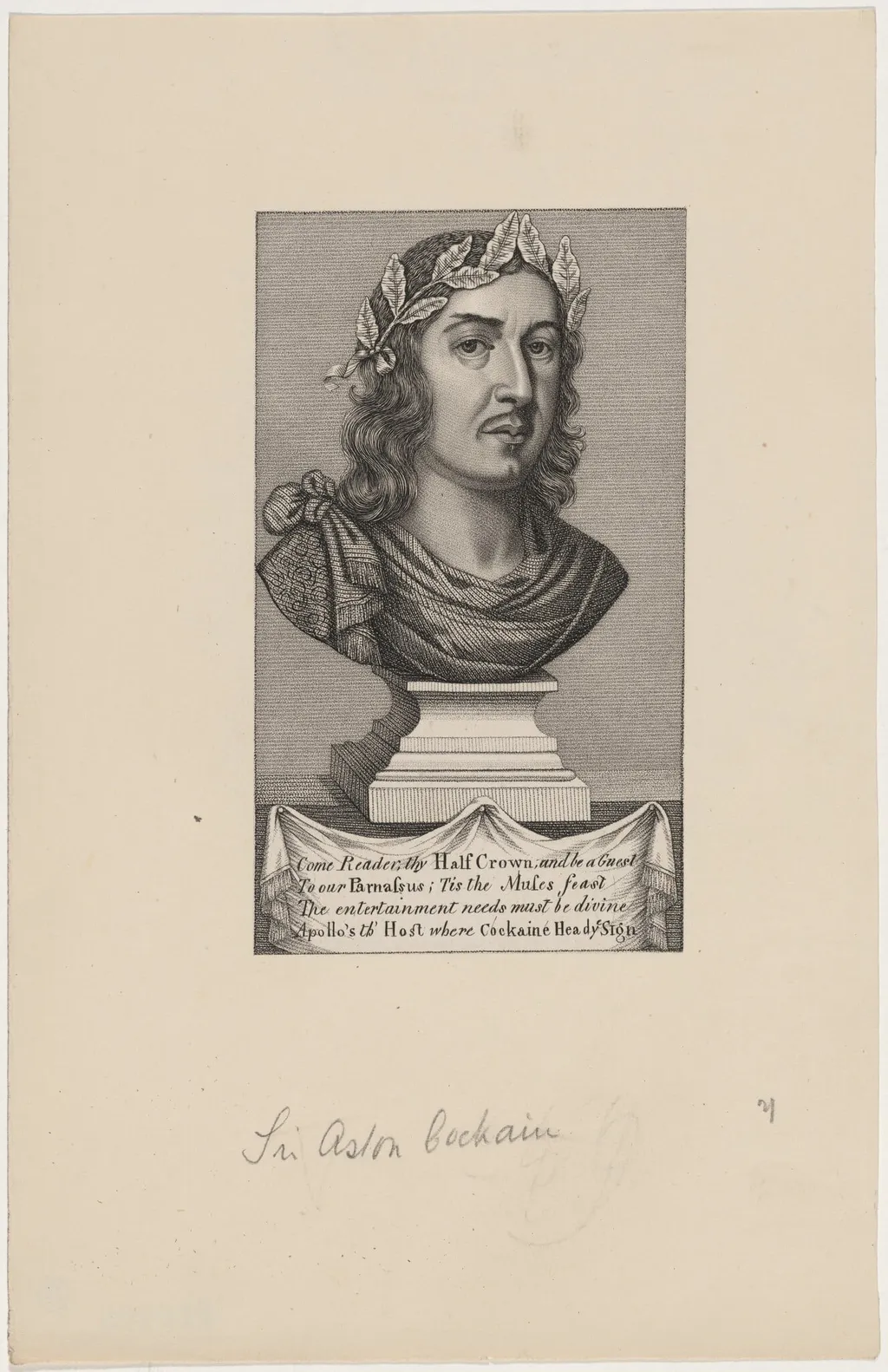
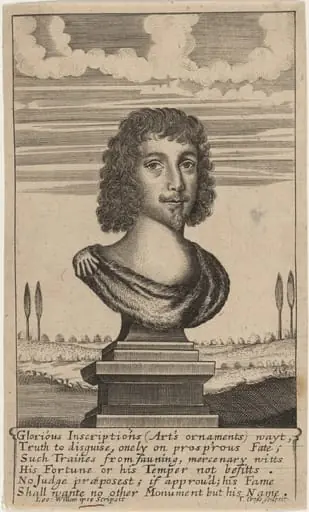
Sir Aston Cockain, Poet is an ink print by the Romanticist artist Unknown 19th Century. It dates from 1850 and is held in the collection of the National Gallery of Art.
About this work
Overview
The figure rests on a pedestal that bears a lengthy inscription in early‑modern English, addressing the viewer and invoking Barnabas, mules, and Apollo.
The print presents a classical bust rendered in stipple engraving, showing a man with flowing hair crowned by a laurel wreath and draped in a robe. The figure rests on a pedestal that bears a lengthy inscription in early‑modern English, addressing the viewer and invoking Barnabas, mules, and Apollo. A uniform gray background isolates the composition, emphasizing the relief‑like quality of the portrait.
Subject & Meaning
The bust likely represents a poet named Sir Aston Cockain, suggested by the title. The laurel wreath signals poetic achievement, while the inscription—addressing the reader as a “guest” and invoking mythic references—creates a playful, perhaps satirical, dialogue between the poet and his audience, hinting at themes of patronage and artistic celebration.
Technique & Style
Executed in stipple, the image is built from countless fine dots that produce soft tonal transitions, a method popular in the 18th‑century print market for its ability to mimic drawing. The absence of cross‑hatching and the smooth gray field behind the figure enhance the three‑dimensional illusion, giving the bust a delicate, almost sculptural presence on paper.
History & Provenance
The work is catalogued as a print of uncertain date, attributed to a stipple engraver whose identity remains unclear. No museum records or collector marks accompany the piece, and the inscription’s idiosyncratic spelling suggests a private or limited circulation, possibly produced for the poet’s own circle or as a commemorative token.
Artist & collection

Artist