Artwork
Thomas Percy, Gunpowder Plot Conspirator
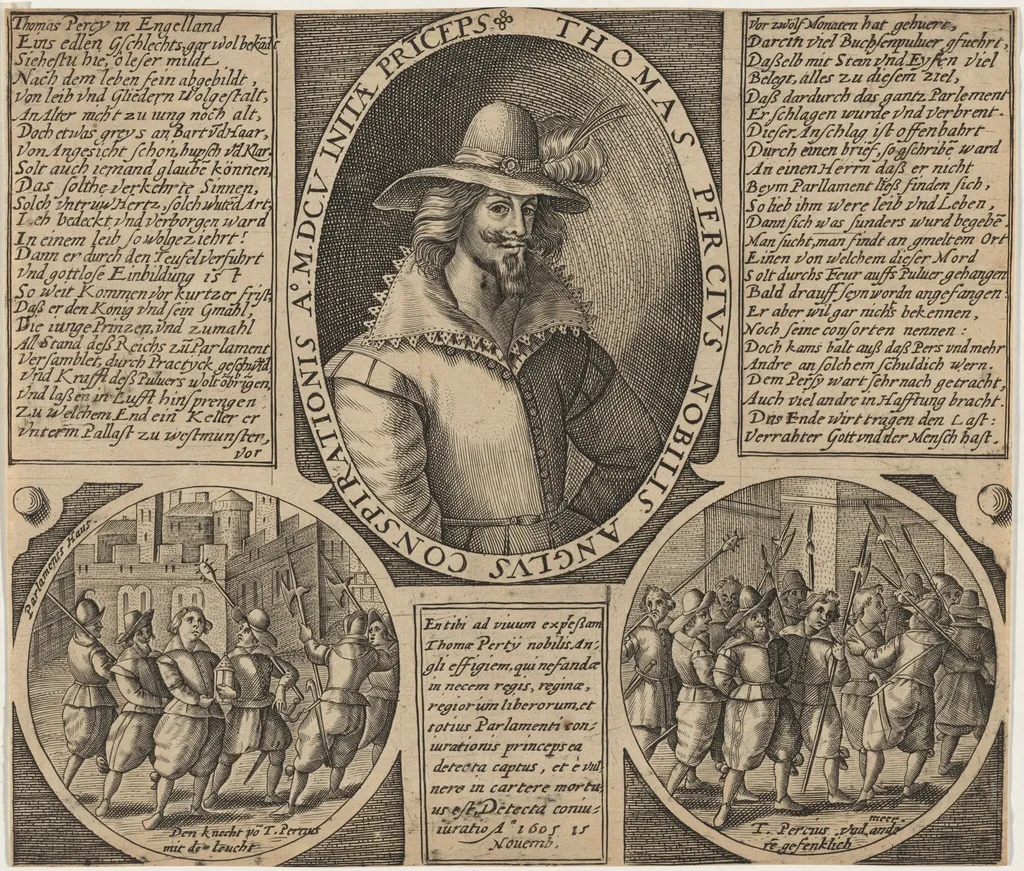
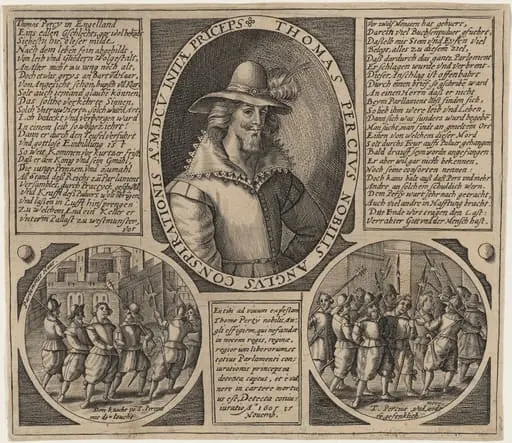
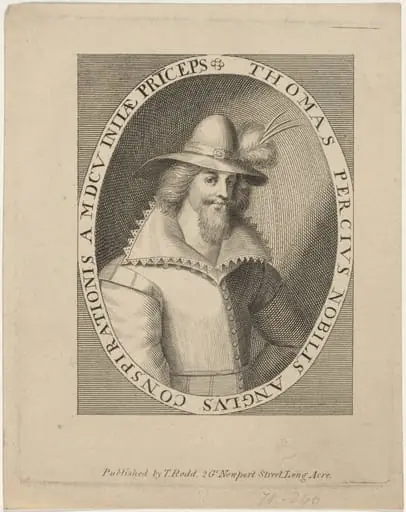
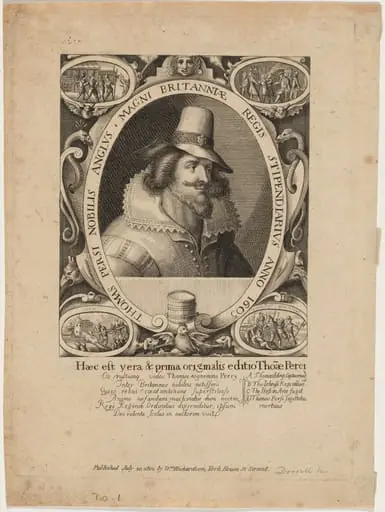
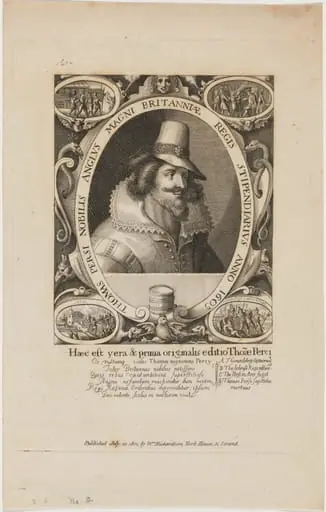
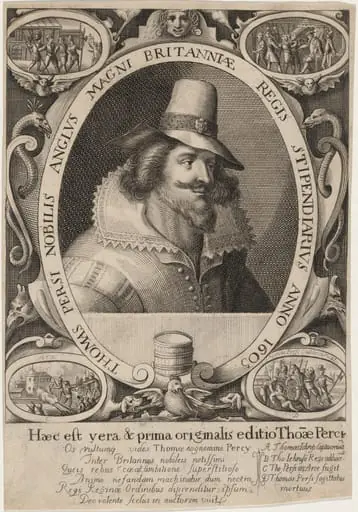
Thomas Percy, Gunpowder Plot Conspirator is an ink print by the Romanticist artist Unknown 19th Century. It dates from 1850 and is held in the collection of the National Gallery of Art. This engraving depicts Thomas Percy, a conspirator in the Gunpowder Plot, in a somber and detailed representation.
About this work
Overview
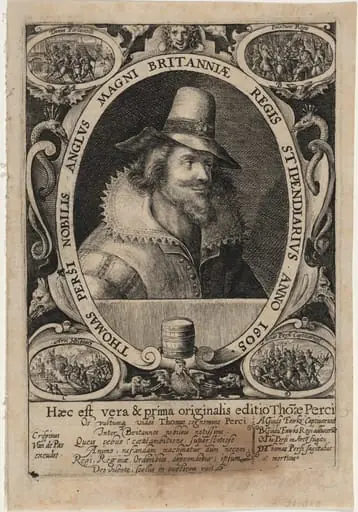
This engraving depicts Thomas Percy, a conspirator in the Gunpowder Plot, in a somber and detailed representation. The print combines a central portrait with two peripheral scenes, all rendered in fine lines on metal.
Subject & Meaning
At the center is Thomas Percy, identified by text as a participant in the Gunpowder Plot. Surrounding scenes show nocturnal procession with torches and a crowd observing a fire, likely alluding to the plot's nocturnal nature and its intended explosive outcome.
Technique & Style
The work showcases meticulous engraving on metal, characterized by dense, fine lines. The dramatic and dark aesthetic aligns with the prevailing artistic tastes of the time, emphasizing drama and historical narrative.
History & Provenance
While specific details about the engraving's creation date and artist are not provided, its style suggests production during a period favoring dramatic historical illustrations, potentially soon after the plot (1605) when such subjects were timely.
Context
Created in an era captivated by dramatic historical events, this engraving reflects the public's fascination with the Gunpowder Plot's conspiracy and drama. It may have served as a form of news dissemination or historical record.
Legacy
As a detailed, dramatic piece from its time, the engraving contributes to the visual legacy of the Gunpowder Plot in historical memory, though its broader influence on art or its current prominence in collections is not specified.
Artist & collection

Artist