Artwork
A blindfolded suitor is brought before a princess; verso: scrolling floral vines
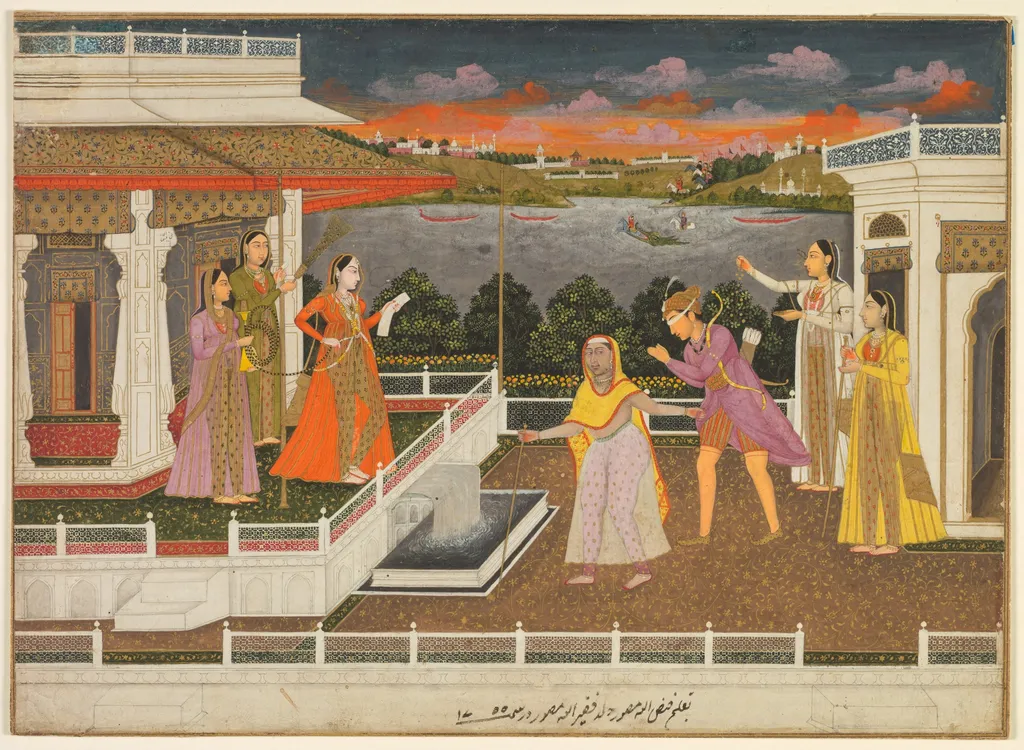
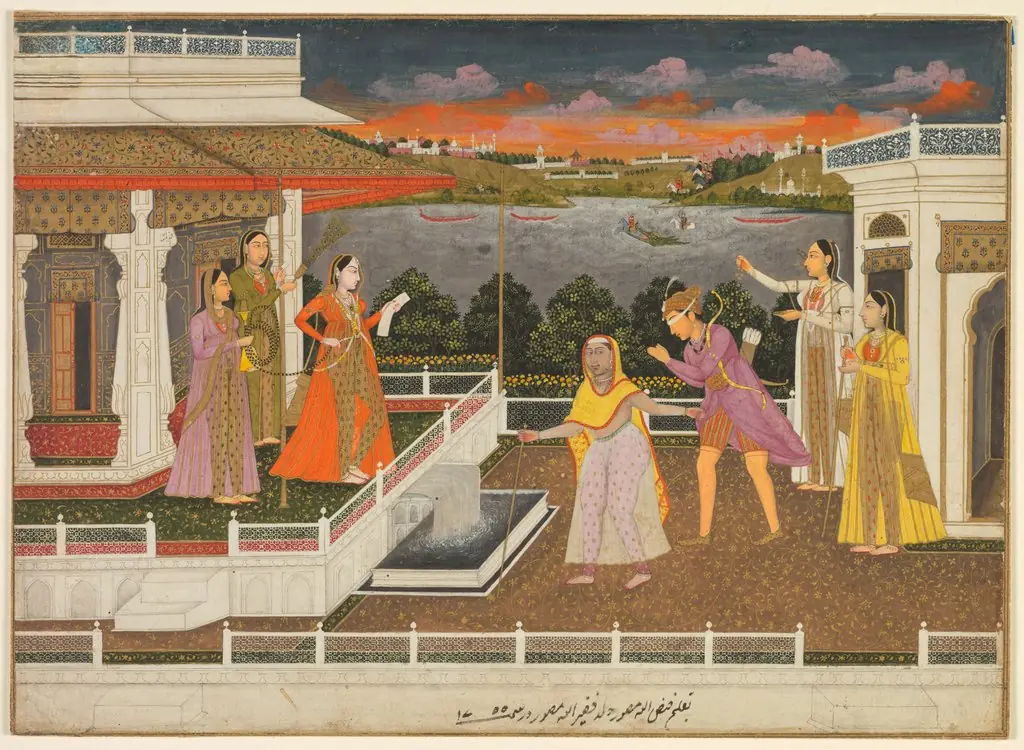
A blindfolded suitor is brought before a princess; verso: scrolling floral vines is an unspecified painting. It dates from 1755 and is held in the collection of the Cleveland Museum of Art. The work depicts a blindfolded male figure, robed in purple, being escorted by a woman toward a balcony where a group of women observe.
About this work
Overview
The work depicts a blindfolded male figure, robed in purple, being escorted by a woman toward a balcony where a group of women observe. The balcony scene is set against a landscape of trees, water, and distant boats. The women are dressed in vivid garments, one holding a document, creating a tableau of curiosity and anticipation.
Subject & Meaning
The composition suggests a narrative moment in which the blindfolded suitor is presented before a princess or courtly audience. The act of blindfolding may symbolize testing, secrecy, or the unknown, while the women's attentive gaze and the held paper hint at judgment or a forthcoming decision within a courtly or ceremonial context.
Technique & Style
The painting employs a rich palette of saturated colors, especially in the women's attire, and detailed rendering of foliage and water. Subtle gradations of tone and atmospheric depth are achieved through a sfumato-like blending, softening edges and unifying the scene while preserving intricate decorative elements such as the floral vines on the reverse side.
Context
The inclusion of a decorative verso featuring scrolling floral vines indicates the work was likely intended as a paired piece, possibly for a domestic or ceremonial setting. The presence of a balcony and water landscape aligns with artistic conventions that blend interior court scenes with idealized natural surroundings, common in late medieval to early Renaissance visual narratives.
Legacy
While the artist remains unidentified, the painting’s sophisticated use of color, narrative detail, and sfumato technique reflect a high level of craftsmanship that informs studies of transitional styles between medieval iconography and emerging Renaissance naturalism.
Artist & collection