Artwork
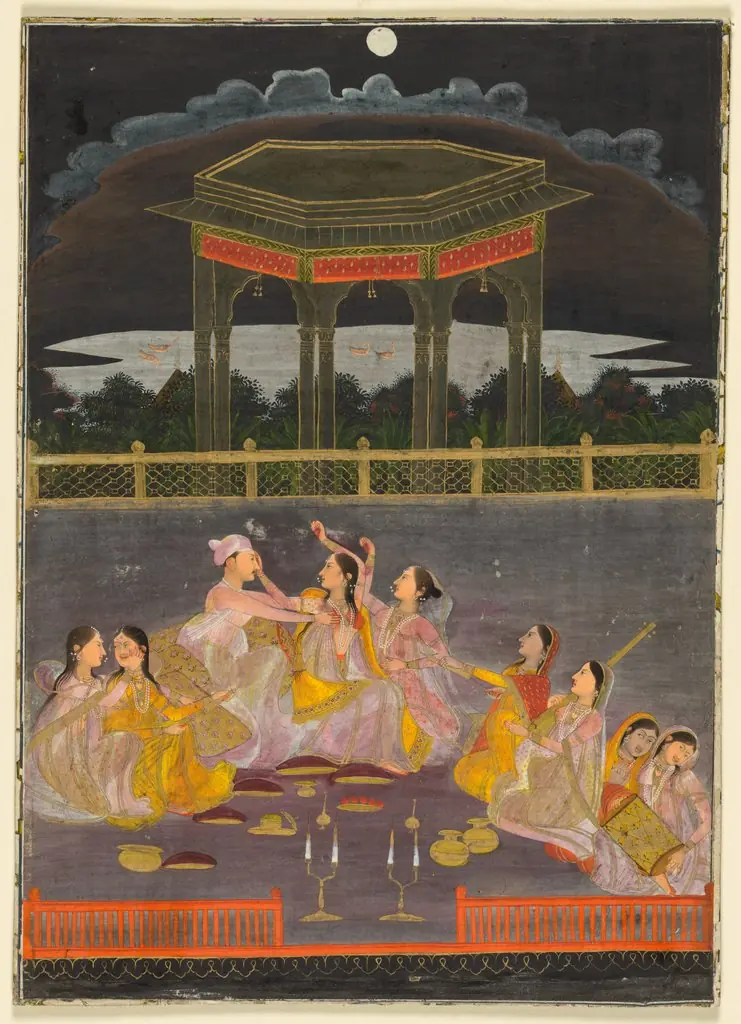
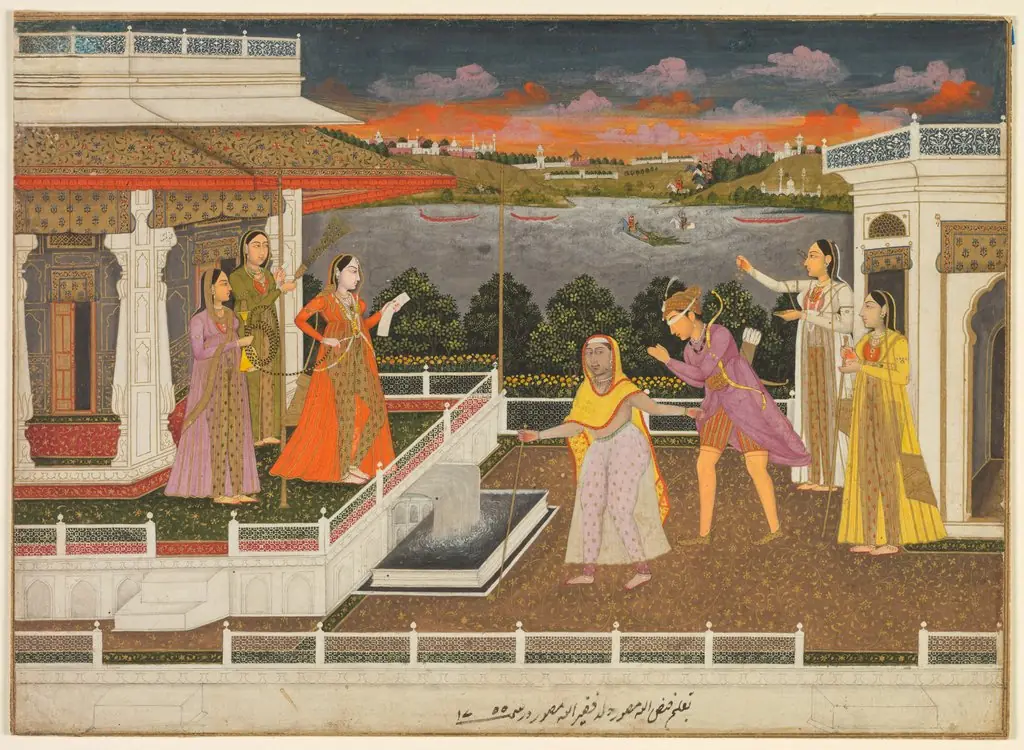
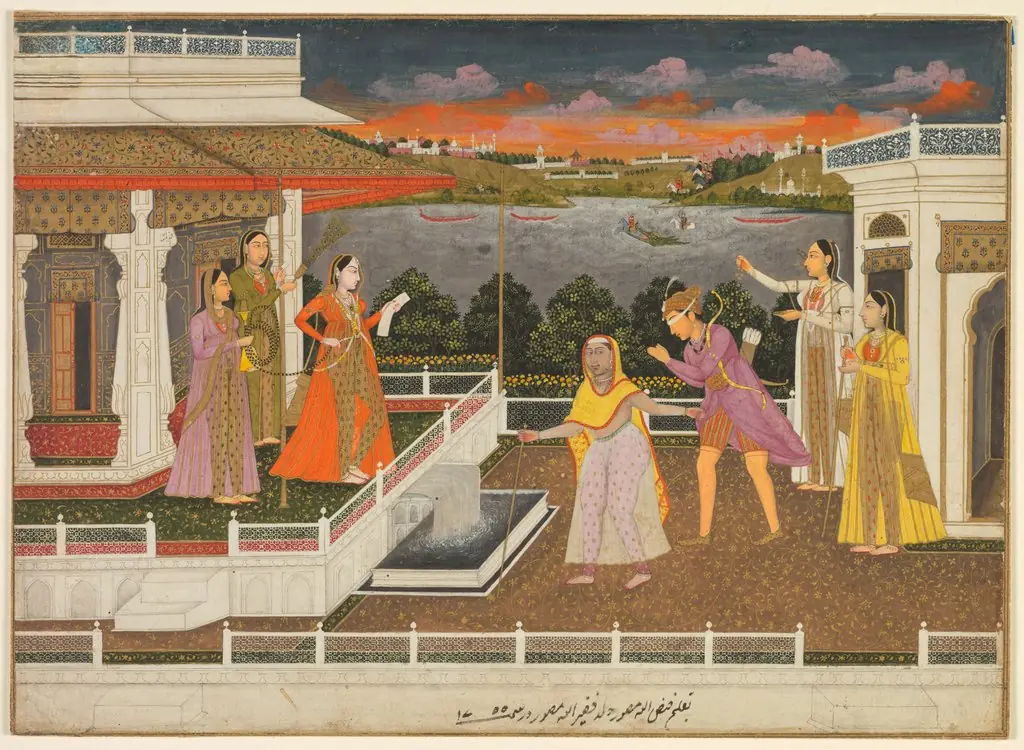
A prince celebrating Holi with palace women on a terrace at night (recto); calligraphy of a quatrain (verso)
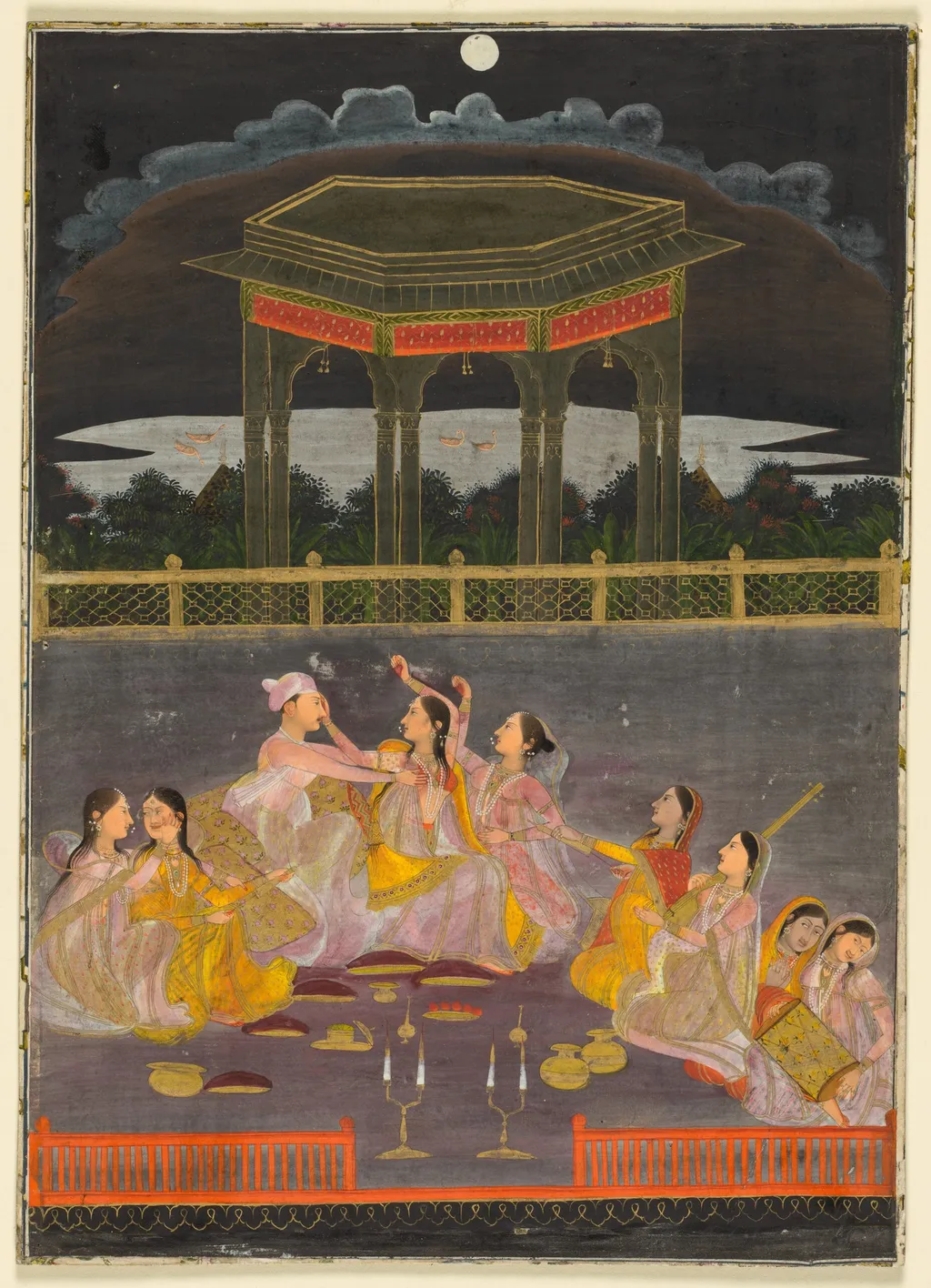
A prince celebrating Holi with palace women on a terrace at night (recto); calligraphy of a quatrain (verso) is an unspecified painting. It dates from 1760 and is held in the collection of the Cleveland Museum of Art. The work depicts a nocturnal gathering on a palace terrace, illuminated by moonlight and a pavilion’s lanterns.
About this work
Overview
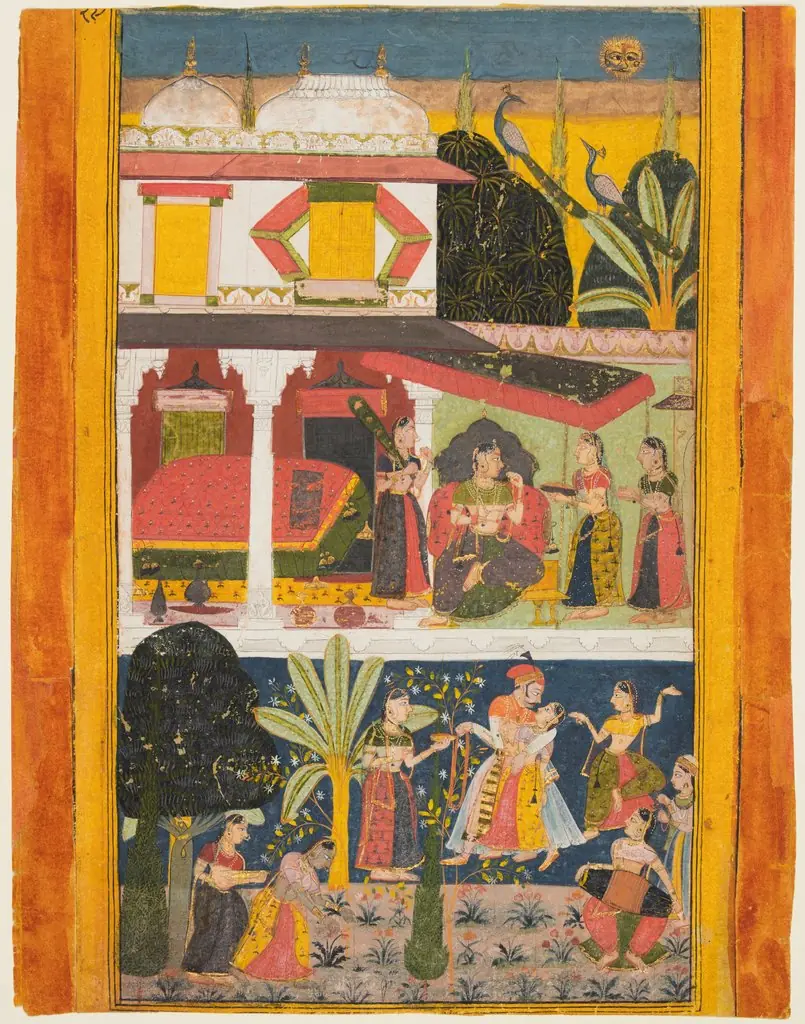
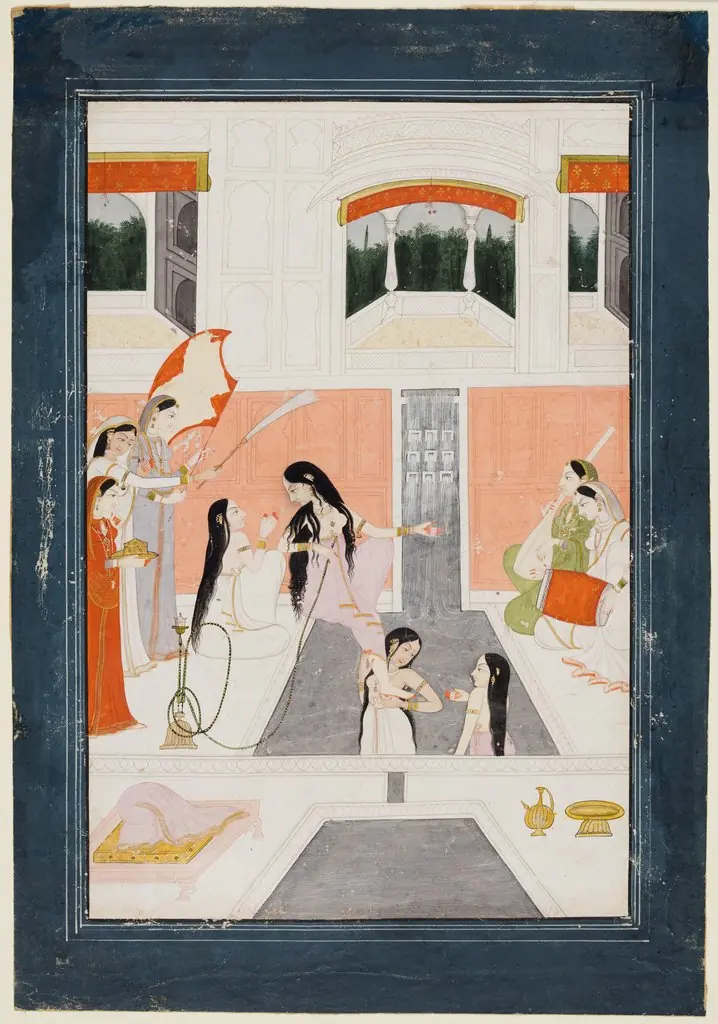
The work depicts a nocturnal gathering on a palace terrace, illuminated by moonlight and a pavilion’s lanterns. Figures in vivid pink, yellow and gold garments dance, play music, and share food around a low table set with candles. A central male figure holds a woman's hand, suggesting a celebratory or ceremonial moment within a festive atmosphere.
Subject & Meaning
The scene captures a Holi celebration, a Hindu spring festival known for its exuberant use of colored powders and communal revelry. The inclusion of palace women and a princely figure indicates a royal patronage of the festivities, highlighting the cultural importance of the event within elite circles.
Technique & Style
Rendered in a detailed painting technique, the artist employs a luminous palette to contrast the bright costumes against the dark night sky. Delicate brushwork defines the intricate patterns on the clothing, while the soft glow of candles and moonlight creates depth and a sense of movement among the participants.
History & Provenance
The piece is catalogued as a double-sided work, with a calligraphic quatrain inscribed on the reverse. Its origins trace to a period when courtly art often combined visual narrative with poetic text, reflecting a tradition of integrating literary and pictorial expression.
Context
Set against a backdrop of a full moon and distant landscape, the painting situates the celebration within an architectural setting typical of Indian palatial complexes. The composition emphasizes communal joy while also showcasing the opulent attire and refined surroundings of the royal court.
Legacy
Works of this type illustrate the fusion of festive ritual and courtly aesthetics in South Asian art, offering insight into the visual culture surrounding Holi and its representation in elite patronage.
Artist & collection