Artwork
A British warship, lying off a Turkish Port, 1850-1860
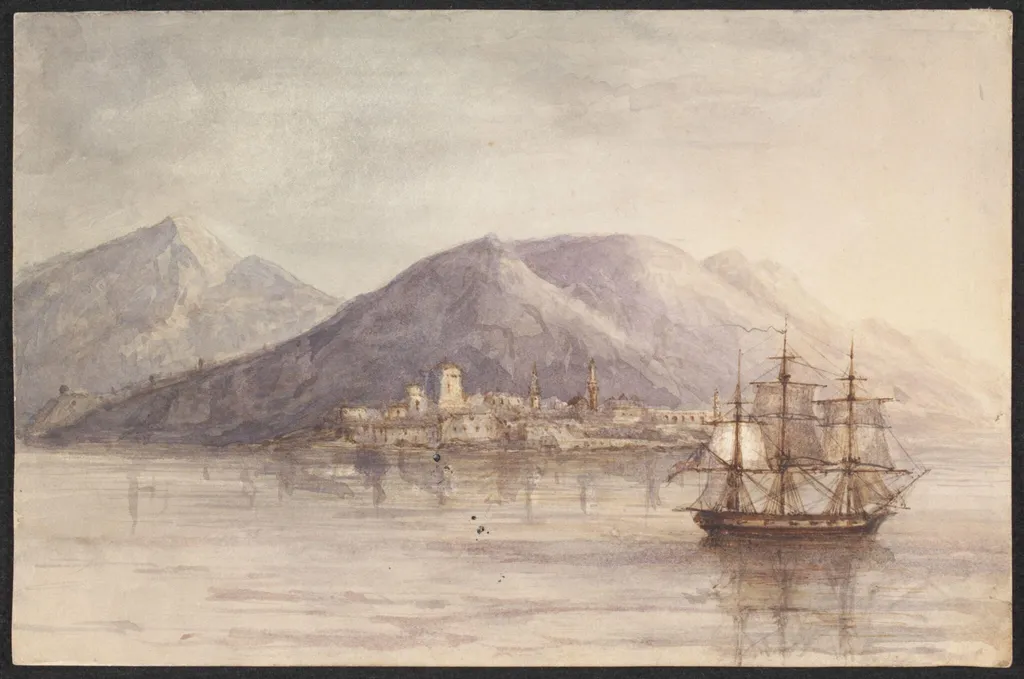
A British warship, lying off a Turkish Port, 1850-1860 is a watercolor work on paper by the British Romanticist artist Unknown. It dates from 1855 and is held in the collection of the Victoria and Albert Museum. This watercolour depicts a British naval vessel at anchor near a modest Turkish coastal settlement, likely created between 1850 and 1860.
About this work
Overview
This watercolour depicts a British naval vessel at anchor near a modest Turkish coastal settlement, likely created between 1850 and 1860.
This watercolour depicts a British naval vessel at anchor near a modest Turkish coastal settlement, likely created between 1850 and 1860. The artist remains unidentified, though the work is tentatively dated to around 1855. Executed in delicate washes, the piece captures a tranquil maritime moment with minimal detail, emphasizing atmosphere over precision. It entered a public collection in 1963 after being acquired from a dealer for 15 shillings.
Subject & Meaning
The scene presents a British warship in a foreign port, its presence unobtrusive yet unmistakable. The vessel, with its tall masts and flying flag, contrasts with the low, unadorned buildings of the town and the distant mountain range. There is no indication of activity or conflict—only quiet coexistence. The image suggests diplomatic or logistical naval presence rather than military action, reflecting the routine nature of imperial maritime operations in the region.
Technique & Style
The artist employed light, fluid watercolour washes to render the scene with a soft, hazy quality. Brushstrokes are loose and suggestive, avoiding sharp definition in favor of tonal gradations. The calm water mirrors the ship and shore with subtle reflections, while the mountains fade into pale blues and greys. This approach prioritizes mood over topographical accuracy, aligning with 19th-century amateur watercolour traditions that valued atmospheric effect over detail.
History & Provenance
The painting was acquired by a public institution in March 1963 from R. Appleby, a London dealer, for 15 shillings. Its earlier ownership is undocumented, and no records link it to a specific naval officer, artist, or commission. Its modest purchase price and lack of signature suggest it was not considered a significant work at the time of acquisition, likely viewed as a personal sketch or decorative piece rather than a formal artwork.
Context
During the mid-19th century, British naval vessels frequently patrolled the eastern Mediterranean, maintaining trade routes and diplomatic influence in the declining Ottoman Empire. Coastal ports like those depicted were common anchorage points. Such watercolours, often made by officers or travellers, served as personal mementos or informal records. This piece reflects the quiet, everyday presence of British naval power in the region, far from the drama of battle.
Legacy
Though unsigned and unremarked upon in its time, the work survives as a quiet testament to the routine maritime life of the British Empire. Its unassuming style and modest provenance place it within a broader category of amateur watercolours produced by travellers and servicemen. It contributes to the visual record of imperial presence without asserting grandeur, offering a subdued counterpoint to more celebrated military art of the period.
Artist & collection

 Domestic Scene
 Giacomo and Cardinal Marco, investing Andrea, Abbot of San Zeno, with his Benefice
 The Nymph of Fontainebleau
 Portrait of a Woman
 Madonna and Child with Saints in the Enclosed Garden
 Venus and Minerva
 Family Group of Four on Sofa
 Wall painting from Room H of the Villa of P. Fannius Synistor at Boscoreale
 Acre
Acre Smyrna
 Isola Bella, Lago Maggiore
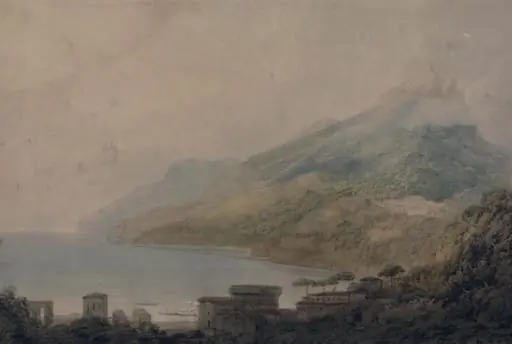 View near Vietri
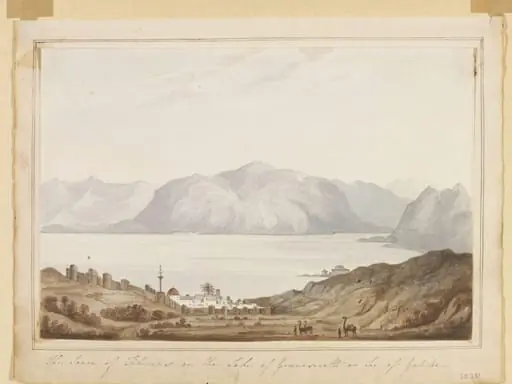 The Town of Tiberias on the Lake of Gennesereth or Sea of Galilee
![Looking towards Leanders Tower and the Sultans New Palace [Dolmabahçe] From Scutari, by Michael Anthony Shrapnel Biddulph](https://artifactworldgallery.com/img/michael-anthony-shrapnel-biddulph--looking-towards-leanders-tower-and-the-sultans-new-palace-do--77513ba4e146ed32-w320.webp) Looking towards Leanders Tower and the Sultans New Palace [Dolmabahçe] From Scutari
Looking towards Leanders Tower and the Sultans New Palace [Dolmabahçe] From Scutari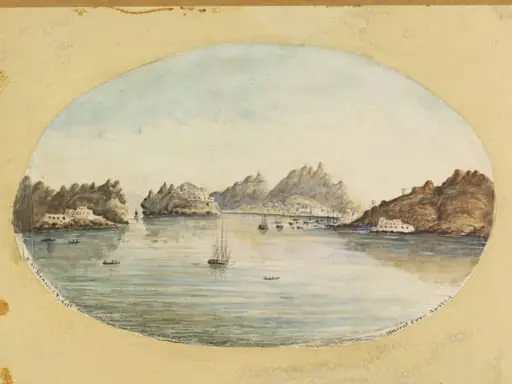 Muscat Cove, Arabia
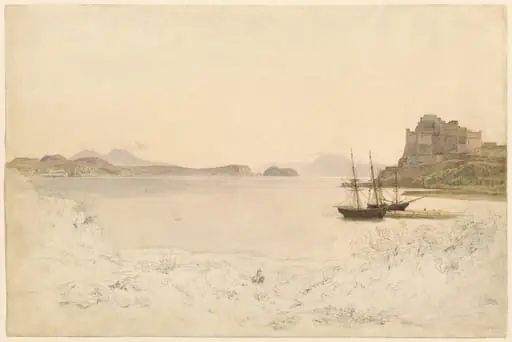 The Gulf of Pozzuoli
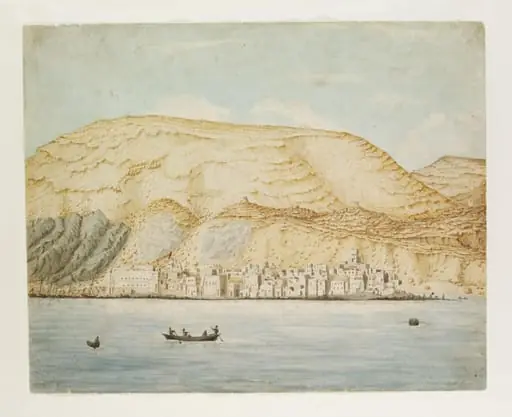 Maculla. Town. Coast of Arabia. Coal Depot
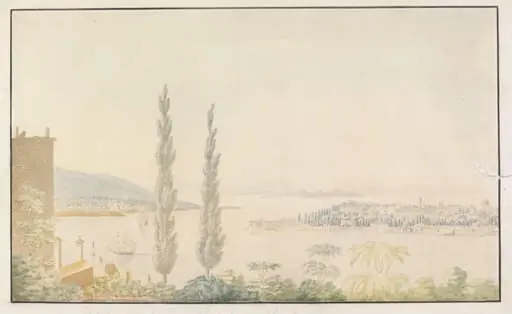 Üsküdar and Saray Burnu from Galata, with the Sea of Marmara in the distance
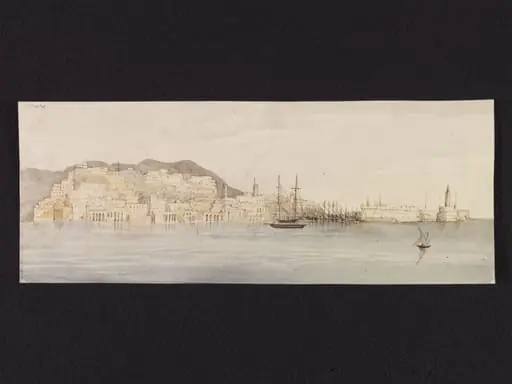 Algiers
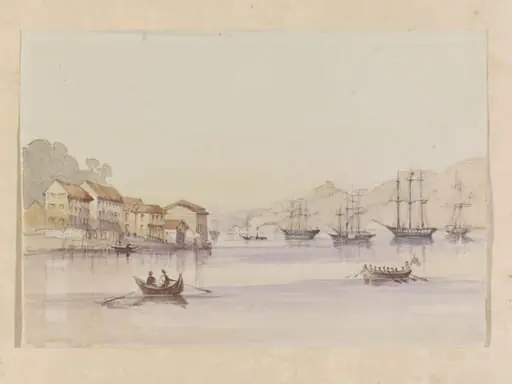 View of the Bosphorus with warships