Artwork
Algiers
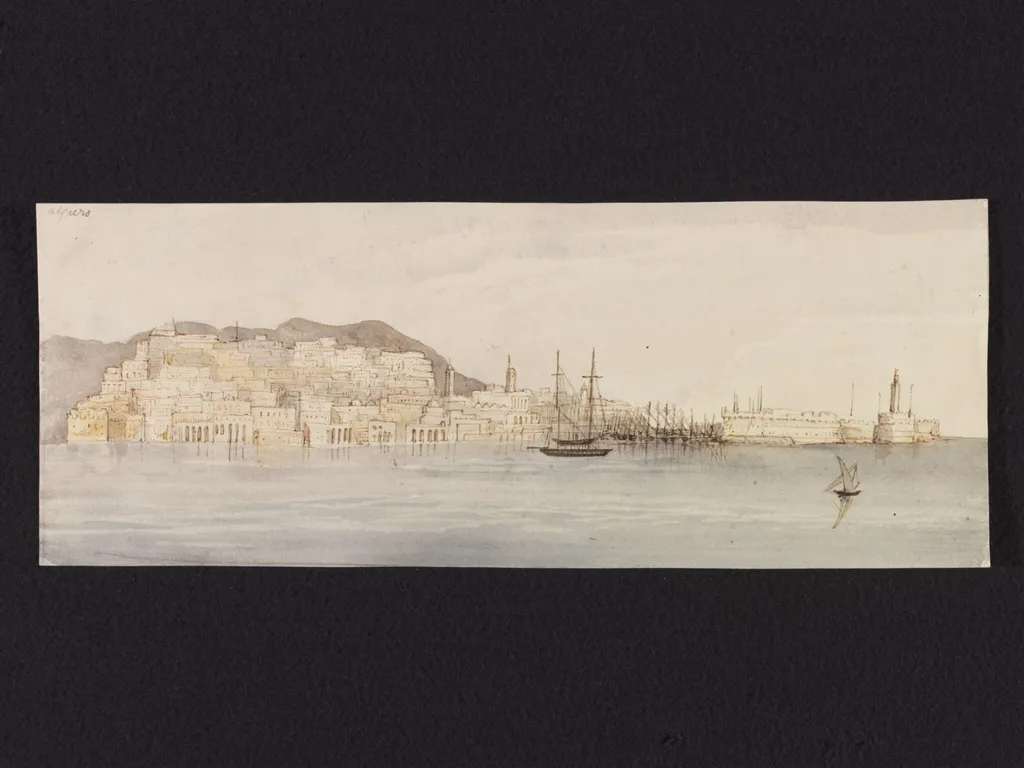
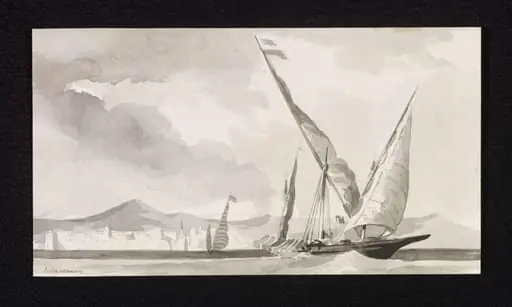
Algiers is a watercolor work on paper by the British Romanticist artist Selina Bracebridge. It dates from 1825 and is held in the collection of the Victoria and Albert Museum.
About this work
Overview
The scene captures the city’s steeply terraced architecture clinging to coastal cliffs, with a bustling harbor below dotted with vessels of varying sizes.
Created in 1825, Selina Bracebridge’s watercolour depicts the North African port city of Algiers as seen from the water. The scene captures the city’s steeply terraced architecture clinging to coastal cliffs, with a bustling harbor below dotted with vessels of varying sizes. Rendered in delicate washes, the work conveys a quiet stillness, emphasizing the harmony between natural topography and human settlement.
Subject & Meaning
The painting presents Algiers not as a site of political or military significance, but as a lived-in landscape shaped by commerce and daily life. The anchored ships suggest active maritime trade, while the dense urban fabric implies a long-established community. The absence of human figures invites contemplation of the city’s rhythm rather than its events, aligning with a quiet, observational approach to place.
Technique & Style
Bracebridge employed loose, transparent watercolour washes to suggest form without rigid definition. The pale sky and calm sea serve as neutral backdrops, allowing the warm ochres and terracottas of the buildings to dominate. Delicate linework outlines rooftops and masts, preserving a sense of spontaneity while maintaining structural clarity—characteristic of a skilled amateur’s disciplined sketching practice.
History & Provenance
The work entered the Victoria and Albert Museum’s collection through a collaborative acquisition supported by The Art Fund, the National Heritage Memorial Fund, Shell International, and the Friends of the V&A. Its journey from private hands to public institution reflects late 20th-century efforts to preserve lesser-known works by women artists and expand the museum’s representation of travel-related watercolours.
Context
Produced during the height of Romanticism, the painting aligns with the era’s fascination with foreign landscapes and atmospheric effects. Unlike grand historical scenes, Bracebridge’s work embraces intimacy and observation, reflecting a growing interest among European travellers—particularly women—in documenting everyday scenes of the Mediterranean world with personal sensitivity.
Legacy
As a work by a relatively obscure female artist of the early 19th century, *Algiers* contributes to broader scholarly efforts to reassess the role of women in the tradition of topographical watercolour. Its preservation and display underscore the value of modest, non-heroic travel art in expanding the narrative of European engagement with North Africa beyond colonial or exoticized frameworks.
Artist & collection
Artist

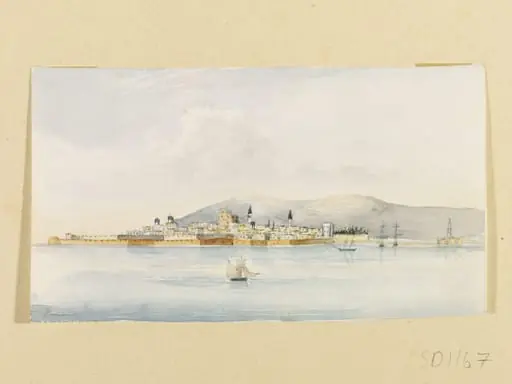 Acre
Acre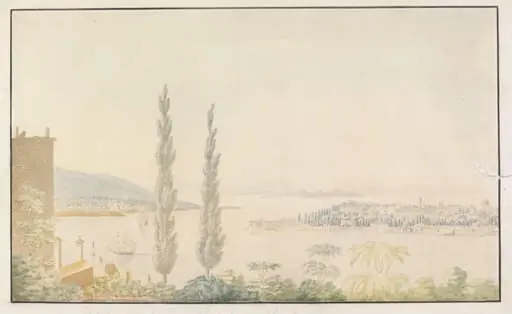 Üsküdar and Saray Burnu from Galata, with the Sea of Marmara in the distance
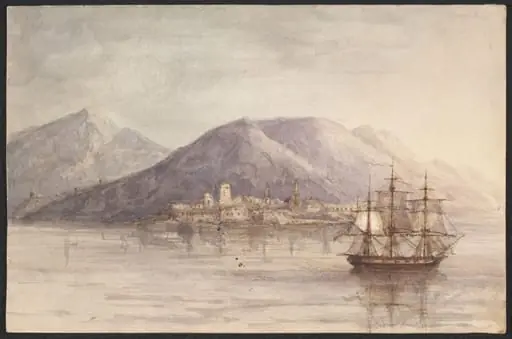 A British warship, lying off a Turkish Port, 1850-1860
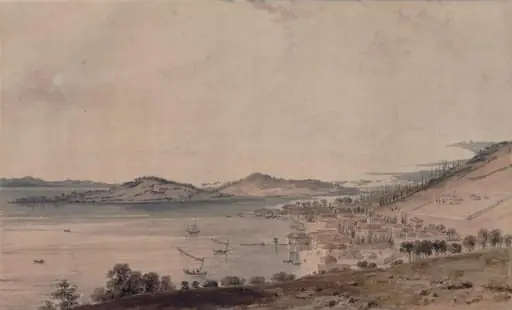 Islands Khalxi and Prinkipos, Sea of Marmora
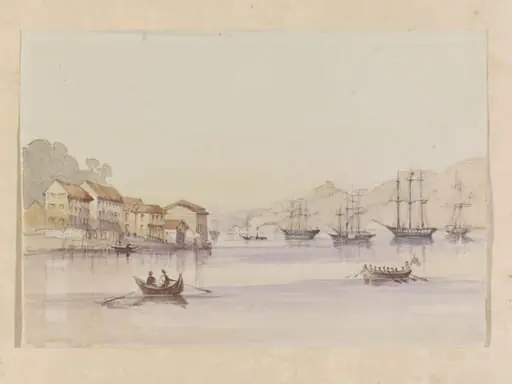 View of the Bosphorus with warships
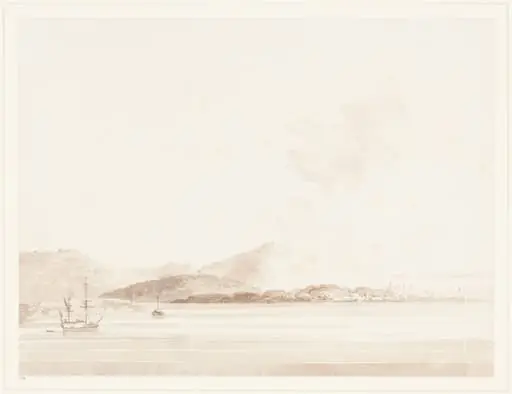 A View in India
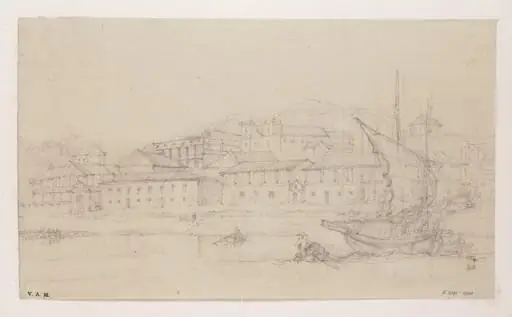 Macau with the church of S. Lourenço
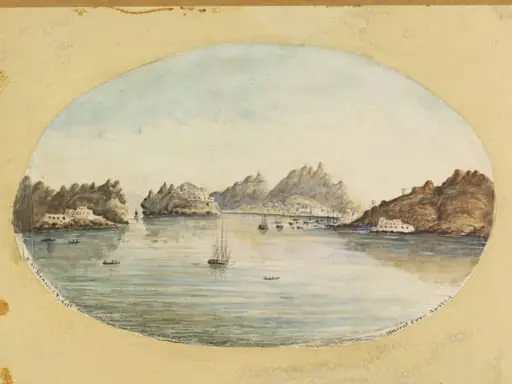 Muscat Cove, Arabia
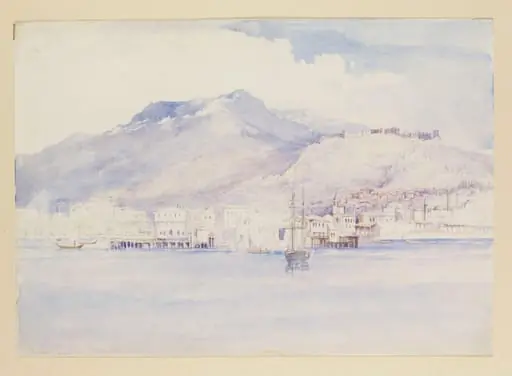 Smyrna
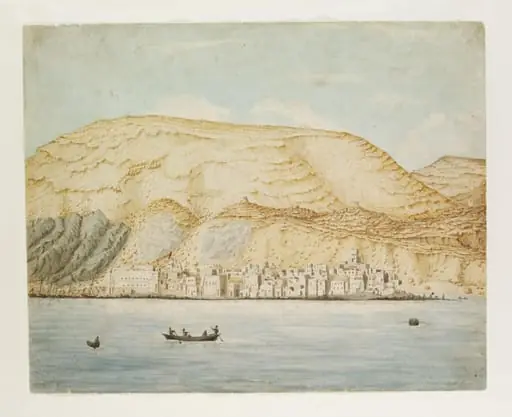 Maculla. Town. Coast of Arabia. Coal Depot
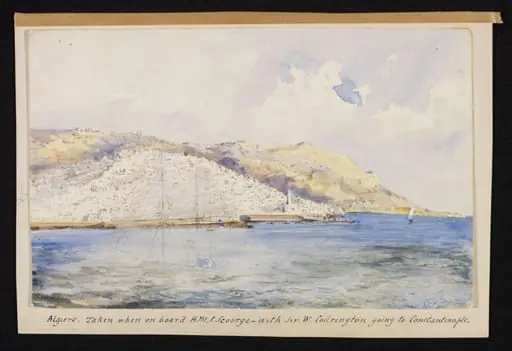 Algiers
 Jeddah