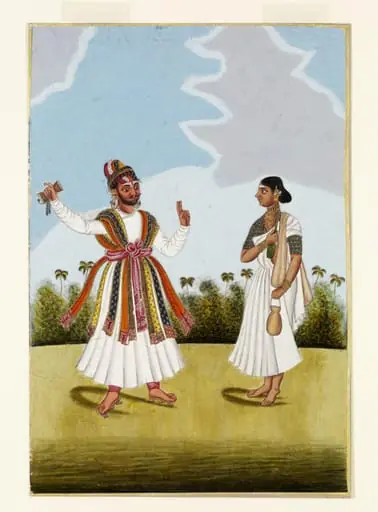
Artwork
A dancing-gril with two musicians
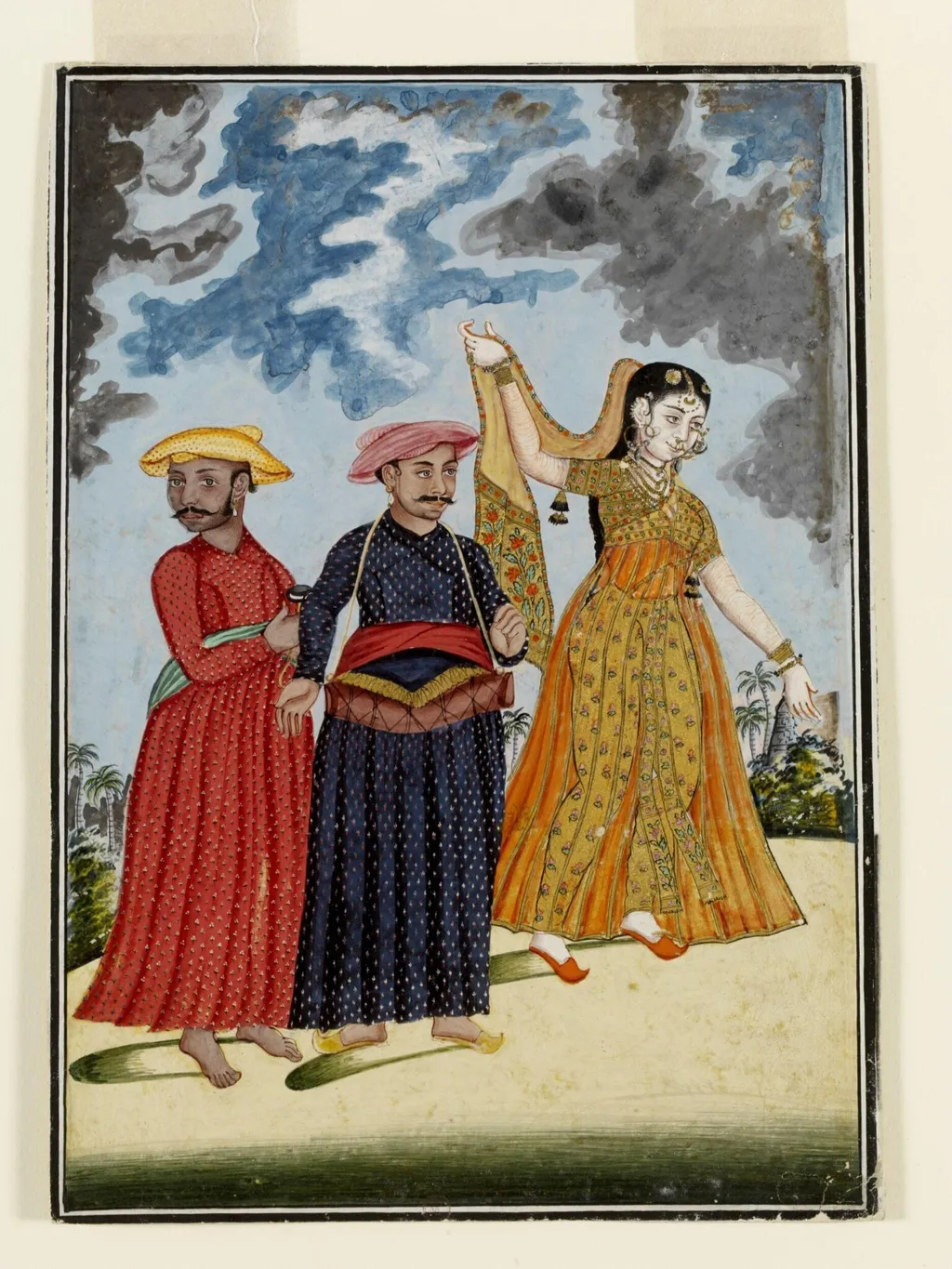
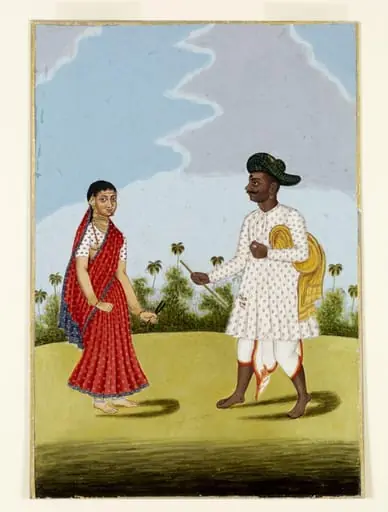
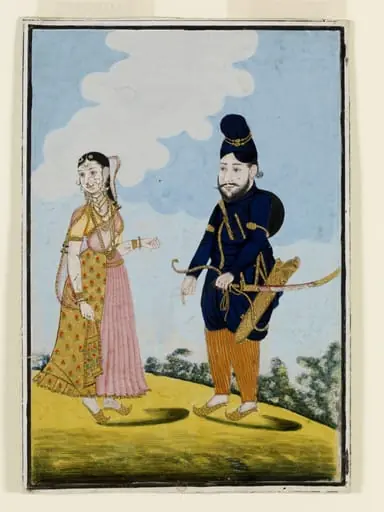
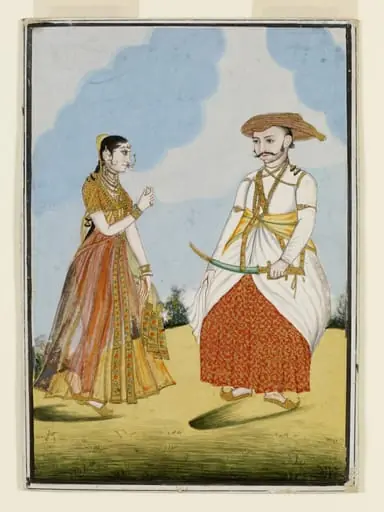
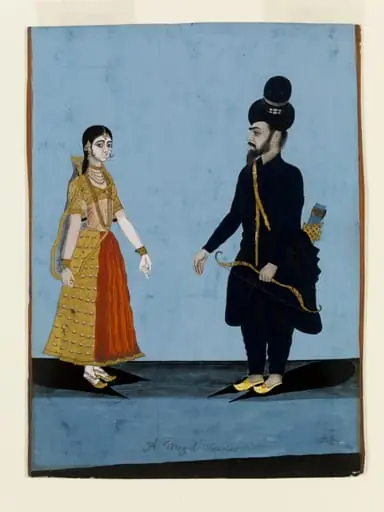
A dancing-gril with two musicians is a paint painting by the Romanticist artist Unknown. It dates from 1822 and is held in the collection of the Victoria and Albert Museum. This painting captures a moment of informal performance in an outdoor setting, featuring three figures engaged in music and dance.
About this work
Overview
The scene conveys movement and rhythm through gesture and attire, suggesting a spontaneous cultural moment rather than a formal ceremony.
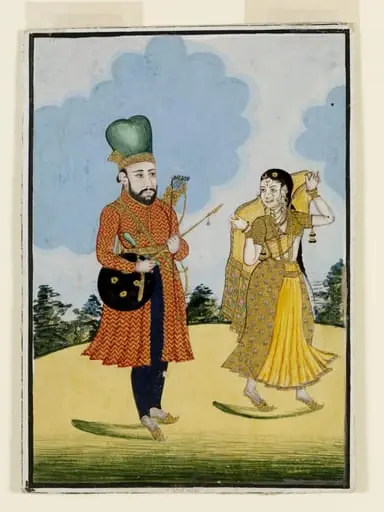
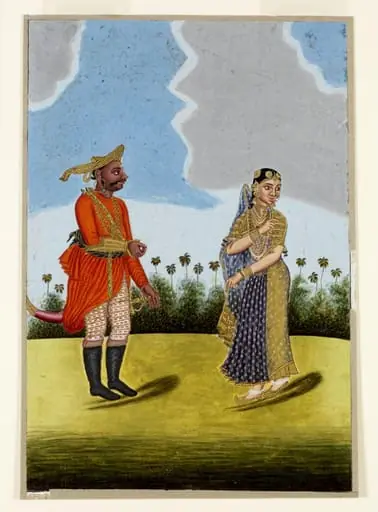
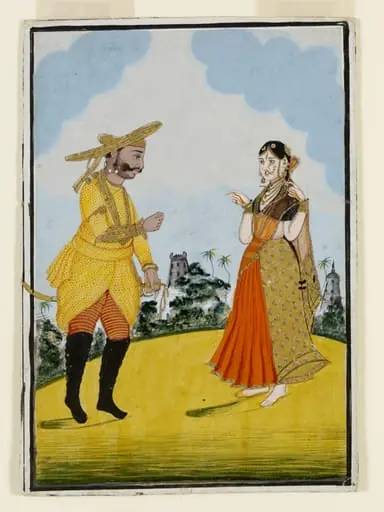
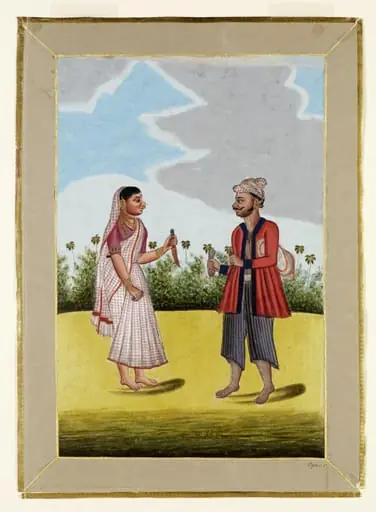
This painting captures a moment of informal performance in an outdoor setting, featuring three figures engaged in music and dance. The composition centers on a female dancer flanked by two male musicians, all positioned beneath a sky filled with dynamic cloud formations and framed by tall palm trees. The scene conveys movement and rhythm through gesture and attire, suggesting a spontaneous cultural moment rather than a formal ceremony.
Subject & Meaning
The figures represent a trio engaged in communal performance: one man holds a stick, possibly a rhythmic instrument or prop; the other, dressed in contrasting colors, appears to accompany on an unseen instrument. The dancer, her arm raised and hand linked to the first man, embodies motion and connection. The scene likely reflects a local tradition of street or festival performance, where music and dance intersected in daily life, though no specific ritual is identifiable.
Technique & Style
The artist employs detailed brushwork to render the textures of fabric—elaborate patterns on the dancer’s gown, the folds of the musicians’ garments—while the background is rendered with looser, atmospheric strokes. Swirling clouds and stylized palm trees create a sense of depth without strict perspective. Color contrasts, particularly the red and blue clothing against the muted sky, draw attention to the figures and enhance the scene’s kinetic energy.
History & Provenance
The painting’s origin is not definitively recorded, but its visual language aligns with regional artistic traditions from South or Southeast Asia, possibly from the 18th or 19th century. It may have been produced for private patrons or as part of a larger series documenting local customs. Its current location is not specified, though similar works are held in institutions such as the Victoria and Albert Museum.
Context
During the period in which this work was likely created, depictions of musicians and dancers were common in regional painting traditions, often commissioned to record social rituals or entertain elite audiences. Such scenes balanced realism with stylization, reflecting both observational accuracy and cultural ideals of movement and adornment. Outdoor performances were integral to festivals and public gatherings, making this image part of a broader visual record of everyday life.
Legacy
Though not widely known outside specialized collections, this painting contributes to the understanding of non-courtly artistic expression in South and Southeast Asia. It preserves details of costume, gesture, and social interaction that might otherwise be lost, offering insight into how music and dance functioned as accessible, communal art forms. Its preservation allows continued study of regional aesthetics beyond formal religious or royal subjects.
Artist & collection

 Domestic Scene
 Giacomo and Cardinal Marco, investing Andrea, Abbot of San Zeno, with his Benefice
 The Nymph of Fontainebleau
 Portrait of a Woman
 Madonna and Child with Saints in the Enclosed Garden
 Venus and Minerva
 Family Group of Four on Sofa
 Wall painting from Room H of the Villa of P. Fannius Synistor at Boscoreale