Artwork
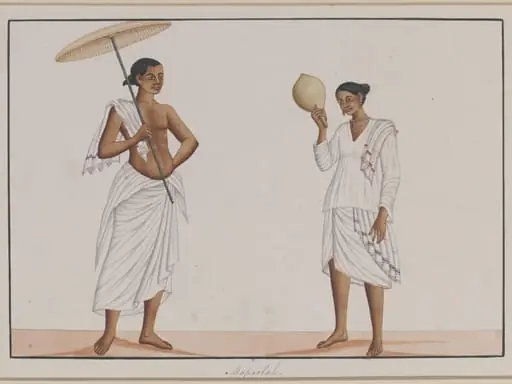
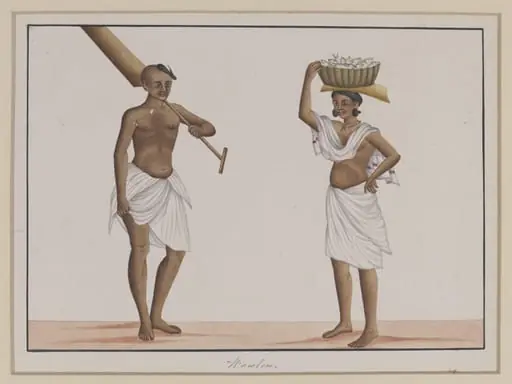
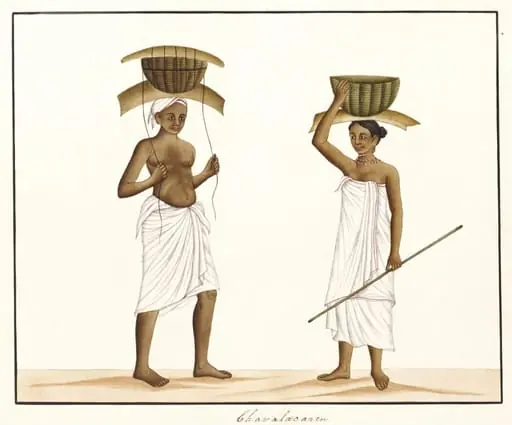
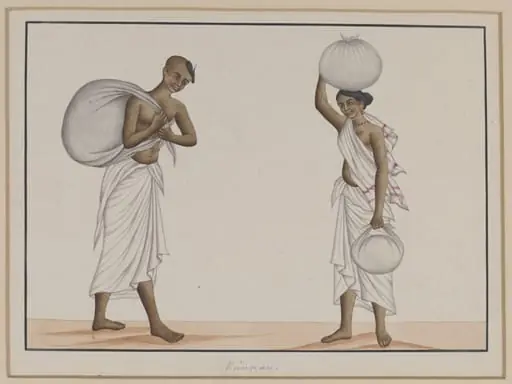
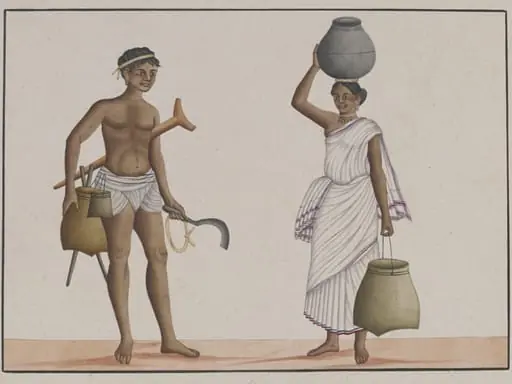
A man and woman carrying rolled mats
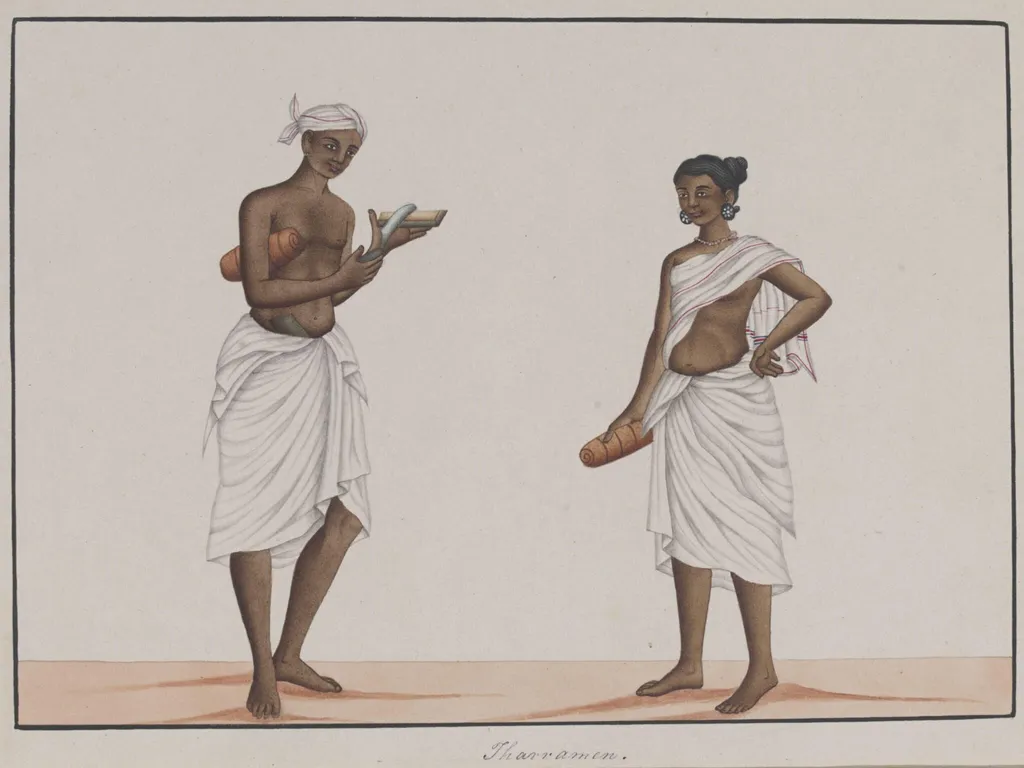
A man and woman carrying rolled mats is a paint painting by the Realist artist Unknown. It dates from 1830 and is held in the collection of the Victoria and Albert Museum.
About this work
Overview
This painting depicts a man and woman carrying rolled mats, part of a twelve-part series documenting occupational roles in South Asian society.
This painting depicts a man and woman carrying rolled mats, part of a twelve-part series documenting occupational roles in South Asian society. Both figures are rendered in plain white attire, standing side by side against a minimal background. Their posture and possessions suggest daily labor, presented without embellishment. The work belongs to the Victoria and Albert Museum’s collection, where it serves as a record of social structure through visual detail.
Subject & Meaning
The figures represent a working pair engaged in the production or transport of woven mats, a common craft in the region. The man’s book implies literacy or a secondary role beyond manual labor, while the woman’s stance conveys quiet authority. Together, they embody a domestic or artisanal unit, their dignity rooted in routine work rather than status. The scene avoids idealization, focusing instead on the quiet dignity of everyday labor.
Technique & Style
The composition is restrained, with flat planes of color and minimal shading. Figures are outlined clearly against a white ground, drawing attention to their posture and attire. Details like the folds of fabric and the texture of the mats are suggested rather than rendered with realism. The style prioritizes clarity and symbolic representation over naturalism, aligning with regional traditions of narrative painting.
History & Provenance
The painting originates from a series commissioned to document caste-based occupations, likely produced in the 18th or early 19th century in northern India. It entered the Victoria and Albert Museum’s collection through colonial-era acquisitions, part of broader efforts to catalog Indian material culture. Its preservation reflects early museum practices focused on ethnographic documentation rather than aesthetic value.
Context
This work belongs to a larger set of paintings created to visually classify social roles under British colonial administration. Such series were often compiled for administrative or anthropological interest, aiming to systematize Indian society. While intended as records, these images also reveal the subtle agency of the subjects, who are portrayed with composure and individuality despite their classification.
Legacy
The painting endures as a quiet testament to labor and gender roles in pre-modern South Asia. It contributes to scholarly understanding of how occupational identities were visually encoded and preserved. Today, it is studied not only as ethnographic material but as a subtle expression of dignity within structured social systems, offering insight beyond its original documentary purpose.
Artist & collection

 Domestic Scene
 Giacomo and Cardinal Marco, investing Andrea, Abbot of San Zeno, with his Benefice
 The Nymph of Fontainebleau
 Portrait of a Woman
 Madonna and Child with Saints in the Enclosed Garden
 Venus and Minerva
 Family Group of Four on Sofa
 Wall painting from Room H of the Villa of P. Fannius Synistor at Boscoreale