Artwork
Toddy-tappers
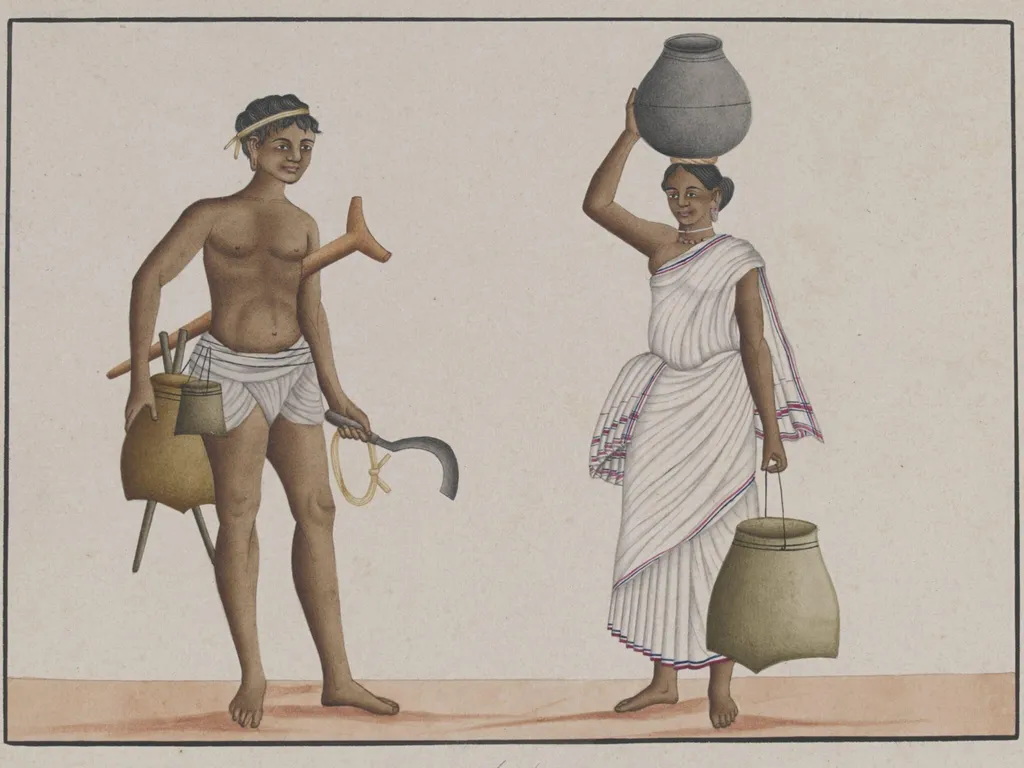
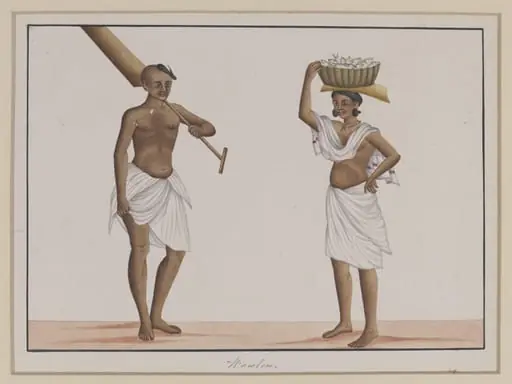
Toddy-tappers is a paint painting by the Romanticist artist Unknown. It dates from 1830 and is held in the collection of the Victoria and Albert Museum. This painting is one of twelve in a series documenting occupational roles in early 19th-century South India.
About this work
Overview
This painting is one of twelve in a series documenting occupational roles in early 19th-century South India. It portrays a man and woman engaged in toddy-tapping, the collection of sap from palm trees. Their tools and attire reflect the physical demands and social positioning of their labor, rendered with quiet precision against a neutral background that isolates them as archetypes of daily work.
Subject & Meaning
The man carries equipment for climbing and collecting sap, while the woman balances a container on her head, suggesting transport or storage.
The figures represent a collaborative labor system, where each person performs a distinct but interdependent task. The man carries equipment for climbing and collecting sap, while the woman balances a container on her head, suggesting transport or storage. Their bare feet and simple garments indicate a working-class status, and the absence of landscape or context emphasizes the universality of their role within the local economy.
Technique & Style
The composition is frontal and symmetrical, with figures centered against a uniform beige field. Brushwork is restrained, focusing on clear outlines and flat areas of color, particularly in the woman’s striped sari. The black border frames the scene like a document or ethnographic record, reinforcing its function as a visual catalog rather than a narrative moment.
History & Provenance
Created during the British colonial period, the painting belongs to a commissioned series likely intended for administrative or ethnographic study. These works were produced by local artists under European supervision, blending indigenous techniques with colonial interests in classifying Indian society. The series was later dispersed, with individual pieces entering private and institutional collections.
Context
Toddying was a widespread practice in South India, often performed by specific communities assigned to this labor by caste structure. The depiction avoids romanticization, presenting the workers without idealization or moral judgment. The series as a whole reflects colonial attempts to systematize and categorize indigenous life, even as it preserves details of material culture otherwise undocumented.
Legacy
Though not widely exhibited today, the series remains a valuable record of pre-industrial labor practices in South India. Its clinical presentation contrasts with later nationalist or romantic portrayals of rural life, offering a neutral, observational perspective that historians and anthropologists continue to consult for insights into social organization and material conditions of the time.
Artist & collection

 Domestic Scene
 Giacomo and Cardinal Marco, investing Andrea, Abbot of San Zeno, with his Benefice
 The Nymph of Fontainebleau
 Portrait of a Woman
 Madonna and Child with Saints in the Enclosed Garden
 Venus and Minerva
 Family Group of Four on Sofa
 Wall painting from Room H of the Villa of P. Fannius Synistor at Boscoreale
 A Dhobi and his wife
 Malayali Muslims of the Mopla caste
 A basket weaver and his wife
 A Brahmin and his wife
 A man and woman carrying rolled mats
 Three couples
 Three South Indian couples
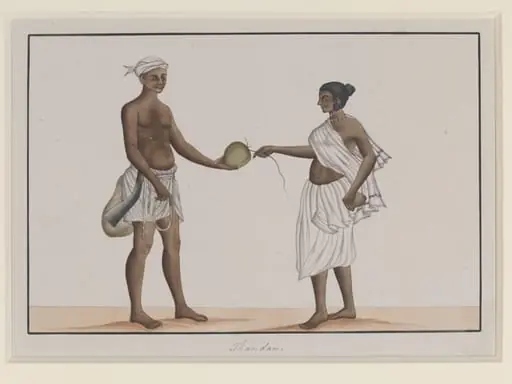 Coconut-gatherers
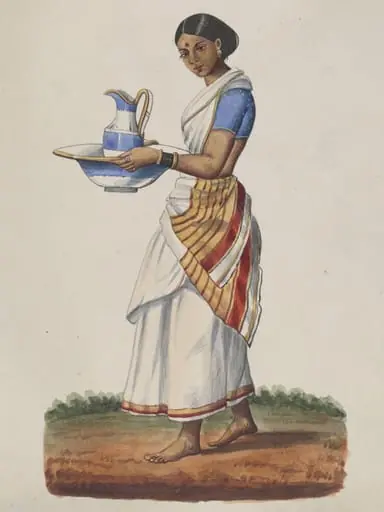 An ayah in a blue choli carrying a china ewer and basin
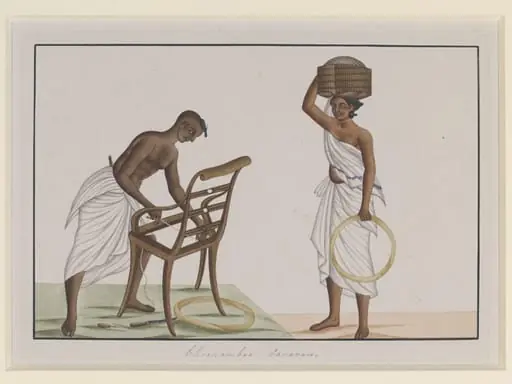 A chair-caner and his wife
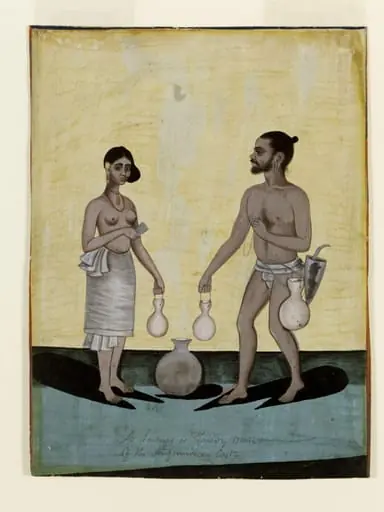 A toddy-tapper and his wife
 A fisherman and his wife