Artwork
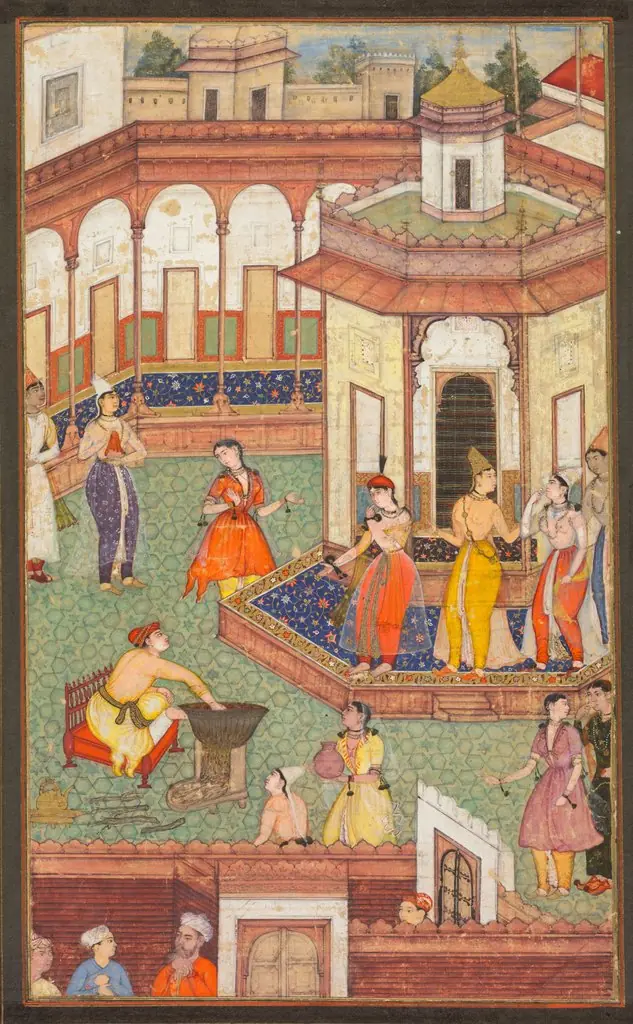
A Man Dips His Hand into a Cauldron as Ladies of the Harem Stand in Amazement: A Page from a Manuscript of Religious History
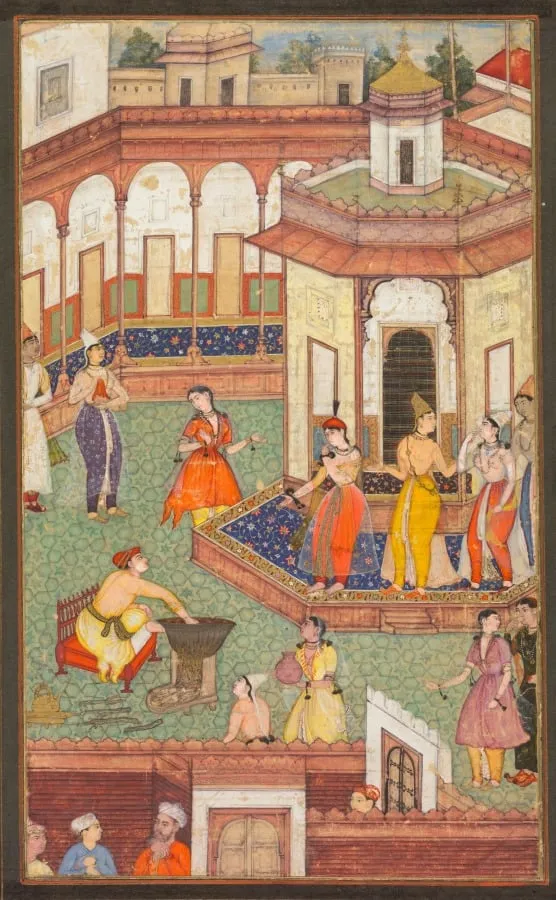
A Man Dips His Hand into a Cauldron as Ladies of the Harem Stand in Amazement: A Page from a Manuscript of Religious History is an unspecified painting by the Mughal Painting artist Unknown. It dates from 1600 and is held in the collection of the Cleveland Museum of Art. This illuminated manuscript page depicts a dramatic moment from a religious narrative, set in an ornate courtyard.
About this work
Overview
This illuminated manuscript page depicts a dramatic moment from a religious narrative, set in an ornate courtyard.
This illuminated manuscript page depicts a dramatic moment from a religious narrative, set in an ornate courtyard. Figures in vivid hues gather around a central act: a man submerging his hand into a steaming cauldron. Onlookers, including women in elaborate garments and a seated child, react with surprise. Architectural details—arches, domes, and patterned flooring—frame the scene, suggesting a courtly or sacred space. The composition is dense yet balanced, typical of illustrated texts from the Islamicate tradition.
Subject & Meaning
The scene illustrates a miraculous or test-of-faith episode, likely drawn from prophetic or saintly lore. The man’s act of placing his hand in boiling liquid implies divine protection, a motif found in Islamic hagiographies where faith renders the believer unharmed by fire or heat. The astonishment of the harem women underscores the supernatural nature of the event, reinforcing the narrative’s moral or theological message through visual awe.
Technique & Style
The painting employs mineral pigments and fine brushwork characteristic of Persian and Mughal manuscript illumination. Bold, saturated colors—orange, blue, gold—are layered with intricate patterns on textiles and architecture. Figures are rendered with stylized proportions, emphasizing gesture and expression over naturalism. The flat, decorative space and lack of perspective align with manuscript conventions, prioritizing symbolic clarity over spatial realism.
History & Provenance
The page likely originated in a 16th- or 17th-century Persian or Indian manuscript chronicling religious histories, possibly linked to courtly patronage. Such volumes were produced in royal ateliers and circulated among elites. Its current presence in The Cleveland Museum of Art suggests acquisition through early 20th-century collections of Islamic art, though its specific provenance prior to museum ownership remains undocumented.
Context
Illuminated manuscripts in the Islamic world served both devotional and didactic purposes, often commissioned to illustrate epic or sacred texts. Scenes like this one, blending historical narrative with miraculous events, were popular in courtly libraries. The inclusion of harem figures reflects the social settings of royal courts, where gendered spaces were depicted with symbolic precision, reinforcing hierarchical and cultural norms of the time.
Legacy
This page exemplifies the enduring tradition of narrative illustration in Islamic manuscript culture, influencing later regional styles across South and Central Asia. Its preservation allows modern viewers to engage with pre-modern visual storytelling methods that prioritized symbolic meaning over realism. As part of museum collections, it contributes to broader understandings of how religious narratives were visually transmitted across centuries.
Artist & collection

 Domestic Scene
 Giacomo and Cardinal Marco, investing Andrea, Abbot of San Zeno, with his Benefice
 The Nymph of Fontainebleau
 Portrait of a Woman
 Madonna and Child with Saints in the Enclosed Garden
 Venus and Minerva
 Family Group of Four on Sofa
 Wall painting from Room H of the Villa of P. Fannius Synistor at Boscoreale
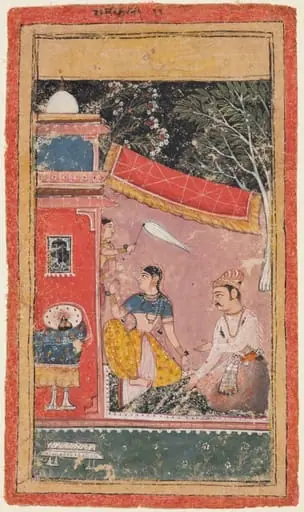 Lovers on a Terrace: Ramakali Ragini of Hindol, from a Bundi Ragamala
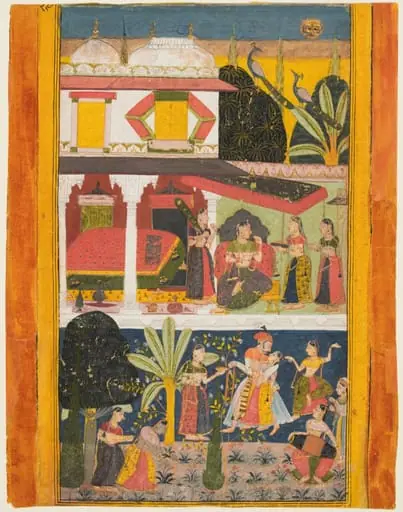 A Heroine and Her Paramour: Malavi Ragini, from a Ragamala
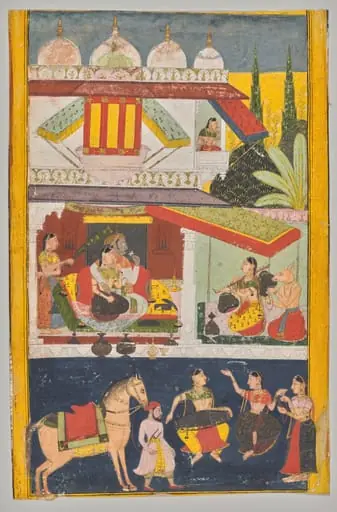 Shri Raga, from a Ragamala
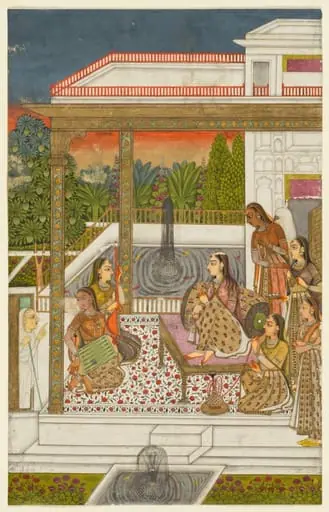 A princess with attendants on a terrace
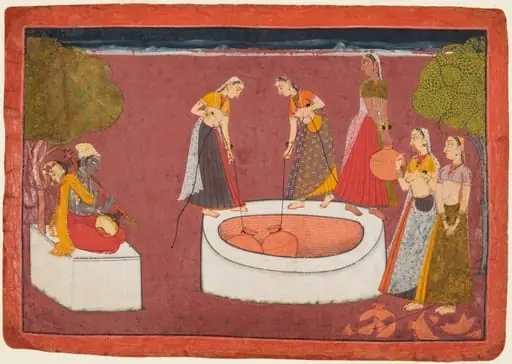 Madhava plays his vina before five women drawing water from a well, folio 3 from a Madhavanala-Kamakandala
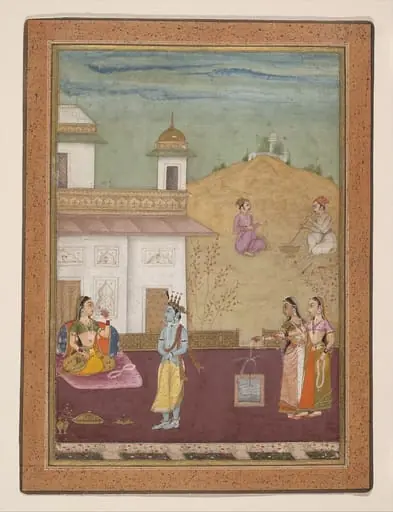 Untitled
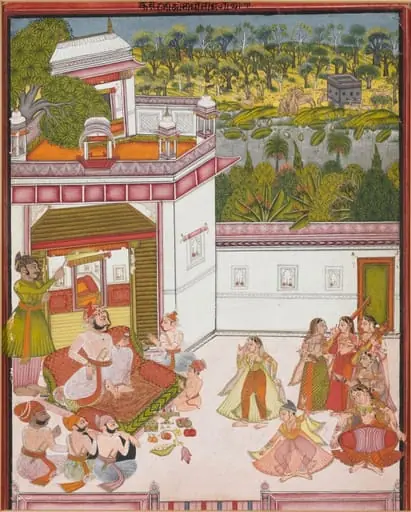 Maharaja of Kotah Listening to Music and Watching Dancers
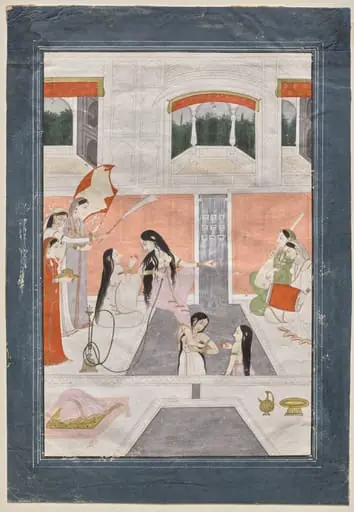 Palace women enjoy music by the side of a cascade
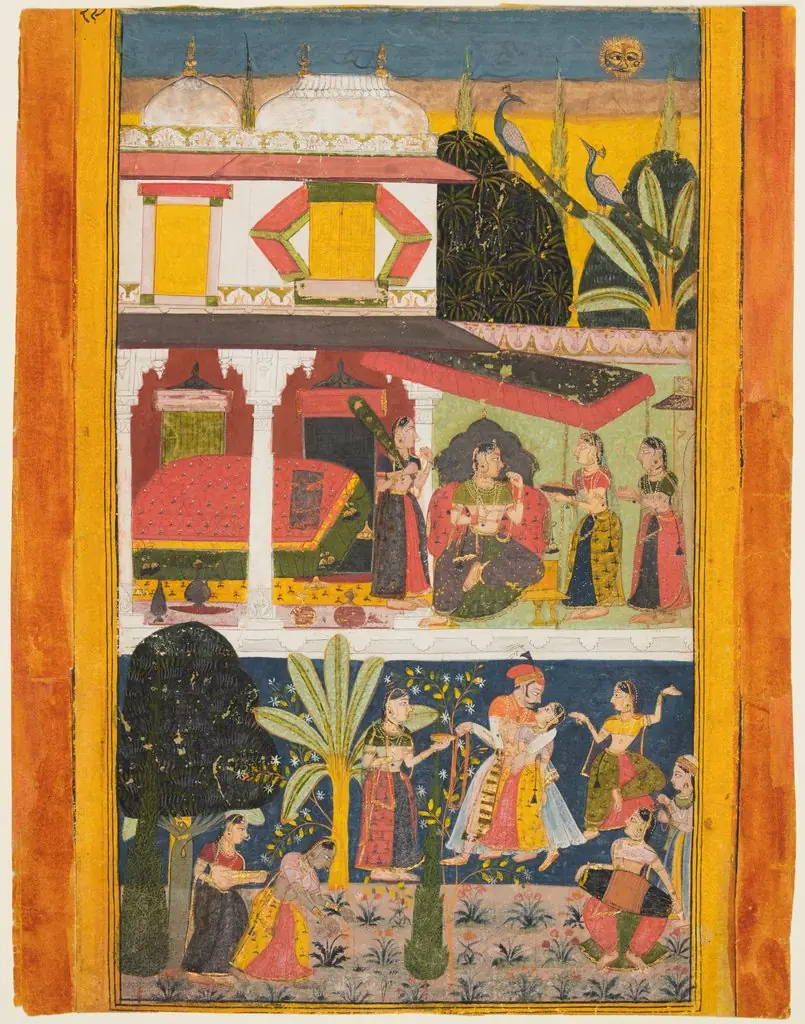 A Heroine and Her Paramour: Malavi Ragini, from a Ragamala
 Untitled
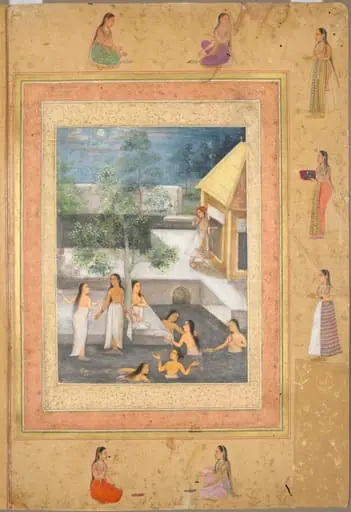 Harem night-bathing scene, from the Late Shah Jahan Album (recto)
 A Man Dips His Hand into a Cauldron as Ladies of the Harem Stand in Amazement: A Page from a Manuscript of Religious History