Artwork
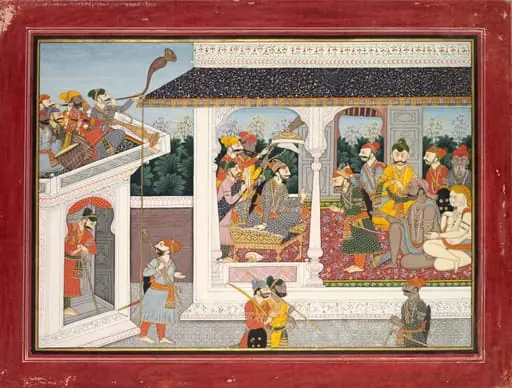
Maharaja of Kotah Listening to Music and Watching Dancers
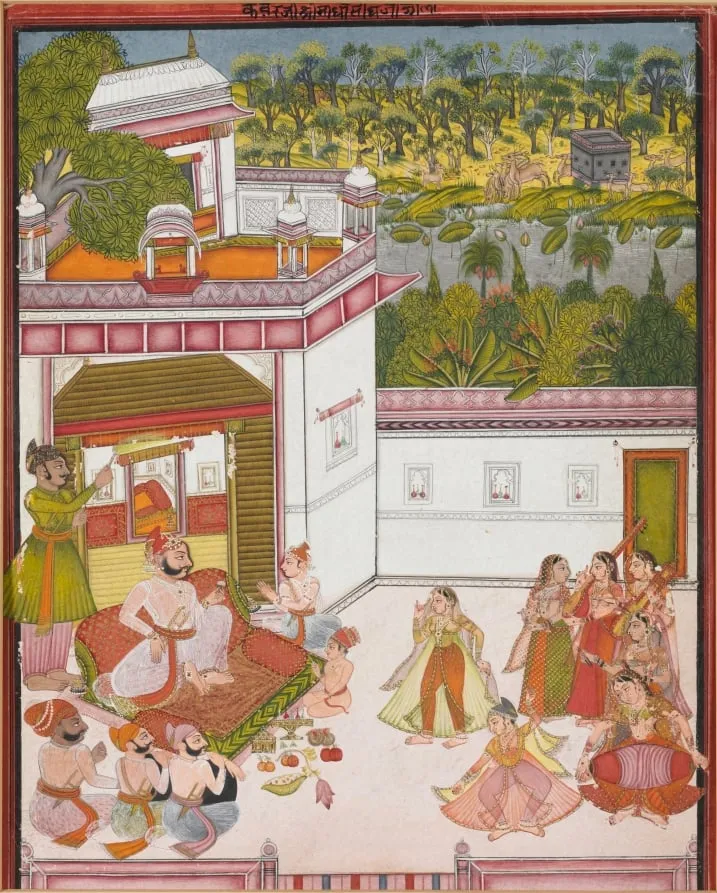
Maharaja of Kotah Listening to Music and Watching Dancers is an unspecified painting by the Patna School of Painting artist Unknown. It dates from 1820 and is held in the collection of the Cleveland Museum of Art.
About this work
Overview
The canvas depicts a ruler seated on a palace terrace, surrounded by attendants who present food and wine while a troupe of dancers performs. Beyond the river, a hunting lodge is visible amid a forest populated by deer, wild boar and a tiger. The composition balances the courtly entertainment with a glimpse of the king’s outdoor pursuits, illustrating a moment of leisure and authority.
Subject & Meaning
The scene emphasizes the princely patron’s role as both connoisseur of the arts and master of the hunt. By juxtaposing the refined indoor spectacle with the untamed wildlife across the water, the painting conveys the ruler’s dominion over cultural refinement and natural forces, reflecting the ideal of a balanced, cultivated sovereignty.
Technique & Style
Executed in the early nineteenth‑century Kotah school, the work combines Mughal architectural motifs—white marble arches, pink sandstone façades, and rooftop pavilions—with a nascent sense of depth influenced by European painting. Linear perspective is suggested through the receding interior space behind the king, where a doorway opens onto a private chamber, demonstrating an evolving spatial awareness among Indian court painters.
History & Provenance
Originating in the princely state of Kota, the painting reflects the court’s adoption of Mughal aesthetic conventions while asserting its own regional identity.
Originating in the princely state of Kota, the painting reflects the court’s adoption of Mughal aesthetic conventions while asserting its own regional identity. It likely remained in royal collections before entering the museum’s holdings in the twentieth century, providing a visual record of Kota’s artistic production during a period of cultural exchange between Indian and European visual traditions.
Artist & collection

 Domestic Scene
 Giacomo and Cardinal Marco, investing Andrea, Abbot of San Zeno, with his Benefice
 The Nymph of Fontainebleau
 Portrait of a Woman
 Madonna and Child with Saints in the Enclosed Garden
 Venus and Minerva
 Family Group of Four on Sofa
 Wall painting from Room H of the Villa of P. Fannius Synistor at Boscoreale
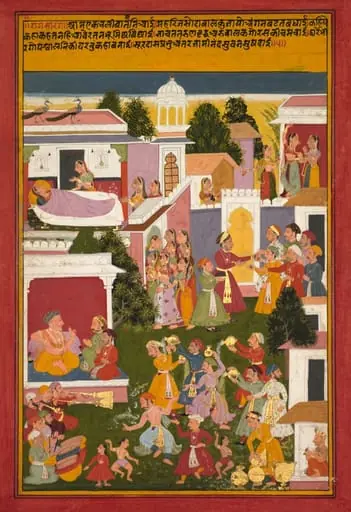 The Birth of Krishna, from a Sursagar of Surdas (Indian, c. 1480–1580)
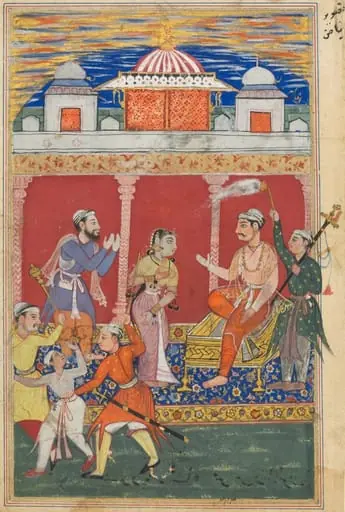 The prince’s ordeal continues, he is ordered away to be executed for the fifth time, from a Tuti-nama (Tales of a Parrot): Eighth Night
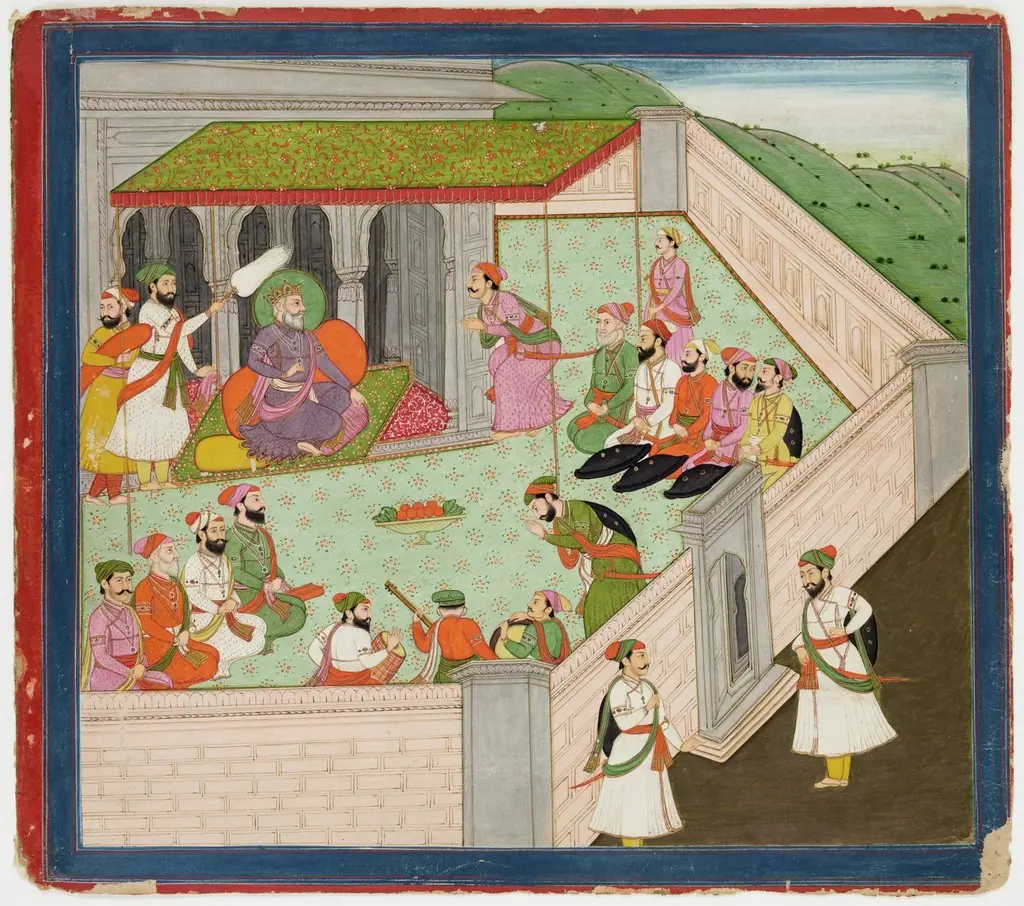 Illustrations to Life of Dhurva Maharaj: #1 Durbar of King Uttan Pad
 Untitled
 The birth of Rama and his brothers, from Chapter 17 of the Bala Kanda (Book of Childhood) of the Adhyatma Ramayana (Rama's Journey of the Supreme Spirit) from the Brahmanda Purana (Ancient Scripture of the Cosmic Egg)
 Bhairava Raga
 Untitled
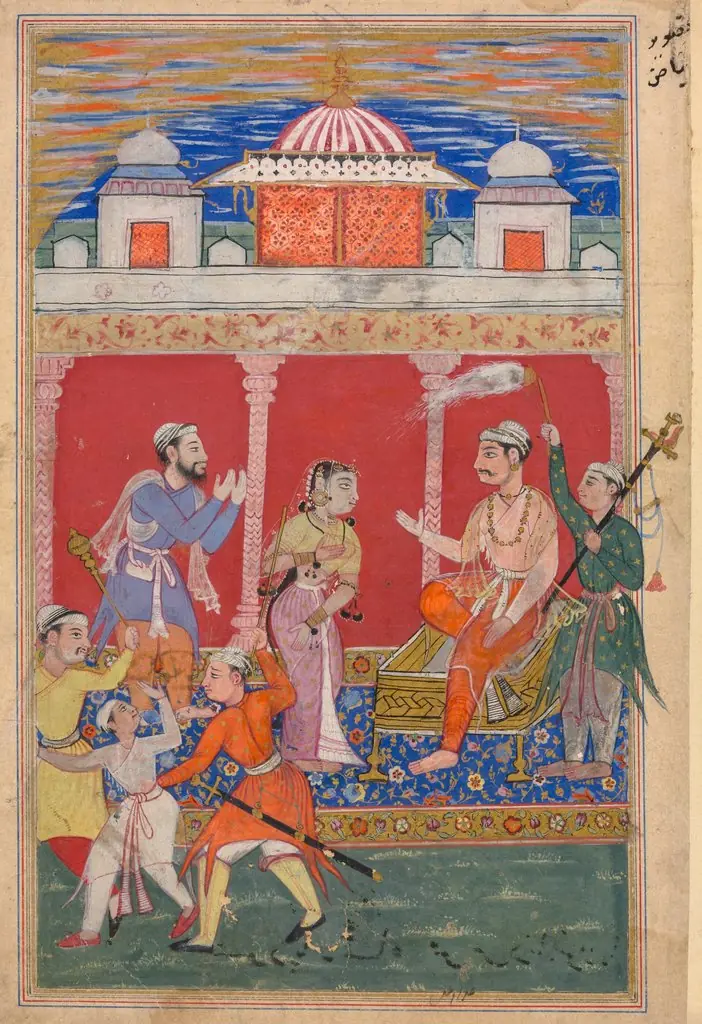 Page from Tales of a Parrot (Tuti-nama): text page
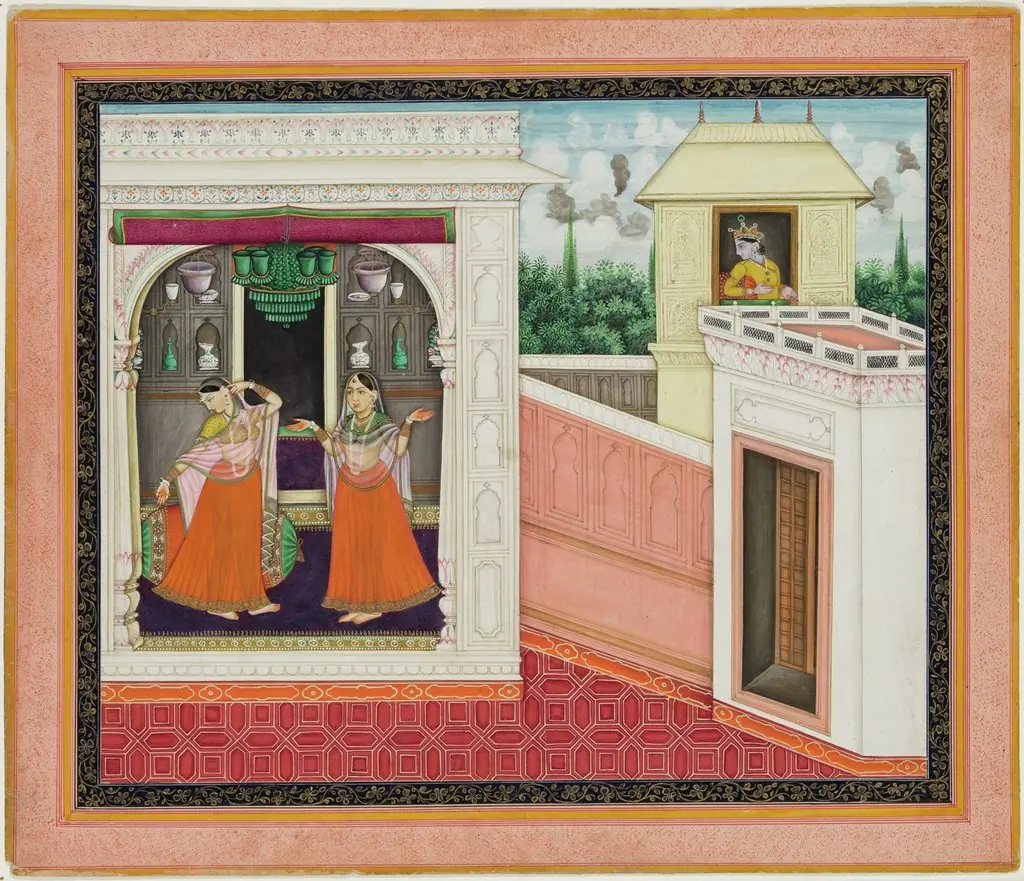 Story of Krishna and Radha
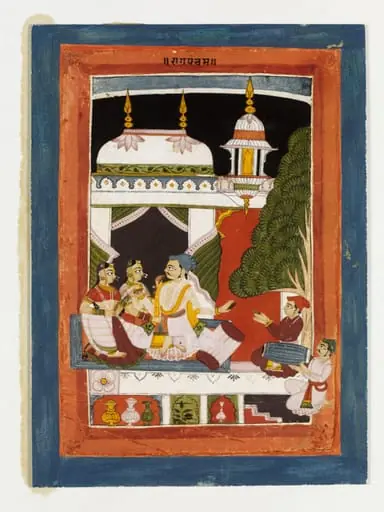 Pancham Raga
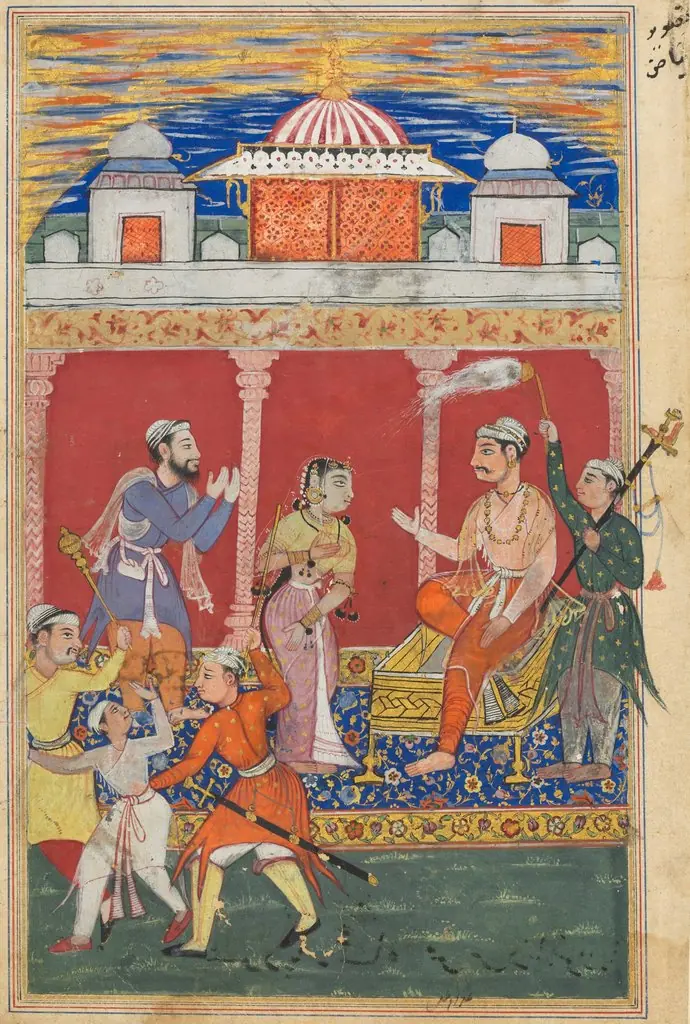 The prince’s ordeal continues, he is ordered away to be executed for the fifth time, from a Tuti-nama (Tales of a Parrot): Eighth Night
 Kamsa deploys Akrura and Keshi to Braj, from a Bhagavata Purana