Artwork
Harem night-bathing scene, from the Late Shah Jahan Album (recto)
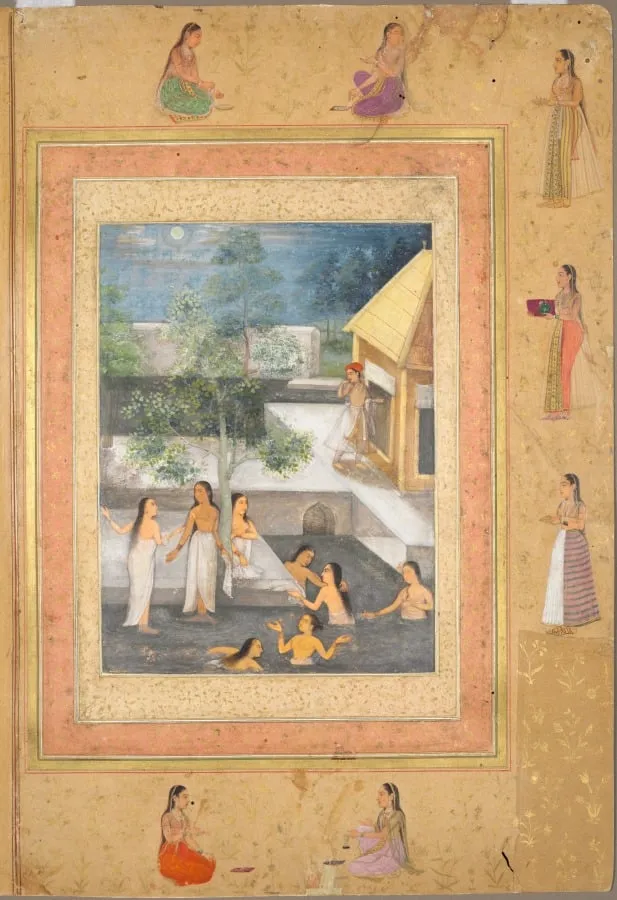
Harem night-bathing scene, from the Late Shah Jahan Album (recto) is an unspecified painting by the Baroque artist Unknown. It dates from 1653 and is held in the collection of the Cleveland Museum of Art. This miniature painting, part of a Shah Jahan‑commissioned album, depicts a tranquil night‑time scene on a marble terrace.
About this work
His artists often showed quiet, elegant moments like this—less about grand stories, more about beauty in everyday court life.
You see women in loose, pale robes bathing on a moonlit marble terrace, watched by a servant holding a cloth.
This painting comes from an album made for Shah Jahan, the Mughal emperor who built the Taj Mahal. His artists often showed quiet, elegant moments like this—less about grand stories, more about beauty in everyday court life. The soft glow of the marble makes the scene feel calm, almost dreamlike.
If you like this, look up *mughal india, court of shah jahan (reigned 1628–58)*.
Overview
This miniature painting, part of a Shah Jahan‑commissioned album, depicts a tranquil night‑time scene on a marble terrace. Women in light, flowing garments are shown bathing under a moonlit sky, while a solitary attendant watches from the side, his cloth draped over one arm. The composition emphasizes quiet elegance rather than narrative drama, reflecting the refined aesthetic of the early‑17th‑century Mughal court.
Subject & Meaning
The work continues a long‑standing Mughal interest in domestic, gendered spaces, focusing on women’s private rituals of bathing. By presenting the scene in a serene, almost poetic manner, the painting underscores ideals of courtly refinement and the cultivated beauty of everyday life within the imperial harem. The attendant’s reverent gaze suggests a respectful distance, reinforcing the separation between male observers and the secluded female realm.
Technique & Style
Executed in the miniature tradition of the imperial atelier, the painting employs delicate brushwork and a restrained palette of pale tones. The marble terrace is rendered with subtle shading that captures the cool, reflective quality of moonlight. Fine linear details define the women’s robes, while the attendant’s figure is rendered with a slightly more pronounced outline, highlighting his role as observer.
History & Provenance
Created during Shah Jahan’s reign (1628–1658), the piece was mounted in a personal album assembled for the emperor. Shah Jahan’s patronage favored refined, courtly subjects over the more fantastical narratives popular under earlier rulers. The attendant is likely a eunuch, as Mughal protocol barred men from entering women’s quarters, a detail that aligns the work with contemporary court customs.
Artist & collection

 Domestic Scene
 Giacomo and Cardinal Marco, investing Andrea, Abbot of San Zeno, with his Benefice
 The Nymph of Fontainebleau
 Portrait of a Woman
 Madonna and Child with Saints in the Enclosed Garden
 Venus and Minerva
 Family Group of Four on Sofa
 Wall painting from Room H of the Villa of P. Fannius Synistor at Boscoreale
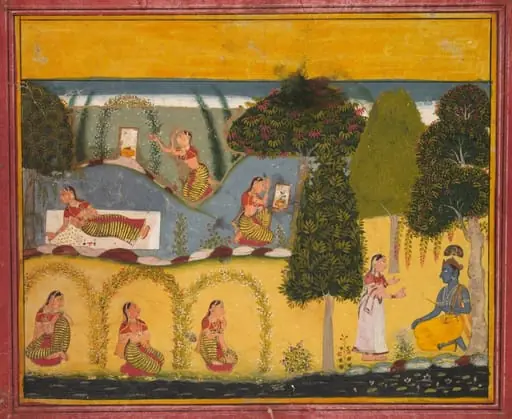 Radha Awaiting Reconciliation with Krishna, from a Gita Govinda of Jayadeva
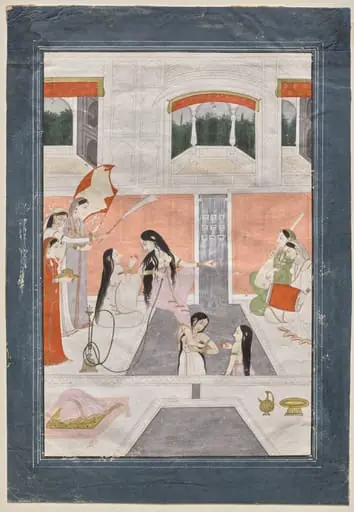 Palace women enjoy music by the side of a cascade
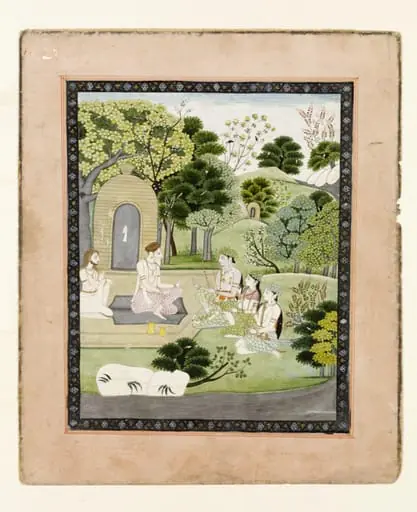 Rama, Sita and Lakhshmana
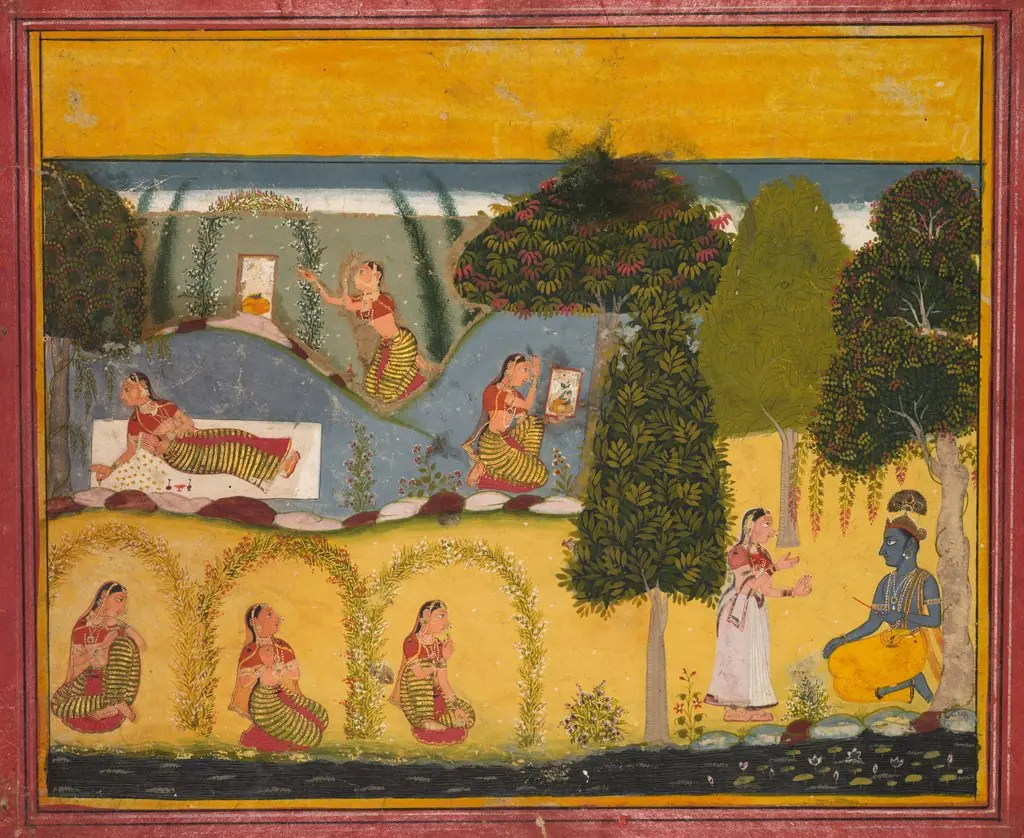 Radha Awaiting Reconciliation with Krishna, from a Gita Govinda of Jayadeva
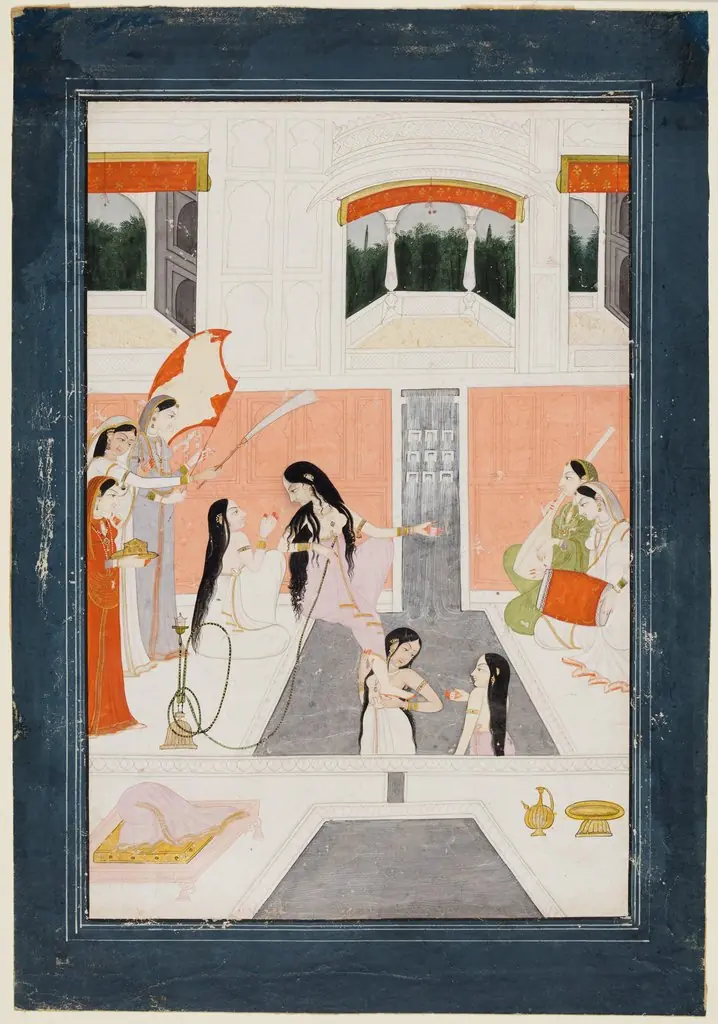 Palace Women Enjoy Music by the Side of a Water Cascade
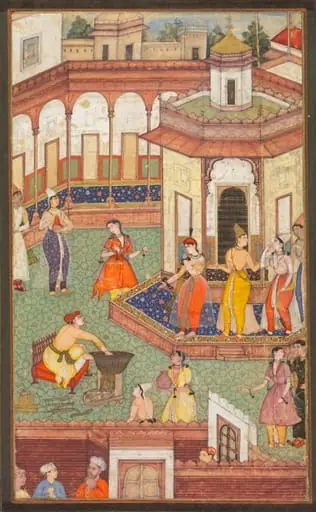 A Man Dips His Hand into a Cauldron as Ladies of the Harem Stand in Amazement: A Page from a Manuscript of Religious History
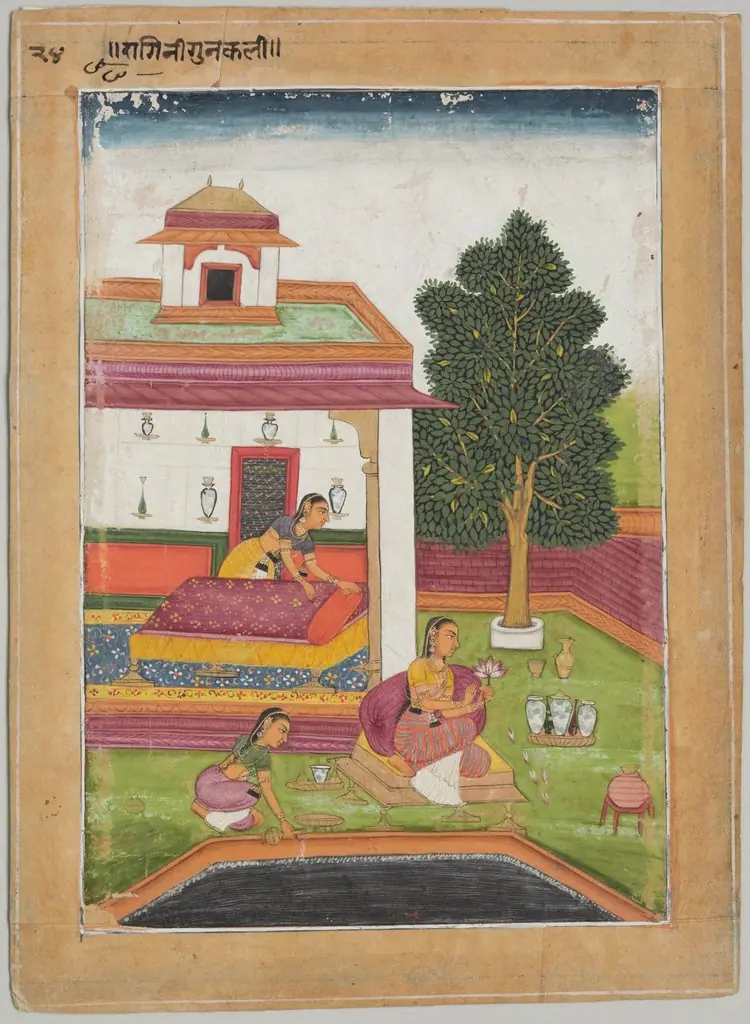 Illustration to the Musical Mode Malasari Ragini