Artwork
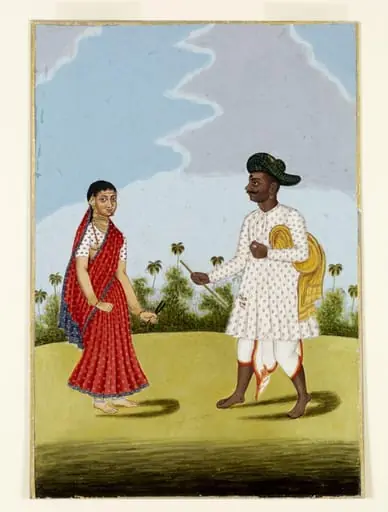
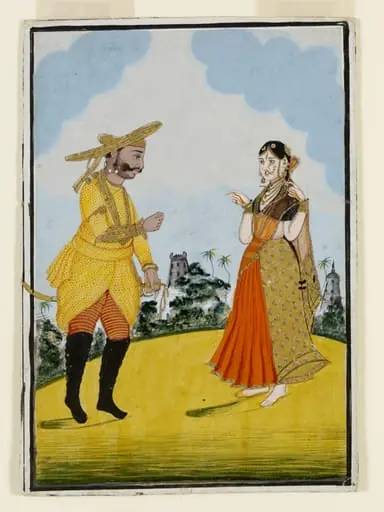
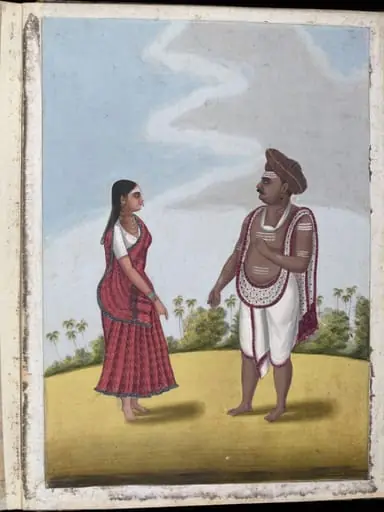
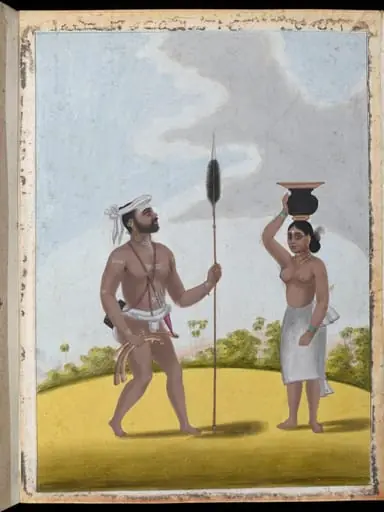
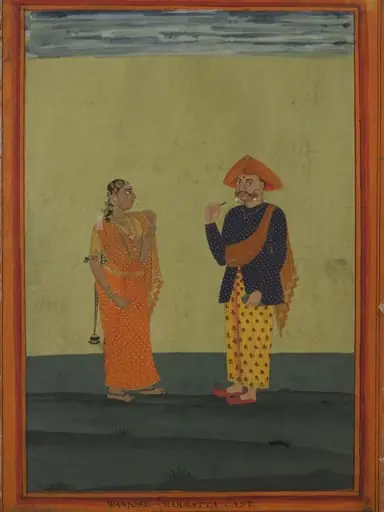
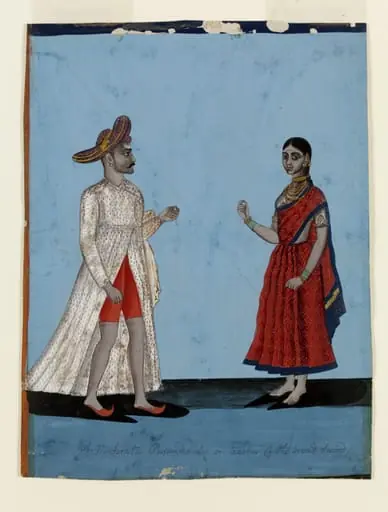
A Maratha couple
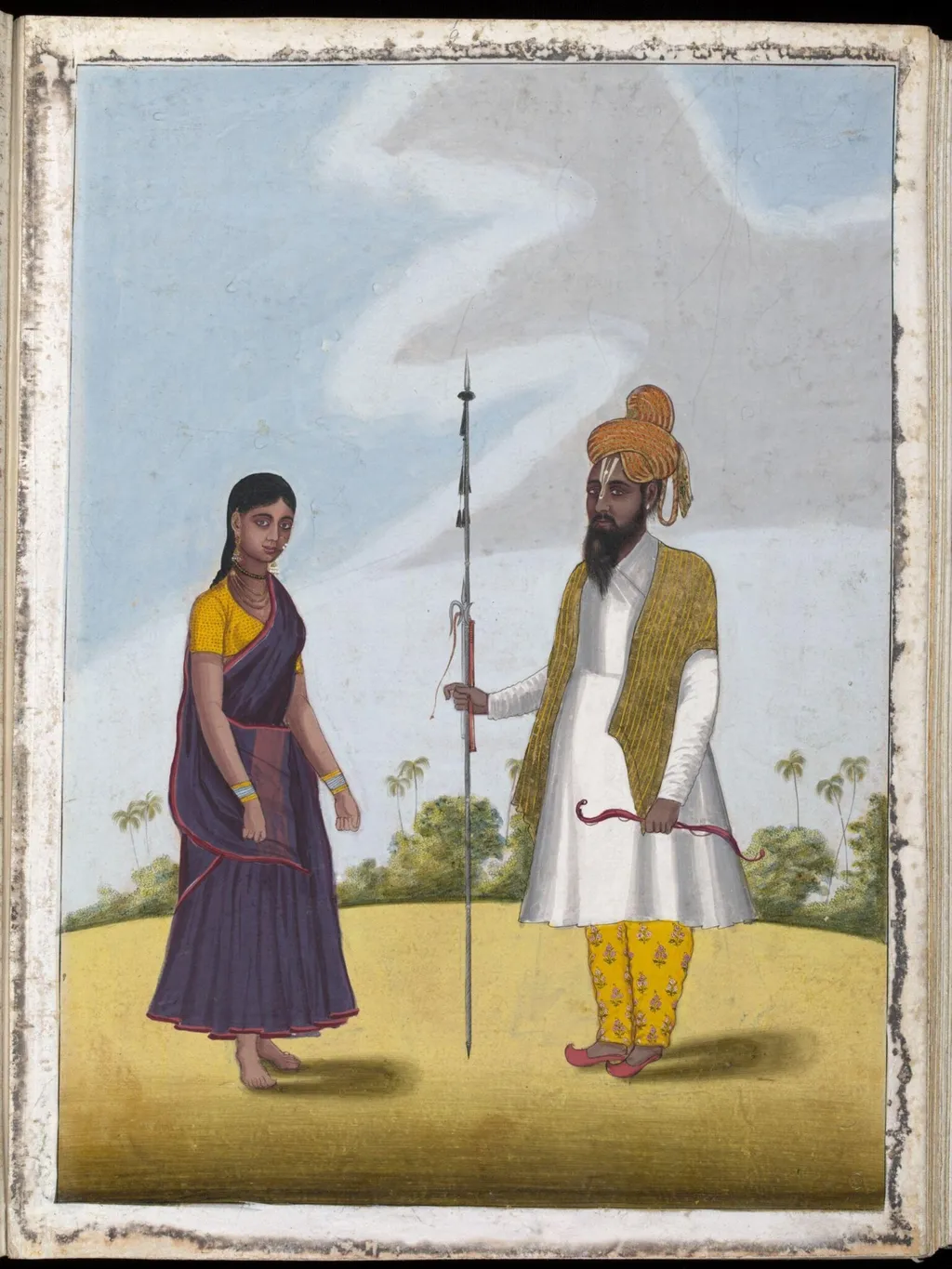
A Maratha couple is a paint painting by the Patna School of Painting artist Unknown. It dates from 1805 and is held in the collection of the Victoria and Albert Museum.
About this work
Overview
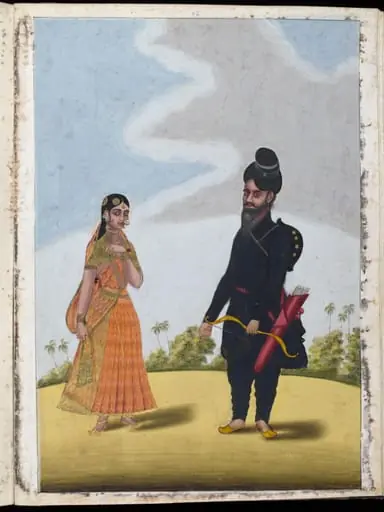
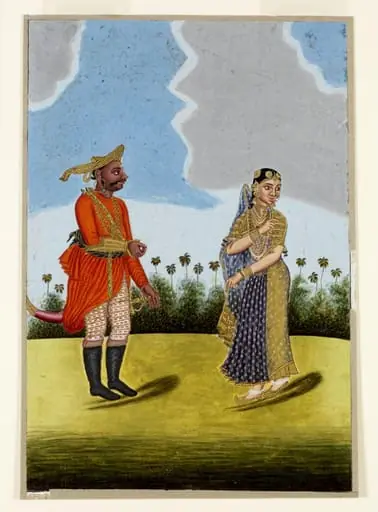
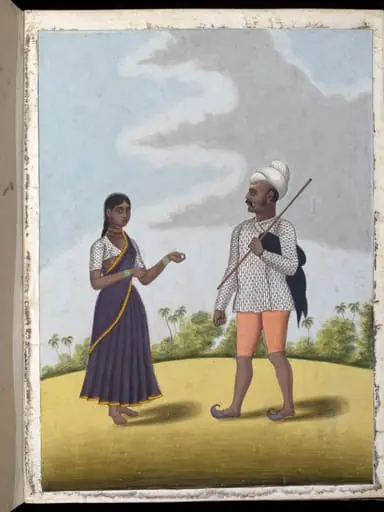
This painting, dated 1805, is one of thirty-six illustrations in a series documenting regional trades and attire across caste lines in western India.
This painting, dated 1805, is one of thirty-six illustrations in a series documenting regional trades and attire across caste lines in western India. It portrays a masalchi, a torch-bearer, and his wife, rendered with quiet dignity against a naturalistic landscape. The album, likely commissioned by a British official or local patron, sought to catalog everyday life through paired figures, emphasizing occupational identity and regional dress rather than mythological or courtly themes.
Subject & Meaning
The couple represents a specific occupational role: the masalchi carried torches for nighttime processions or patrols, a position tied to community service. Their pairing reflects a broader effort to visually organize social structure through gendered labor. The inscription, though slightly misspelled, anchors their identity in a documented social role. Their calm posture and matching placement suggest equality in status within their domain, contrasting with hierarchical depictions common in courtly art.
Technique & Style
Executed in watercolor and opaque pigments, the painting employs soft modeling and flat, decorative patterns to define fabric and form. The figures are rendered with precise detail in costume, while the background foliage is loosely suggested, creating a shallow but harmonious space. Colors are muted yet deliberate—deep indigo, pale yellow, and white—enhancing the sense of stillness. Brushwork is controlled, avoiding dramatic contrast in favor of atmospheric balance.
History & Provenance
The painting originated in the Maratha region during the early 19th century, likely produced in a workshop catering to British colonial collectors interested in ethnographic documentation. It was part of a bound album, now dispersed, that circulated in European collections by the mid-1800s. Its survival as a single sheet suggests it was separated from the original set, possibly during transit or sale, but retains its original inscription and intact composition.
Context
This work emerged during a period when British administrators and travelers commissioned visual records of Indian society, often blending curiosity with ethnographic intent. Unlike traditional Indian miniatures focused on royalty or religion, this series treated common laborers as subjects worthy of systematic depiction. The inclusion of both genders in each scene reflects an emerging interest in domestic and occupational roles, aligning with colonial cataloging practices of the time.
Legacy
Though not widely exhibited, the album remains a valuable record of regional dress and social organization in early colonial India. Its quiet realism offers insight into how non-elite communities were visually represented during a time of shifting power. Today, such works are studied for their anthropological precision and as counterpoints to idealized portrayals of Indian life, preserving the dignity of everyday laborers in a historical record often dominated by elites.
Artist & collection

 Domestic Scene
 Giacomo and Cardinal Marco, investing Andrea, Abbot of San Zeno, with his Benefice
 The Nymph of Fontainebleau
 Portrait of a Woman
 Madonna and Child with Saints in the Enclosed Garden
 Venus and Minerva
 Family Group of Four on Sofa
 Wall painting from Room H of the Villa of P. Fannius Synistor at Boscoreale