Artwork
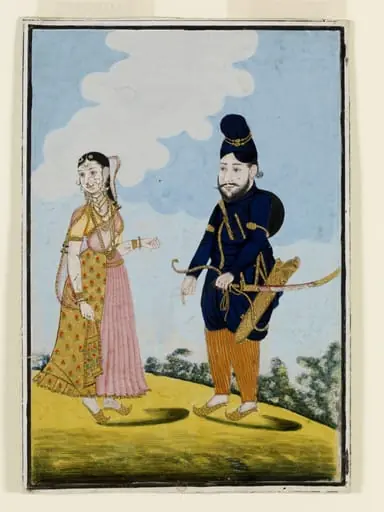
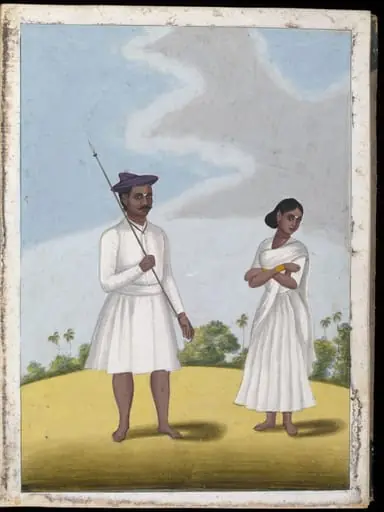
A Hindu ascetic and his wife
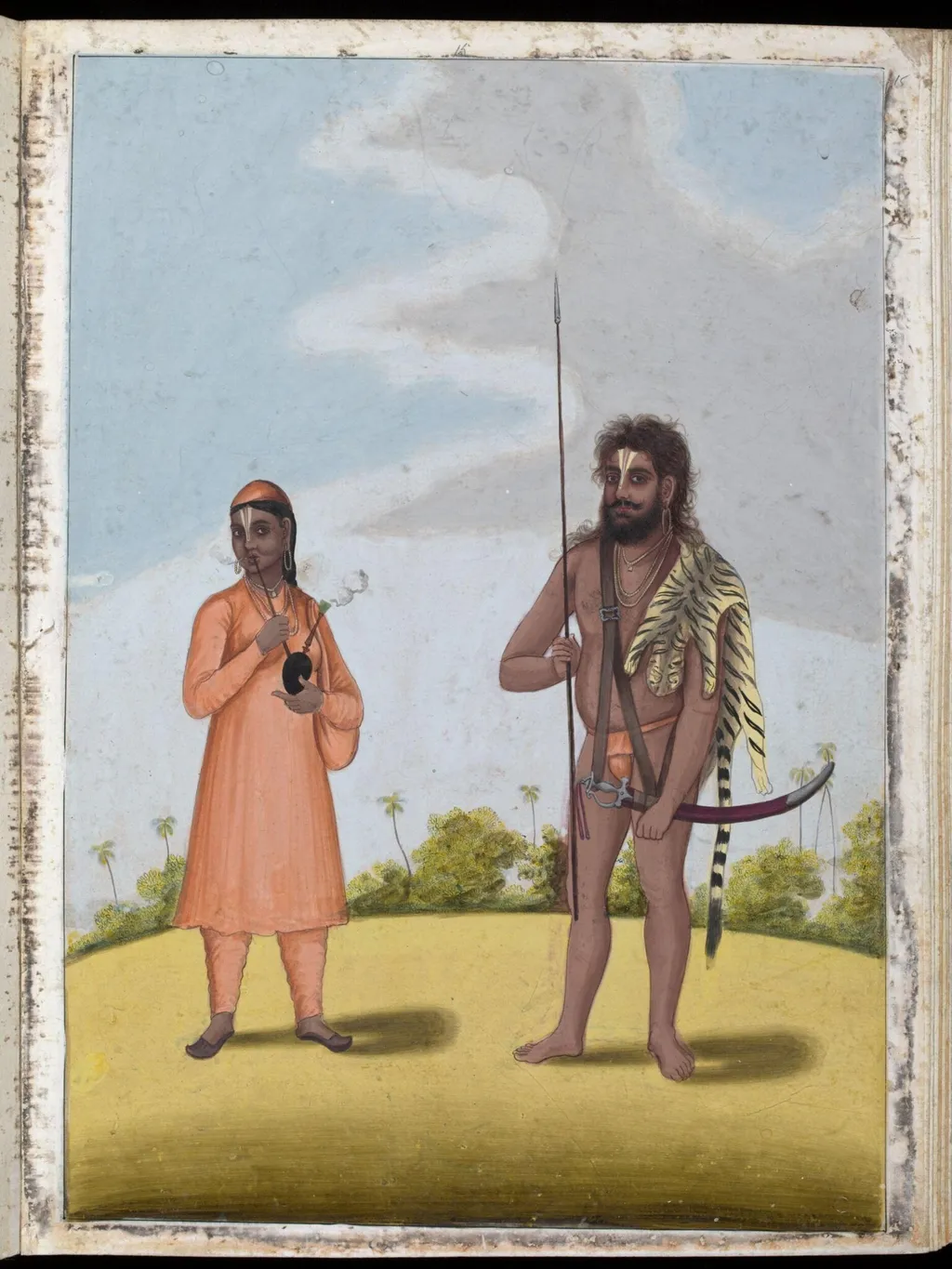
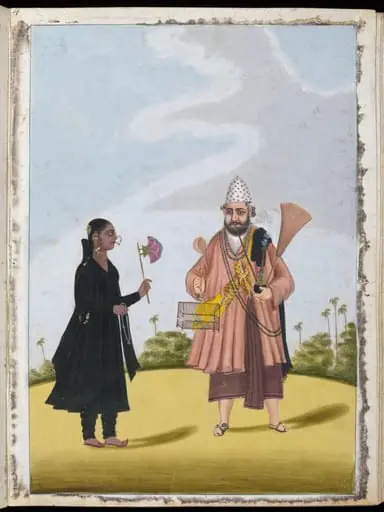
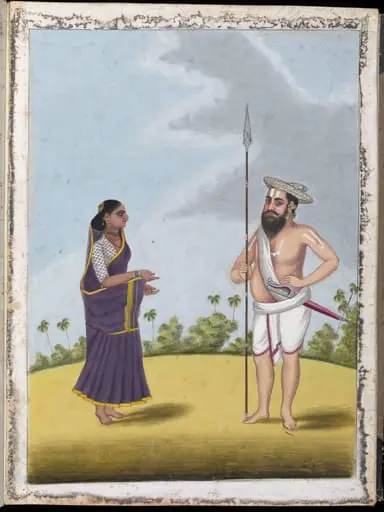
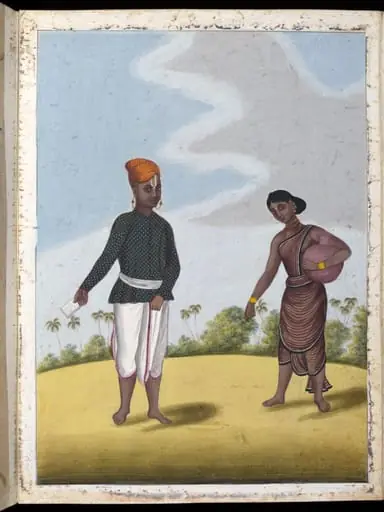
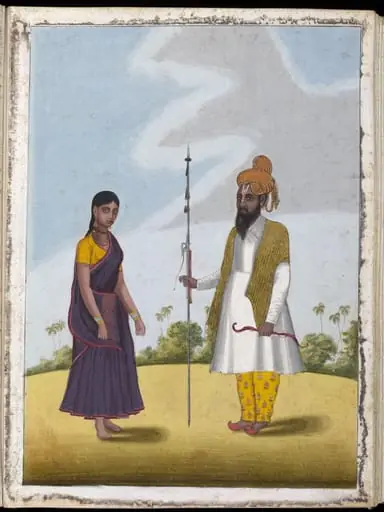
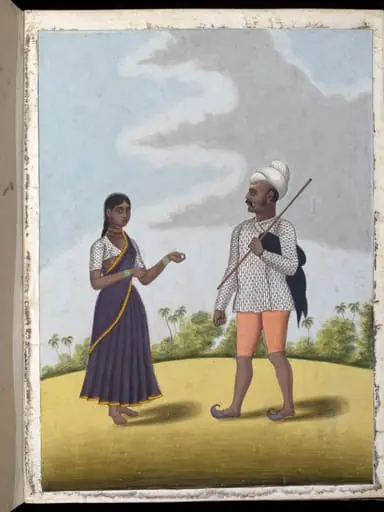
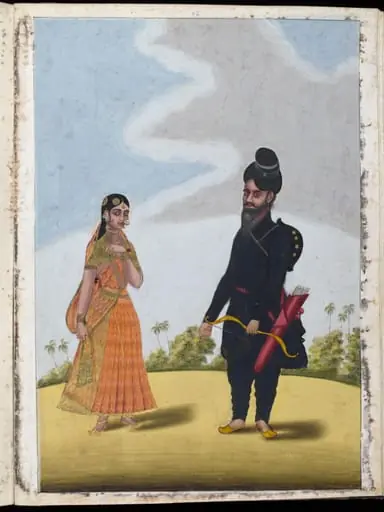
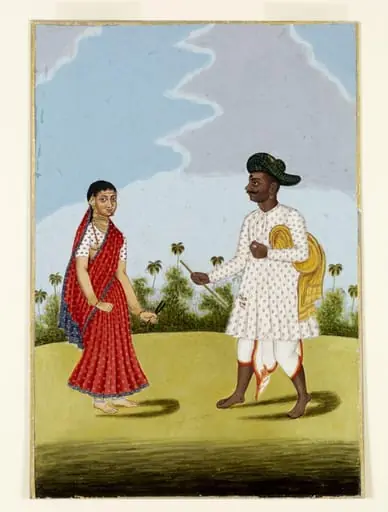
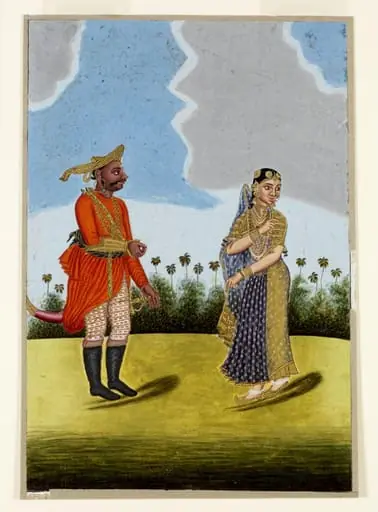
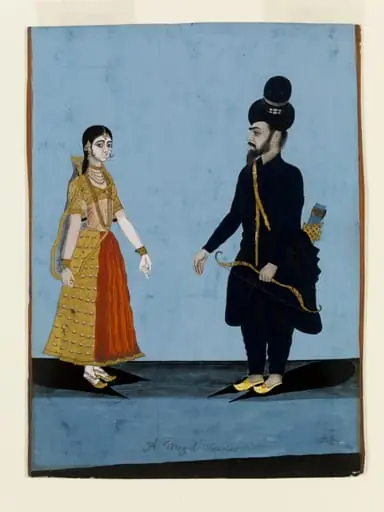
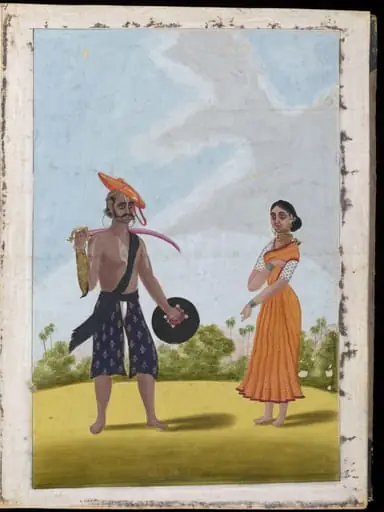
A Hindu ascetic and his wife is a paint painting by the Patna School of Painting artist Unknown. It dates from 1805 and is held in the collection of the Victoria and Albert Museum. This painting is one of thirty-six works documenting regional occupations and attire in early 19th-century India.
About this work
Overview
The figures are rendered with minimal detail but strong color contrasts, emphasizing their roles through dress and posture rather than narrative action.
This painting is one of thirty-six works documenting regional occupations and attire in early 19th-century India. It portrays a Hindu ascetic and his wife outdoors, set against a sparse, sunlit landscape. The figures are rendered with minimal detail but strong color contrasts, emphasizing their roles through dress and posture rather than narrative action. The composition avoids depth, focusing instead on symbolic representation.
Subject & Meaning
The man, likely a wandering sadhu, is identified by his tiger-skin garment, bow, and unshaven beard—symbols of renunciation and connection to nature. His wife, dressed in a simple orange robe, stands beside him, suggesting shared spiritual life. Together, they represent the ascetic tradition in Hinduism, where detachment from material life is embodied through clothing and tools, not ritual or temple setting.
Technique & Style
Executed in opaque watercolor on paper, the painting uses flat planes of color—orange, ochre, and brown—with no shading or perspective. The background is a pale, uniform field, isolating the figures. Brushwork is direct and economical, prioritizing clarity of identity over realism. This style aligns with regional manuscript traditions that favored symbolic clarity over naturalism.
History & Provenance
The painting originates from a series commissioned by British colonial officials in northern India, likely between 1815 and 1830, to document local customs. It was collected by the East India Company and later entered the Victoria and Albert Museum’s holdings. Its purpose was ethnographic, intended as a visual archive rather than an artistic statement.
Context
These paintings emerged during a period of British interest in cataloging Indian society. While influenced by European ethnographic practices, they retain indigenous stylistic conventions. The depiction of ascetics reflects both colonial curiosity and Hindu cultural norms, where renunciants occupied a respected, if marginal, social role outside caste structures.
Legacy
The series remains a key visual record of regional dress and spiritual practices in early colonial India. Though created for administrative documentation, the works now serve as cultural artifacts, offering insight into how Indian asceticism was perceived and recorded by outsiders. Their simplicity continues to inform contemporary studies of identity and representation in colonial art.
Artist & collection

 Domestic Scene
 Giacomo and Cardinal Marco, investing Andrea, Abbot of San Zeno, with his Benefice
 The Nymph of Fontainebleau
 Portrait of a Woman
 Madonna and Child with Saints in the Enclosed Garden
 Venus and Minerva
 Family Group of Four on Sofa
 Wall painting from Room H of the Villa of P. Fannius Synistor at Boscoreale