Artwork
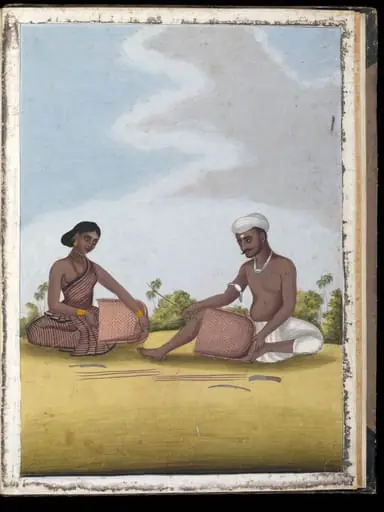
A shoemaker and his wife
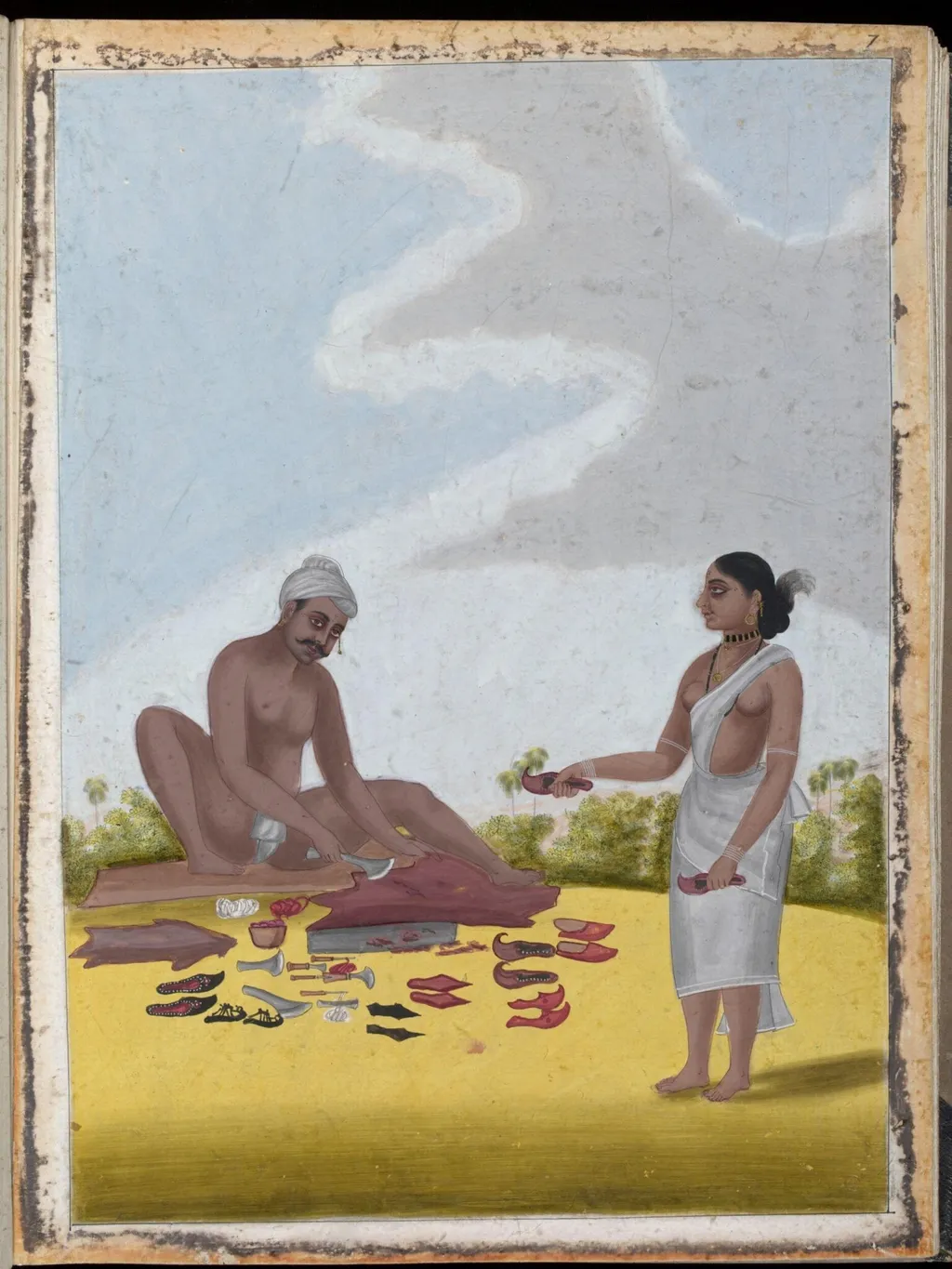
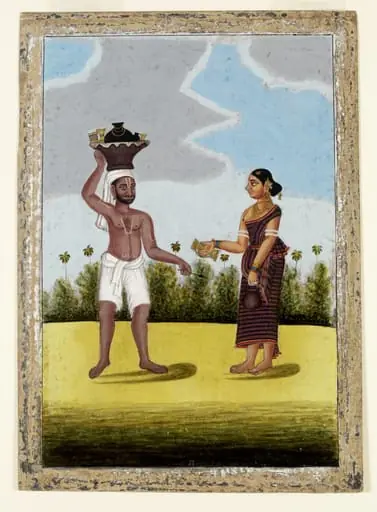
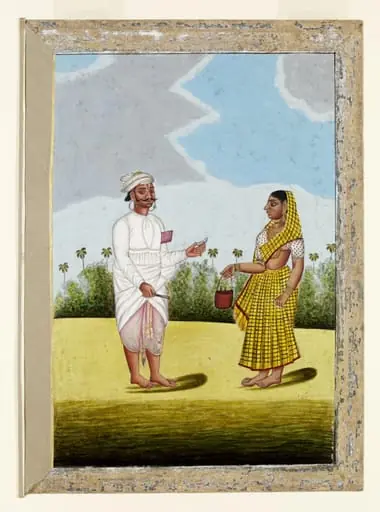
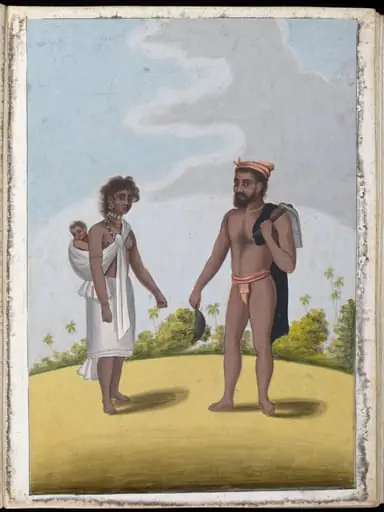
A shoemaker and his wife is a paint painting by the Biedermeier artist Unknown. It dates from 1805 and is held in the collection of the Victoria and Albert Museum. Painted in 1805, this work is one of 36 scenes in a series documenting regional trades and attire.
About this work
Overview
Painted in 1805, this work is one of 36 scenes in a series documenting regional trades and attire. It portrays a shoemaker and his wife engaged in their daily labor, set against a minimal landscape of trees and sky. The composition emphasizes quiet domesticity rather than grandeur, aligning with a broader interest in ordinary life during the early 19th century.
Subject & Meaning
The shoemaker, bare-chested and seated, is focused on his craft, surrounded by leather and tools. His wife stands nearby, offering a small object—perhaps a tool or scrap of material—suggesting collaboration in their work. The scene captures mutual dependence and the dignity of manual labor, avoiding idealization in favor of observed reality.
Technique & Style
The painting employs soft, muted tones and restrained detail, with attention to texture in fabric, leather, and skin. The background is deliberately sparse—light sky and foliage—to direct focus to the figures. Brushwork is deliberate but unembellished, reflecting a documentary impulse over theatrical expression.
History & Provenance
This painting originated in a commissioned album of 36 occupational scenes, likely created for a colonial or aristocratic patron interested in ethnographic record. Its survival suggests it was preserved as a cultural artifact rather than a decorative piece, though its exact early ownership remains undocumented.
Context
Created during the rise of Romanticism, the work reflects the movement’s turn toward everyday subjects and regional identity. While Romantic art often idealized nature or emotion, this piece grounds its sentiment in the tangible rhythms of labor, offering a quiet counterpoint to grand historical narratives.
Legacy
The painting contributes to a rare visual archive of pre-industrial craft in its region. Though not widely exhibited, it remains a reference for studies of vernacular life and artisanal practice in the early 1800s, valued for its unadorned depiction of work and domestic partnership.
Artist & collection

 Domestic Scene
 Giacomo and Cardinal Marco, investing Andrea, Abbot of San Zeno, with his Benefice
 The Nymph of Fontainebleau
 Portrait of a Woman
 Madonna and Child with Saints in the Enclosed Garden
 Venus and Minerva
 Family Group of Four on Sofa
 Wall painting from Room H of the Villa of P. Fannius Synistor at Boscoreale