Artwork
A tank-builder and his wife
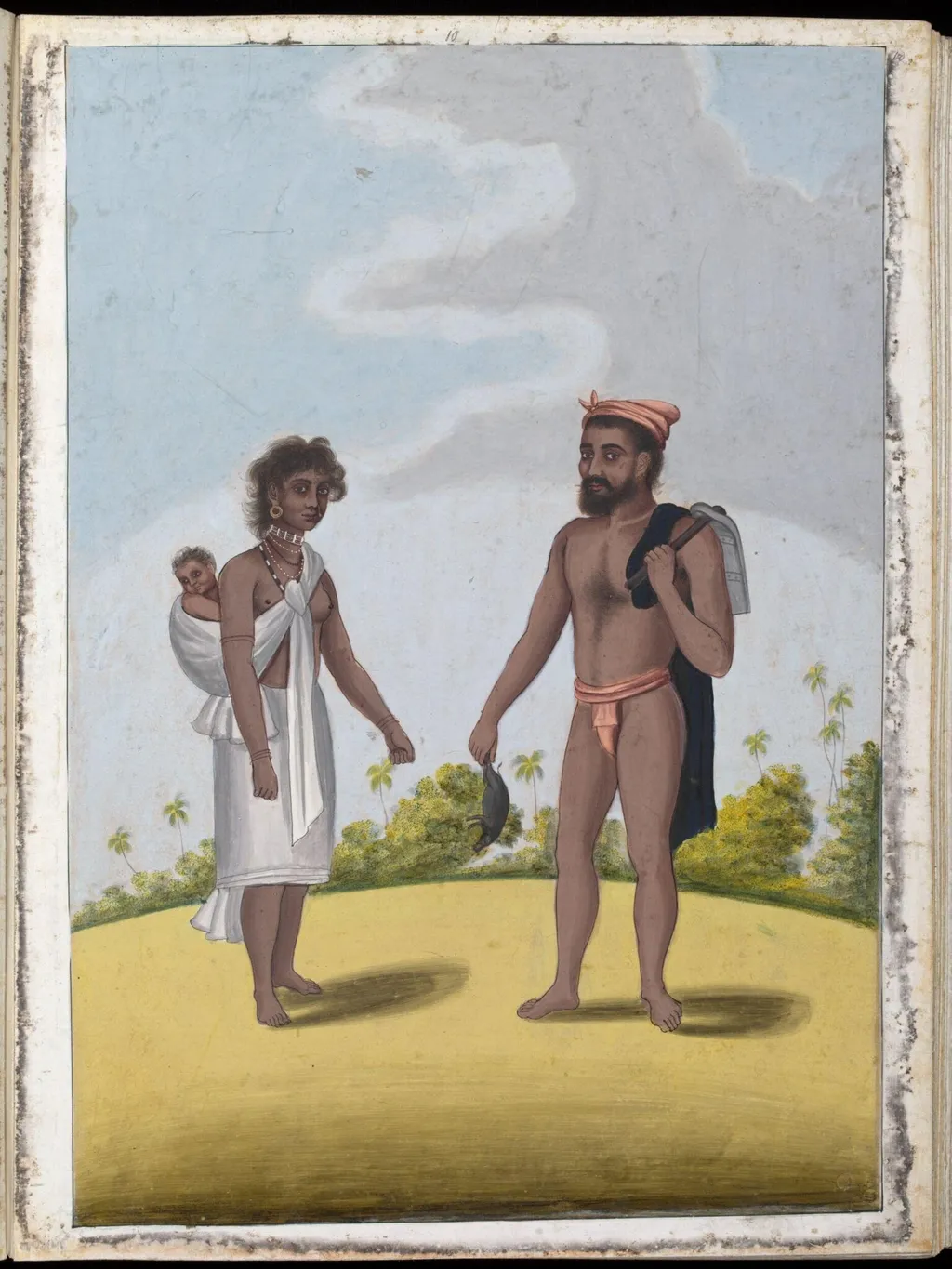
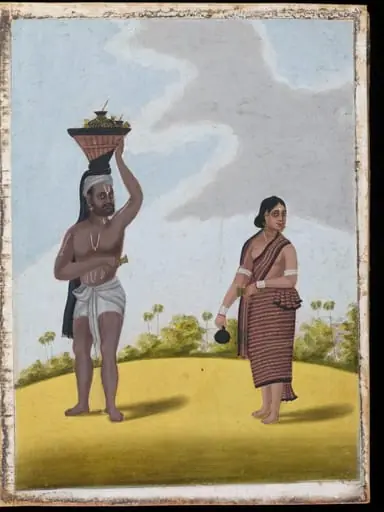
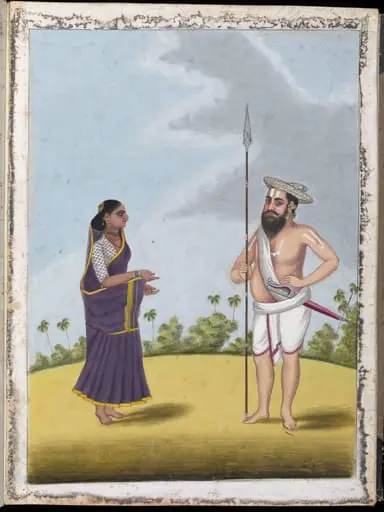
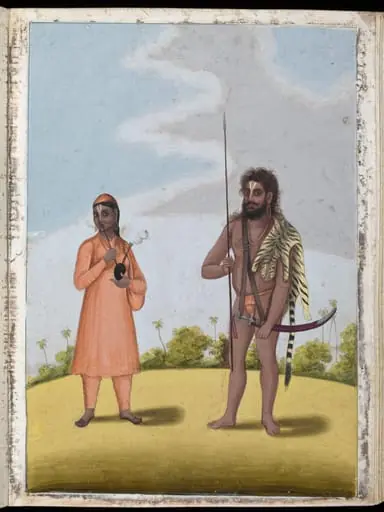
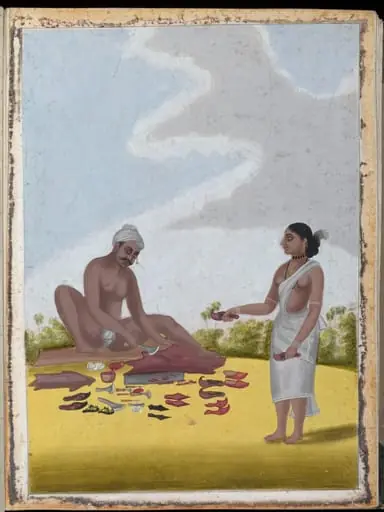
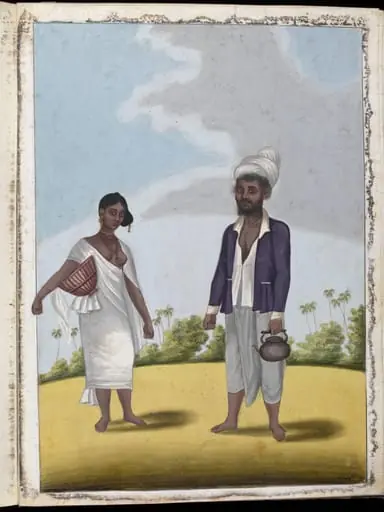
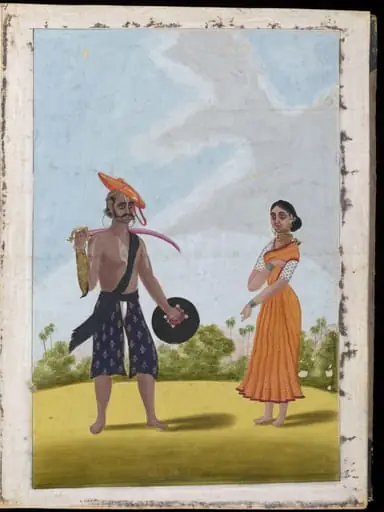
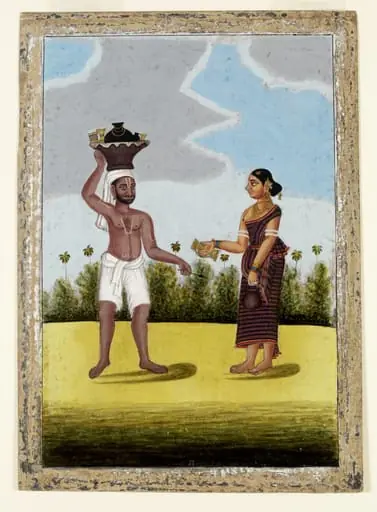
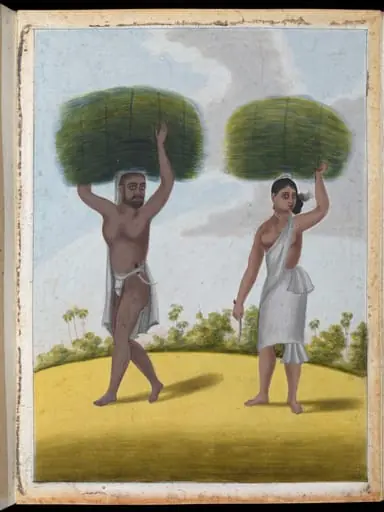
A tank-builder and his wife is a paint painting by the Romanticist artist Unknown. It dates from 1805 and is held in the collection of the Victoria and Albert Museum. This painting is one of thirty-six in a series documenting regional trades and attire across India.
About this work
Overview
The work belongs to a larger collection assembled to record occupational diversity and social customs, now held at the Victoria and Albert Museum.
This painting is one of thirty-six in a series documenting regional trades and attire across India. It portrays a man identified as a tank-builder alongside his wife, captured in a quiet, everyday moment. The scene is set outdoors on a sunlit ground, with natural vegetation framing the figures. The work belongs to a larger collection assembled to record occupational diversity and social customs, now held at the Victoria and Albert Museum.
Subject & Meaning
The man, engaged in a labor-intensive trade involving water infrastructure, holds a tool—possibly a digging implement—while his wife stands beside him, carrying their infant. Their attire suggests differing caste backgrounds, subtly acknowledged through garment color and style. The composition avoids theatricality, instead emphasizing dignity in routine work and domestic life, reflecting a documentary intent rather than symbolic narrative.
Technique & Style
Rendered in opaque watercolor, the figures are outlined with fine brushwork and filled with flat, unmodulated hues. The background trees and sky are rendered with loose, atmospheric strokes, contrasting with the precise detailing of clothing and tools. The use of warm tones for skin and fabric, against a pale yellow ground and blue sky, creates a sense of midday light without artificial shading or perspective.
History & Provenance
The painting originated in early 19th-century India, likely produced for a British collector or administrator interested in ethnographic records. It was part of a bound album compiled to catalog regional occupations. Acquired by the Victoria and Albert Museum in the 19th century, it remains within the institution’s South Asian decorative arts collection, preserved as a record of pre-colonial occupational life.
Context
This work emerged during a period when British officials and travelers commissioned visual surveys of Indian society. Such albums served both administrative curiosity and anthropological interest, often emphasizing distinctions in caste, dress, and labor. While not overtly political, the series subtly documents social structures through visual specificity, offering insight into daily life beyond elite or religious subjects.
Legacy
The painting contributes to a historical archive of Indian occupational practices, valued today for its unembellished depiction of labor and family life. It stands as a quiet counterpoint to more stylized courtly art of the era, offering a grounded view of non-elite communities. Its preservation allows ongoing study of regional costume, gender roles, and artisanal trades in early colonial India.
Artist & collection

 Domestic Scene
 Giacomo and Cardinal Marco, investing Andrea, Abbot of San Zeno, with his Benefice
 The Nymph of Fontainebleau
 Portrait of a Woman
 Madonna and Child with Saints in the Enclosed Garden
 Venus and Minerva
 Family Group of Four on Sofa
 Wall painting from Room H of the Villa of P. Fannius Synistor at Boscoreale