Artwork
A Watermill in a Woody Landscape
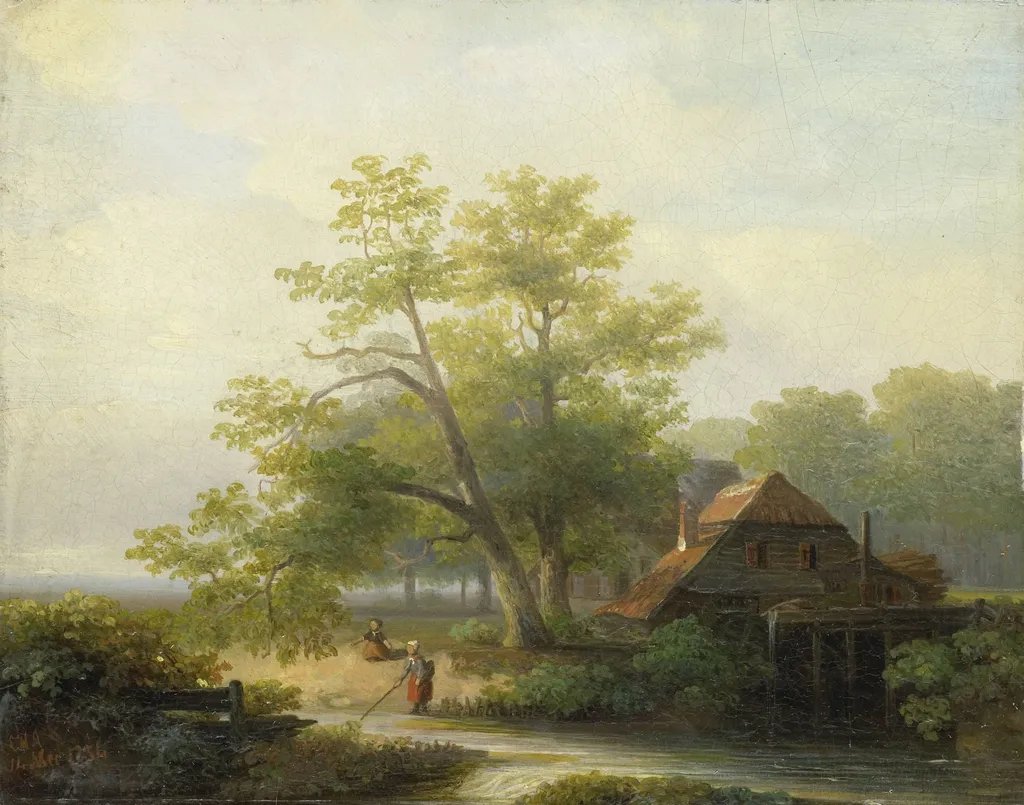
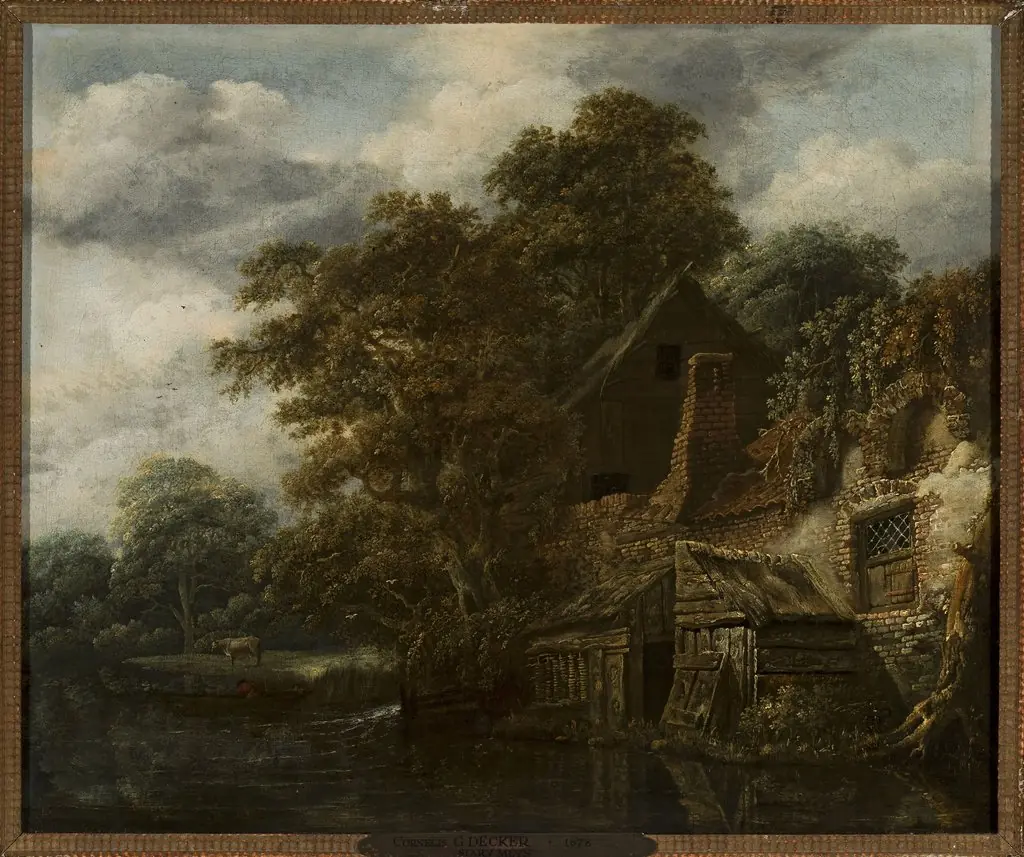
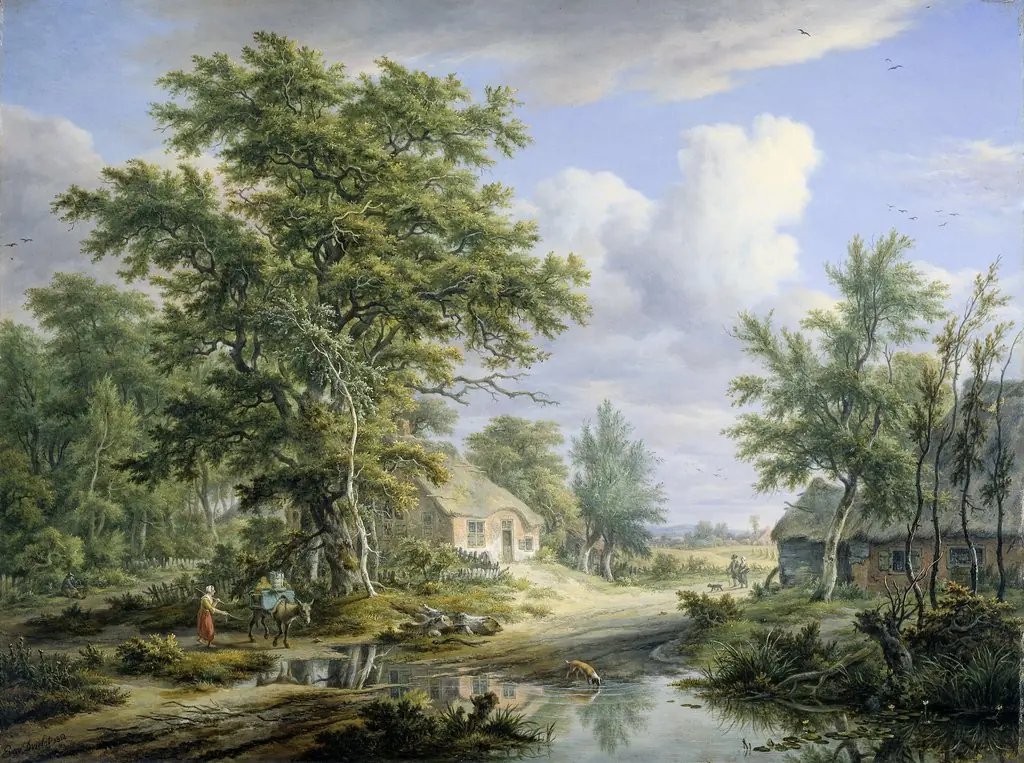
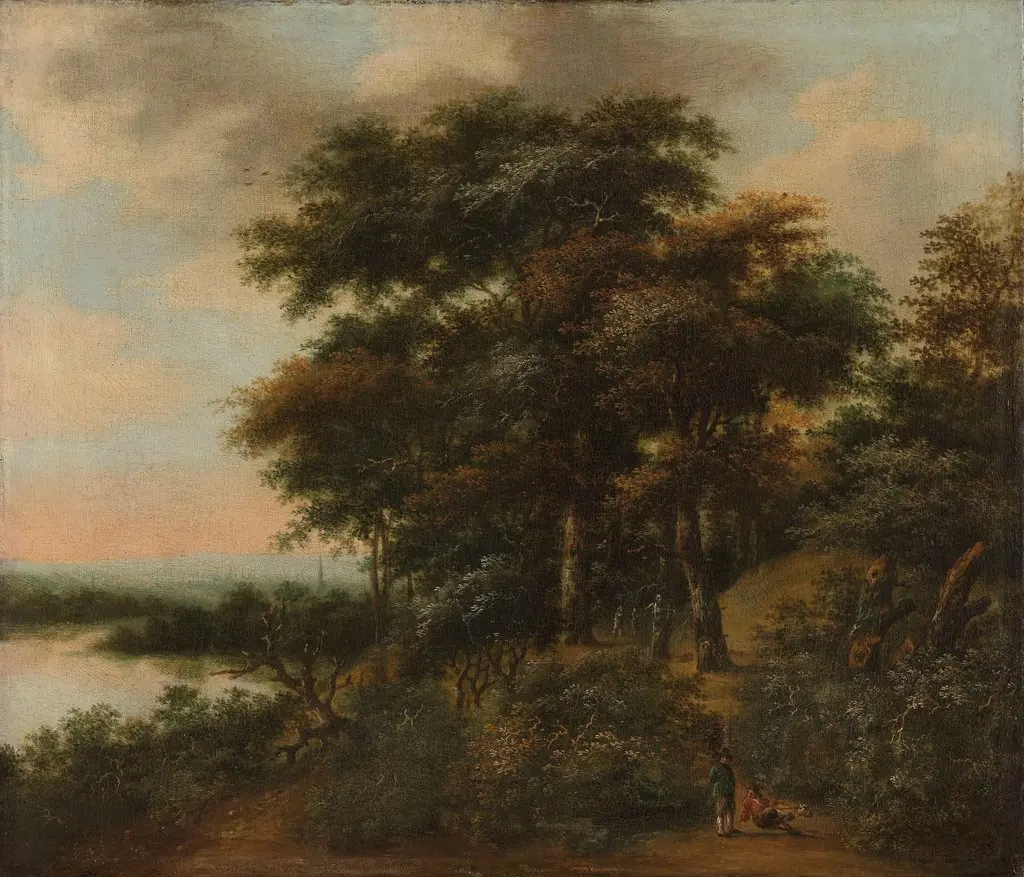
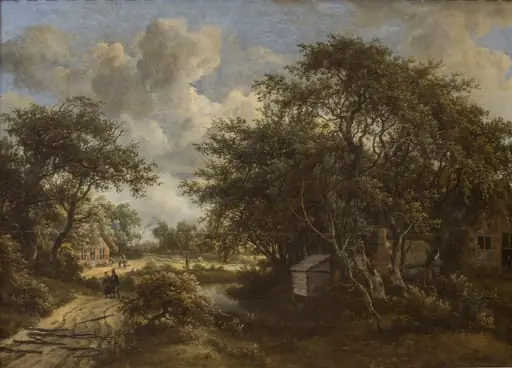
A Watermill in a Woody Landscape is an unspecified painting by the Realist artist Unknown. It dates from 1880 and is held in the collection of the Rijksmuseum. This small landscape painting depicts a modest wooden watermill nestled among dense trees, with a quiet stream flowing beside it.
About this work
Overview
This small landscape painting depicts a modest wooden watermill nestled among dense trees, with a quiet stream flowing beside it.
This small landscape painting depicts a modest wooden watermill nestled among dense trees, with a quiet stream flowing beside it. Two girls are present—one casting a line into the water, the other standing still, observing. The scene carries no overt drama or narrative, instead offering a calm, unembellished glimpse of rural life. The absence of an artist’s signature leaves the creator unidentified, though the work’s attention to natural detail suggests a skilled hand familiar with the Dutch countryside.
Subject & Meaning
The painting captures an ordinary moment in rural daily life, free from symbolic or allegorical intent. The girls’ presence—fishing and watching—suggests leisure rather than labor, hinting at the rhythm of country existence. The watermill, a functional structure, blends into the environment rather than dominating it. The scene’s quietude implies an appreciation for stillness and the unremarkable, reflecting a cultural preference for modest, observed reality over grandeur.
Technique & Style
The artist employs soft, naturalistic brushwork to render the textures of moss-covered wood, dappled light on water, and the subtle gradations of foliage. Colors are muted, dominated by greens, browns, and pale blues, reinforcing the scene’s tranquility. Light is rendered with sensitivity, catching the surface of the stream and highlighting the mill’s weathered surfaces. The composition is unforced, with no central focal point, allowing the viewer’s eye to wander as if through an actual landscape.
History & Provenance
The painting’s origins remain undocumented due to the lack of a signature or early records. It likely dates to the late 17th or early 18th century, a period when Dutch artists frequently depicted rural scenes for private collectors. Its survival and eventual inclusion in the Rijksmuseum’s collection suggest it was valued for its quiet authenticity, even if its maker was unknown. No notable changes in ownership or restoration are recorded.
Context
This work aligns with a broader Dutch tradition of landscape painting that favored everyday rural settings over mythological or aristocratic themes. During the 17th century, as urbanization grew, such scenes offered a nostalgic or idealized view of country life. Artists and patrons alike found beauty in the unadorned—watermills, streams, and quiet figures—reflecting a cultural shift toward valuing observation over spectacle.
Legacy
Though unsigned and unattributed, the painting endures as an example of understated Dutch landscape art. It contributes to the Rijksmuseum’s broader representation of non-heroic, intimate scenes from the period. Its continued presence in digital collections invites contemporary viewers to engage with historical perceptions of nature and stillness, preserving a quiet aesthetic that values presence over prominence.
Artist & collection

 Domestic Scene
 Giacomo and Cardinal Marco, investing Andrea, Abbot of San Zeno, with his Benefice
 The Nymph of Fontainebleau
 Portrait of a Woman
 Madonna and Child with Saints in the Enclosed Garden
 Venus and Minerva
 Family Group of Four on Sofa
 Wall painting from Room H of the Villa of P. Fannius Synistor at Boscoreale