Artwork
Landscape
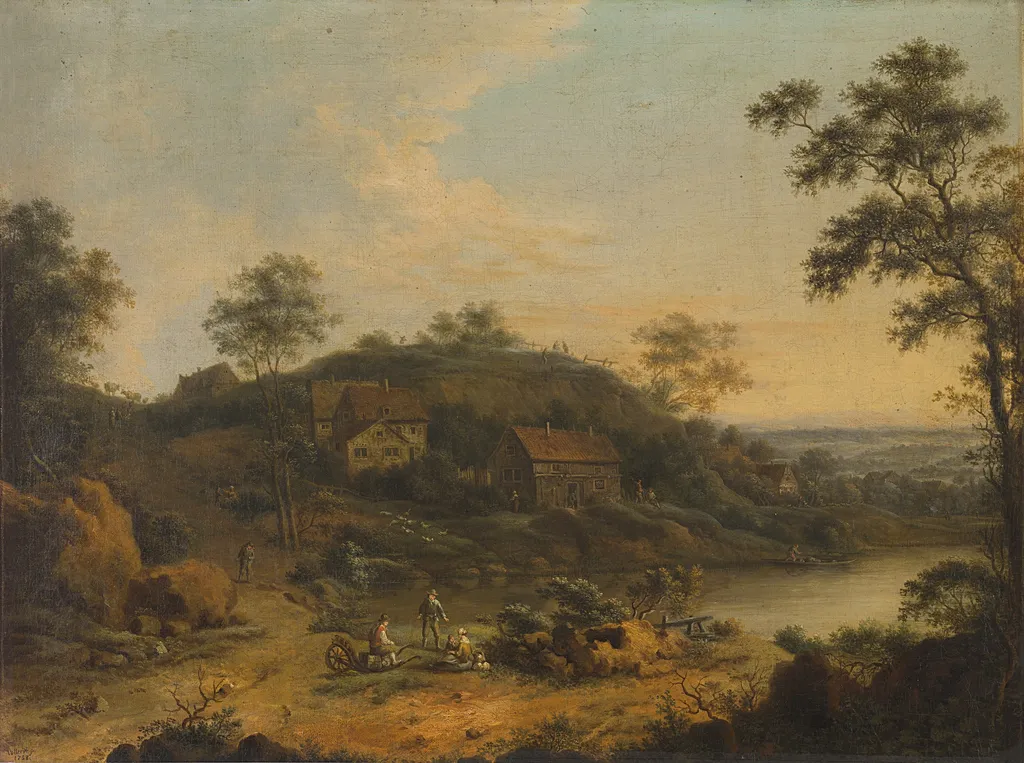
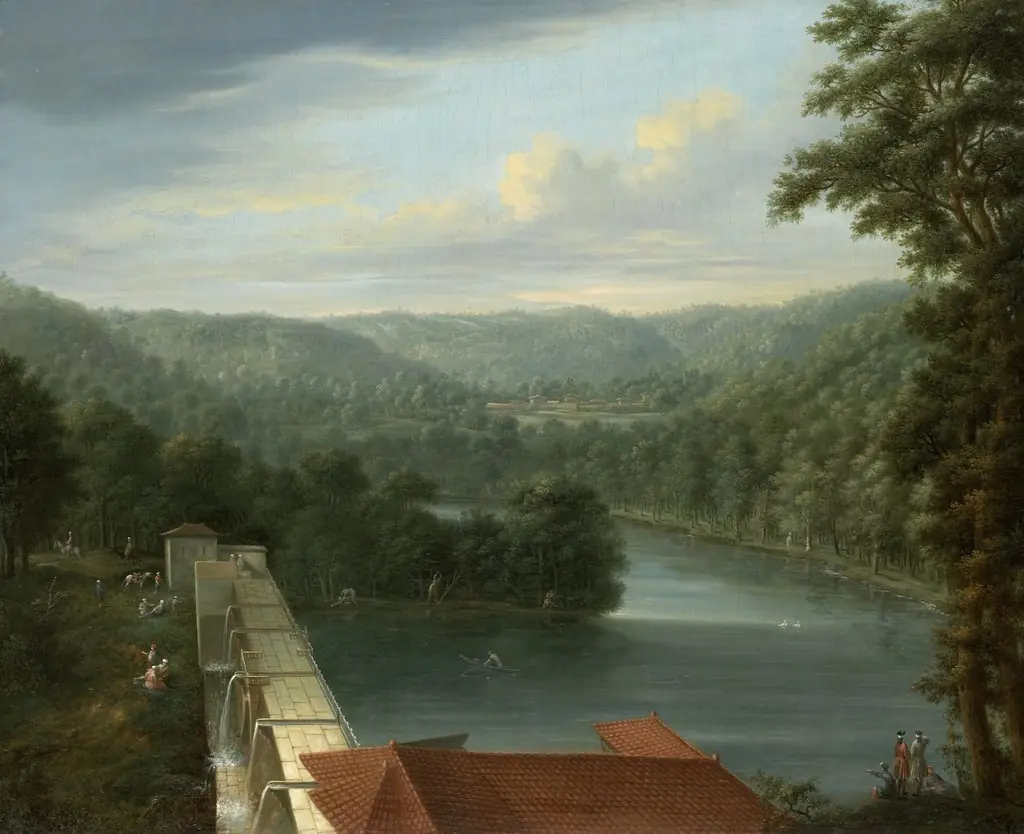
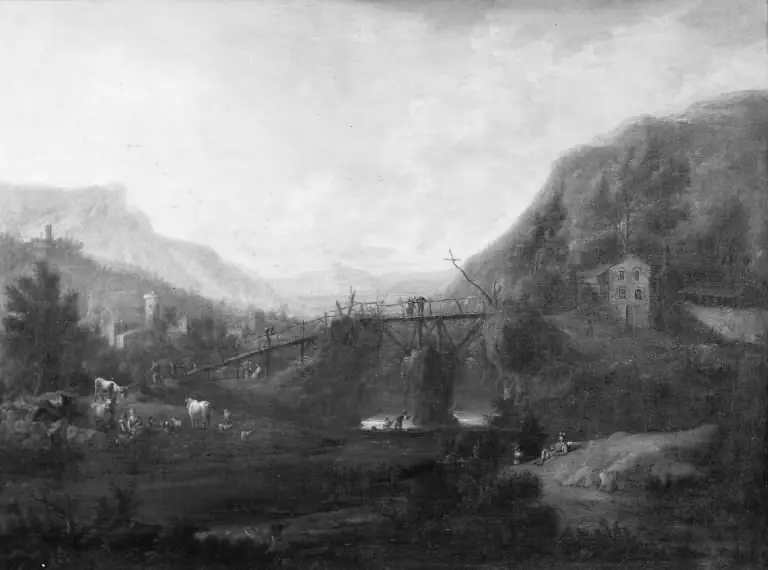
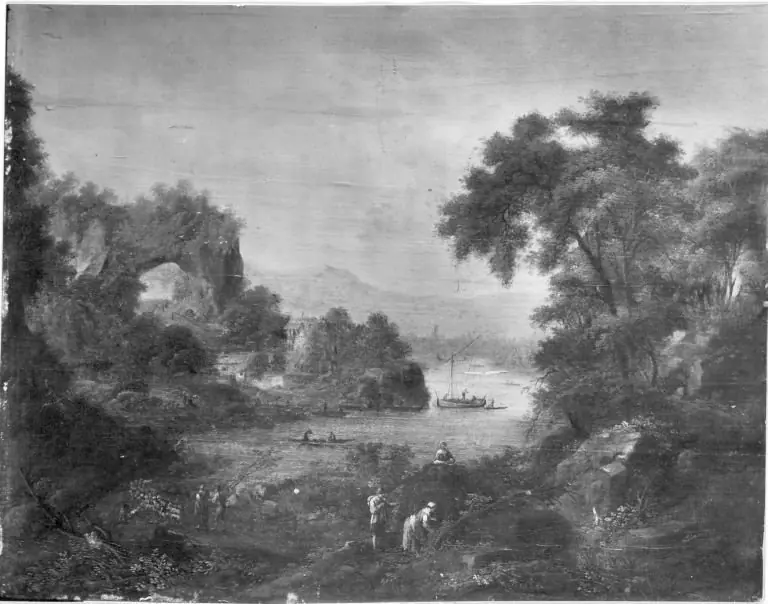
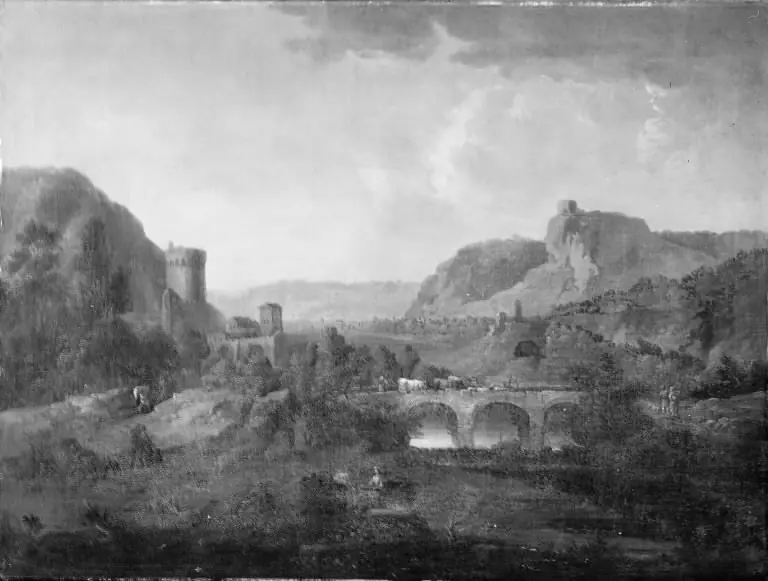
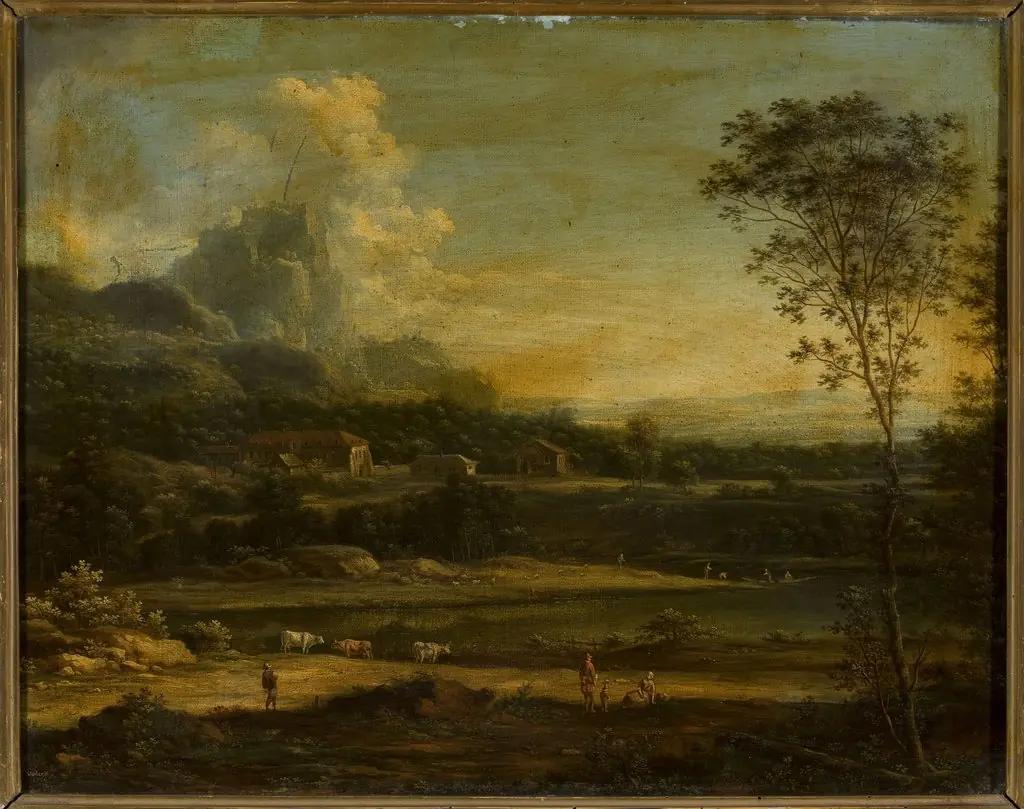
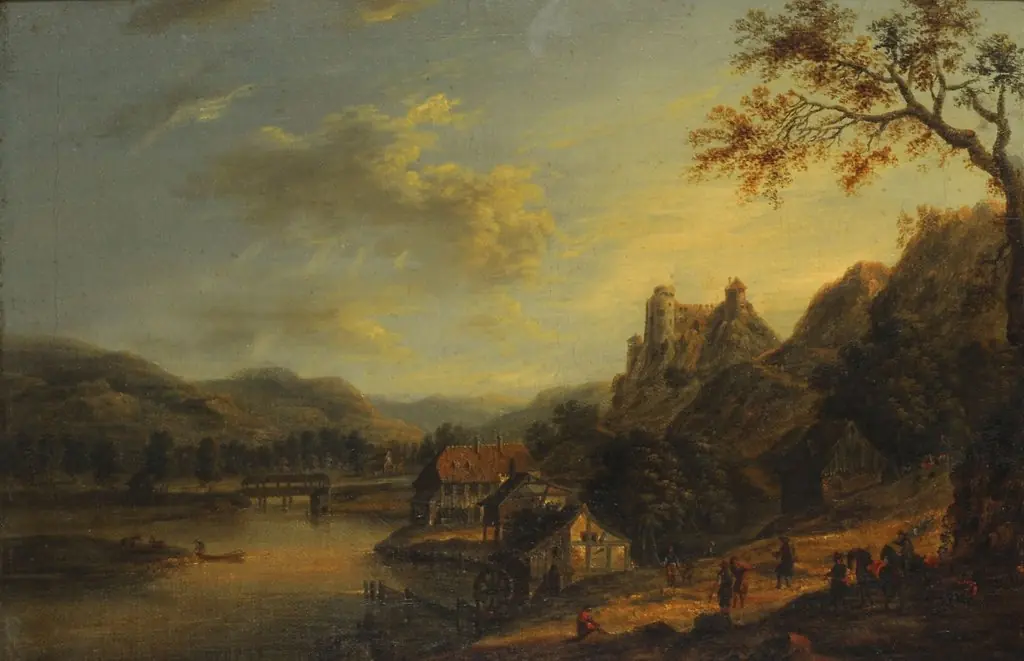
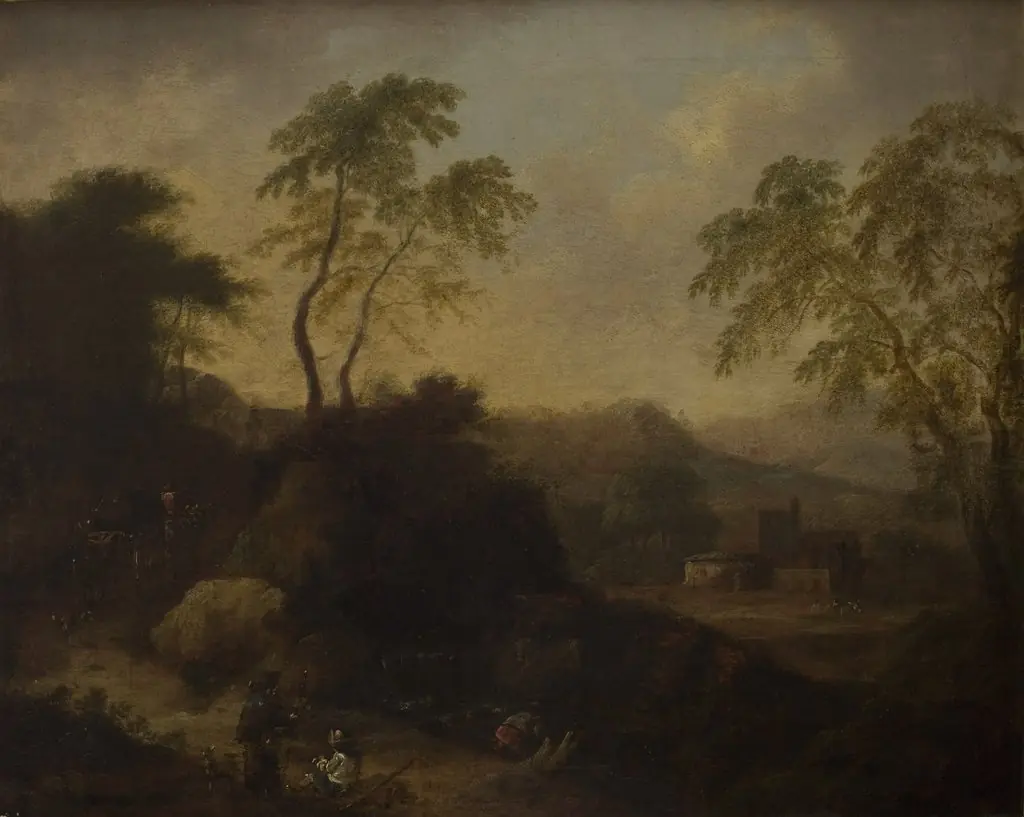
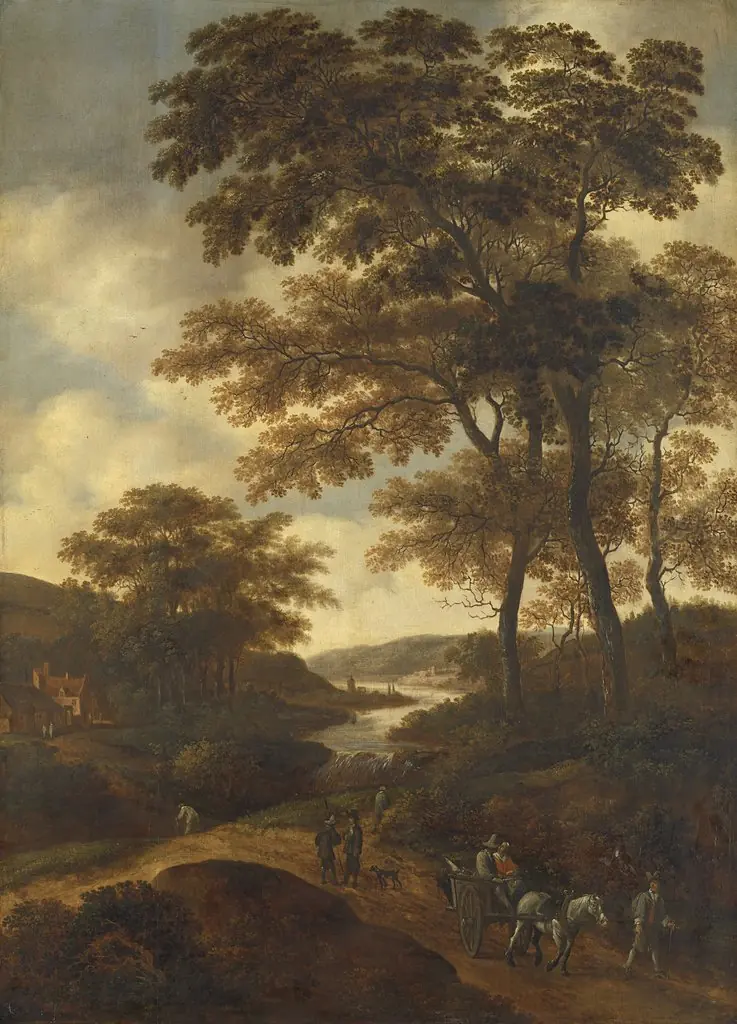
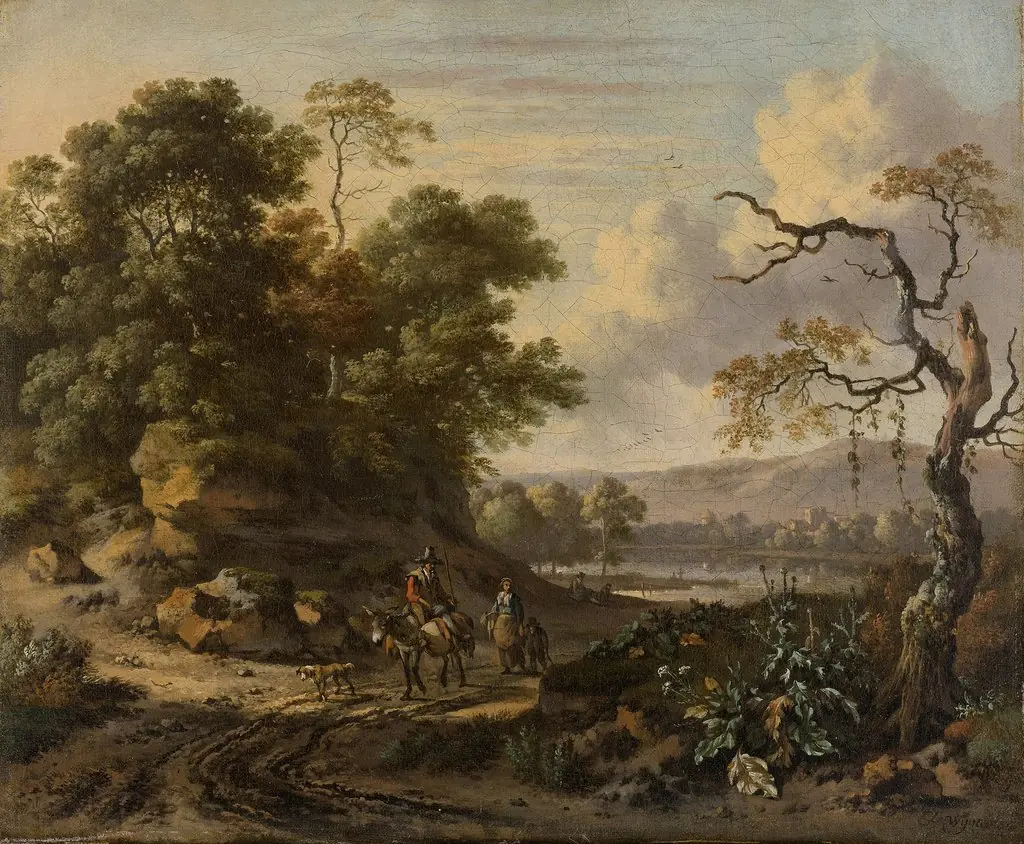
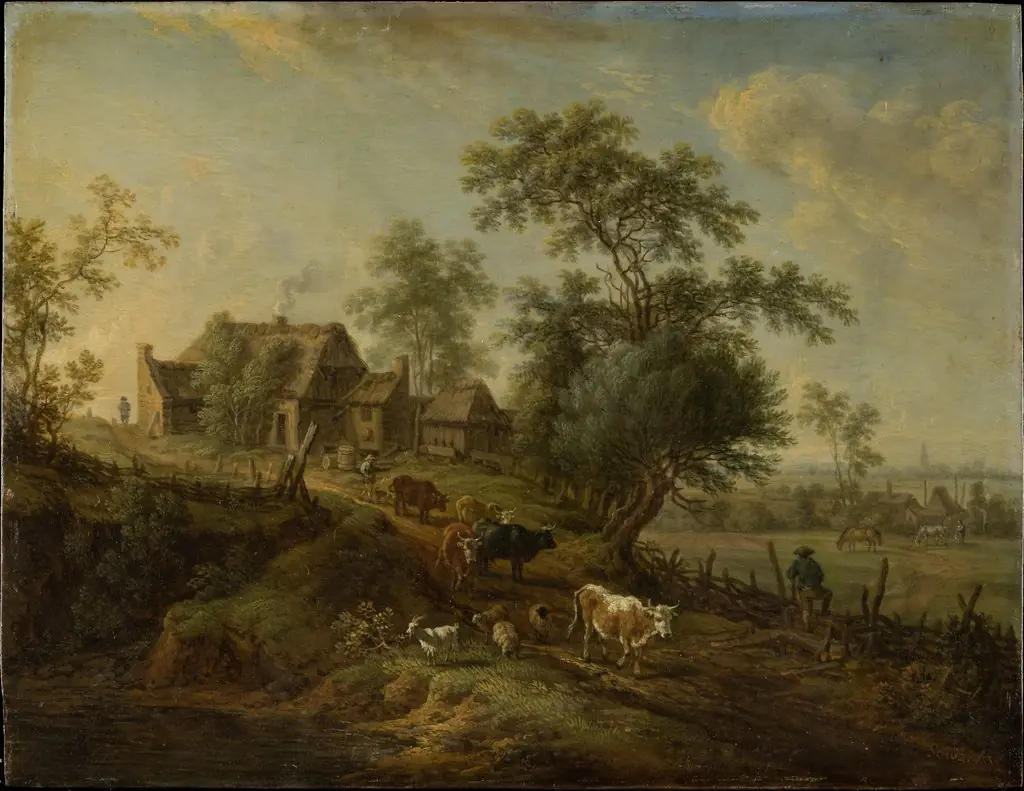
Landscape is an oil painting by the Rococo painting artist Johann Christian Vollerdt. It dates from 1758 and is held in the collection of the Museo del Prado.
About this work
Overview
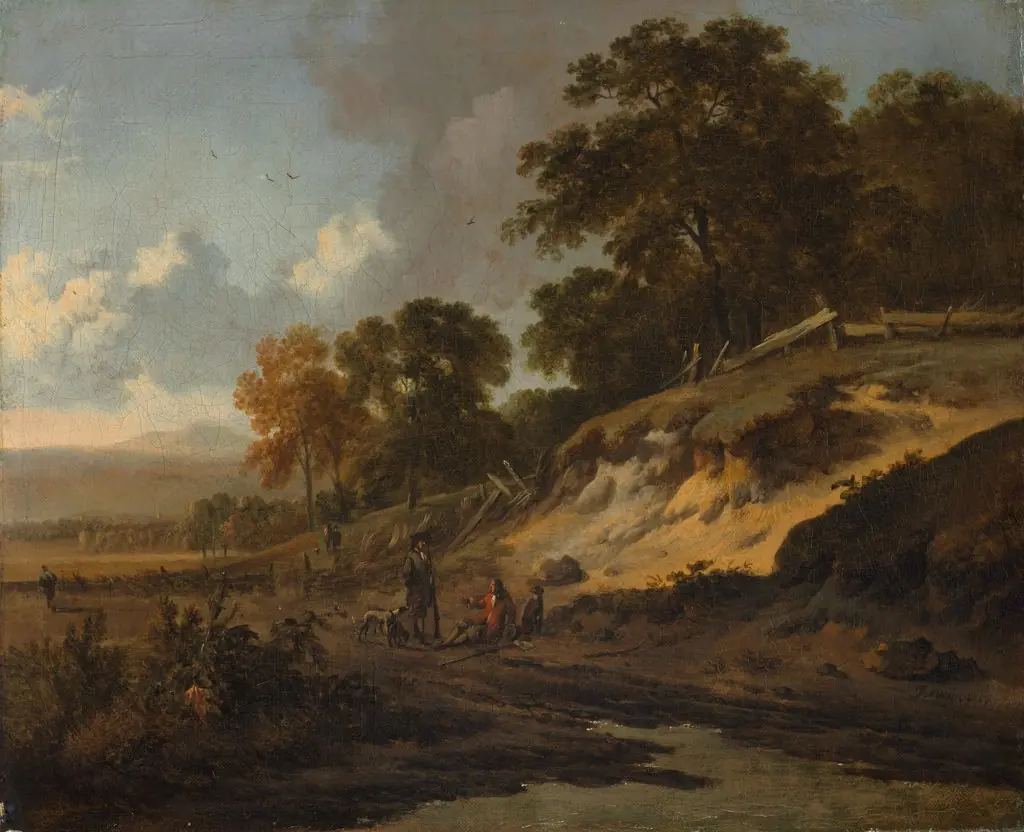
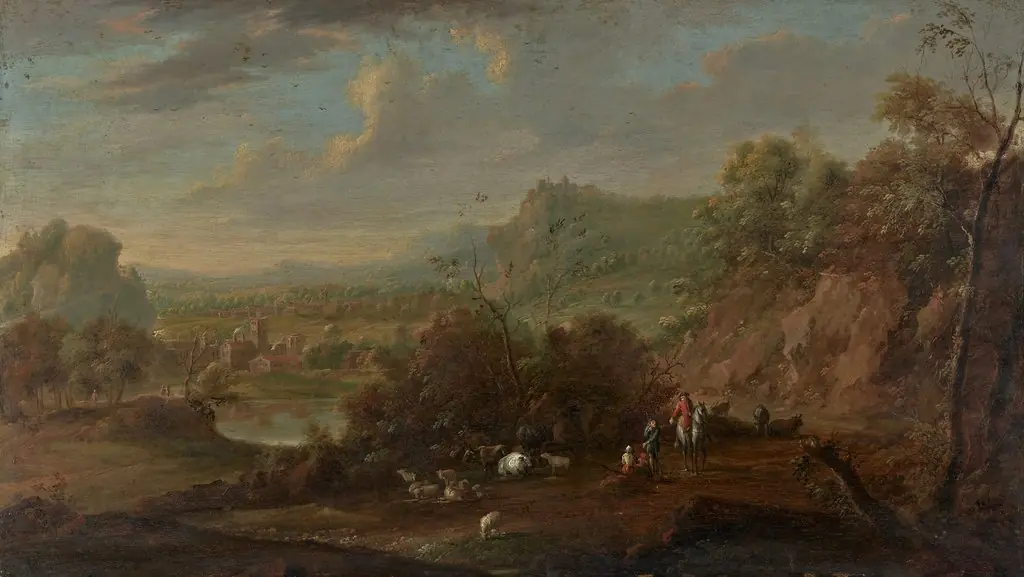
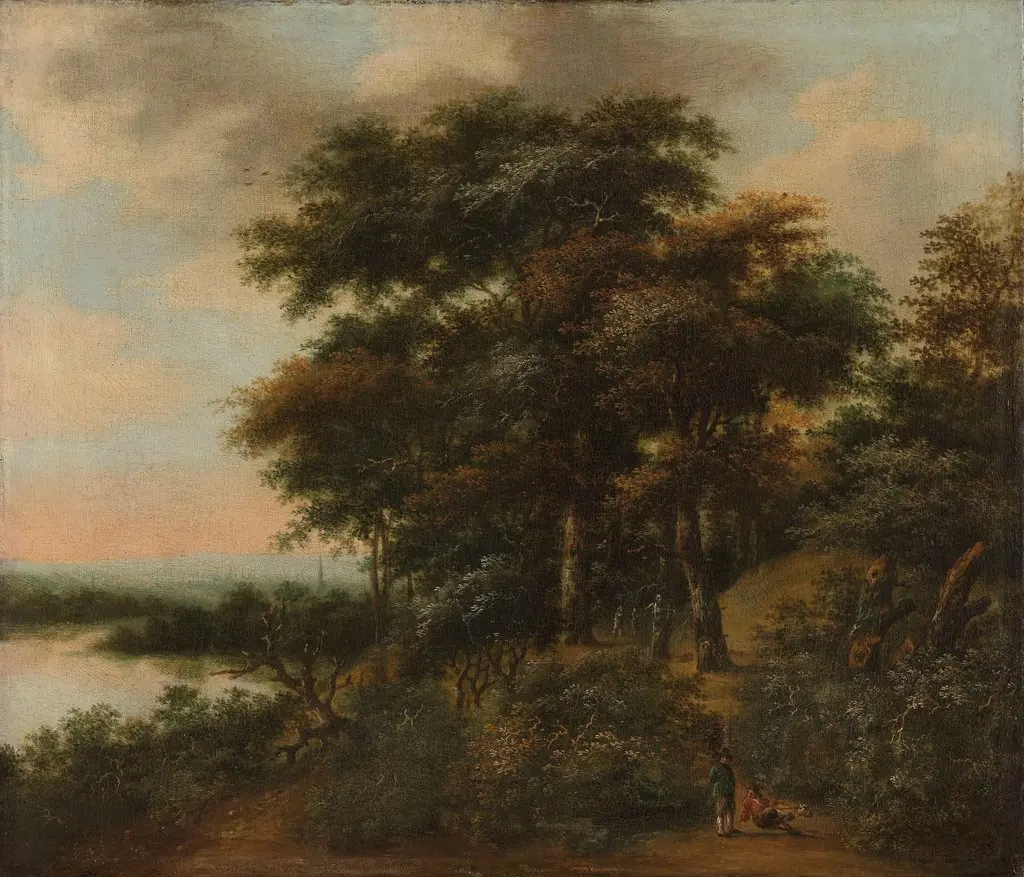
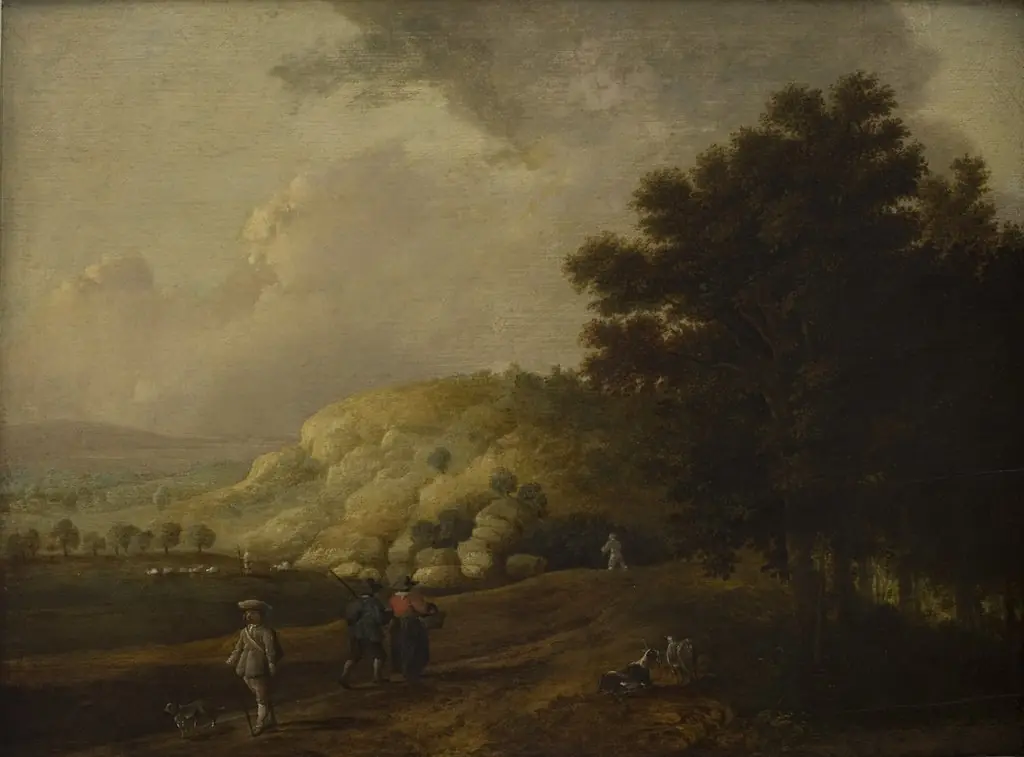
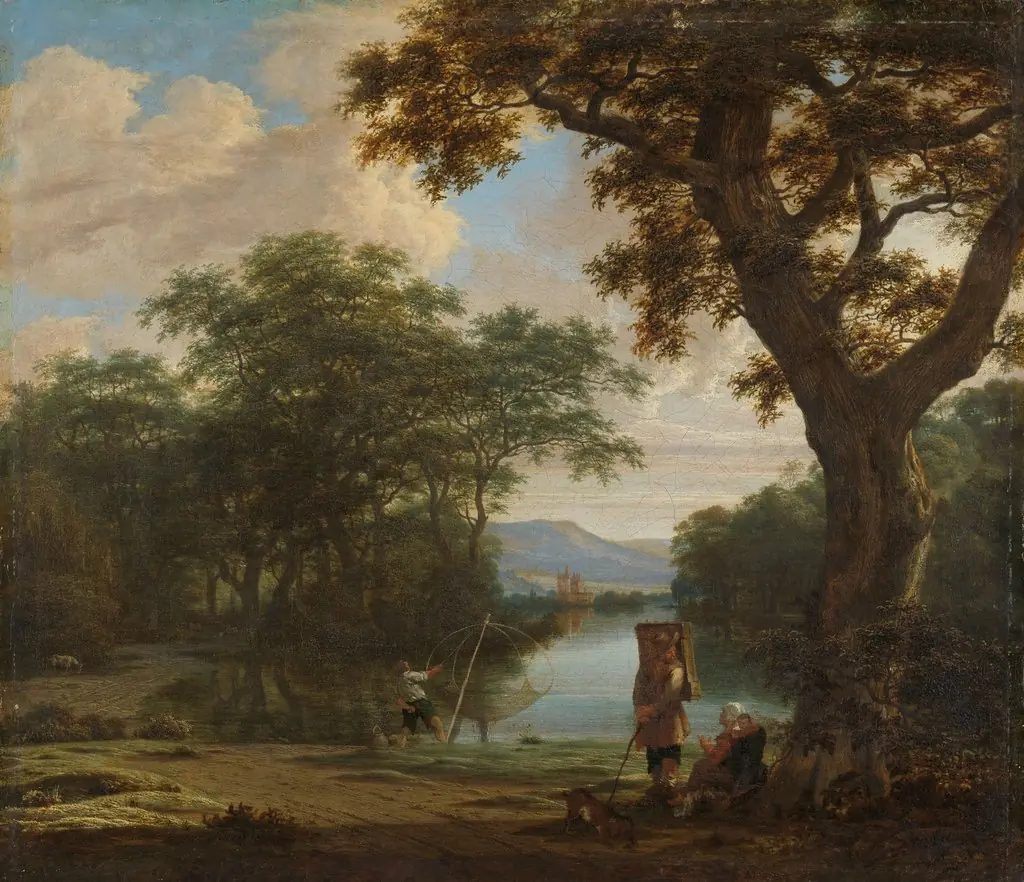
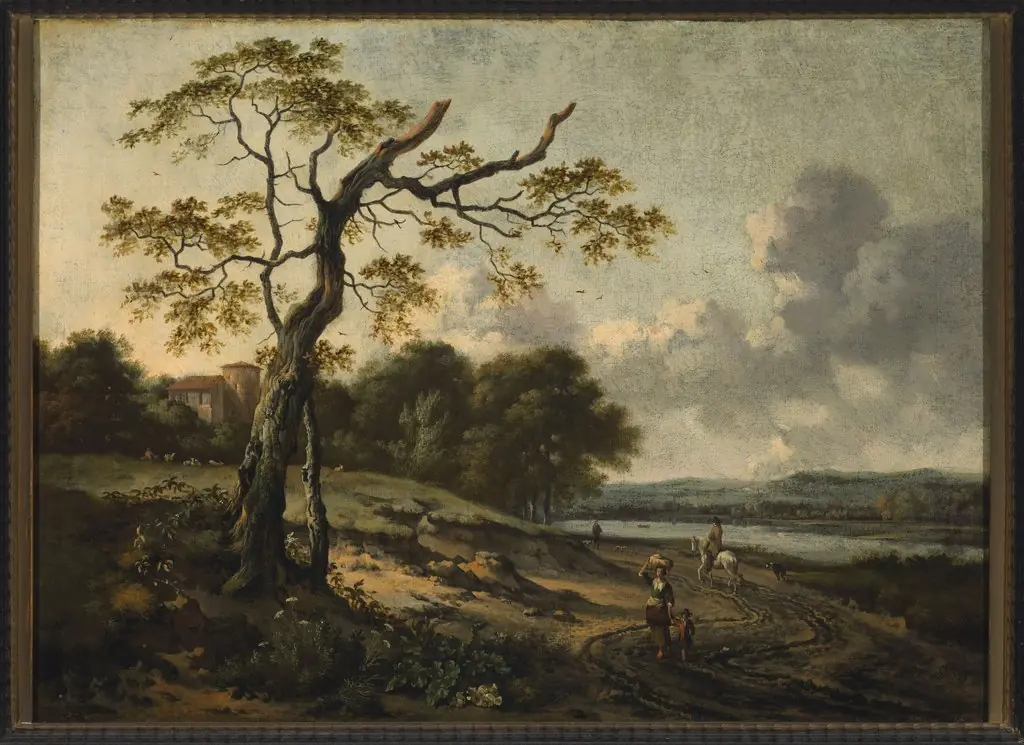
The composition presents a modest hillside village with scattered dwellings, winding paths, and a gentle river, all rendered in muted natural tones.
Painted in 1758 by Johann Christian Vollerdt, this oil-on-canvas work depicts a tranquil rural scene. It is part of the collection at the Museo del Prado in Madrid. The composition presents a modest hillside village with scattered dwellings, winding paths, and a gentle river, all rendered in muted natural tones. The painting reflects an 18th-century European tradition of observing everyday landscapes without dramatic intervention.
Subject & Meaning
The scene captures ordinary life in a quiet village: figures move along paths, a cart rests near a road, and individuals linger by the water. There is no narrative climax or symbolic allegory; instead, the focus lies in the quiet rhythm of daily activity. The absence of grandeur suggests an appreciation for the unremarkable, valuing stillness and routine over spectacle.
Technique & Style
Vollerdt employs subtle gradations of light and shadow to model forms, particularly along the riverbank where darker tones anchor the composition. Warm earth tones dominate the foliage and soil, while the sky remains pale and diffuse. The brushwork is restrained, avoiding overt texture in favor of atmospheric cohesion. Light is used not for drama but to define spatial depth and time of day.
History & Provenance
The painting entered the Museo del Prado’s collection in the 19th century, likely as part of a broader acquisition of Northern European works. Its attribution to Vollerdt, a lesser-known German painter active in the mid-1700s, was confirmed through archival records and stylistic comparison. It has remained in the museum’s care since, with no documented restorations or major reattributions.
Context
Created during the height of the Rococo period, this landscape diverges from the ornate and theatrical trends of the time. Instead, it aligns with a growing interest in naturalism and pastoral quietude among Northern European artists. Similar works by contemporaries reflect a shift toward intimate, unidealized views of the countryside, often commissioned by patrons seeking solace in domesticated nature.
Legacy
Though Vollerdt did not achieve widespread fame, this painting contributes to the understanding of 18th-century landscape painting beyond the dominant French and Italian schools. It exemplifies how regional artists adapted observational techniques to depict local environments with quiet sincerity. The work remains a quiet reference point in studies of pre-Romantic rural representation.
Own this work as a print
Artist & collection
Artist
Johann Christian Vollerdt (1708–1769) was an artist, born in Leipzig.