Artwork
Aga Muhammad Khan Qajar
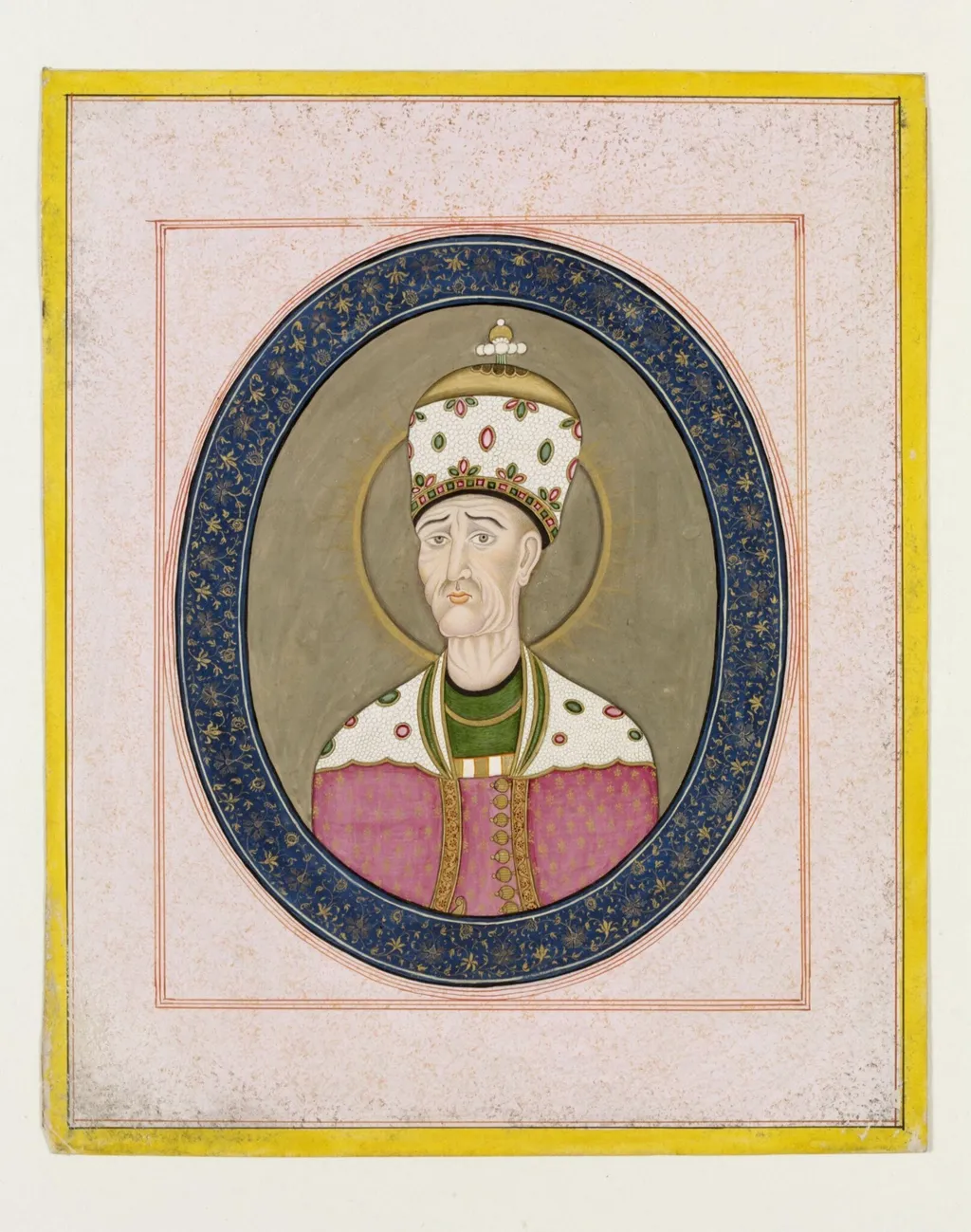
Aga Muhammad Khan Qajar is a paint painting by the Romanticist artist Unknown. It dates from 1840 and is held in the collection of the Victoria and Albert Museum.
About this work
Overview
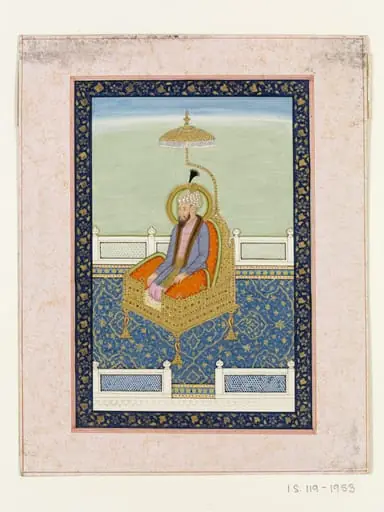
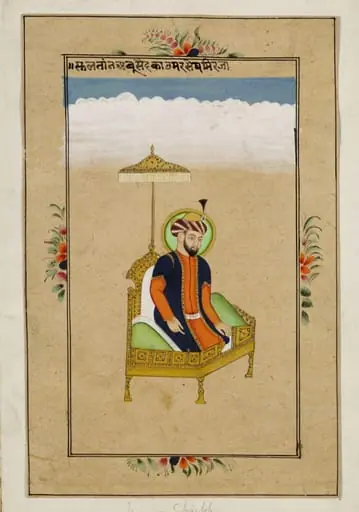
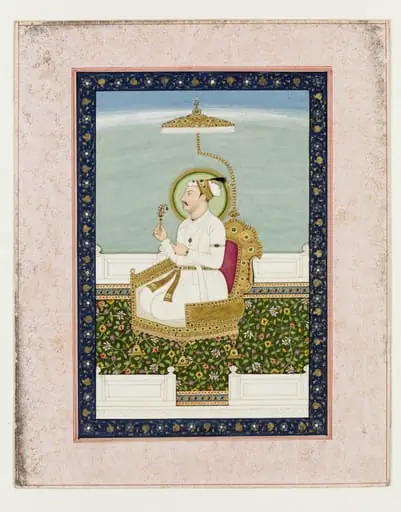
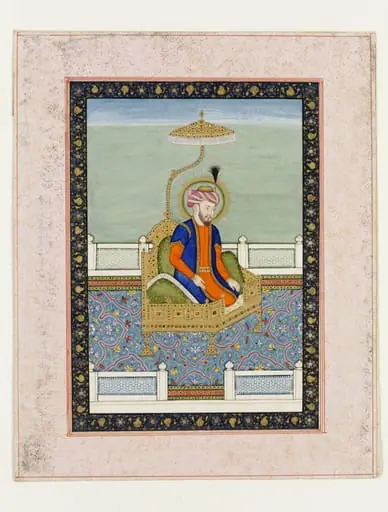
This opaque watercolour on paper depicts Aga Muhammad Khan Qajar, founder of the Qajar dynasty and ruler of Persia in the late 18th century.
This opaque watercolour on paper depicts Aga Muhammad Khan Qajar, founder of the Qajar dynasty and ruler of Persia in the late 18th century. The portrait presents him in a formal, frontal pose, typical of courtly portraiture of the period. Executed with precision, the work belongs to a documented series of Muslim sovereigns, likely commissioned to assert dynastic legitimacy and imperial presence through visual representation.
Subject & Meaning
Aga Muhammad Khan is portrayed with solemn authority, his long beard and heavy brows reinforcing an image of stern leadership. His attire—pink robe with gold floral motifs and jewelled shoulder ornaments—signals wealth and status, while the tall headdress aligns with Persian royal iconography. The portrait functions not as a likeness alone but as a symbol of sovereignty, intended to convey control and divine sanction to viewers within and beyond his realm.
Technique & Style
The painting employs opaque watercolour on paper, a medium favored in Persian and Mughal court art for its luminous detail and fine line work. The gold embellishments on the robe and headdress are rendered with meticulous precision, while the background features a dark, patterned oval border, possibly added later as a decorative frame. The composition is tightly contained, emphasizing the figure against a neutral field, a convention in 19th-century imperial portraiture.
History & Provenance
The portrait was once in the collection of George Eden, Earl of Auckland, who served as Governor-General of India between 1836 and 1842. His ownership suggests the work entered British collections during the period of heightened imperial interest in Persian and South Asian courts. Its presence in such a collection reflects the broader 19th-century practice of acquiring and cataloging non-European rulers’ imagery as part of colonial ethnographic and political documentation.
Context
Created during or shortly after Aga Muhammad Khan’s reign, the portrait aligns with a broader trend among Qajar rulers to commission formal images that blended Persian traditions with emerging European influences in composition and detail. Such portraits were circulated among elites and used to reinforce political authority. Similar works from this era appear in royal archives and European collections, indicating a deliberate effort to project legitimacy through visual culture.
Legacy
The portrait remains a key example of early Qajar court art, illustrating the transition from earlier Safavid styles toward more naturalistic and ornate representations. Its survival in institutional collections underscores its role as a historical document of Persian rulership during a period of political consolidation. It continues to inform scholarly understanding of how power was visually constructed in 19th-century Iran.
Artist & collection

 Domestic Scene
 Giacomo and Cardinal Marco, investing Andrea, Abbot of San Zeno, with his Benefice
 The Nymph of Fontainebleau
 Portrait of a Woman
 Madonna and Child with Saints in the Enclosed Garden
 Venus and Minerva
 Family Group of Four on Sofa
 Wall painting from Room H of the Villa of P. Fannius Synistor at Boscoreale