Artwork
Sultan Abu Sayid Mirza
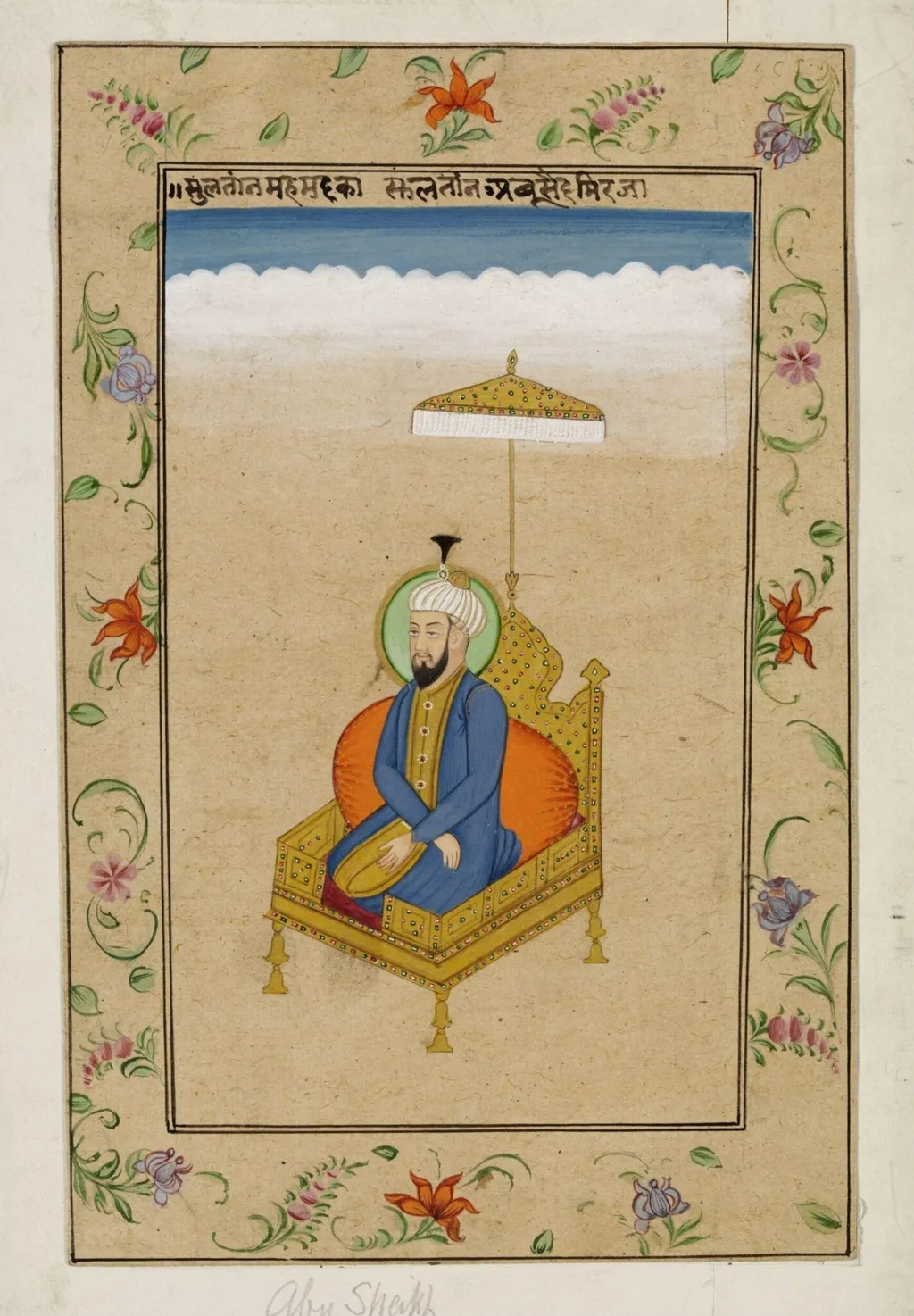
Sultan Abu Sayid Mirza is a paint painting by the Impressionist artist Unknown. It dates from 1890 and is held in the collection of the Victoria and Albert Museum.
About this work
Overview
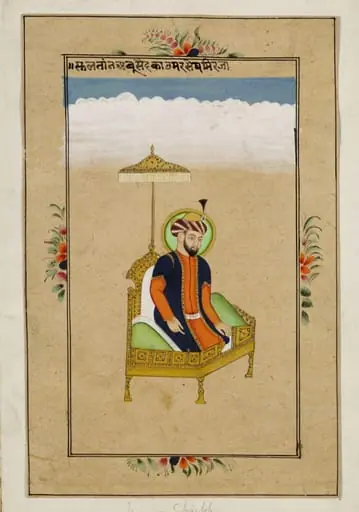
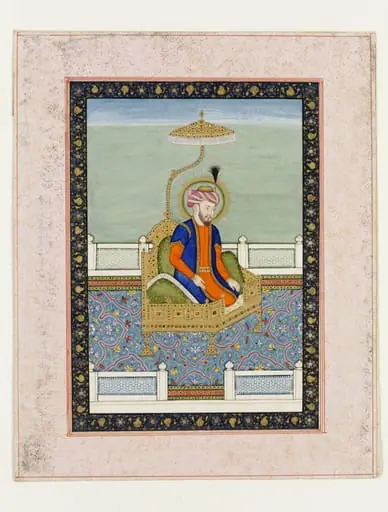
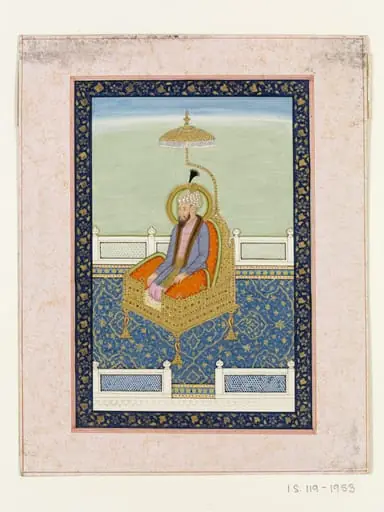
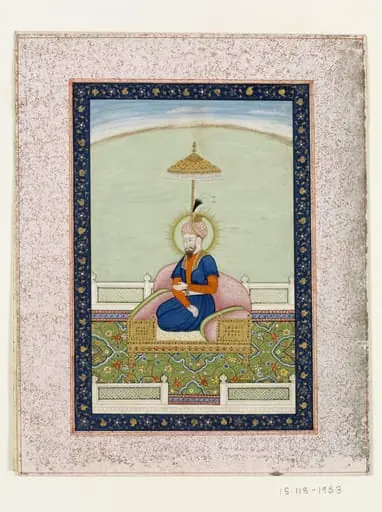
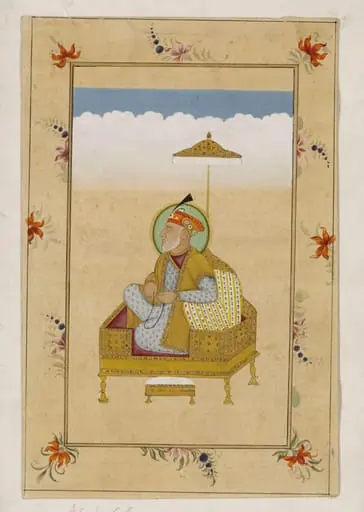
The work portrays a seated figure identified as Sultan Abu Sayid Mirza, positioned on an elaborate golden throne adorned with red cushions.
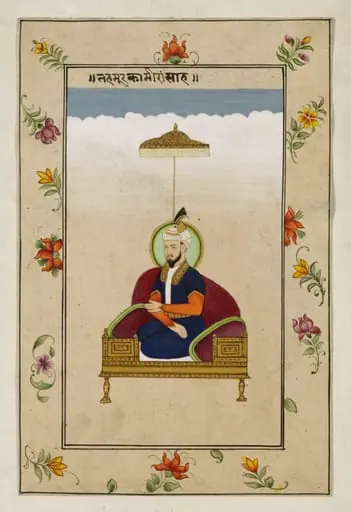
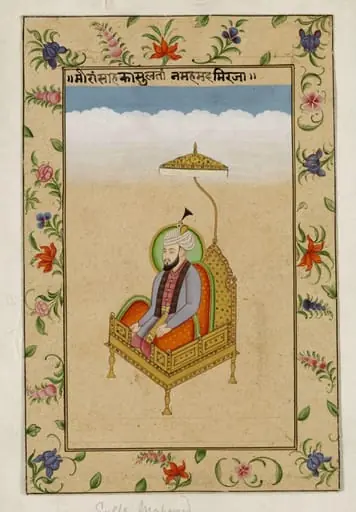
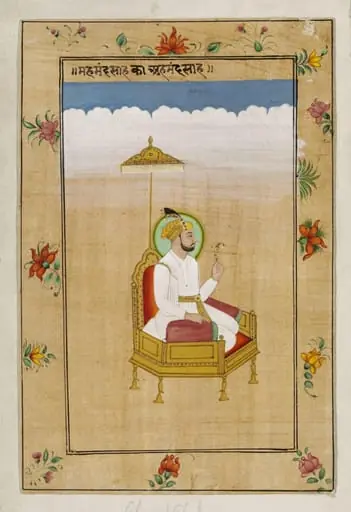
The work portrays a seated figure identified as Sultan Abu Sayid Mirza, positioned on an elaborate golden throne adorned with red cushions. He is dressed in a blue robe over an orange shirt, complemented by a green hat and a modest turban. The composition is set against a desert horizon under a blue sky dotted with white clouds, while the border is embellished with stylised flowers and swirling foliage.
Subject & Meaning
The central figure, a ruler named Abu Sayid Mirda, is presented in regal attire, emphasizing his authority through the sumptuous throne and rich garments. The inclusion of a small object in his hands—perhaps a manuscript or correspondence—suggests a moment of contemplation or governance. The decorative border may symbolize fertility or prosperity, framing the sovereign within an idealised landscape.
Technique & Style
Executed in opaque watercolour combined with gold leaf on paper, the painting balances transparent washes with metallic accents. The gold throne features fine dotting and patterned detailing that enhances its opulence. The colour palette—blues, oranges, greens, and reds—creates a vivid contrast, while the delicate rendering of clouds and foliage demonstrates a refined handling of the medium.
History & Provenance
The artwork originates from a tradition of courtly portraiture in which rulers were depicted with symbolic regalia. While the precise date and workshop remain undocumented, the use of gold and watercolour aligns with artistic practices prevalent in Central Asian and Persian courts during the late medieval period. The piece is currently part of a museum collection that focuses on historic decorative arts.
Context
Portraits of sultans often served diplomatic and propagandistic functions, reinforcing legitimacy through visual splendor. The desert setting situates the ruler within his realm, while the ornate border reflects the aesthetic conventions of manuscript illumination, linking the painting to broader visual cultures of the region.
Artist & collection

 Domestic Scene
 Giacomo and Cardinal Marco, investing Andrea, Abbot of San Zeno, with his Benefice
 The Nymph of Fontainebleau
 Portrait of a Woman
 Madonna and Child with Saints in the Enclosed Garden
 Venus and Minerva
 Family Group of Four on Sofa
 Wall painting from Room H of the Villa of P. Fannius Synistor at Boscoreale