Artwork
Sultan Umar Shaikh Mirza
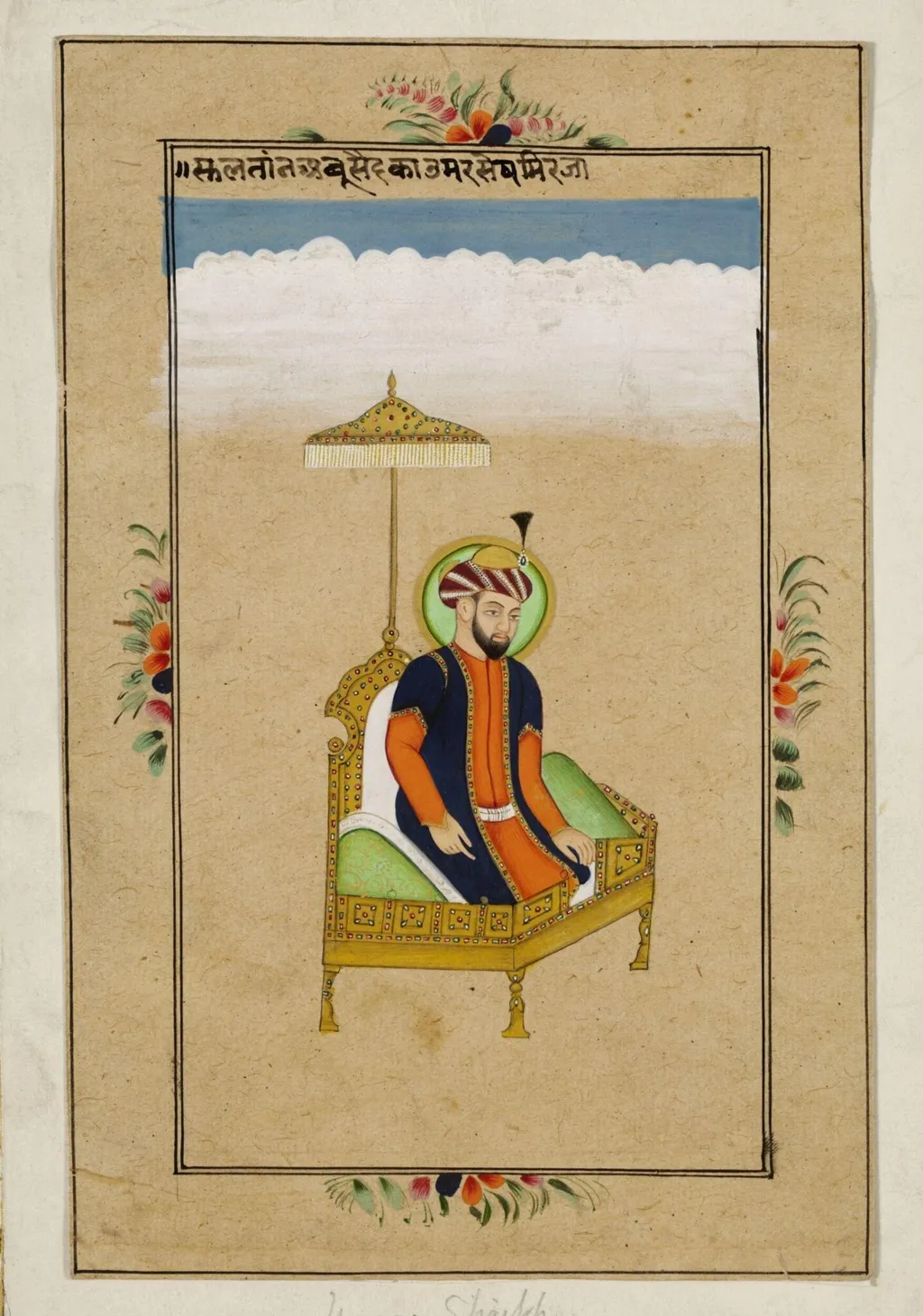
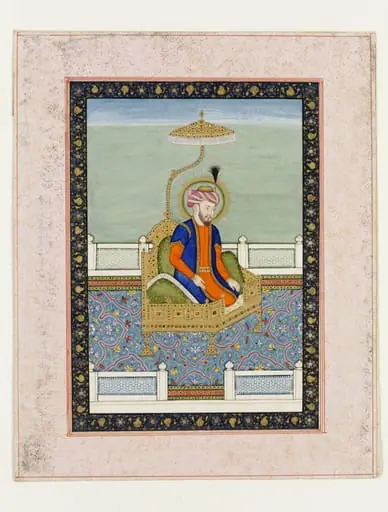
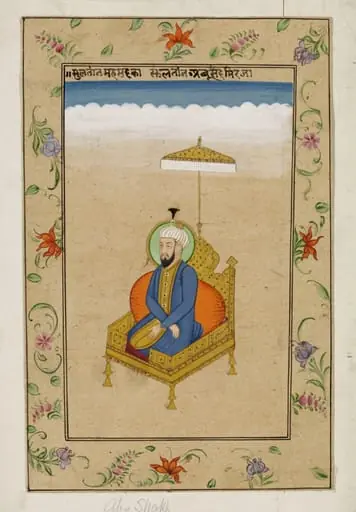
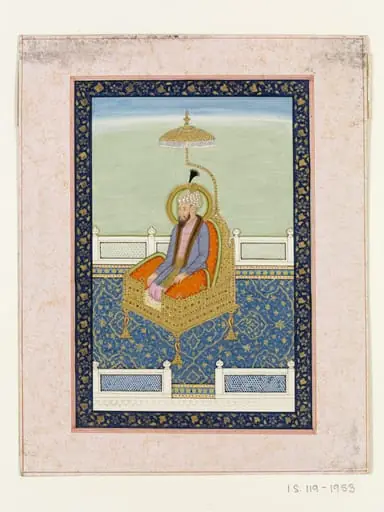
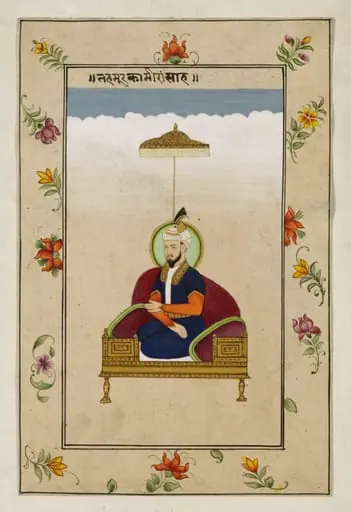
Sultan Umar Shaikh Mirza is a paint painting by the Impressionist artist Unknown. It dates from 1890 and is held in the collection of the Victoria and Albert Museum.
About this work
Overview
The composition is restrained yet regal, avoiding overt grandeur in favor of quiet authority, typical of Persianate court portraiture of the late 15th century.
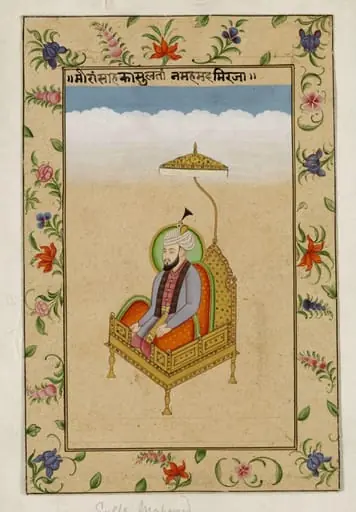
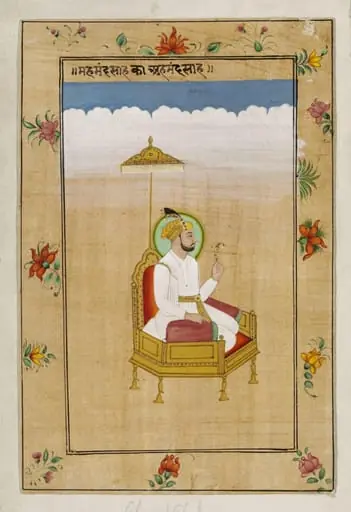
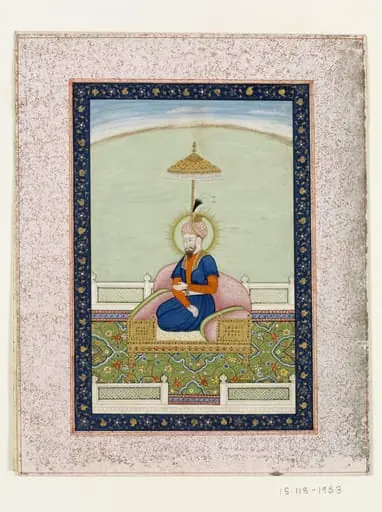
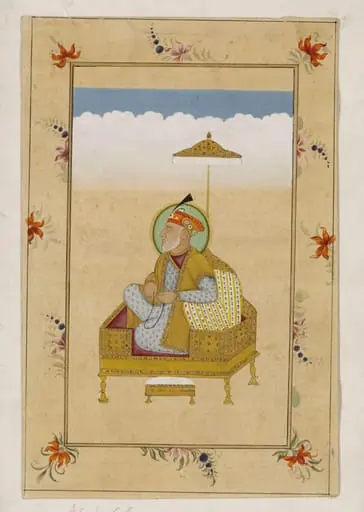
This opaque watercolor and gold leaf painting on paper portrays Sultan Umar Shaikh Mirza, a Timurid ruler, in a formal seated pose. Executed with meticulous detail, the work emphasizes his status through rich materials and symbolic elements. The composition is restrained yet regal, avoiding overt grandeur in favor of quiet authority, typical of Persianate court portraiture of the late 15th century.
Subject & Meaning
Sultan Umar Shaikh Mirza is depicted as a sovereign, seated with composure on an ornate chair beneath a ceremonial canopy. His attire—dark blue robe over an orange tunic and a striped red-and-white turban—signals both rank and cultural identity. The white umbrella, a traditional symbol of sovereignty in Islamic courts, reinforces his authority. The barren desert backdrop suggests his domain, grounding his power in the landscape rather than architectural splendor.
Technique & Style
The artist employed fine brushwork to render intricate textile patterns and delicate gold leaf accents, enhancing the texture of fabric and throne. Opaque watercolor allowed for luminous, saturated hues, while the pale sky and soft clouds create a serene, elevated atmosphere. The flat perspective and emphasis on surface detail reflect conventions of Persian miniature painting, prioritizing symbolic representation over naturalistic depth.
History & Provenance
Created during the Timurid period, likely in Herat or another major court center, the painting belonged to a tradition of royal portraiture used to affirm lineage and legitimacy. Its survival suggests it was preserved in a royal collection, possibly later entering European hands through diplomatic gifts or acquisitions in the 19th century. No definitive record of its early ownership exists, but its style aligns with known Timurid court workshops.
Context
This portrait emerged in a cultural milieu where rulers commissioned images to project continuity and legitimacy, especially amid political fragmentation after Timur’s death. Similar portraits appear in manuscripts and albums from Herat and Samarkand, often paired with poetry or genealogical texts. The emphasis on personal regalia over monumental settings reflects a shift toward intimate, individualized representations of power in late Timurid art.
Legacy
The painting exemplifies the refinement of Timurid court aesthetics, influencing later Mughal and Safavid portraiture through its balance of detail and restraint. Though not widely exhibited, it remains a key reference for understanding how Central Asian rulers visually encoded authority. Its preservation in institutional collections underscores its role as a historical document of elite identity in early modern Islamic courts.
Artist & collection

 Domestic Scene
 Giacomo and Cardinal Marco, investing Andrea, Abbot of San Zeno, with his Benefice
 The Nymph of Fontainebleau
 Portrait of a Woman
 Madonna and Child with Saints in the Enclosed Garden
 Venus and Minerva
 Family Group of Four on Sofa
 Wall painting from Room H of the Villa of P. Fannius Synistor at Boscoreale