Artwork
Akbar
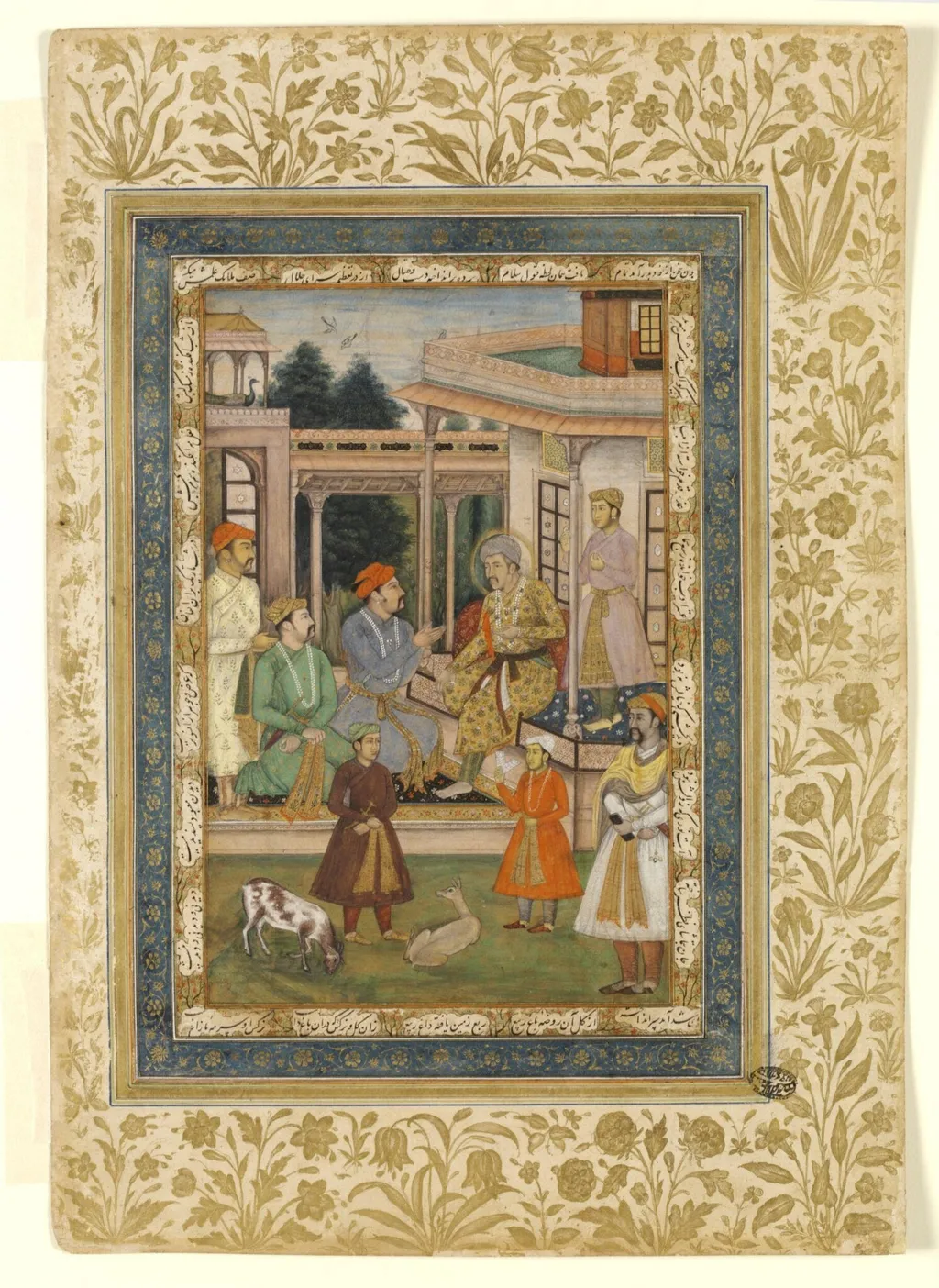
Akbar is a paint painting by the Mughal Painting artist Unknown. It dates from 1800 and is held in the collection of the Victoria and Albert Museum. This early nineteenth‑century work is an opaque watercolor executed on paper.
About this work
Overview
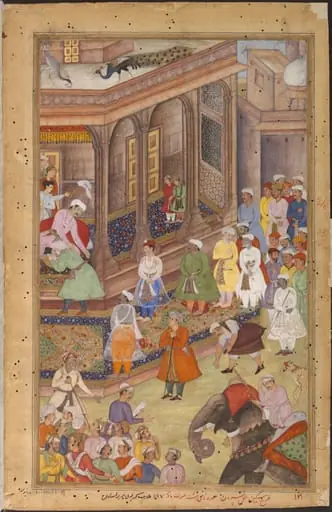
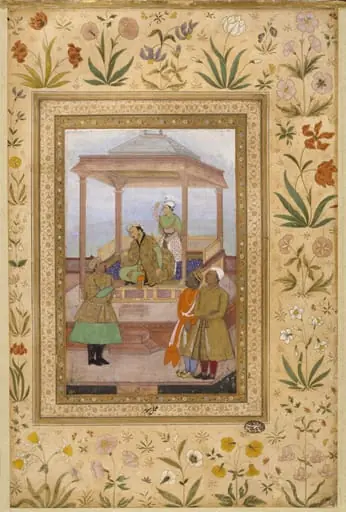
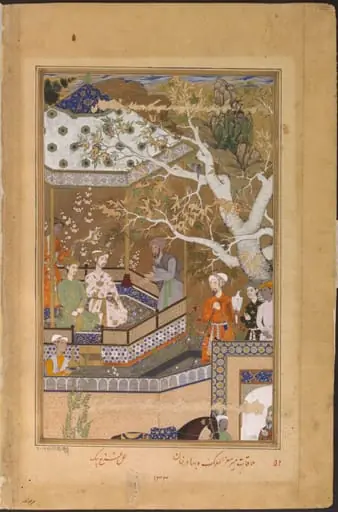
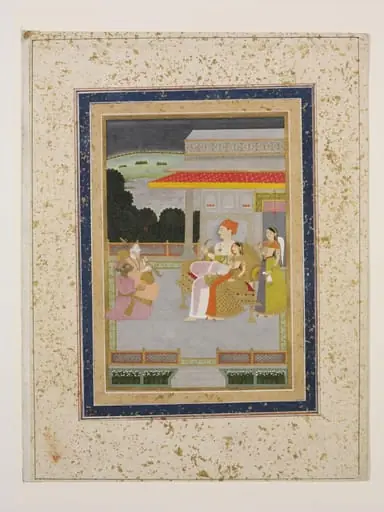
This early nineteenth‑century work is an opaque watercolor executed on paper. The composition depicts a courtly scene in a palace garden, where the Mughal emperor Akbar is shown receiving two mansabdars—military officials—amid a group of attendants. The image is framed by a decorative gold‑leaf border bearing ornamental script, and it includes domestic animals such as a goat and a dog.
Subject & Meaning
The central narrative illustrates a formal audience in which Akbar confers rank upon the two officials, a ritual that underscored the hierarchical structure of the Mughal administration. The presence of richly dressed courtiers, the exchange of a scroll, and the garden setting together convey the ceremonial grandeur and the intertwining of political authority with cultural refinement.
Technique & Style
Rendered in opaque watercolor, the painting employs vivid pigments and intricate gold threading to highlight the sumptuous costumes of the figures. The artist balances elaborate patterning with a comparatively restrained depiction of the surrounding architecture—a covered porch with arched windows—and uses a modest naturalistic touch for the animals, creating a layered visual hierarchy.
History & Provenance
The piece entered the museum’s holdings through the bequest of Harriet Sarah, Baroness Wantage, whose will stipulated the donation of her collection in 1920 and 1921. Since that time it has remained part of the institution’s permanent assemblage, contributing to the broader representation of South Asian courtly art within the collection.
Artist & collection

 Domestic Scene
 Giacomo and Cardinal Marco, investing Andrea, Abbot of San Zeno, with his Benefice
 The Nymph of Fontainebleau
 Portrait of a Woman
 Madonna and Child with Saints in the Enclosed Garden
 Venus and Minerva
 Family Group of Four on Sofa
 Wall painting from Room H of the Villa of P. Fannius Synistor at Boscoreale