Artwork
Krishna and Raja Bhishmaka
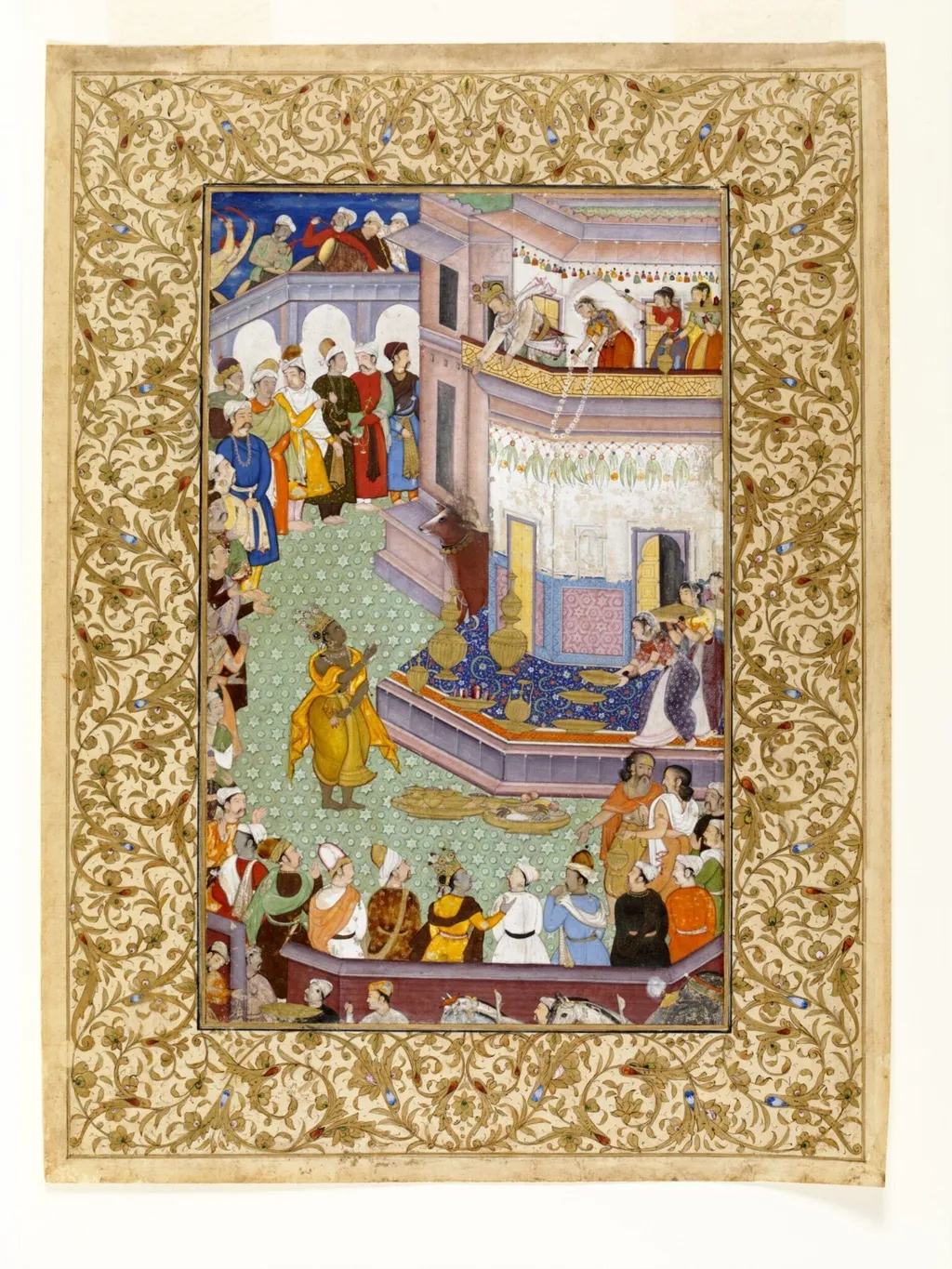
Krishna and Raja Bhishmaka is a paint painting by the Mughal Painting artist Unknown. It dates from 1590 and is held in the collection of the Victoria and Albert Museum.
About this work
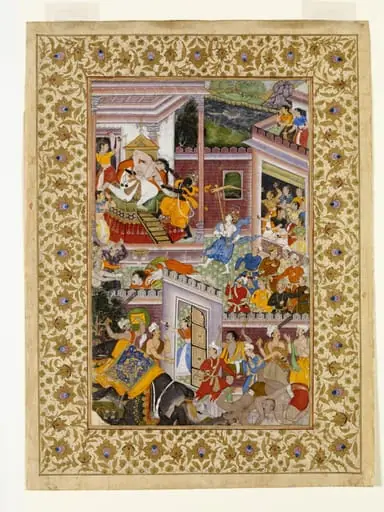
You see Krishna in a room with a king. The king sits on a throne. Krishna wears a crown and holds a flower. The colors are bright blues and golds.
This comes from a book made for Emperor Akbar. He wanted Hindu stories translated and painted. The picture is from about 1590.
Now go see it at the Victoria and Albert Museum.
Overview
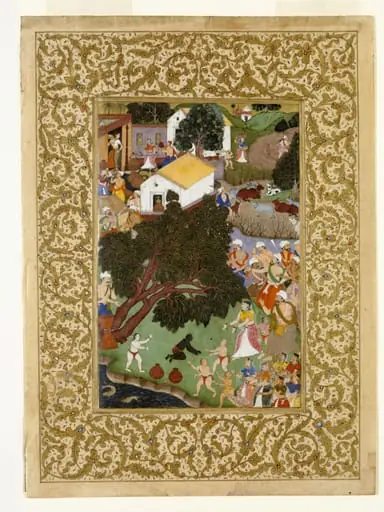
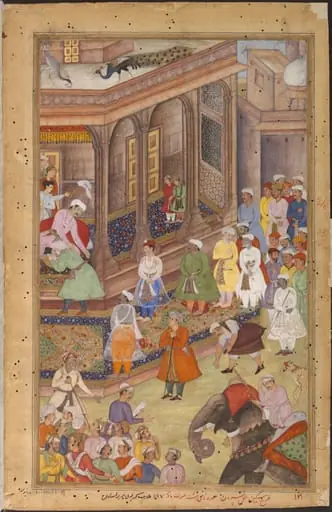
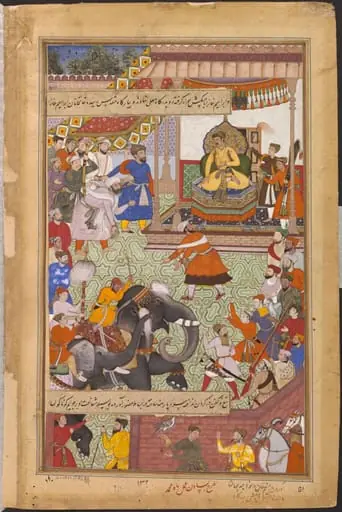
This miniature, created around 1590, illustrates a scene from the Harivamsa, an ancient Sanskrit narrative about Krishna that was incorporated into the Mahabharata. Produced as part of a Persian‑language illustrated translation commissioned by the Mughal court, the work later received ornamental borders, likely added in an 18th‑century Lucknow album.
Subject & Meaning
The image depicts the moment Krishna, crowned and holding a flower, appears before Raja Bhishmaka, who sits on a throne in his hall. The episode relates Krishna’s intent to marry Rukmini, Bhishmaka’s daughter, and his arrival at a ceremony where she is to choose a husband, a plan later thwarted by rival schemers.
Technique & Style
Executed in the Mughal miniature tradition, the painting combines delicate line work with vivid blues and gold pigments. The figures are rendered with courtly elegance, while the interior setting is outlined with ornamental detailing characteristic of Persian‑influenced Indian art of the late 16th century.
History & Provenance
Originally part of a dispersed illustrated manuscript created for Emperor Akbar, the piece was subsequently incorporated into a later album, receiving decorative borders in Lucknow during the 1700s. It now resides in the collection of the Victoria and Albert Museum.
Context
Akbar’s patronage of Sanskrit texts translated into Persian reflects his broader policy of cultural synthesis, encouraging the exchange of Hindu narratives within the imperial artistic milieu. This miniature exemplifies the collaborative environment where Persian court aesthetics merged with Indian religious storytelling.
Artist & collection

 Domestic Scene
 Giacomo and Cardinal Marco, investing Andrea, Abbot of San Zeno, with his Benefice
 The Nymph of Fontainebleau
 Portrait of a Woman
 Madonna and Child with Saints in the Enclosed Garden
 Venus and Minerva
 Family Group of Four on Sofa
 Wall painting from Room H of the Villa of P. Fannius Synistor at Boscoreale