Artwork
Mir Muizzu'l Mulk and Bahadur Khan
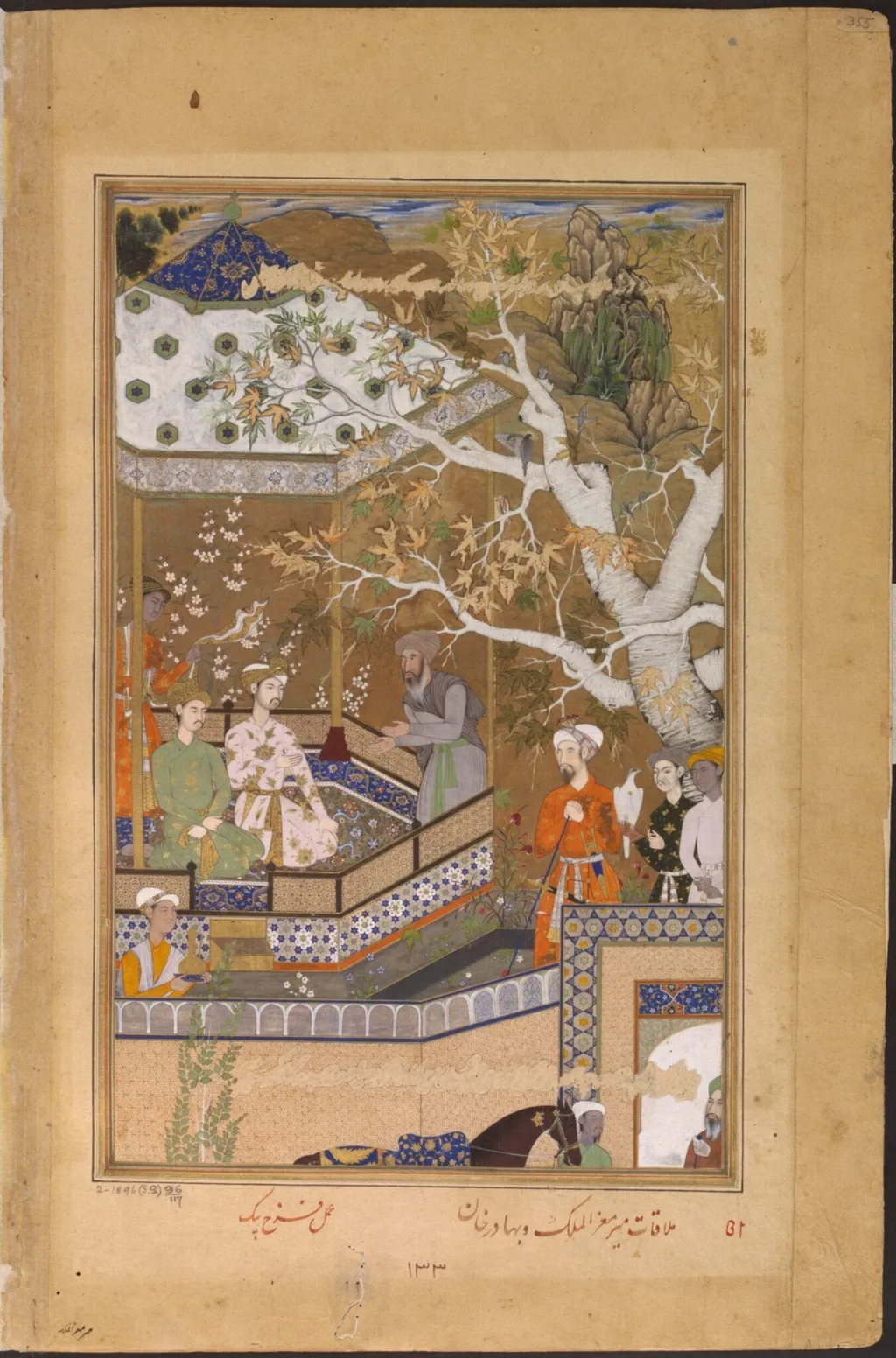
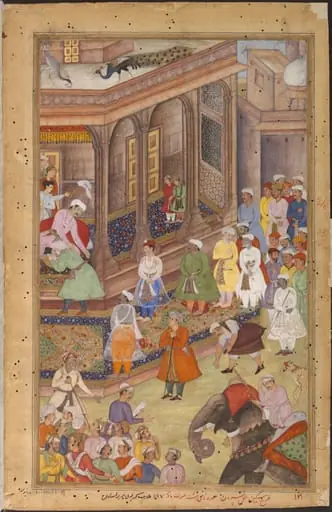
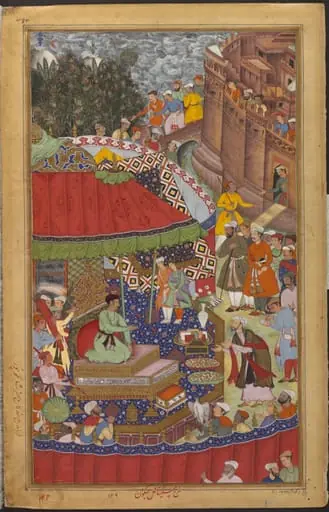
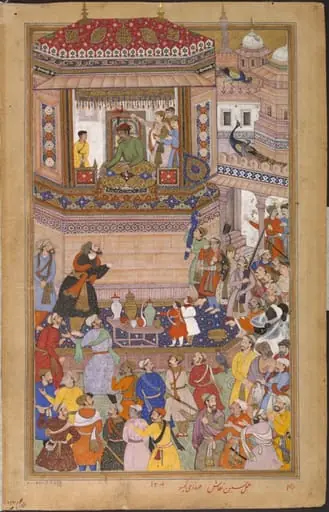
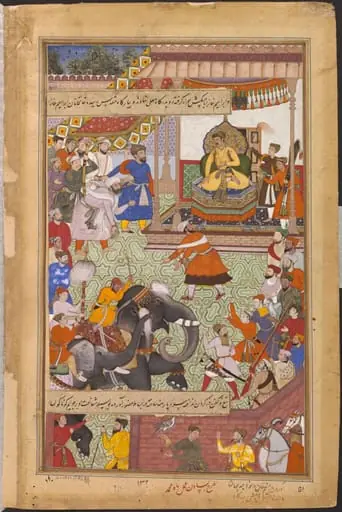
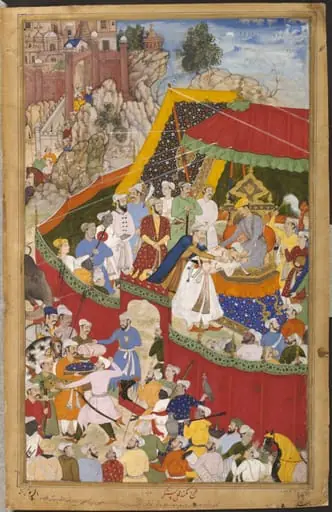
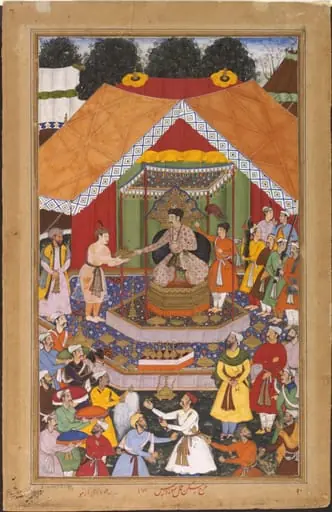
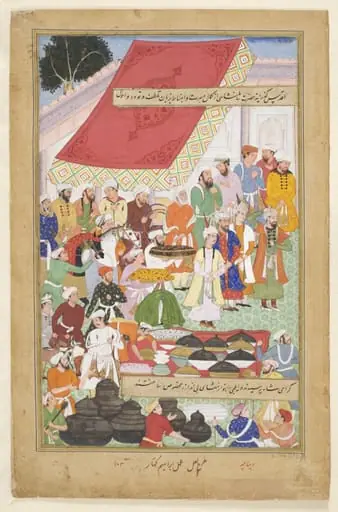
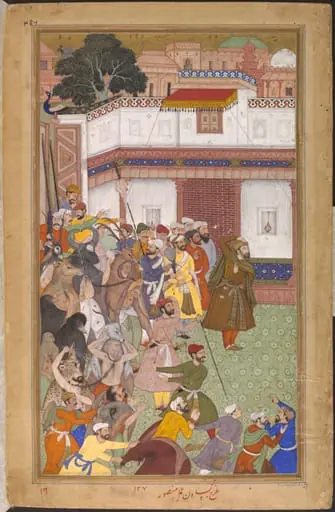
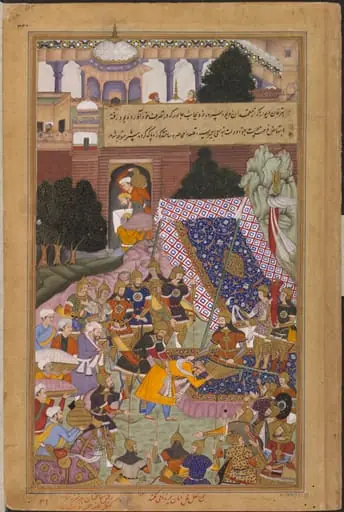
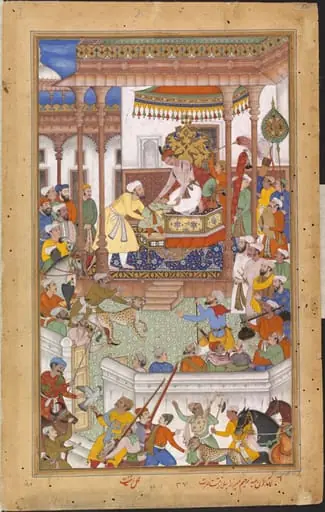
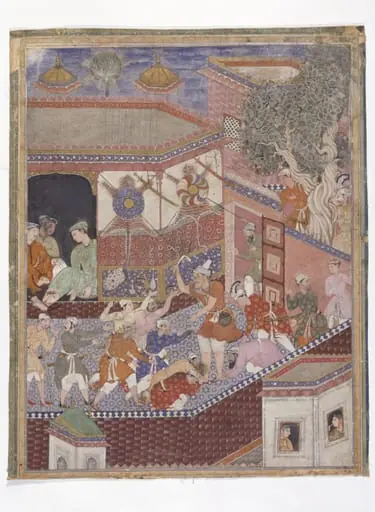
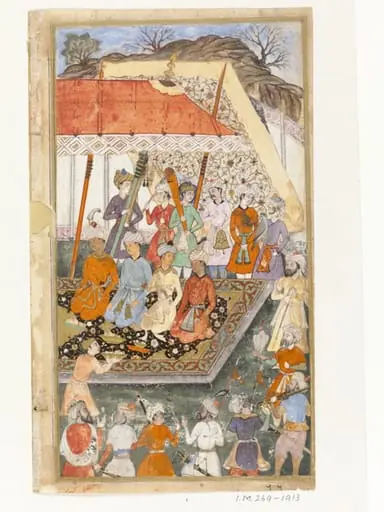
Mir Muizzu'l Mulk and Bahadur Khan is a paint painting by the Mughal Painting artist Farrokh. It dates from 1592 and is held in the collection of the Victoria and Albert Museum. This painting is one of many illustrations created for the Akbarnama, a commissioned historical record of Emperor Akbar’s reign.
About this work
Overview
The scene is rendered with meticulous detail, reflecting the imperial workshop’s commitment to documenting political events through visual narrative.
This painting is one of many illustrations created for the Akbarnama, a commissioned historical record of Emperor Akbar’s reign. Executed in the Mughal atelier between 1592 and 1594, it captures a diplomatic encounter between a royal envoy and a regional rebel. The scene is rendered with meticulous detail, reflecting the imperial workshop’s commitment to documenting political events through visual narrative. The manuscript later passed through the collections of Akbar’s successors before entering Western hands in the 19th century.
Subject & Meaning
The painting portrays Mir Muizzu'l Mulk, Akbar’s representative, meeting Bahadur Khan, a local leader who had resisted imperial authority. Their seated interaction suggests negotiation rather than confrontation, emphasizing diplomacy over force. The presence of a deer, motionless beside them, may symbolize the quiet tension of the moment or the natural order under imperial rule. The setting—a shaded pavilion beneath a chenar tree—reinforces the formality of the encounter within a cultivated, royal space.
Technique & Style
Rendered in opaque watercolor and gold on paper, the painting exhibits the refined draftsmanship and delicate coloration characteristic of Mughal court art. Figures are arranged with spatial awareness, their postures and garments carefully delineated to convey status and mood. The tiled floor and striped canopy reflect Persian influences, while the naturalistic deer and textured foliage demonstrate the artists’ attention to observed detail. The composition balances symmetry with subtle narrative nuance.
History & Provenance
Created during Akbar’s reign, the Akbarnama manuscript remained in imperial hands through the rule of Jahangir and Shah Jahan. After the decline of the Mughal court, it entered private collections. In the mid-19th century, Major-General John Clarke acquired it while serving in India. Following his death, his widow, Mrs. Frances Clarke, sold the manuscript to the Victoria and Albert Museum in 1896, where it has since been preserved as a key artifact of Mughal visual culture.
Context
The Akbarnama was conceived as both historical record and political propaganda, designed to legitimize Akbar’s rule through curated imagery and text. Its illustrations were produced by a large team of artists, each contributing to a unified visual language that blended Persian, Indian, and emerging Mughal styles. This particular scene reflects Akbar’s broader strategy of integrating regional leaders into his administration through dialogue rather than conquest, a hallmark of his governance.
Legacy
The Akbarnama’s illustrations remain among the most studied examples of early Mughal painting, influencing later Indian and colonial artistic traditions. Its survival in near-complete form allows scholars to trace the evolution of courtly aesthetics and political messaging. The painting of Mir Muizzu'l Mulk and Bahadur Khan endures as a quiet testament to the complexity of imperial diplomacy, preserved not as myth but as a documented moment in a vast, meticulously compiled chronicle.
Artist & collection
Artist
Farrokh had a habit of slipping into miniature paintings like a tailor tucking stitches—tiny worlds where every thread counted.