Artwork
Akbar
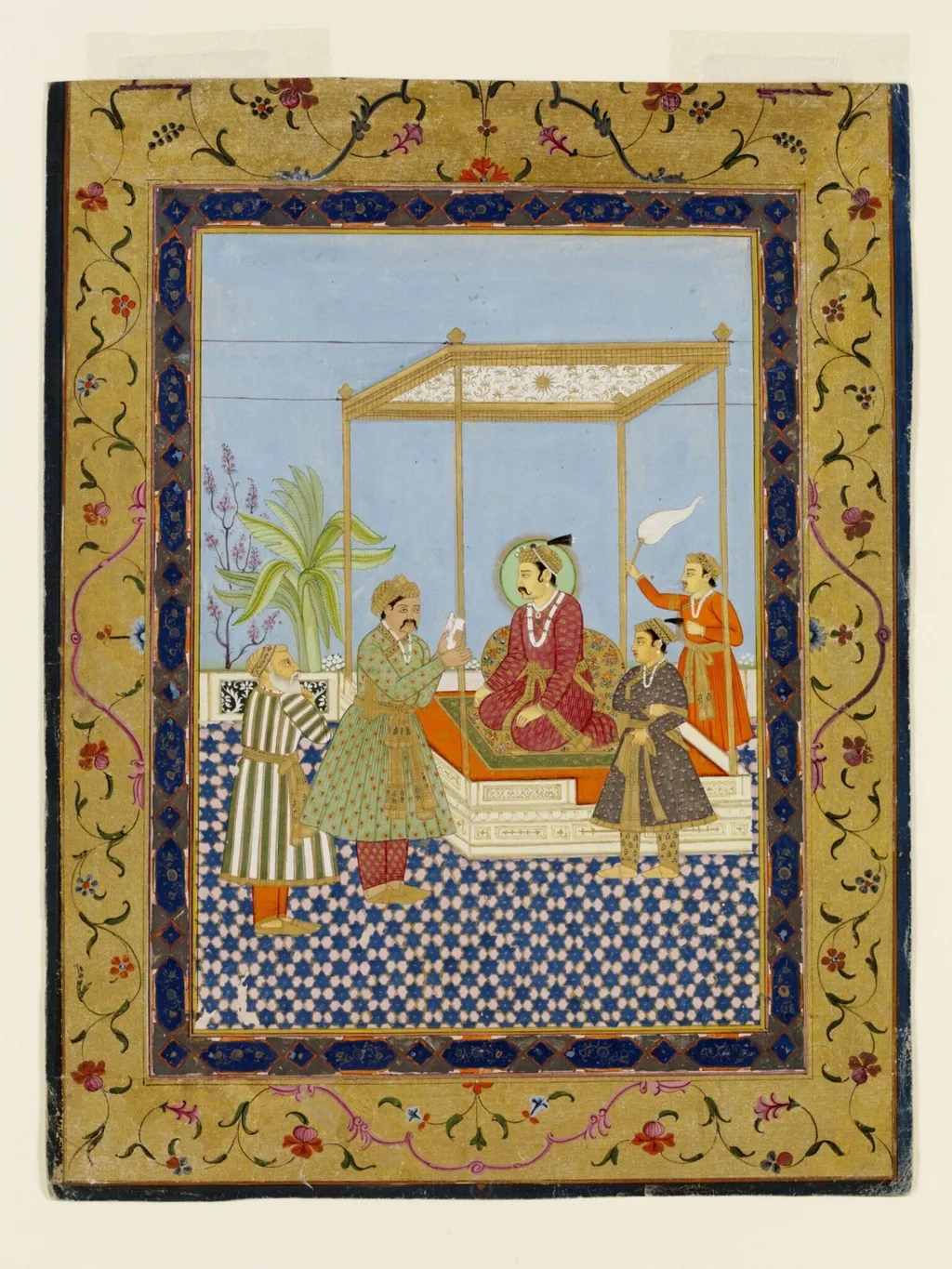
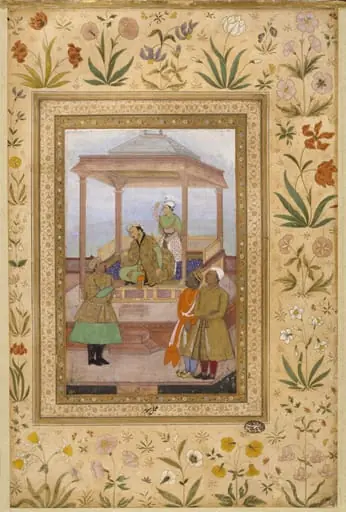
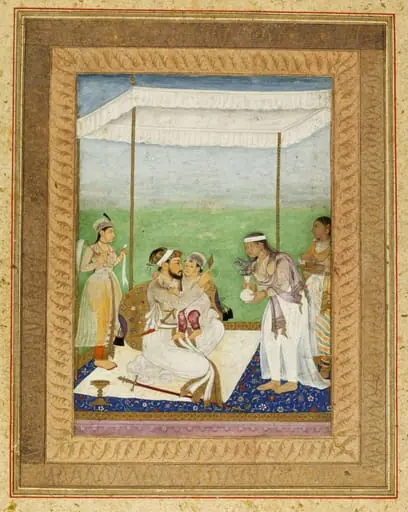
Akbar is a paint painting by Unknown. It dates from 1750 and is held in the collection of the Victoria and Albert Museum. The work presents a seated figure on a raised platform beneath a modest pavilion, surrounded by several attendants.
About this work
Overview
The work presents a seated figure on a raised platform beneath a modest pavilion, surrounded by several attendants. The central figure holds a white object, while the companions gesture or carry items. The composition rests on a tiled floor, framed by a decorative gold border with floral motifs, and is set against a light blue sky and a tall plant.
Subject & Meaning
The seated individual is identified as Emperor Akbar, the Mughal ruler, portrayed in a formal, courtly setting. The presence of richly dressed attendants and the tranquil atmosphere emphasize imperial authority and the ceremonial aspects of his reign, rather than any narrative action.
Technique & Style
Executed in opaque watercolour combined with gold leaf on paper, the painting employs vivid, patterned textiles and intricate detailing of jewels and stripes. The use of gold in the border and canopy highlights the regal status, while the flat, decorative background reflects a stylised courtly aesthetic typical of Mughal miniature traditions.
Context
The scene reflects the hierarchical organization of the Mughal court, where the emperor is centrally positioned under a canopy, a visual cue of sovereignty. The surrounding figures, dressed in luxurious fabrics, illustrate the elite class of courtiers and officials who surrounded Akbar during his reign in the late 16th century.
Legacy
Works of this type contribute to the visual record of Mughal imperial iconography, informing later representations of royal authority in South Asian art. The painting’s combination of watercolour, gold, and elaborate border design continues to be studied for its insight into courtly aesthetics and material culture.
Artist & collection

 Domestic Scene
 Giacomo and Cardinal Marco, investing Andrea, Abbot of San Zeno, with his Benefice
 The Nymph of Fontainebleau
 Portrait of a Woman
 Madonna and Child with Saints in the Enclosed Garden
 Venus and Minerva
 Family Group of Four on Sofa
 Wall painting from Room H of the Villa of P. Fannius Synistor at Boscoreale