Artwork
Dhanasri Ragini
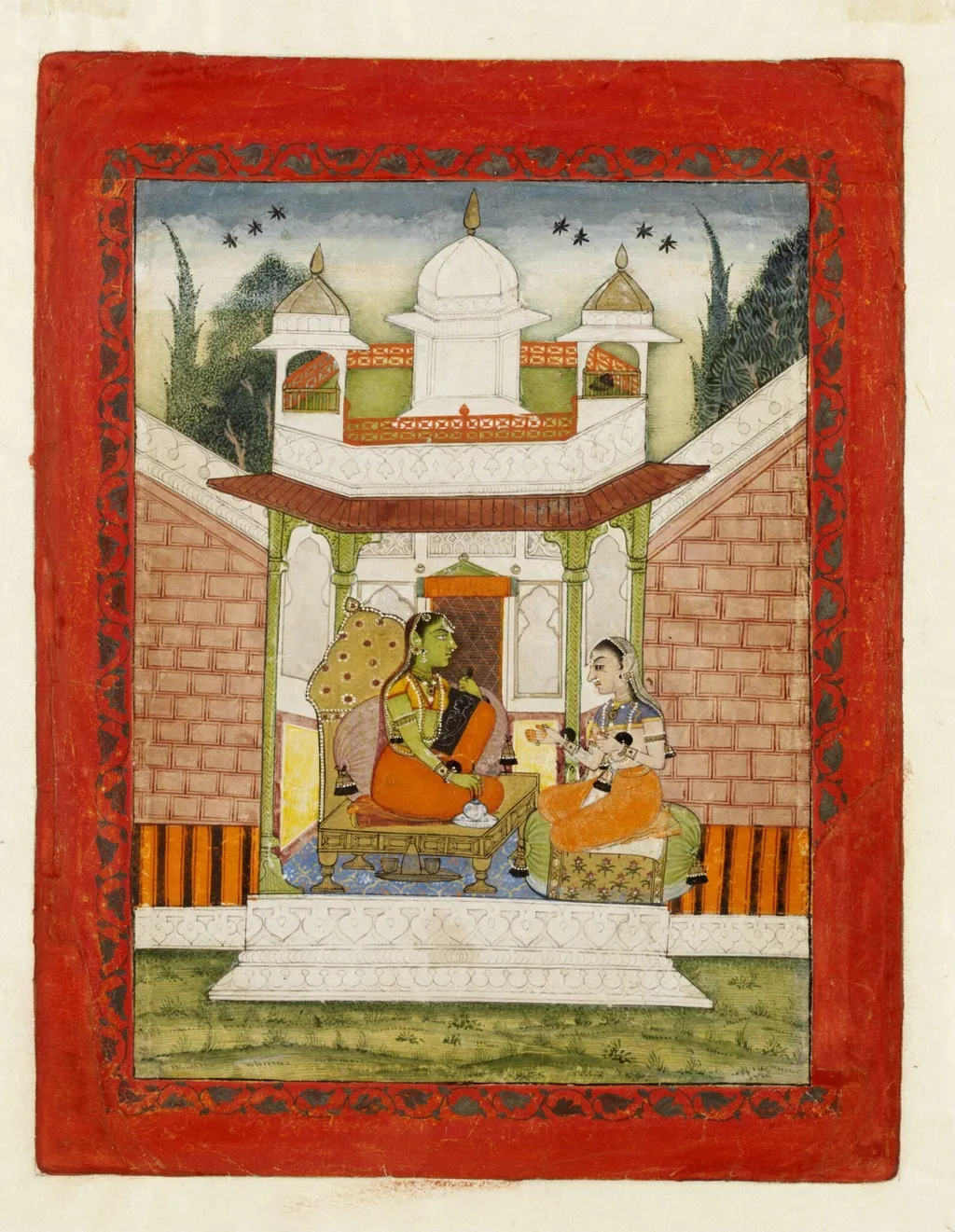
Dhanasri Ragini is a paint painting by the Baroque artist Unknown. It dates from 1700 and is held in the collection of the Victoria and Albert Museum.
About this work
Overview
This opaque watercolor on paper, dated to approximately 1700, belongs to a Ragamala series illustrating musical modes through visual allegory.
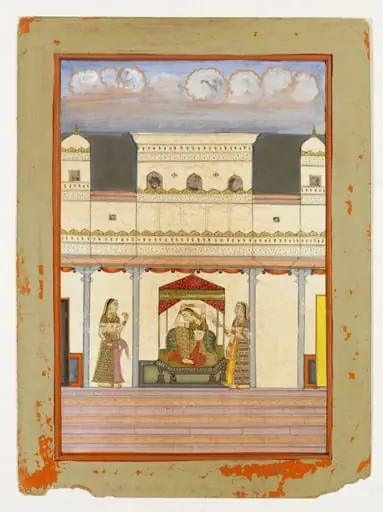
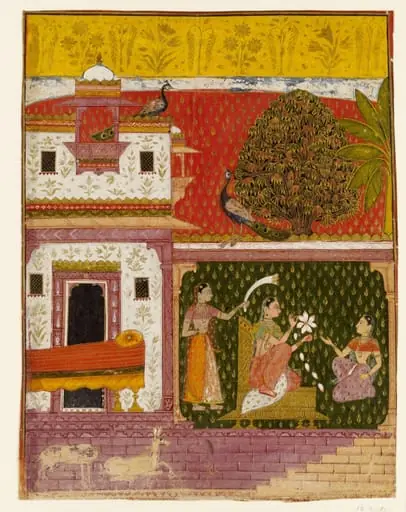
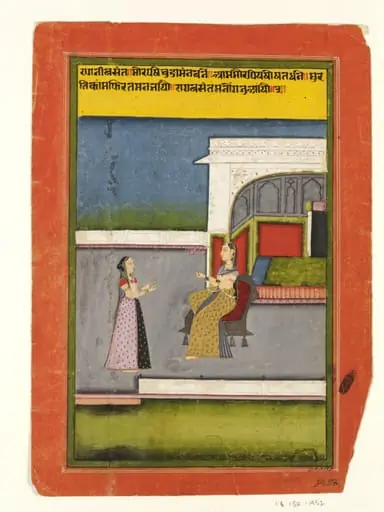
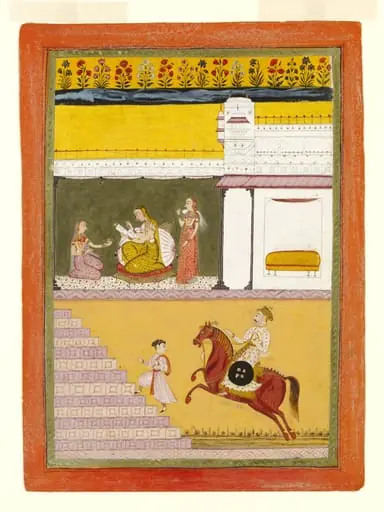
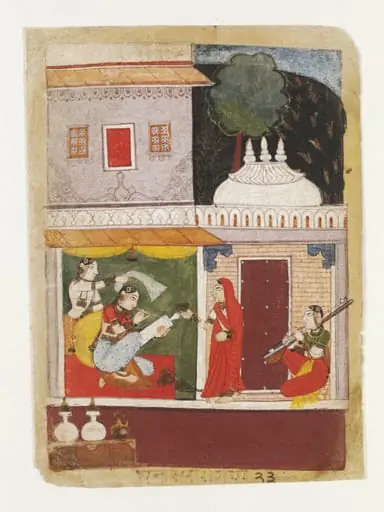
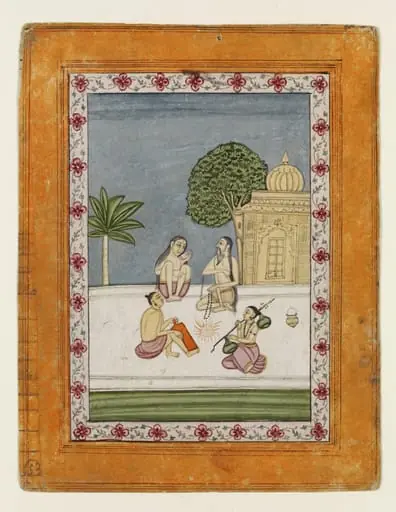
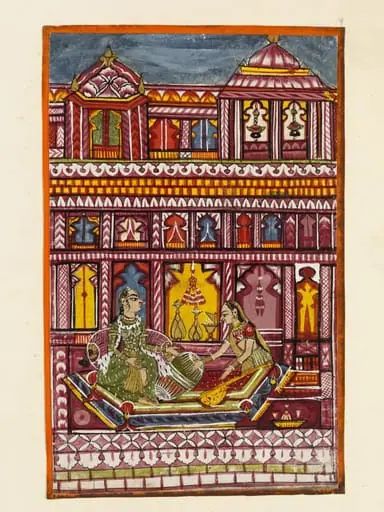
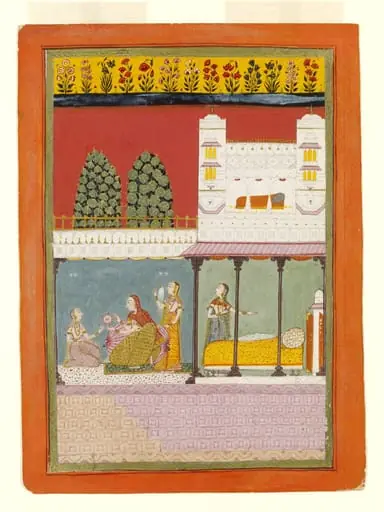
This opaque watercolor on paper, dated to approximately 1700, belongs to a Ragamala series illustrating musical modes through visual allegory. It depicts two women in a shaded pavilion, one holding a fan and the other a stringed instrument, set against a backdrop of domed architecture and framed by a bold red border. The composition reflects the integration of music and courtly leisure in Rajput artistic traditions.
Subject & Meaning
The scene personifies Dhanasri Ragini, a melodic mode associated with devotion and serenity. The two figures, one playing an instrument and the other attending with a fan, symbolize the interplay of sound and repose. Their presence in a palace courtyard suggests an intimate, elevated space where music is both ritual and respite, aligning the raga’s emotional character with aristocratic leisure.
Technique & Style
The painting employs rich mineral pigments and fine brushwork to render intricate textiles, gold detailing, and architectural elements. The use of flat, saturated colors and decorative patterning reflects the Rajput miniature tradition, while the symmetrical pavilion and framed border create a contained, almost icon-like composition. The green skin of one figure may reference divine or mythological associations tied to the raga.
History & Provenance
The work was once part of the collection of Thakur Iswari Singh of Bilaspur, a ruler descended from Raja Kharakh Chand. It later passed through Abdullah & Sons in Udaipur before being acquired by Maggs Bros. The painting’s journey reflects the movement of Rajput art through private aristocratic holdings and early 20th-century dealers, preserving its lineage despite displacement.
Context
Created during a period when Rajput courts actively commissioned Ragamala series, this painting reflects the fusion of Hindu devotional music and visual culture. Similar works were produced across Rajasthan and the Punjab hills, often for royal libraries or personal meditation. The architectural style and attire align with early 18th-century North Indian courtly aesthetics, distinct from Mughal or European conventions.
Legacy
As part of a larger thematic cycle, this painting contributes to the enduring visual vocabulary of Indian musical iconography. Though less widely known than Mughal miniatures, such works sustained regional artistic identities and influenced later collectors and scholars seeking to document India’s non-Islamic artistic heritage.
Artist & collection

 Domestic Scene
 Giacomo and Cardinal Marco, investing Andrea, Abbot of San Zeno, with his Benefice
 The Nymph of Fontainebleau
 Portrait of a Woman
 Madonna and Child with Saints in the Enclosed Garden
 Venus and Minerva
 Family Group of Four on Sofa
 Wall painting from Room H of the Villa of P. Fannius Synistor at Boscoreale