Artwork
Akrura Drives Krishna and Balarama to Mathura, from the “Isarda Bhagavata Purana”
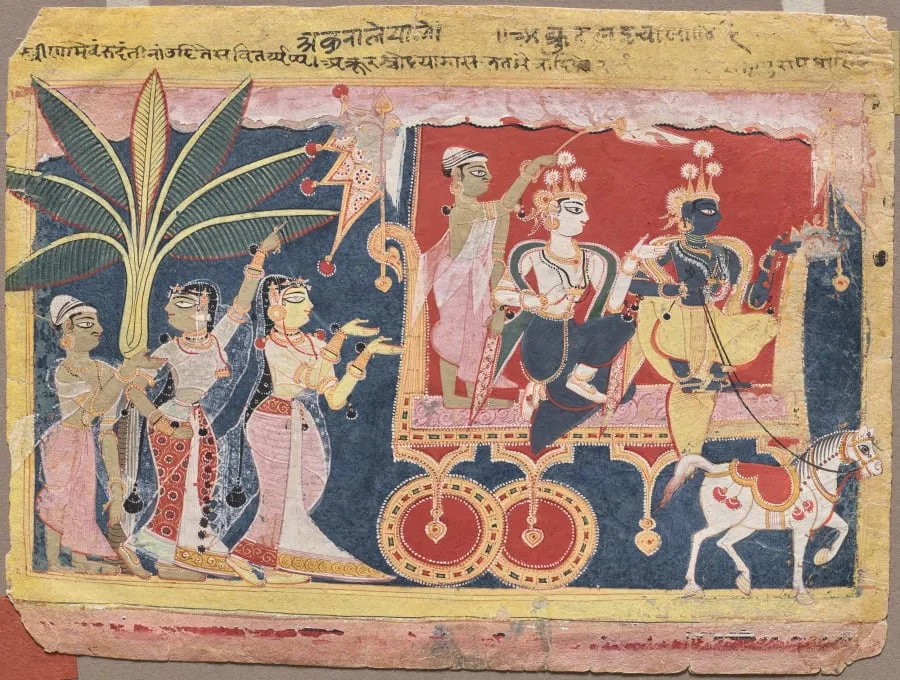
Akrura Drives Krishna and Balarama to Mathura, from the “Isarda Bhagavata Purana” is an unspecified painting by the Mughal Painting artist Unknown. It dates from 1565 and is held in the collection of the Cleveland Museum of Art.
About this work
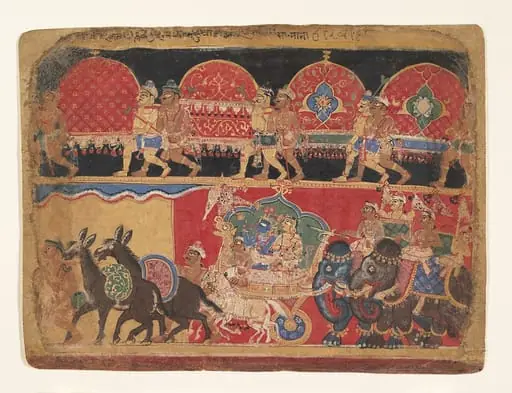
A chariot races across a pink sky, carrying two brothers—one dark blue, one pale.
A chariot races across a pink sky, carrying two brothers—one dark blue, one pale. Villagers wave goodbye as the pair leaves their childhood home. The scene feels rushed, like a moment pulled from a longer story.
This is a single page from a Hindu manuscript, painted in Rajasthan around 1560. The bright pinks—sky, chariot, clothes—stand out. Most older works from this region used softer colors. The urgency in the brothers’ poses tells you they’re heading toward danger.
To see more pages like this, look up *northwestern india, rajasthan, isarda*.
Overview
This 16th-century painting from Rajasthan, India, depicts a pivotal moment from Hindu mythology as Krishna and Balarama depart their childhood village for Mathura, bound for a confrontation with their tyrannical uncle.
Subject & Meaning
The scene captures Krishna (dark-skinned) and Balarama (light-skinned) leaving their village to challenge their uncle, who had murdered their siblings and imprisoned their parents. The brothers’ urgent gestures convey their determination and the peril of their mission.
Technique & Style
Notable for its vibrant use of pink in the sky, chariot, and attire, this work distinguishes itself from pre-Mughal precedents with its bold color palette, contrasting with the softer hues typical of earlier regional art.
History & Provenance
Created circa 1560 in Rajasthan as part of the “Isarda Bhagavata Purana” manuscript, this single-page painting reflects the artistic trends of its time and place, characterized by a sense of dynamism and expressive color.
Context
Part of a broader Hindu manuscript tradition, this page illustrates a narrative from the Bhagavata Purana, highlighting the brothers’ journey as a narrative climax. The setting and figures are rendered in a style consistent with Rajasthani manuscript illustrations of the period.
Legacy
As a representative of 16th-century Rajasthani art, this painting contributes to the understanding of the region’s artistic evolution, particularly in its transitional phase towards Mughal influences, marked by innovative color choices.
Artist & collection

 Domestic Scene
 Giacomo and Cardinal Marco, investing Andrea, Abbot of San Zeno, with his Benefice
 The Nymph of Fontainebleau
 Portrait of a Woman
 Madonna and Child with Saints in the Enclosed Garden
 Venus and Minerva
 Family Group of Four on Sofa
 Wall painting from Room H of the Villa of P. Fannius Synistor at Boscoreale
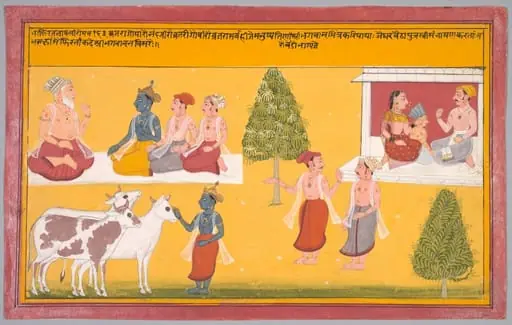 Friends of Krishna, folio 163 from a Bhakti Ratnavali of Vishnu Puri
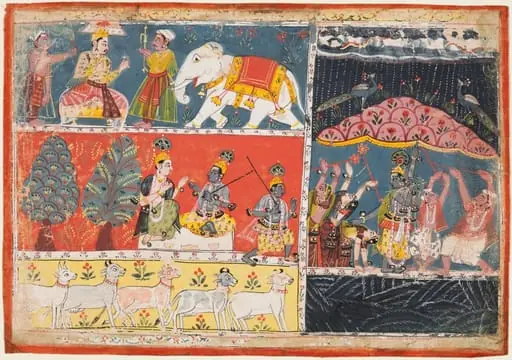 Krishna Lifts Mount Govardhan, from a Bhagavata Purana
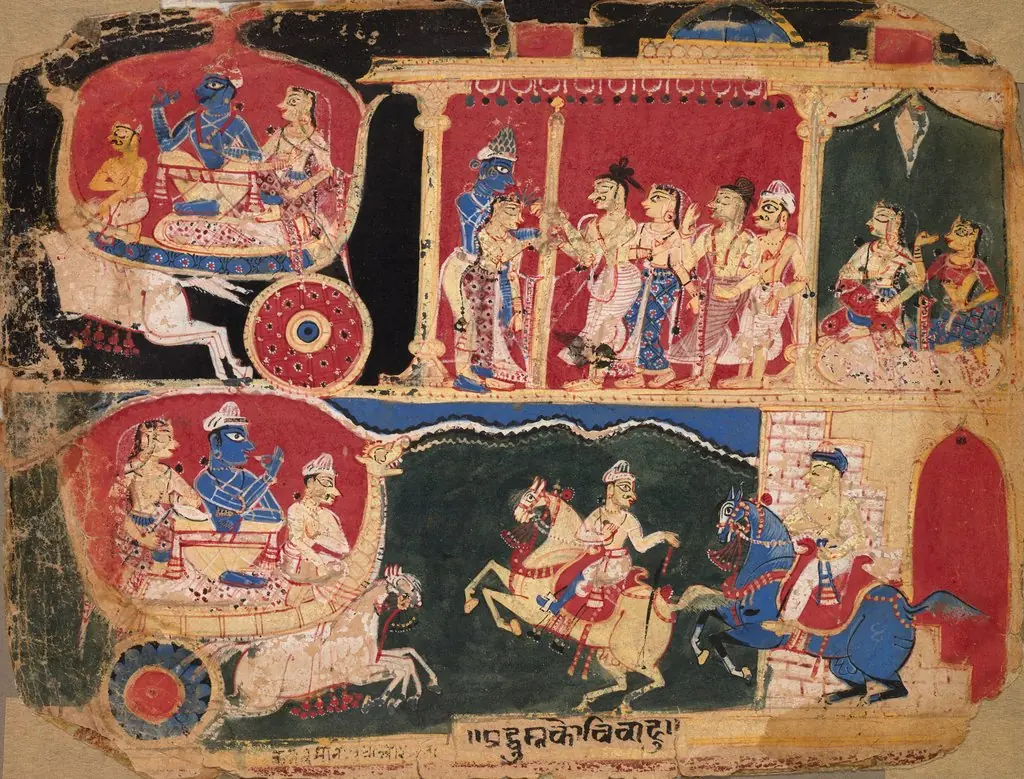 The Marriage of Pradyumna and Rukmavati, page from a Bhagavata Purana
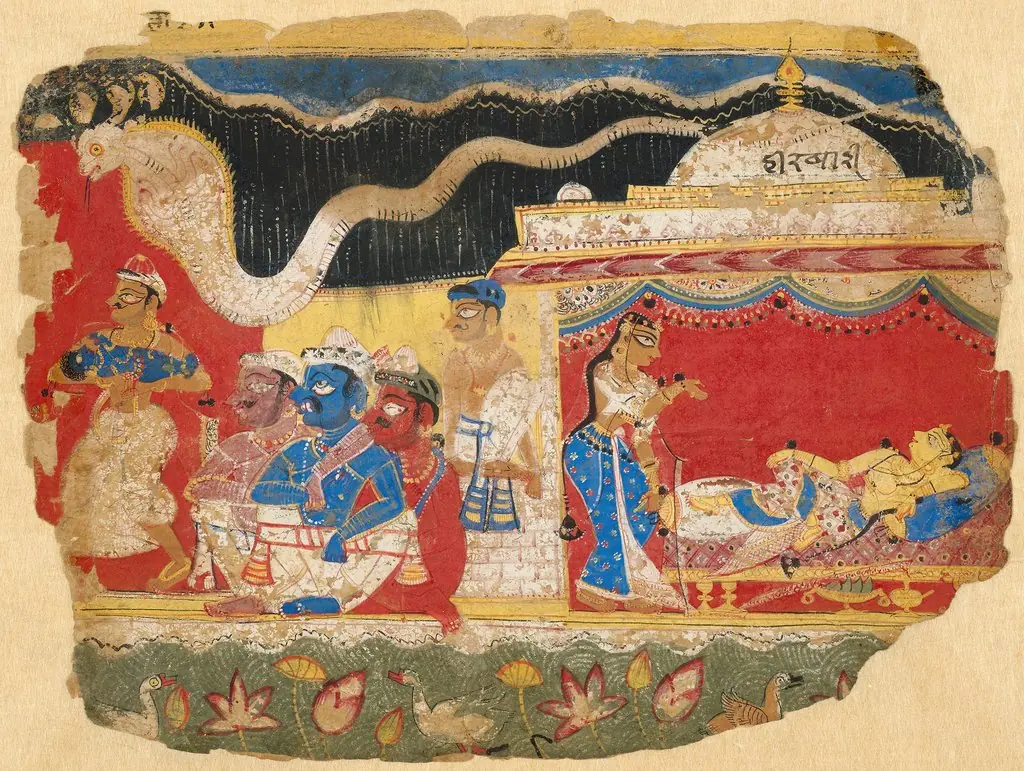 The Infant Krishna Spirited Away by Vasudev, page from the Dispersed Bhagavatapurana manuscript
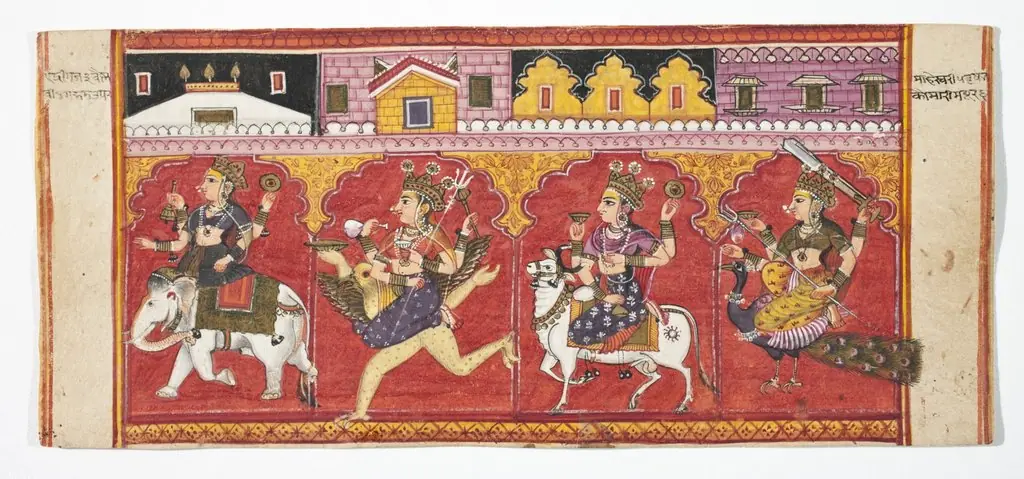 Legend of Durga
 Untitled
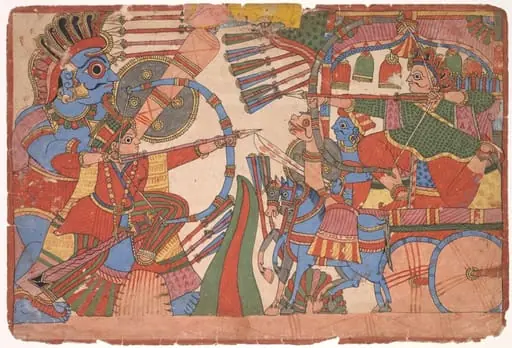 Illustration to the Mahabharata
 Untitled
 Untitled